Sensor cable assembly mistakes often look small at the beginning of an OEM project, but they can create serious problems during equipment assembly, testing, or field use. A wrong pinout, similar-looking connector, poor shield termination, weak rear seal, or incomplete test plan can cause unstable sensor signals, installation delays, rework, or customer complaints.
For OEM buyers, the best way to avoid these problems is to define the cable assembly clearly before sample production and control the process before batch release. This article explains common sensor cable assembly mistakes and how engineering and procurement teams can prevent them.
Table of Contents
ToggleVague Application
One of the first mistakes is asking for a sensor cable without explaining the application.
Many RFQs begin with a photo, a cable length, and a connector description. This may be enough for a rough discussion, but it is not enough for a reliable OEM cable assembly project. The supplier needs to know where the sensor cable will be used, what signal it carries, whether it moves, and what environment it faces.
A cable used inside a clean control cabinet is different from one used on an outdoor agricultural machine. A cable used for a simple switching signal is different from one used for analog measurement, encoder feedback, or communication. A cable fixed inside equipment is different from one installed on a moving robotic arm.
When the application is vague, the supplier may choose a standard cable structure that looks correct but does not match the real use condition. The result can be excessive stiffness, poor signal stability, weak environmental resistance, or installation difficulty.
OEM buyers should define the sensor type, equipment type, installation location, signal type, movement condition, and environmental exposure in the RFQ. Even short notes can help the supplier make better decisions.
For the full specification logic, buyers can review Sensor Cable Assemblies for OEM Equipment.
Wrong Connector
Connector mistakes are common because many sensor connectors look similar.
M8, M12, circular connectors, waterproof connectors, molded plugs, and board-side connectors may appear simple from the outside. But for OEM projects, connector size, coding, pin count, gender, locking structure, sealing design, and mating interface all matter.
A frequent mistake is writing only “M12 connector” without defining coding. An M12 A-coded connector, D-coded connector, and X-coded connector may serve very different purposes. If the coding is wrong, the cable may not mate with the equipment even if the cable length and wiring are correct.
Another common mistake is confusing male and female connectors. Poor photos, unclear drawings, or misunderstanding of electrical contact gender can lead to the wrong connector being selected.
Connector availability is also a risk. Some buyers approve a connector based on an old sample without checking whether it is still available or practical for small-batch production. If the connector has long lead time, high MOQ, or unstable supply, repeat orders may become difficult.
To avoid connector mistakes, OEM buyers should provide connector part numbers, datasheets, photos, mating interface details, and approved alternatives when possible. If the exact connector is not known, the supplier should review the sample carefully and confirm the specification before sample production.
For connector-specific guidance, see M8 and M12 Sensor Cable Assemblies.
Unclear Pinout
Unclear pinout is one of the most serious sensor cable assembly mistakes.
A sensor cable can look correct from the outside but still be wired incorrectly inside. This is especially common with multi-pin connectors, custom molded cables, M8/M12 sensor cables, and cables with similar wire colors.
If the pinout is wrong, the sensor may not work, may send unstable signals, or may be damaged by incorrect power or polarity. In equipment assembly, a pinout mistake can stop production and create long troubleshooting time.
The problem often starts with incomplete drawings. A buyer may send connector photos and cable length but not define which wire connects to which pin. In some cases, the old sample is used as the only reference, but the previous supplier’s wiring may not be documented.
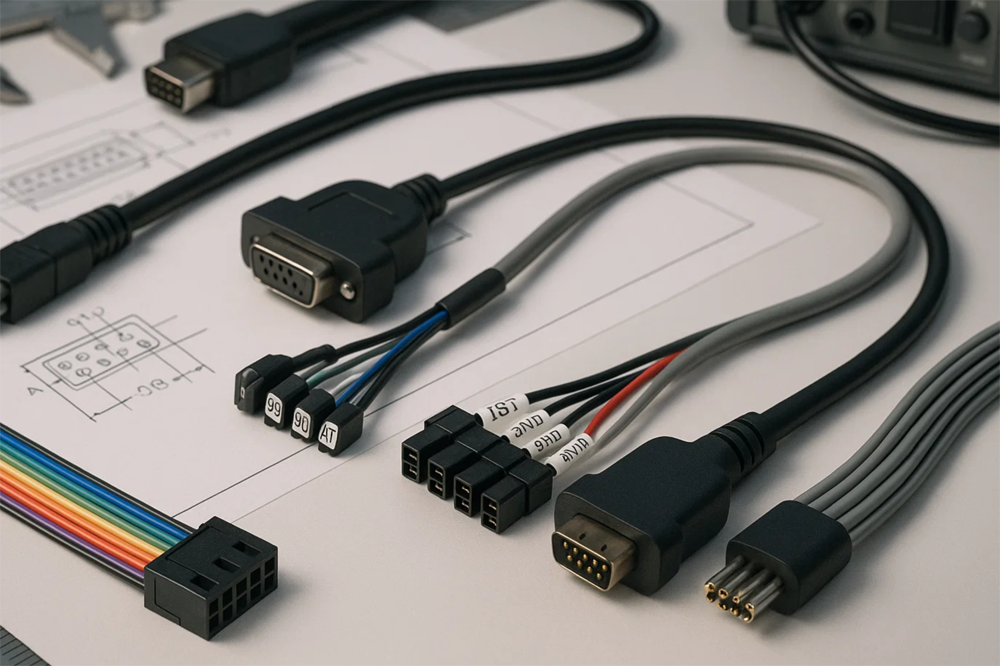
For OEM projects, the drawing should include a clear wiring table. It should define connector pin numbers, wire colors, conductor functions, shield or drain wire connection, and any open-end treatment. If the connector has a keyway or orientation mark, the drawing should make pin numbering unambiguous.
During production, the supplier should test every cable against the approved pinout. Visual inspection alone cannot confirm wiring correctness.
Weak Shielding
Shielding mistakes often cause unstable sensor signals.
Many sensor cables are used near motors, drives, pumps, relays, power cables, switching power supplies, or other electromagnetic noise sources. If the cable carries analog signals, pulse signals, encoder signals, or sensitive data, shielding may be important.
A common mistake is simply writing “shielded cable” without defining the shield structure or termination method. The supplier may not know whether to use foil shield, braid shield, foil plus braid, drain wire, one-end grounding, both-end grounding, shell termination, or pin termination.
Another mistake is assuming that shielding alone will solve every noise problem. Cable routing, grounding design, connector shell, drain wire handling, and equipment layout all affect performance.
Poor shield termination can also create inconsistency. If the drain wire is too long, poorly insulated, or connected to the wrong point, it may create short-circuit risk or reduce shielding effectiveness. If the shield is not tested, the mistake may not be found until the cable is installed in the equipment.
To avoid shielding problems, buyers should define signal type, noise source, shield type if required, grounding method, drain wire treatment, and shield continuity test requirements.
For detailed shielding guidance, see Sensor Cable Shielding Guide.
Poor Waterproofing
Waterproof cable failures often happen because buyers focus only on the connector.
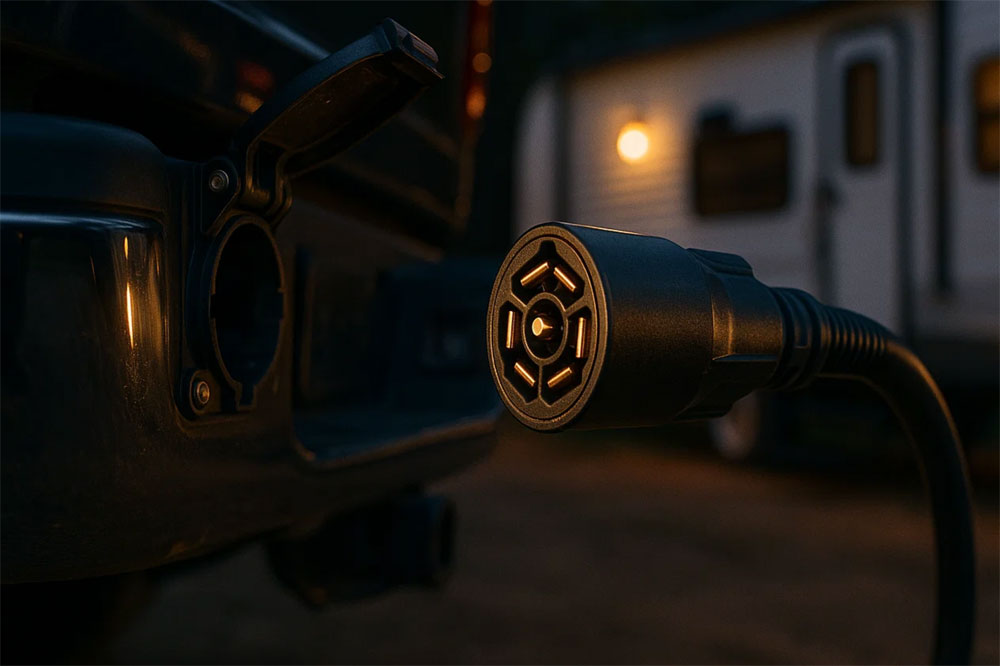
A waterproof connector does not automatically make the complete sensor cable assembly waterproof. The full structure includes connector interface, rear seal, cable jacket, overmolding, heat shrink, grommet, strain relief, and mating connector condition.
One common mistake is using vague wording such as “waterproof cable” or “outdoor cable” without defining the actual environment. A cable exposed to occasional splash water is different from one exposed to rain, washdown, mud, fertilizer, coolant, oil, or temporary immersion.
Another mistake is ignoring the rear side of the connector. Many leakage problems happen at the cable exit or rear seal, not at the front mating interface. If the cable jacket does not match the seal, or if overmolding is weak, water may enter through the rear structure.
Waterproofing can also be affected by mechanical stress. If the cable bends sharply near the connector or is pulled during installation, the seal may weaken over time.
To prevent waterproof failures, OEM buyers should define the environment, target IP level if required, cable jacket, sealing method, connector mating condition, strain relief, and sample validation process.
For more details, see Waterproof Sensor Cable Assemblies.
Wrong Cable Jacket
The wrong cable jacket can cause long-term field problems.
A sensor cable jacket should be selected according to the real operating environment. But in many projects, jacket material is chosen only by cost or copied from an old sample without review.
PVC may be suitable for many standard indoor applications. PUR may be better when the cable needs abrasion resistance, oil resistance, flexibility, or better durability. Other materials may be needed for special temperature, chemical exposure, UV exposure, or compliance requirements.
One common mistake is using an indoor cable jacket for outdoor equipment. Over time, sunlight, temperature changes, moisture, and mechanical stress may cause cracking, hardening, or degradation.
Another mistake is ignoring oil or chemical exposure. In agricultural, industrial, medical, cleaning, or machinery environments, cables may contact oils, coolants, cleaning agents, fertilizers, or disinfectants. A jacket that is waterproof may not be chemically resistant.
Cable flexibility is also important. If the cable is too stiff, it may be difficult to install or may transfer stress to the sensor connector. If it is used in moving equipment, poor flexibility can cause early failure.
Buyers should describe the operating environment and let the supplier review jacket options instead of assuming one material fits all applications.
Bad Strain Relief
Strain relief is often underestimated in sensor cable design.
The transition between connector and cable is one of the most stressed areas of a cable assembly. If this area is not protected, bending, vibration, pulling, or repeated movement can damage conductors, weaken seals, loosen terminals, or break the jacket.
This mistake is common in mobile equipment, robotic systems, agricultural machines, outdoor devices, and industrial machinery. The cable may pass electrical testing when new, but fail later because mechanical stress slowly damages the assembly.
A straight connector may not be suitable when the cable needs to exit immediately along a machine surface. An angled connector may be better, but the angle direction must be defined. A molded strain relief, protective boot, sleeve, clamp, or routing support may also be needed.
OEM buyers should not define only the cable length and connector. They should also explain how the cable is routed, whether it moves, whether it is exposed to pull force, and whether it passes near sharp edges or moving parts.
Good strain relief reduces stress, supports sealing, and improves field reliability.
Limited Testing
A major mistake is relying only on basic continuity testing.
Continuity testing is important, but it does not confirm everything. A sensor cable may pass continuity testing but still have wrong pinout, reversed polarity, poor shield termination, weak crimp, bad connector fit, wrong label, or poor sealing.
For sensor cable assemblies, the test plan should match the application risk. Common checks may include continuity, pinout, polarity, short-circuit test, shield continuity, connector fit, dimensional inspection, pull force, visual inspection, label check, and sealing review when required.
If the cable is shielded, shield continuity should be verified. If the cable is waterproof, sealing structure should be checked. If the cable uses crimped terminals, pull force may be required. If the cable has labels for assembly or service, label accuracy and position should be inspected.
Another mistake is requesting test reports after production has already started. Testing requirements should be discussed before quotation or at least before sample approval.
For a structured testing approach, see Sensor Cable Assembly Test Plan.
No Drawing Control
A physical sample is useful, but it should not replace controlled documentation.
In many OEM cable projects, the buyer sends an old sample and asks the supplier to copy it. This can work at the beginning, but it becomes risky if the copied sample is not converted into a clear drawing, wiring table, material specification, and test plan.
Without drawing control, repeat orders may drift. Connector source, cable jacket, wire color, label position, shield termination, or length tolerance may change without anyone noticing. A cable may still look similar, but it may not perform the same way.
Drawing control is especially important after sample feedback. If the first sample is revised, the final approved version should be documented. The supplier should know exactly which version is approved for production.
For OEM buyers, the approved drawing should include cable length, tolerance, connector details, pinout, wire color, material, shielding, sealing, label, test requirements, and revision information.
This helps both buyer and supplier reduce misunderstanding during repeat production.
Weak Change Control
Change control is critical for repeat orders.
Sensor cable assemblies often depend on specific connectors, cable jackets, terminals, shielding structures, labels, and production methods. If any of these changes without approval, the finished cable may look acceptable but perform differently.
A supplier may want to replace a connector because of lead time. A cable jacket may be changed because of availability. A label material may be changed to reduce cost. A shield termination method may be adjusted to simplify production. These changes may be reasonable, but they should be reviewed and approved before production.
For OEM buyers, change control should be part of the purchasing requirement. The supplier should not change approved materials, connectors, wiring, test method, or process without confirmation.
Change control is especially important for waterproof sensor cables, shielded sensor cables, M8/M12 molded cables, and cables used in regulated or high-reliability equipment.
The practical rule is simple: if a change can affect fit, function, safety, testing, durability, or customer approval, it should be controlled.
RFQ Checklist
A clear RFQ is the best way to avoid many sensor cable assembly mistakes.
| Risk Area | What OEM Buyers Should Define |
|---|---|
| Application | Sensor type, equipment type, installation location |
| Connector | Size, coding, pin count, gender, mating interface |
| Pinout | Pin numbering, wire color, signal function, polarity |
| Shielding | Shield type, drain wire, grounding, termination method |
| Waterproofing | IP target, sealing structure, rear seal, mating condition |
| Cable jacket | PVC, PUR, UV, oil, chemical, flexibility requirements |
| Strain relief | Molded boot, angled connector, sleeve, clamp, routing support |
| Testing | Continuity, pinout, polarity, shield, fit, pull, sealing |
| Labels | Part number, revision, serial number, barcode, position |
| Production control | Approved drawing, revision, test records, change control |
If some items are not confirmed, buyers should mark them as “to be confirmed.” This is better than leaving them unclear. A capable supplier can review open points and suggest practical solutions.
Final View
Most sensor cable assembly mistakes can be prevented before production starts.
For OEM buyers, the key is to avoid treating sensor cables as simple accessories. A sensor cable assembly should be defined by application, signal, connector, pinout, shielding, waterproofing, cable jacket, strain relief, testing, drawing control, and change control.
The earlier these details are clarified, the lower the risk of sample rework, production delay, field failure, and repeat order inconsistency.
A capable sensor cable supplier should help review incomplete specifications, identify hidden risks, suggest manufacturable options, and support the project from prototype to pilot and production.
At Infinite Harness, we support custom sensor cable assemblies, M8 and M12 sensor cables, shielded sensor cables, waterproof cable assemblies, and small-batch OEM wire harness projects. If you want to reduce sensor cable assembly risk, send us your drawing, sample photos, connector requirements, application notes, and testing expectations. We can help review the design and provide a practical manufacturing solution.
FAQ
What are common sensor cable assembly mistakes?
Common mistakes include unclear application requirements, wrong connectors, unclear pinout, poor shielding, weak waterproofing, wrong cable jacket, limited testing, no drawing control, and weak change control.
Why is pinout so important?
Pinout defines which signal connects to which connector pin. If the pinout is wrong, the sensor may fail, communication may be unstable, or equipment may be damaged.
Does a waterproof connector make the whole cable waterproof?
No. Waterproof performance depends on the full assembly, including connector interface, rear seal, cable jacket, overmold, strain relief, mating connector, and installation condition.
Is continuity testing enough for sensor cables?
No. Continuity testing is only one part of inspection. Sensor cable assemblies may also need pinout, polarity, short-circuit, shield continuity, connector fit, pull force, sealing, label, and visual checks.
How can OEM buyers reduce sensor cable risks?
Buyers should provide clear drawings, application details, connector requirements, pinout, material expectations, shielding and waterproofing needs, testing requirements, and change-control expectations before sample production.
Related Articles
Sensor Cable Assemblies for OEM Equipment
M8 and M12 Sensor Cable Assemblies
Sensor Cable Shielding Guide
Waterproof Sensor Cable Assemblies
Sensor Cable Assembly Test Plan