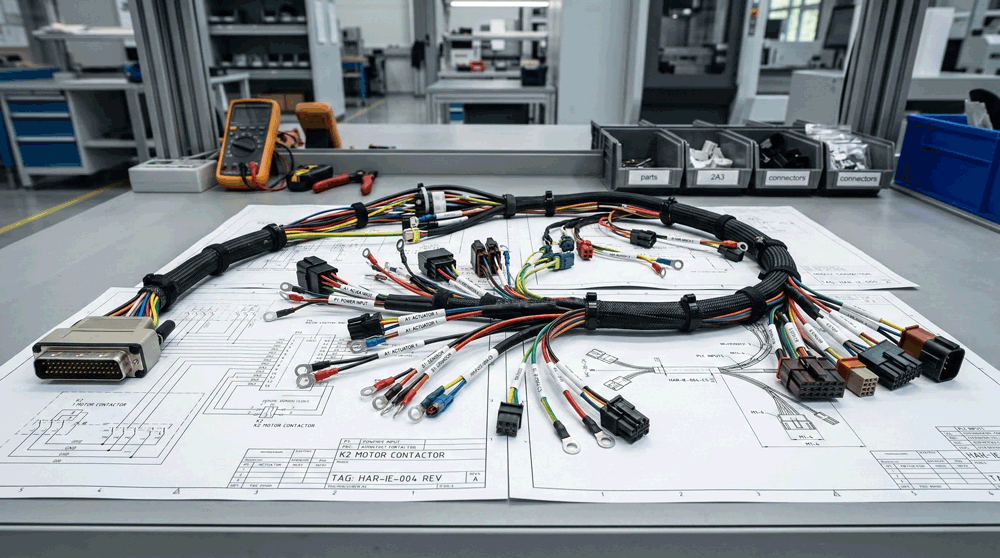
Lab Equipment Wire Harnesses
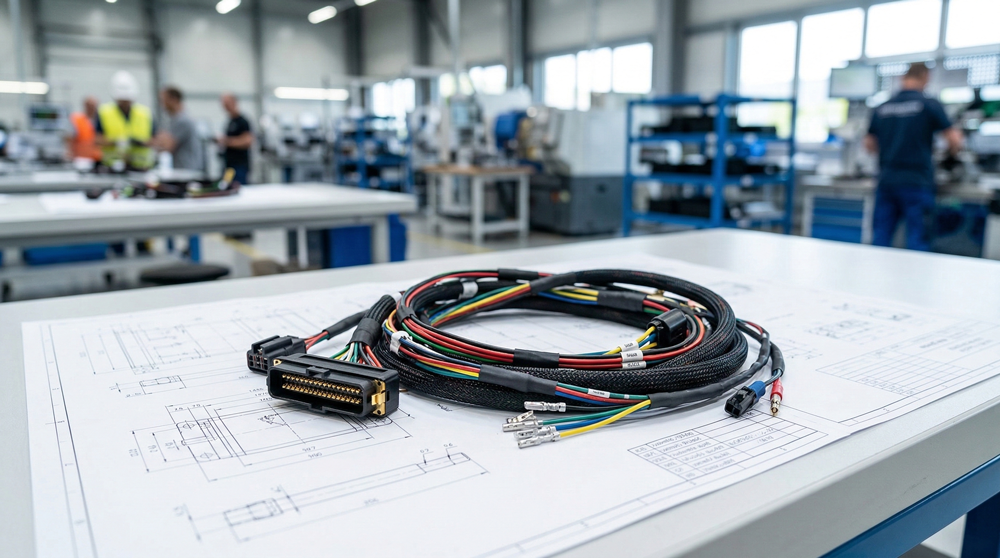
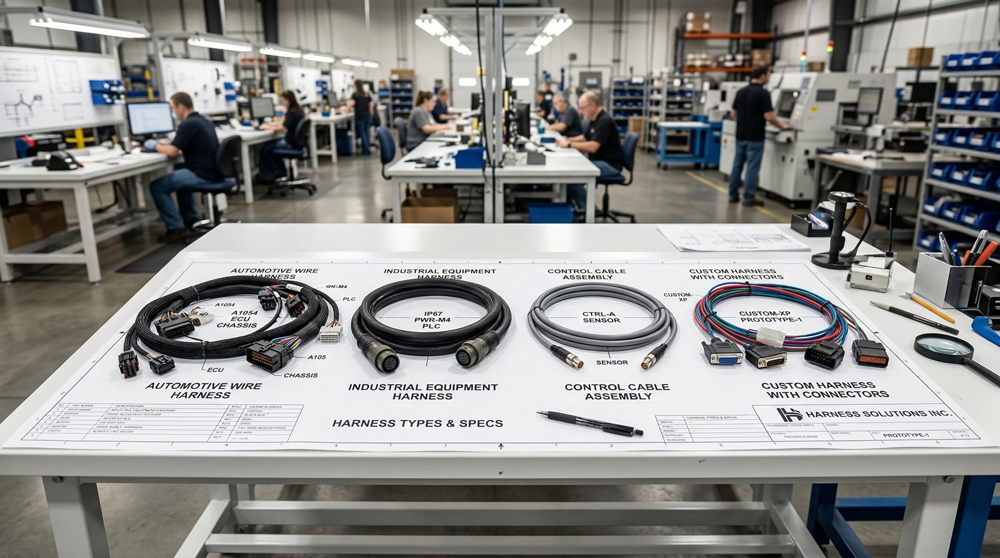
Lab equipment wire harnesses connect the electrical and electronic systems inside analyzers, laboratory automation machines, testing instruments, sample preparation devices, and specialized research equipment. These assemblies may connect control boards, motors, sensors, pumps, heaters, displays, power supplies, fans, valves, and communication modules.
For OEM buyers, the cable assembly inside a laboratory instrument is usually not a standard off-the-shelf product. The available installation space may be limited. Several modules may need to be connected inside one enclosure. Signal, power, motor, and sensor circuits may run through the same machine. The equipment may also require clear labels and easy service access because technicians need to replace modules or troubleshoot systems later.
Many laboratory equipment projects are also produced in relatively low or medium volumes. An OEM may need 20 prototypes, 100 units for an initial production run, and then periodic repeat orders. This makes supplier flexibility important. The cable assembly manufacturer must support custom production without losing drawing control, pinout accuracy, and testing discipline.
This guide explains the main considerations when sourcing custom wire harnesses and cable assemblies for laboratory equipment and analytical instruments.
Table of Contents
ToggleLab Equipment Applications
Laboratory equipment covers a wide range of machines. The wiring requirements of a small benchtop analyzer are different from those of a large automated sample processing system, but both may need custom cable assemblies.
Wire harnesses can be found in chemical analyzers, laboratory automation systems, centrifuges, incubators, sample preparation machines, fluid handling equipment, test instruments, environmental chambers, optical instruments, and research devices.
Inside these systems, one harness may supply power to motors or heaters. Another cable assembly may connect sensors to a control board. A separate communication cable may connect display modules or internal control units. Some equipment also uses several small harnesses grouped into an installation kit.
The supplier should understand the type of equipment before quotation. A drawing shows how wires connect, but the application explains why certain materials, connectors, protection methods, or testing requirements may be necessary.
For example, a cable located near a heater may need different temperature performance from a cable installed near a display. A harness routed near pumps or motors may need better noise control. A cable installed around moving mechanisms may need more flexibility and strain relief.
Understanding the equipment layout helps the supplier review the harness as part of the machine rather than as an isolated component.
Complex Internal Routing
Laboratory instruments often contain several modules inside a compact enclosure. PCBs, pumps, valves, motors, power supplies, displays, sensors, and mechanical components may all share the same internal space.
This creates routing challenges.
A wire harness that is too long may create large loops that interfere with fans, moving parts, or service access. A branch that is too short may pull on a connector. A stiff cable may be difficult to install around internal modules. A breakout point in the wrong location can force production workers to route the harness differently in each machine.
For this reason, harness dimensions should match the actual equipment layout. Total length alone is not enough. Branch lengths, breakout positions, connector orientation, and cable exit direction may all affect installation.
During prototype development, OEM engineers often adjust the mechanical layout several times. A PCB may move. A pump may be replaced. A new sensor may be added. Each change can affect the cable assembly.
The first wire harness sample should therefore be installed in the real equipment whenever possible. Installation feedback is more useful than reviewing the harness only on a table.
If the branch reaches the connector but creates tension, the design may still need adjustment. If the cable can be installed only by sharply bending it, the routing may create a future reliability problem.
A good cable assembly supplier should support these adjustments during prototype and pilot stages.
Multiple Circuits
Lab equipment often contains different electrical functions in the same machine. Power, sensor, communication, motor, heater, and control circuits may all be present.
These circuits should not automatically use the same wire construction.
Power wiring should be reviewed based on current, voltage, cable length, temperature, and voltage drop. Motor and heater circuits may have higher electrical loads. Sensor and communication circuits may be more sensitive to noise.
If a cable carries several circuit types, wire selection and routing should be reviewed carefully. In some cases, separating power and signal cables is more suitable. In other systems, multiple circuits may be combined into one custom harness to simplify assembly.
There is no single correct solution for every machine. The OEM should provide basic circuit information during RFQ review.
The supplier does not always need complete confidential electrical design data. However, knowing whether a circuit is power, sensor, motor, communication, or control helps the manufacturer understand the production requirements.
Pinout documentation is especially important in multi-circuit harnesses. Similar wire colors or repeated connector types can increase the risk of wiring errors. A controlled pinout table and 100% electrical testing help reduce this risk.
Sensor Connections
Many laboratory instruments depend on sensors. These may measure temperature, pressure, position, flow, liquid level, optical conditions, or other process parameters.
Sensor cable assemblies require stable connections because intermittent faults can create false readings or equipment alarms. A loose terminal or damaged conductor may not create a complete failure. Instead, the signal may become unstable.
The supplier should understand whether the sensor cable requires shielding, twisted pairs, specific wire colors, or special connector handling.
Shielding requirements should be defined clearly. A shielded cable is only effective when the shield is prepared and terminated according to the design. The drawing should show whether the drain wire connects to a specific pin, chassis ground, connector shell, or only one side of the cable.
Cable routing also affects sensor signal performance. A sensor cable installed next to a motor or switching power cable may face more electrical interference.
The equipment designer controls the final routing, but the cable supplier should know when the assembly carries a sensitive signal. This helps prevent inappropriate material substitutions or production assumptions.
If an OEM has experienced intermittent sensor errors, the complete cable system should be reviewed. The cause may involve crimp quality, connector retention, shielding, grounding, strain relief, or routing.
Motors, Pumps, and Valves
Laboratory automation equipment often contains small motors, pumps, valves, actuators, and other electromechanical components. These components may require custom wiring harnesses because the equipment layout and connector interfaces are specific to the machine.
Motor and pump wiring should be reviewed for current, wire gauge, connector rating, and movement. If the component creates vibration, connector locking and strain relief become more important.
Some pumps or valves may be replaced during service. In this case, the cable assembly should be easy to identify and disconnect. Labels can help technicians distinguish similar components.
Branch design is also important. A single harness may connect several valves or motors arranged in a row. The breakout positions should match the machine layout. If the branch spacing is inconsistent, installation becomes difficult.
For automated equipment, repeatability matters. The supplier should use controlled cutting, assembly, and inspection instructions so each harness matches the approved dimensions.
A hand-built prototype may work well in one machine, but production harnesses need a repeatable process.
Connector Choice
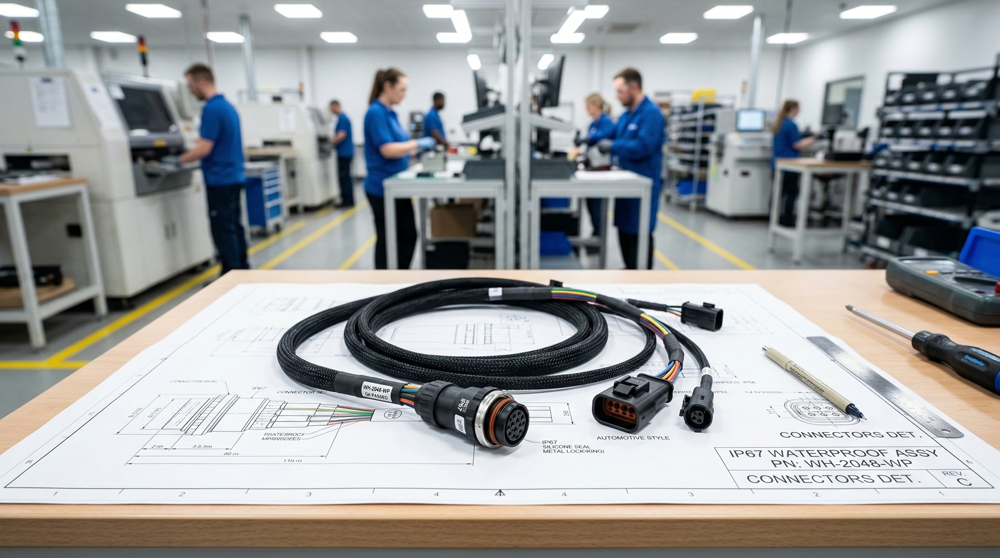
Laboratory equipment may use board connectors, circular connectors, waterproof connectors, D-sub connectors, M8/M12 interfaces, Molex, JST, TE, Hirose, or other connector systems.
Connector selection depends on space, current, mating cycles, service access, locking requirements, and environmental conditions.
Internal board connectors are often compact. Small terminals require proper crimp tooling and careful inspection. External connectors may need stronger locking or better mechanical protection.
For serviceable modules, connector accessibility matters. A connector that is secure but extremely difficult to release may slow maintenance. On the other hand, a weak latch may loosen during transportation or vibration.
Connector availability should also be considered during new product development. A specialized connector with a long lead time can delay prototype and production orders.
OEM engineers naturally focus on technical compatibility, but purchasing availability should also be reviewed before the design is frozen.
For an existing instrument, replacement harness, or supplier transition project, the supplier may need to use the exact connector because the mating interface is already fixed.
When the connector part number is unknown, an approved physical sample or clear connector photos can help with identification.
Labeling and Service
Clear identification is valuable inside laboratory equipment because a machine may contain many similar cables and connectors.
Labels can show connector names, cable part numbers, branch numbers, module names, or revision information. During original assembly, these labels help production workers connect the harness correctly. During service, they help technicians identify the correct cable.
Imagine an instrument with four similar pumps connected to the same control area. If the cables are visually identical, service technicians may need to trace each wire manually. Clear branch labels can simplify the process.
Label position matters. A label should remain visible after installation if it is intended for service use. It should not be placed at a sharp bend or in a location where it will be damaged during assembly.
Wire colors may also support identification, but color should not replace a controlled pinout and drawing.
OEM buyers should explain how the harness is used in production and service. The supplier can then understand whether simple part number labels are enough or whether branch-level identification is needed.
Clean Assembly
Laboratory and analytical instruments often require a clean and organized internal appearance. This is not only about aesthetics.
Controlled harness routing makes equipment easier to assemble, inspect, and service. Loose wires can interfere with moving parts, airflow, or module replacement. Uncontrolled cable loops may make the internal layout inconsistent between units.
Sleeves, cable ties, tubing, clips, heat shrink, and other protection methods can help organize the harness.
However, additional protection should be used for a clear reason. Adding heavy conduit to every cable may make a compact instrument harder to assemble. Excessive cable ties can create stress points. Very rigid sleeves may reduce flexibility.
The harness construction should match the equipment.
OEM buyers can help by providing product photos, routing drawings, or an approved sample. A cable supplier can manufacture more consistently when the expected installed condition is clear.
For complex harnesses, a harness board or controlled assembly fixture may help maintain branch geometry during production.
Low-Volume Production
Many laboratory equipment manufacturers do not produce consumer-electronics volumes. A specialized analyzer may be built in hundreds or a few thousand units per year. Research equipment may be produced in even smaller quantities.
This creates a sourcing challenge.
Large cable manufacturers may prefer high-volume programs and may not provide flexible support for prototype changes or low MOQ orders. At the same time, a small local workshop may support low quantities but lack controlled documentation, testing, or production consistency.
OEM buyers need a supplier that can work with custom designs and practical order quantities while still following a repeatable process.
Low MOQ production is especially useful during new product introduction. The buyer may need 10 to 20 cable assemblies for prototypes, followed by 50 or 100 pieces for pilot production.
After validation, regular production quantities can increase.
The supplier should understand the expected project path. If annual demand is available, even as an estimate, it helps with connector sourcing and material planning.
Low-volume production should still include controlled BOMs, approved drawings, pinout verification, and inspection. Small quantity does not remove quality risk.
Prototype Changes
Laboratory equipment projects often evolve during development. Cable assemblies may be revised because the enclosure changes, components move, connectors are replaced, or service feedback identifies a better routing method.
Engineering changes are normal. The problem begins when changes are not controlled.
A supplier may receive one drawing for the first sample, an email asking for a longer branch, and a message requesting a new label. If these changes are not combined into the latest controlled version, the next batch may follow outdated information.
Every approved change should be reflected in the drawing, BOM, pinout, or production notes as required.
The customer and supplier should also use clear revision identification. The approved sample should match the latest revision.
For OEMs, this is especially important when engineering, purchasing, and production teams communicate with the supplier separately. All teams should refer to the same approved file.
A good prototype process does not prevent changes. It makes changes traceable.
Testing
Electrical testing is a basic requirement for custom wire harness production.
For most laboratory equipment harnesses, continuity, short-circuit, and pinout testing should be considered. A multi-branch harness with several similar connectors can create serious assembly problems if even one circuit is incorrect.
Depending on the application, additional tests may include HiPot, insulation resistance, shielding continuity, terminal pull force, or functional testing.
The OEM should define these requirements during RFQ review.
Visual inspection is also necessary. The supplier should check connector orientation, branch dimensions, wire colors, labels, sleeve position, heat shrink, and protection materials.
A harness can pass an electrical test and still be difficult to install because one branch is too short.
For repeat orders, the supplier should use the approved drawing and inspection criteria as the production reference.
If the OEM requires test records or special inspection documentation, this should be discussed before quotation because it affects process and lead time.
Replacement Harnesses
Laboratory instruments can remain in service for many years. Aftermarket and technical service teams may need replacement harnesses for older machines.
The original harness drawing may not always be available. Sometimes the OEM only has an old sample or a cable removed from equipment.
A custom wire harness manufacturer can often start from the sample. The supplier may measure dimensions, identify connectors, trace pinout, record labels, and create a preliminary drawing.
However, an old harness should be reviewed carefully. It may have been repaired or modified during service. It may not represent the latest production revision.
The OEM should test the replacement sample in the actual equipment and approve the final documentation.
Once approved, the replacement harness drawing and BOM should be controlled for future orders.
This allows the service team to reorder the part without sending an old sample every time.
Choosing a Supplier
Selecting a cable assembly supplier for laboratory equipment requires more than checking unit price.
The supplier should be comfortable with custom designs, low or medium quantities, prototype changes, and technical communication. They should understand connector identification, pinout control, labeling, and testing.
During RFQ review, a good supplier should ask questions. Where is the harness used? Does it carry power, signal, or mixed circuits? Are any cables moving? Is shielding required? What is the expected quantity? What tests are needed?
These questions are not unnecessary delays. They help identify production risks.
The supplier should also be able to manage revision changes. Laboratory equipment designs may evolve, and the cable documentation needs to remain aligned with the approved machine.
Material sourcing capability is another consideration. If connectors or special cables are difficult to obtain, the supplier should identify the risk early.
For OEM buyers, the right supplier is a manufacturing partner that can support the project from sample and prototype through repeat production.
How Infinite Possibilities Supports Lab Equipment OEMs
Infinite Possibilities supports custom wire harness and cable assembly projects for laboratory, diagnostic, testing, industrial, and specialized OEM equipment.
We work with drawings, BOMs, samples, photos, sketches, and incomplete project information. For early-stage programs, we can help review connector requirements, harness structure, branch layout, and pinout information before sample production.
We support prototype builds, low MOQ production, pilot runs, and repeat orders. Our manufacturing capabilities include terminal crimping, soldering, shielding, braided sleeve, heat shrink, labeling, overmolding, and other custom assembly requirements.
For production control, we support 100% continuity and pinout testing, visual inspection, and customer-specific testing requirements.
If you are developing a laboratory analyzer, automation system, testing instrument, or specialized device, send us the available drawings, samples, application information, target quantity, and testing requirements.
We can review the project and help you move from RFQ to prototype and production.
Final View
Lab equipment wire harnesses need to support complex internal routing, multiple electrical functions, reliable connections, and repeatable production.
The correct cable assembly depends on the equipment. Sensor circuits may need noise control. Motors and pumps need suitable wire and connector ratings. Compact instruments require precise routing. Serviceable machines benefit from clear labels and organized harness design.
For OEM buyers, the most effective sourcing process begins with application information, controlled pinout data, connector details, and clear testing requirements. Prototype samples should be installed in the actual equipment so routing and branch dimensions can be validated.
Low-volume laboratory equipment projects still need production discipline. Drawings, BOMs, revisions, and electrical testing help ensure that the first sample and future repeat orders remain consistent.
A reliable cable assembly supplier should understand both the harness and the equipment around it. That is the foundation for stable production and long-term supply.
FAQ
1. What wire harnesses are used in laboratory equipment?
Laboratory equipment may use power harnesses, sensor cables, motor and pump wiring, communication cables, PCB interconnects, and multi-branch custom wire harnesses.
2. Do lab equipment cables need shielding?
Some cables may need shielding, especially sensor, analog, or noise-sensitive signal circuits. The requirement depends on signal type, equipment layout, and grounding design.
3. Can lab equipment wire harnesses be produced in low quantities?
Yes. Many laboratory equipment projects require prototypes, pilot batches, or low-volume production. A custom wire harness supplier can support these order sizes while maintaining controlled documentation and testing.
4. What should an OEM provide for quotation?
Useful information includes drawings or samples, equipment application, connector part numbers, pinout, wire specifications, quantity, testing requirements, labels, and packaging needs.
5. Can a supplier rebuild an old laboratory equipment harness?
Yes. A supplier can often review an old sample, measure the harness, identify connectors, trace wiring, and prepare a preliminary drawing. The final sample and documentation should be approved before production.
CTA
Need custom wire harnesses for laboratory equipment?
Send us your drawings, samples, application details, target quantity, connector information, and testing requirements. Our team can review your project and support prototype, pilot, or repeat production.
Contact Infinite Possibilities for Lab Equipment Wire Harnesses
Related Articles
- Diagnostic Cable Assemblies
- Patient Monitoring Cable Assemblies
- Test Equipment Cable Assemblies
- Low MOQ Cable Assemblies
Series
Medical, Laboratory and Test Equipment Cable Assembly Guide
This article is part of a focused application series for OEM buyers sourcing custom cable assemblies and wire harnesses for diagnostic, patient monitoring, laboratory, and test equipment projects.