Diagnostic Cable Assemblies
Diagnostic cable assemblies are used in equipment where stable signal transmission, clean routing, reliable connectors, and consistent production quality matter. For OEM buyers in medical diagnostic devices, laboratory instruments, test equipment, and healthcare-related systems, a cable assembly is rarely just a basic cable. It is part of the internal structure that supports measurement accuracy, equipment reliability, user safety, serviceability, and long-term production stability.
Many diagnostic and laboratory devices require custom cable assemblies because standard cables cannot always meet the mechanical layout, connector interface, signal requirements, or assembly process of the equipment. A diagnostic analyzer may need compact internal routing. A portable testing device may need flexible cable exits. A lab instrument may require clean labeling and repeatable connector orientation. A medical testing device may require stable low-noise signal transmission and controlled documentation.
For OEM customers, the real challenge is not only finding a supplier that can assemble wires and connectors. The challenge is finding a manufacturer that can understand the application, review incomplete drawings, support prototypes, manage low-volume production, and control quality before parts are shipped.
This article explains what OEM buyers should consider when sourcing diagnostic cable assemblies and custom wire harnesses for laboratory, testing, and medical-related equipment.
Table of Contents
ToggleWhere They Are Used
Diagnostic cable assemblies are used in many types of equipment, not only in large hospital systems. They may be found inside laboratory analyzers, testing instruments, patient-side modules, sample preparation devices, handheld diagnostic tools, monitoring equipment, imaging-related devices, and compact healthcare electronics.
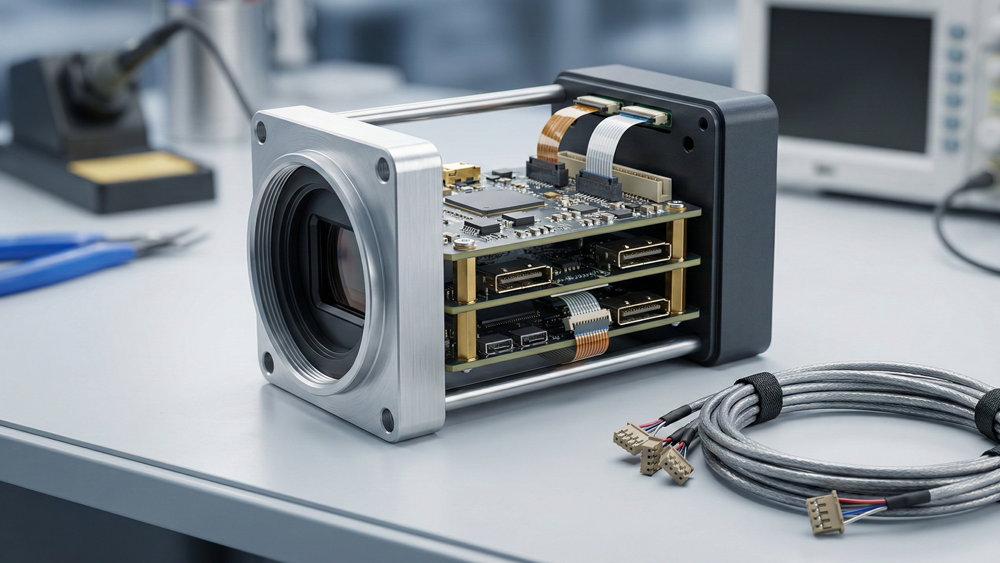
In laboratory equipment, cable assemblies often connect sensors, control boards, motors, displays, pumps, fans, power modules, and user interface components. In medical diagnostic equipment, they may carry low-level signals, power, communication data, or control signals between modules. In portable devices, they may also need to support repeated handling, compact routing, and lightweight construction.
The application determines the design. A cable assembly used inside a fixed analyzer has different requirements from one used in a handheld diagnostic device. A harness inside a protected enclosure may not need the same jacket material as an external service cable. A signal cable connected to a sensor may need shielding or controlled routing, while a power harness may need proper wire gauge and insulation.
For this reason, an OEM buyer should not define the cable only by length and connector type. The supplier also needs to understand how the cable is used inside the equipment.
Key Requirements
The first requirement for diagnostic cable assemblies is electrical stability. Many diagnostic devices depend on consistent readings, clean signal paths, and reliable internal connections. If a cable assembly has poor crimping, unstable shielding, wrong pinout, or inconsistent materials, the issue may not appear as a simple open circuit. It may appear as noise, intermittent error, abnormal readings, communication failure, or equipment instability.
Mechanical fit is equally important. Diagnostic and lab equipment often has compact internal layouts. Cables may need to pass through narrow spaces, bend around modules, or connect to boards in a fixed direction. If the cable is too stiff, too long, too short, or routed incorrectly, installation becomes difficult and assembly quality may suffer.
Clean appearance and controlled labeling also matter. In many OEM devices, service teams need to identify cable assemblies during maintenance or repair. Clear labels, wire colors, connector orientation, and packaging can reduce assembly mistakes. This is especially important when several similar harnesses are installed inside the same equipment.
Material selection should match the application. Some devices need flexible wires for repeated movement. Some need shielded cable for signal protection. Some need jacket materials that support temperature resistance, cleanliness, or chemical exposure. Others need compact wire routing and small-pitch connectors.
Signal and Power
Many diagnostic devices include both signal and power circuits. These circuits should not be treated the same way. Power wires are usually selected based on current, voltage, temperature rise, voltage drop, and insulation requirements. Signal wires may be selected based on noise sensitivity, shielding, impedance, grounding method, or connector quality.
In some equipment, the cable assembly may carry sensor signals that are sensitive to interference. In that case, shielding, twisted pairs, grounding design, and routing path may affect performance. A supplier should not guess these requirements from appearance alone. The OEM buyer should explain what the cable carries and whether the signal is sensitive.
For power connections, wire gauge and terminal quality are important. A wire that is too small may create heating or voltage drop. A poor crimp may pass a simple continuity test but fail under vibration, repeated handling, or long-term use. A diagnostic device may not be high-power equipment, but internal power stability still matters.
When power and signal are combined in one harness, separation and routing should be reviewed carefully. The supplier should understand whether the harness carries mixed circuits and whether any special protection or layout control is required.
Connector Selection
Connector selection is one of the most important parts of a diagnostic cable assembly project. The connector must match the equipment interface, fit the internal space, support the required electrical performance, and remain stable during use.
Many diagnostic devices use compact connectors because internal space is limited. Small connectors can save space, but they require careful terminal crimping, correct tooling, and good inspection. If the connector pitch is small, a wrong terminal or weak crimp can create reliability problems that are difficult to detect visually.
Locking features should also be considered. Some internal connectors need secure latches to prevent loosening during transportation, vibration, or service. Other connectors may need to be easy to disconnect during maintenance. The right choice depends on the equipment structure and service process.
Connector availability should be checked early. If a specific connector has a long lead time or high MOQ, it can delay the entire cable assembly project. For new designs, the buyer may have flexibility to consider more available connector options. For existing devices or replacement parts, the connector may need to match the current interface exactly.
Shielding and Noise
Shielding is often important in diagnostic cable assemblies, especially when the cable carries sensor signals, analog signals, communication signals, or low-level measurements. However, shielding should not be added blindly. It should be based on the actual signal type, equipment layout, grounding method, and noise environment.
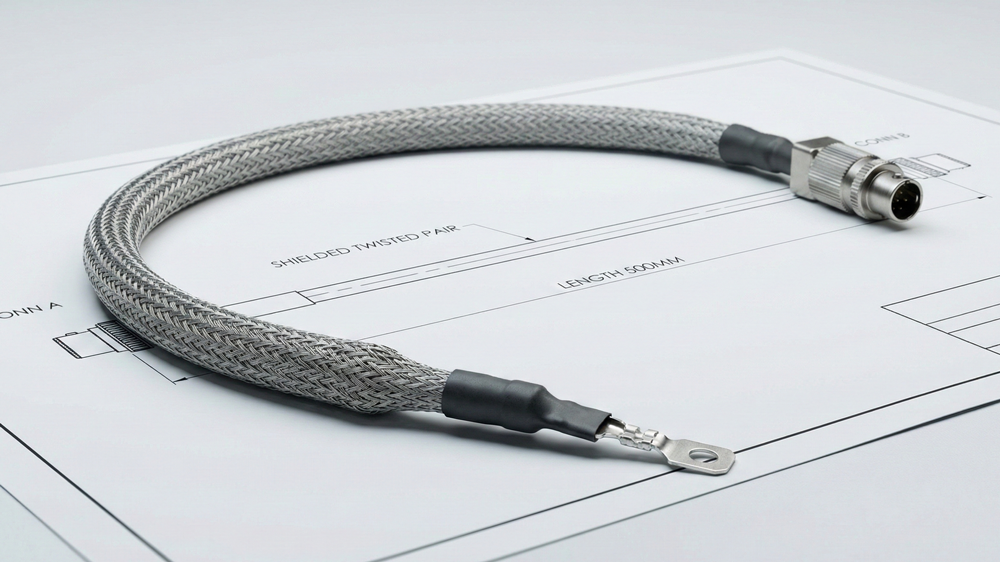
A shielded cable can help reduce electromagnetic interference, but only if the shield is terminated correctly. Poor shield termination may reduce the benefit or even create new problems. The supplier should understand whether the shield should be connected at one end, both ends, or according to a customer-specific design.
Routing also matters. A well-designed cable can still perform poorly if it is routed too close to motors, power lines, switching components, or noisy circuits. For OEM buyers, cable design and equipment layout should be reviewed together when signal stability is critical.
If the buyer has experienced noise, unstable readings, or intermittent signal errors, this should be communicated clearly. The supplier may then review shielding, wire type, grounding, connector quality, and strain relief more carefully.
Flexibility and Routing
Cable flexibility affects both assembly and long-term reliability. A cable assembly used in a compact diagnostic device may need to bend during installation. A cable used in a movable module may need to withstand repeated flexing. A cable used in a handheld device may need better strain relief and a softer jacket.
The minimum bend radius should be considered during design. If a cable is forced into a tight bend, it may create stress on conductors, insulation, terminals, or connector exits. Over time, this can lead to intermittent failure. In diagnostic equipment, intermittent problems are especially difficult because they may not appear during basic testing.
Routing should also be practical for production workers. If the cable can only be installed in one difficult position, assembly time increases and mistakes become more likely. A small adjustment in branch length, connector orientation, or label location may improve assembly efficiency without changing electrical function.
For OEM projects, it is useful to test the first sample inside the actual device. A cable that looks correct on the table may still need adjustment after installation.
Documentation Control
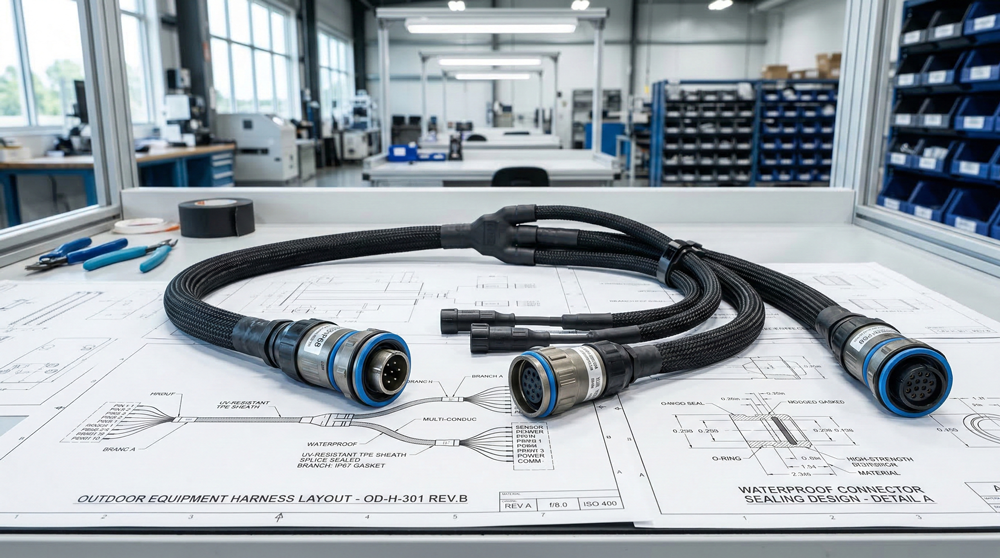
Diagnostic cable assembly projects need clear documentation, even when the order quantity is not large. A controlled drawing, BOM, pinout table, label rule, and test requirement help the supplier build the same product repeatedly.
This is especially important for OEM buyers that start from prototypes. In the early stage, the cable may be adjusted several times. If changes are not documented, the approved sample may not match the drawing. Later, the supplier may build according to an outdated file, and the buyer may receive parts that do not match the latest device version.
A good production package should include total length, branch dimensions, connector part numbers, terminal information, wire specifications, pinout, shielding notes, label requirements, testing requirements, and packaging instructions. If some details are still being finalized, they should be listed as open items rather than left unclear.
Revision control protects both sides. It helps the buyer manage engineering changes, and it helps the supplier avoid production mistakes.
Prototype and Low MOQ
Many diagnostic equipment projects begin with low-volume needs. An OEM may need a few pieces for prototype testing, a small pilot batch for validation, and then regular production after the equipment design is approved. Some laboratory and medical-related devices may never reach extremely high volume, but still require reliable custom manufacturing.
Low MOQ support is valuable in these projects because it allows the buyer to validate design before committing to large quantities. A supplier that supports prototype and pilot production can help the customer move from early design to stable production without forcing unnecessary inventory.
However, low MOQ does not mean low discipline. Even for a small batch, the supplier should confirm pinout, connector details, wire specifications, labeling, and testing. If the first small batch is not controlled, the approved design may become unclear later.
For diagnostic cable assemblies, low-volume production should still follow a repeatable process. The goal is to make small quantities without losing documentation and quality control.
Testing and Inspection
Testing is a key part of diagnostic cable assembly production. At minimum, most custom cable assemblies should be checked for continuity, short circuits, and correct pinout. Depending on the design, additional testing may include HiPot testing, insulation resistance testing, shielding continuity, pull force verification, or functional checks.
Visual inspection should not be underestimated. Connector orientation, label accuracy, wire color, sleeve position, strain relief, and packaging all affect how the cable is installed and used. In compact diagnostic equipment, a small assembly difference may create a fit problem.
The buyer should define testing requirements before quotation. If the supplier assumes only basic continuity testing while the buyer expects additional inspection, the quotation and lead time may not match the real requirement.
For OEM projects, testing records may also be important. A supplier that can provide consistent inspection results helps the buyer control incoming quality and reduce assembly problems.
Service and Replacement
Diagnostic equipment may require replacement cable assemblies after the product has been shipped. Service teams may need spare parts for repair centers, distributors, or field technicians. In this situation, the cable assembly must be easy to identify, pack, and install.
Labels and packaging become more important for service parts. A service technician may not have the same knowledge as the original assembly team. If two cable assemblies look similar but have different pinout or length, clear part numbers and packaging can prevent mistakes.
For older equipment, drawings may be incomplete or lost. A supplier may need to rebuild the cable from an old sample, photos, or a damaged part. This makes documentation control especially valuable. Once the replacement cable is approved, the drawing and BOM should be saved for future reorders.
A well-managed replacement cable program helps OEMs support customers longer and reduce downtime in the field.
Supplier Selection
When selecting a supplier for diagnostic cable assemblies, OEM buyers should look beyond unit price. The supplier should be able to review technical details, ask relevant questions, support small batches, manage connector sourcing, and perform reliable testing.
A supplier that only copies the visible cable structure may miss important requirements. A better supplier will ask about application, signal type, current, voltage, environment, flexibility, shielding, testing, and packaging. These questions may take more time at the beginning, but they reduce risk later.
Communication is also important. Diagnostic and laboratory equipment projects often involve engineering changes. The supplier should document assumptions, update drawings, and confirm revisions clearly. If the supplier cannot manage changes during prototype development, production may become unstable.
The best supplier is not always the one with the lowest quote. It is the one that can help the OEM move from concept, sample, or old harness to a stable production-ready cable assembly.
How Infinite Possibilities Supports OEMs
Infinite Possibilities supports OEM customers with diagnostic cable assemblies, medical-related wire harnesses, laboratory equipment cable assemblies, and custom wiring harness projects. We work with customers that need prototype builds, low MOQ production, replacement parts, and repeat manufacturing support.
For diagnostic equipment projects, we can review drawings, samples, photos, sketches, and incomplete technical information. Our team can help identify connector requirements, prepare preliminary BOMs, support sample development, and provide production support after approval.
We support 100% continuity and pinout testing, visual inspection, labeling review, and customer-specific packaging requirements. For projects with shielding, compact routing, low-volume demand, or old sample replacement needs, we can help customers organize the technical information before production.
If you need custom cable assemblies for diagnostic, laboratory, or medical-related equipment, send us your drawings, sample photos, application details, quantity, and testing requirements. We can review the project and help you move from RFQ to prototype or production.
Final View
Diagnostic cable assemblies require more than basic wire cutting and connector assembly. They are part of equipment where signal stability, compact routing, connector reliability, documentation, and testing all matter. For OEM buyers, a good cable assembly should fit the equipment, support the electrical function, pass inspection, and be repeatable in future orders.
The best sourcing process begins with clear application information. The supplier should know where the cable is used, what signals or power it carries, what connectors are required, how it is installed, and what testing is expected. If the project starts from a sample or incomplete drawing, the supplier should help identify missing details and build a controlled production package.
For diagnostic and laboratory equipment, custom cable assemblies often need low MOQ support, prototype flexibility, and stable quality control. A reliable supplier helps the OEM reduce development risk, support service needs, and maintain consistent production.
FAQ
1. What are diagnostic cable assemblies?
Diagnostic cable assemblies are custom cables or harnesses used in diagnostic, laboratory, testing, or medical-related equipment. They may connect sensors, control boards, displays, power modules, pumps, motors, or communication interfaces.
2. Do diagnostic cable assemblies need shielding?
Some do, depending on the signal type and equipment environment. Sensor signals, analog signals, and noise-sensitive circuits may require shielding, twisted pairs, or specific grounding methods. The requirement should be confirmed during design.
3. Can diagnostic cable assemblies be produced in low MOQ?
Yes. Many diagnostic and laboratory equipment projects require prototype builds, pilot batches, or small-volume production. Low MOQ support is useful when the equipment is specialized or still in development.
4. What information is needed for a quotation?
Useful information includes drawings, samples or photos, application, connector details, pinout, wire specifications, quantity, testing requirements, labeling requirements, and packaging needs.
5. Can a supplier build from an old sample?
Yes. A supplier can review an old sample, identify connectors, measure dimensions, trace wiring, and prepare a preliminary drawing. The customer should approve the final drawing, pinout, and sample before production.
CTA
Need diagnostic cable assemblies for OEM equipment?
Send us your drawings, sample photos, application details, target quantity, connector information, and testing requirements. Our team can review your project and help you move from RFQ to prototype or low-volume production.
Contact Infinite Possibilities for Diagnostic Cable Assemblies