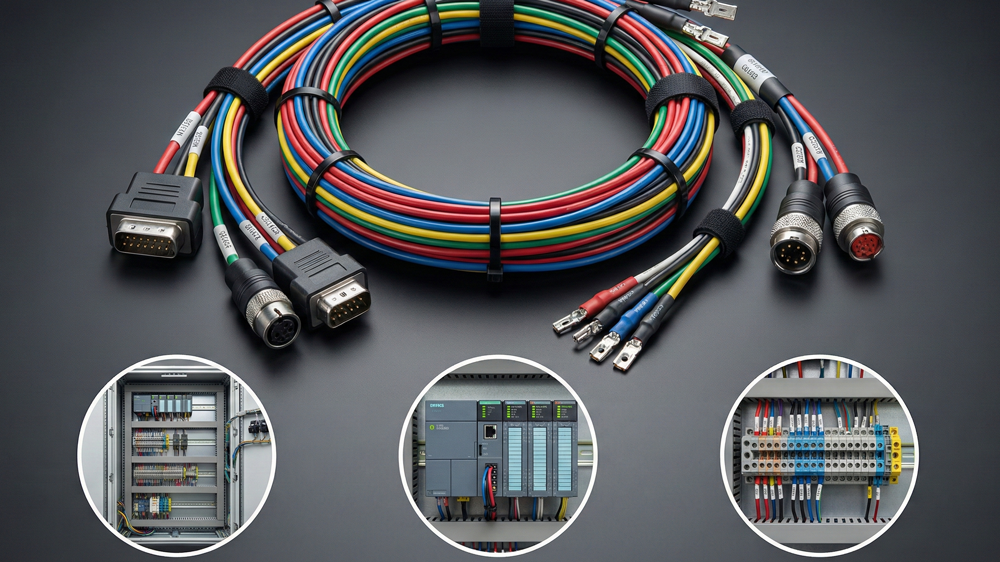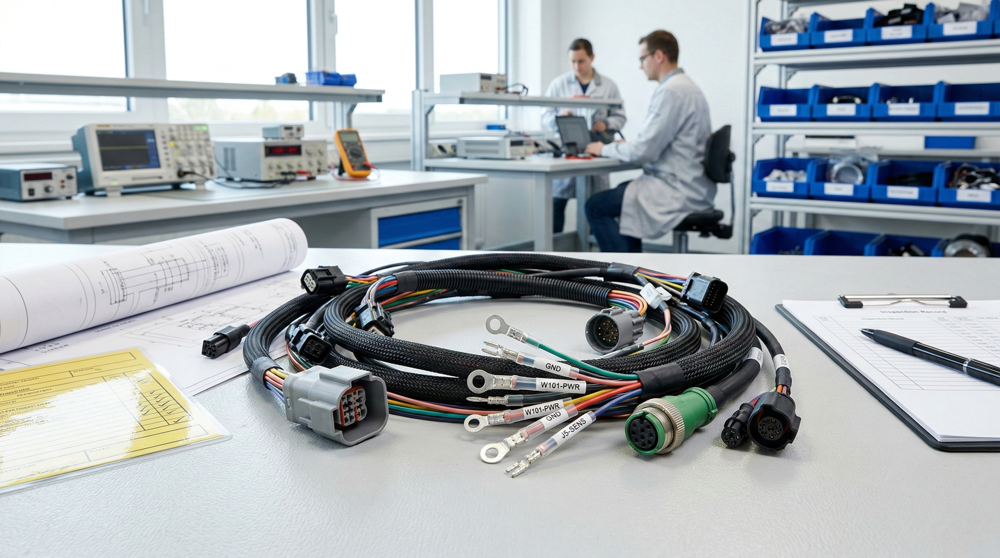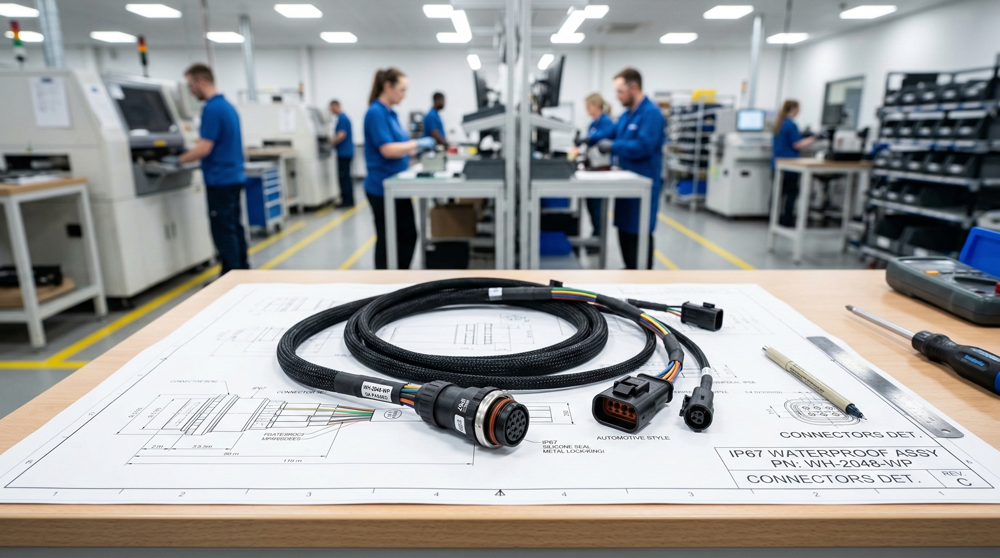
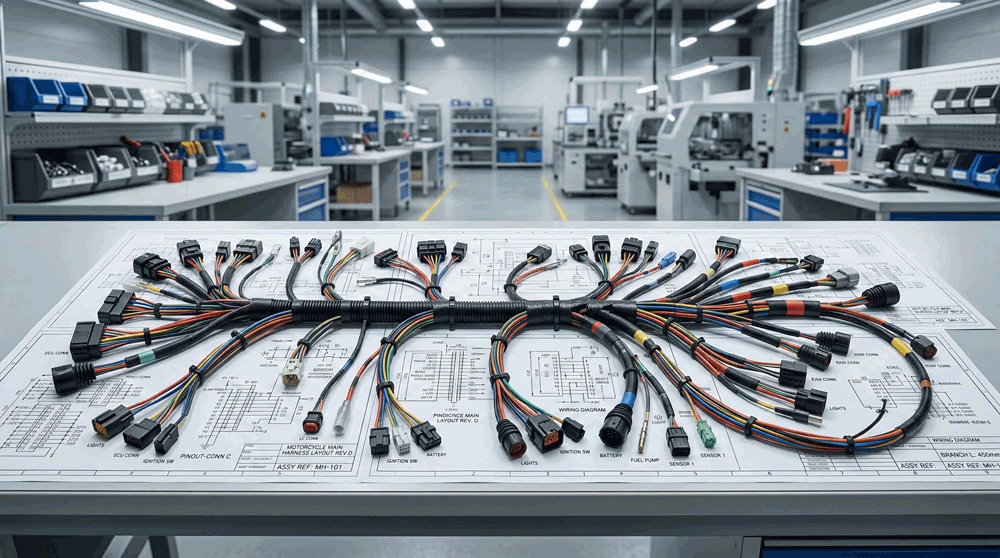
How OEM buyers manage cable assembly ECN and revision changes has a direct effect on sourcing stability, launch timing, and production accuracy. How OEM buyers manage cable assembly ECN and revision changes often determines whether a project moves forward with controlled updates or drifts into a situation where drawings, labels, materials, and factory assumptions no longer match the same product baseline.
In OEM cable assembly programs, revision control is rarely just an engineering paperwork issue. It affects quotations, sample approval, pilot timing, incoming inspection, packaging, traceability, and field service. A small connector update, label change, routing adjustment, or cable substitution can look minor on paper, yet still create real risk if the change is not released, communicated, and implemented cleanly across the buyer team and the factory. That is why ECN and revision control should be treated as a business-control process, not just a drawing process.
Table of Contents
ToggleWhy Changes Matter
Cable assemblies are especially sensitive to revision drift because the product definition is spread across more than one type of information. A finished assembly is not defined only by the drawing. It is also defined by the BOM, cable construction, connector details, labels, packaging logic, protection materials, test expectations, and sometimes customer-specific notes or service requirements. If even one of those elements moves while the others stay behind, the project can quickly become inconsistent.
This is why ECN control is so important in OEM work. The factory may still be building a cable assembly that looks almost the same as before, but the actual approved product state may already be different. A connector suffix may have changed. A heat-shrink marker may have been updated. A breakout dimension may have moved. A packaging label may now require a different part reference. Each of these changes can affect production, receiving, or service even when the electrical function appears unchanged.
For procurement teams, this means change control is not something to leave entirely to engineering. If the revision status is unclear, supplier quotations become less reliable, pilot lots become harder to interpret, and incoming inspection loses a stable reference. For quality teams, poor ECN control increases the chance of mixed lots or misidentified stock. For project managers, it creates the exact kind of launch noise that looks small at first and then consumes weeks of attention later.
Define the ECN Scope
Not every cable assembly change deserves the same level of control, but every meaningful change does need a defined scope. One of the most common mistakes in OEM projects is treating all changes informally because the team believes the product is simple.
A stronger approach starts by asking what the change actually affects. Does it affect fit, function, appearance, routing, label identification, test method, packaging, traceability, or service replacement? Does it affect the supplier’s material sourcing path? Does it affect how incoming inspection will recognize the correct build? Does it affect which lots are still acceptable? If the answer is yes to any of these, the change should be visible in a formal control path.
This does not mean the business needs heavy bureaucracy for every note cleanup or drafting improvement. It means the team should be able to separate document housekeeping from product-impacting revision activity. A connector part-number correction with no physical change may need one type of control. A cable construction update or label relocation may need another. But neither should disappear into email history with no defined ownership.
When the scope of change is clear, the release path becomes much easier to manage because the team knows what must move together.
Define the Baseline
Before a buyer can manage revision changes properly, the current baseline must be defined clearly. In many projects, that sounds easier than it really is.
The working baseline should include the active drawing revision, the approved BOM, current label format, packaging requirement, test expectation, and any linked work instructions or controlled notes that influence the delivered assembly. If some of those items still live outside the formal release structure, the baseline is weaker than it appears. That weakness often stays hidden until the next ECN arrives.
This is one reason revision confusion is so common. Engineering may think the current version is Rev C because the drawing says so. Procurement may still be ordering against a quotation package based on Rev B plus email comments. The supplier may be building according to Rev C drawing dimensions but still using a Rev B label format because nobody issued the packaging update formally. From a distance, the project looks current. In reality, the baseline is fragmented.
A disciplined ECN process therefore begins by stabilizing what “current” actually means. If the baseline itself is fuzzy, every new revision makes the problem worse.
Separate Revision Types
A useful habit for OEM buyers is separating revision activity into practical categories. This makes it easier to decide how much control, communication, and production action is needed.
Some revisions are drawing-only clarifications. They improve notes, terminology, or references without changing the delivered part. Some revisions are material-impacting. They change a connector, cable type, protective material, or approved alternate logic. Some revisions are layout-impacting. They change dimensions, breakouts, labels, or routing-related features. Some revisions are operational. They change packaging, identification, inspection points, or shipment records. In real cable assembly programs, those differences matter because not every revision should trigger the same response.
A drawing clarification may require document refresh but not inventory segregation. A label-content change may require both document refresh and warehouse awareness. A cable-material change may require sample confirmation, pilot review, and a stronger effective-date decision. Without this kind of separation, teams often overreact to small changes and underreact to meaningful ones.
For OEM buyers, the goal is not to create categories for their own sake. The goal is to match control effort to actual program risk.
Set the Effective Date
One of the most important ECN decisions is not only what changes, but when the new revision becomes active. Poor effective-date control is one of the fastest ways to create mixed assumptions in production.
A cable assembly revision can become effective by date, by purchase order, by lot, by stock depletion, by pilot approval, or by explicit release notice. The right method depends on the project. But whichever method is used, it should be visible enough that engineering, procurement, quality, and the supplier all reach the same answer when they ask, “Which version should be built now?”
This matters especially when old inventory, in-process material, or open purchase orders already exist. If the buyer approves a new revision but does not define the transition boundary, the supplier may try to use remaining old material on some orders while new assumptions appear on others. The buyer then ends up with mixed stock under one part number, and incoming inspection has to guess which lots are actually acceptable.
Strong ECN control therefore links the technical change to a commercial and operational cutover rule. That rule should answer at least three questions: when does the new version start, what happens to old material, and how will the first new lots be identified? Without those answers, the revision is only half-controlled.
Align the Documents
An ECN is only effective when all linked documents move together. This is where many projects fail quietly.
A cable assembly change may appear first in the drawing, but the drawing is rarely the only place that must change. The BOM may need updating. Label references may need updating. Packaging documents may need updating. Supplier quotations, internal item masters, incoming inspection references, first article criteria, or service references may need updating too. If one of these stays behind, the project can remain operationally split even though the engineering release is technically complete.
This is why OEM buyers should think of revision changes as document families, not single files. If a new cable jacket is approved, then the BOM, description, supplier material basis, and perhaps even packaging identification may all need alignment. If a label changes, then the drawing, label artwork, incoming inspection criteria, and service documentation may all need alignment. The more visible that document family is, the less likely the project is to drift.
This is also where the broader topic of Cable Assembly Change Control and Production Readiness becomes important. Production readiness is weak when document alignment is weak. The ECN process is how that alignment is protected.
Inform the Supplier
A revision is not truly released just because the buyer’s internal system is updated. The supplier has to understand the change, its effective timing, and what exactly is expected in production. This is where communication discipline matters.
A strong change notice to the supplier should do more than attach a new drawing. It should state what changed, why it matters, what the active revision now is, what the first effective order or lot will be, whether old stock remains acceptable, and whether any sample, pilot, or approval step is required before normal production continues. If the buyer expects the supplier to respond with acknowledgment or open questions, that should also be explicit.
This matters because suppliers often work on multiple jobs in parallel, and many cable assembly changes look deceptively small. If the change is communicated too casually, the factory may assume it can roll the new version in later, or it may implement only the most visible part of the update. That is how mixed label versions, outdated sleeves, or partial material transitions enter the project.
Good supplier communication reduces that risk by making the change visible as a controlled production event rather than an informal update.
Use Revision Status Clearly
Many OEM teams underestimate how much confusion comes from weak revision status language. A drawing may have a new revision letter, but the business still needs to know whether that revision is informational, sample-only, pilot-only, or fully released for production.
This is why a clear revision status framework is useful. A revision may be in engineering review. It may be approved for sample build. It may be approved for pilot only. It may be released for new production orders but not yet for service stock. It may be released with conditions pending closure of labels or packaging updates. These distinctions help prevent the common mistake of assuming that every new revision is automatically ready for unrestricted ordering.
For example, a cable-material change may be approved for pilot confirmation before mass production use. A label correction may be released for immediate production if no physical validation is needed. A routing adjustment may require a first article review before the new revision can become standard. When revision status is explicit, each team knows what action is actually allowed.
That clarity protects procurement from ordering too early, protects the supplier from building ahead of approval, and protects quality from inspecting against the wrong expectation.
Control Old Inventory
Revision changes become much harder when existing stock is already in the system. That is why OEM buyers should review old inventory as part of revision management, not after the fact.
Old inventory can exist in several forms. It may be finished goods at the supplier. It may be in-transit stock. It may be partially built work in progress. It may be label stock, packaging stock, or service inventory. If the ECN affects any of those items, the team should decide whether they remain usable, need rework, should be segregated, or must be frozen.
This is especially important when the revision change is visible to the warehouse or to the customer. A new label format, packaging identifier, or part description can make old stock operationally different even if the physical assembly still functions correctly. Likewise, a connector or cable change can make old and new lots commercially non-equivalent even if they appear interchangeable at a glance.
That is why effective-date control and inventory control belong together. A revision that ignores old inventory is not really a controlled transition.
Link ECN to Pilot
Some cable assembly changes should not move directly from drawing release into normal production. They should pass through a controlled pilot or first-article confirmation stage first.
This is especially true for changes involving materials, routing, labels in service-critical positions, protection details, or anything that can affect manufacturability or repeatability. In these cases, the pilot is not an extra burden. It is a way to confirm that the revised version is not only correct on paper, but also stable in factory execution.
A practical next-step path often looks like this: ECN approved internally, supplier informed, pilot sample or controlled lot built, revised output reviewed, then release status upgraded for general production. This staged approach is particularly useful when the project is already active and the buyer wants to avoid a hard switch into an unproven change.
That is also why the next locked article in this series, Cable Assembly Pilot Run Checklist Before Mass Production, connects directly here. Pilot is one of the strongest tools for making ECN implementation more reliable.
Verify the First New Lots
The first lots built to a new revision deserve more attention than stable mature production. Even a well-controlled ECN can still expose small operational gaps once the factory starts building the updated version in normal flow.
The buyer should therefore decide how the first revised lots will be verified. That may include stronger incoming review, lot identification checks, label confirmation, packaging review, or first-article documentation depending on the type of change. The key is not to treat the new revision as routine immediately if the revision affects something that could drift in implementation.
This is especially useful when the change seems small. Smaller changes are often more dangerous operationally because people assume they do not need close follow-up. In reality, a “minor” label or packaging revision can create just as much receiving confusion as a more visible design change if it is implemented inconsistently.
Verifying the first new lots is therefore not a sign of distrust. It is a sign that the buyer understands how revision control works in real production.
Avoid Informal Drift
One of the biggest threats to good ECN management is informal drift. This happens when the project begins following updates that are understood in conversation but never fully captured in controlled release.
Examples are common. The supplier starts using a slightly different sleeve because everyone agreed it was fine during a call. The buyer accepts a temporary label change but never updates the formal artwork. Engineering adjusts a breakout note in discussion but does not close the drawing change immediately. A cable substitute is used “for now” and remains in place long after the original issue is forgotten. Over time, the project still functions, but the controlled baseline and the real build are no longer the same thing.
That gap is exactly what creates trouble during supplier comparison, second-source qualification, service support, or quality investigation later. What seemed practical in the moment becomes hard to trace afterward.
Strong OEM buyers reduce this drift by using the ECN process to pull real production behavior back into controlled visibility. The purpose of revision control is not to slow the team down. It is to stop memory from becoming the system.
Use a Practical ECN Review
A simple review framework can help teams manage cable assembly ECNs more consistently. It does not need to be overly formal, but it should force the right questions.
| ECN review area | Key question |
|---|---|
| Change type | Is this drafting, material, layout, label, packaging, or test-impacting |
| Baseline impact | Which documents and references must move with this change |
| Effective timing | When does the new revision become active in ordering and production |
| Supplier action | What exactly must the factory change, and by when |
| Inventory effect | Are old lots, WIP, labels, or packaging still usable |
| Validation need | Does the change require sample, pilot, or first-article confirmation |
| Release status | Is the revision for review, pilot, or unrestricted production |
| First-lot control | How will the first updated lots be identified and checked |
The strength of this framework is that it turns revision management into visible business control rather than passive document storage.
Common Mistakes
A common mistake is assuming the supplier will naturally know when a new revision becomes active. Another is updating the drawing but forgetting the BOM, labels, packaging notes, or inspection reference. A third is releasing a meaningful material or label change without defining how old inventory will be handled.
Another frequent mistake is using the same “approved” language for every revision, even when some are sample-only and others are fully production-released. This weakens decision clarity. A further mistake is letting temporary deviations remain open so long that they effectively become undocumented standard practice. When that happens, the project baseline is already drifting.
For OEM buyers, most ECN problems come from one simple root cause: the technical change was recognized, but the operational consequences were not controlled with equal discipline.
Conclusion
How OEM buyers manage cable assembly ECN and revision changes has a direct impact on whether sourcing remains controlled as the project moves from RFQ to sample, pilot, and repeat production. The strongest approach is to define the baseline clearly, separate change types intelligently, set visible effective dates, align all linked documents, communicate to the supplier in a structured way, control old inventory, use pilot where needed, verify the first updated lots, and keep informal drift from becoming the real process.
When teams do this well, revision changes stop being a source of launch noise and become a controlled part of normal OEM project management. In custom cable assemblies, that is one of the most practical ways to protect production readiness, incoming quality, and long-term supplier stability.
FAQ
What does ECN mean in cable assembly projects?
ECN usually refers to Engineering Change Notice, which is the formal method used to document, approve, and communicate product changes that affect the cable assembly baseline.
Do all cable assembly changes need the same level of control?
No. Some are document clarifications, while others affect materials, labels, layout, packaging, or function. The control level should match the actual project impact.
Why is effective date so important in revision changes?
Because without a clear effective date, the supplier may mix old and new assumptions across purchase orders, lots, or stock already in process.
Should old inventory be reviewed during an ECN?
Yes. Finished goods, WIP, labels, and packaging can all be affected by a revision change, and they should be reviewed before the new version is treated as fully active.
When should a revision change go through pilot or first article?
Usually when the change affects materials, routing, labels, protection details, or anything that could influence manufacturability, repeatability, or incoming inspection.
CTA
If you are managing ECN activity on a custom cable assembly project, the most useful first step is to review whether your current drawing revision, BOM, labels, packaging references, and supplier release timing are all aligned to the same baseline.
You can send your drawings, ECN history, BOM, supplier comments, and current release questions through Contact. Our team can help review the change path and support a more controlled OEM release before production risk grows.