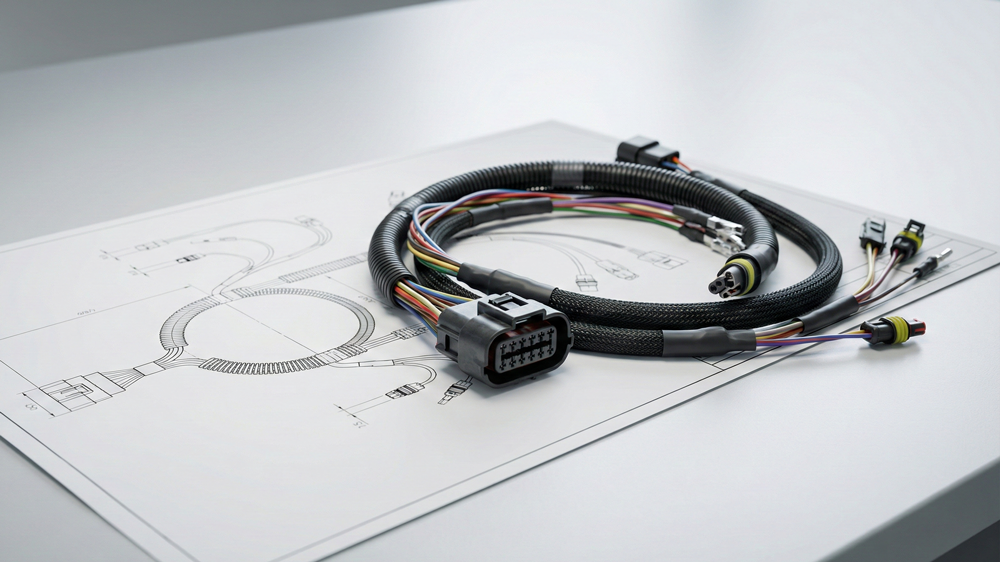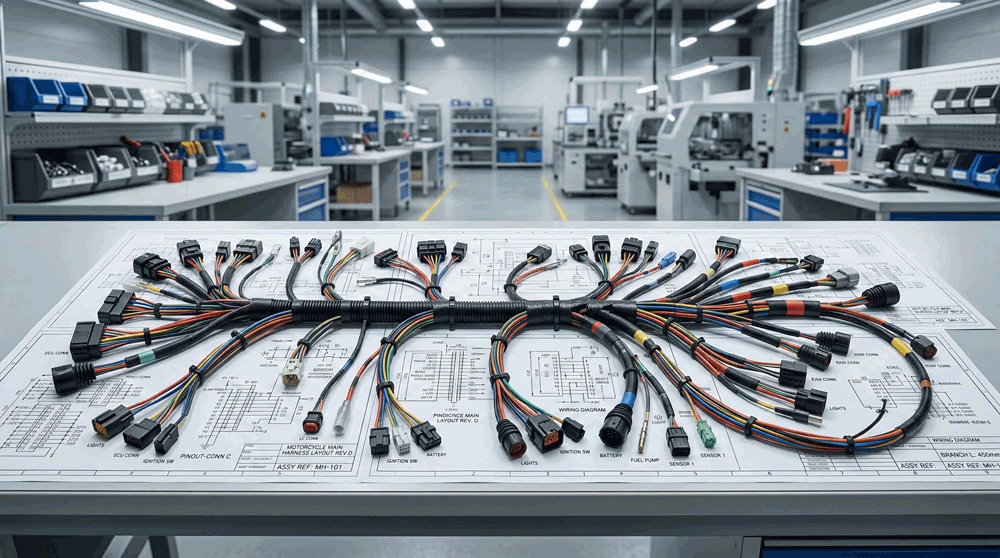
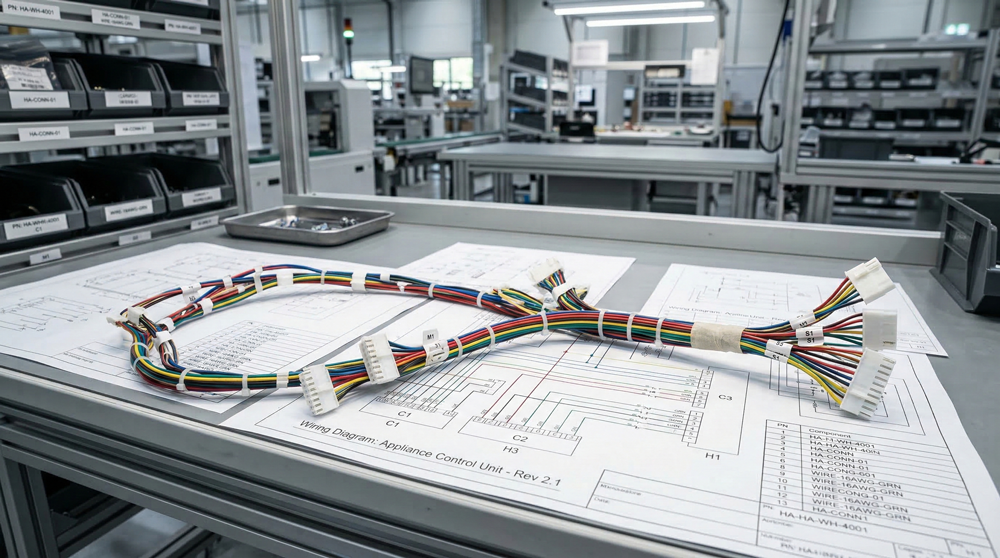
Cable assembly pilot run checklist before mass production is one of the most practical control tools an OEM buyer can use before a project moves from sample confidence to production commitment. Cable assembly pilot run checklist before mass production helps the team confirm that the approved design can be built repeatedly, labeled correctly, packed consistently, and released with fewer surprises once real orders begin.
A pilot run is not just a bigger sample batch. It is the stage where engineering intent, factory execution, material readiness, document control, and launch discipline are tested together. If that stage is weak, mass production usually becomes slower, noisier, and more expensive than expected. If that stage is managed well, the project enters release with much stronger control.
Table of Contents
ToggleWhy Pilot Matters
Many cable assembly projects look ready before they actually are. The sample passed. The supplier is responsive. The quotation is approved. The drawing revision looks stable. But mass production still carries risk because the sample stage does not always prove repeatability. A carefully built sample can hide issues that only appear when more units are made under normal factory conditions.
That is why pilot matters. It is the first meaningful proof that the supplier can translate the released package into repeatable output. It reveals whether labels stay consistent, whether protective materials are applied the same way across units, whether packaging works in real handling, whether records are clear, and whether the factory is truly aligned on the current baseline.
For procurement, pilot reduces supply risk. For engineering, it reduces interpretation risk. For quality, it reduces the chance that unstable processes move directly into customer-facing production. In OEM cable assembly supply, pilot is often the last low-cost place to catch high-cost launch problems.
Define the Pilot Goal
Before reviewing any checklist, the team should define what the pilot run is meant to prove. This sounds simple, but many projects treat pilot as a vague milestone rather than a controlled decision gate.
In some programs, the pilot is meant to confirm repeatable workmanship. In others, it is mainly used to verify labeling, packaging, and production routing. In some cases, it is the first build after an ECN or revision update. In others, it is the first run at a new factory after sample approval. These are all valid uses, but the pilot review criteria should match the business purpose.
A stronger approach is to ask a direct question: what must be true after this pilot before the buyer is willing to release normal production? If the answer is unclear, then the pilot review will likely become too loose. A good pilot run should close specific doubts. It should not simply create the feeling that the project is moving.
Freeze the Baseline
A pilot run is only meaningful when the baseline is stable enough to test. If the drawing, BOM, labels, or packaging logic are still changing informally, then the pilot is not really checking production readiness. It is checking a moving target.
Before pilot begins, the buyer should confirm the active drawing revision, the intended material set, the label format, the packaging method, and any linked inspection or handling notes that affect the build. If some items are still open, those open points should be visible. The pilot can still proceed in some cases, but the team should know exactly what is provisional and what is fixed.
This is where the previous article in the series connects naturally. Strong pilot control depends on strong change control. If the project has open revision confusion, then the pilot result will be harder to trust because the factory may be validating one version while the internal team expects another. That is why How OEM Buyers Manage Cable Assembly ECN and Revision Changes should be treated as a foundation for pilot readiness rather than a separate topic.
Confirm Materials
Material alignment is one of the first things a pilot should prove. A supplier may have built the sample with acceptable materials, but the buyer still needs to know whether the same material logic will hold in production conditions.
This includes the obvious items such as connectors, terminals, cable type, shielding, sleeves, tubes, labels, and packaging materials. It also includes less visible items such as approved alternates, source-specific part references, and any temporary substitutions that were accepted during the sample stage. If the pilot uses a different material set from the approved sample or released BOM, that difference should be disclosed and reviewed rather than discovered later.
Material confirmation matters because many launch problems start here. The design itself may be stable, but the factory may still be planning a different cable variant, a different label stock, or a different protective part for volume supply. A pilot run is the right place to make those assumptions visible. It is much cheaper to clarify them now than after release.
Check the Process
A pilot run should test process stability, not just product appearance. That means the buyer should look beyond whether the cable assemblies seem acceptable on the table and ask whether the build process itself looks repeatable.
A useful review starts with simple questions. Did the factory build the pilot using the intended production method, or did it rely on special manual attention that will not be realistic later? Were labels, breakouts, and protection details applied consistently across the run? Were there repeated operator questions on the same issue? Did the supplier appear stable in how it interpreted the drawing and work instructions?
This matters because the pilot is often the first point where the project moves from “one skilled build” to “normal controlled output.” If the assembly is only good when a senior technician watches every step, then mass production is not ready yet. The goal is not perfection in the abstract. The goal is confidence that the supplier’s process can reproduce the approved design without depending on luck or heroic attention.
Review the Build
A physical review of pilot units is still essential, but it should be more structured than a quick sample lookover. The team should examine whether the actual pilot output matches the released baseline consistently across more than one unit.
This includes connector orientation, cable routing, breakout positions, protection material placement, strain relief treatment, label content and location, finish quality, and general presentation. It also includes whether the assemblies look like they belong to the same product family rather than slightly different interpretations of the same drawing.
In practical OEM projects, consistency often matters more than individual perfection. A single pilot unit may look good while the rest already show drift. That is why the buyer should review the run as a set. Do the units match each other? Do they match the approved design? Do they show a stable factory understanding of what “correct” looks like? If not, the project may still need process tightening before release.
Check the Labels
Labels often seem small during development and become very large during production. A pilot run is one of the best times to verify whether the label logic actually works in operation.
The buyer should review label content, readability, location, consistency, adhesion, print quality, and whether the labels support production, warehouse handling, and service use the way the program expects. If the project has internal part numbers, customer numbers, date code rules, lot references, or packaging identifiers, the pilot should show how those elements will actually appear in the shipped product.
This is especially important because label issues are rarely dramatic enough to stop an early sample, yet they often create real trouble later. Incoming inspection may not know what to accept. Warehousing may not distinguish lots correctly. Service teams may not be able to identify the right assembly. A pilot run should reveal whether the label design is only technically present or genuinely operationally useful.
Verify the Packaging
Packaging is another area where pilot reviews often add more value than buyers expect. In many cable assembly programs, packaging is treated as something that can be finalized later. But once the project moves into mass production, packaging becomes part of the operational system.
The pilot should therefore confirm whether the intended packaging protects the cable correctly, supports warehouse handling, preserves label visibility where needed, and matches the buyer’s receiving logic. If cables are bent too tightly, bundled awkwardly, or packed in a way that encourages tangling or damage, the issue should be corrected before release. If carton labels, bag labels, or outer identifiers are unclear, that also belongs in the pilot review.
This is not just a logistics issue. Packaging affects receiving speed, line feeding, service stocking, and early launch confidence. A well-run pilot helps close these details before production volume makes them expensive.
Review the Records
A strong pilot run should also produce useful records. These do not always need to be excessive, but they should be clear enough that the buyer can connect the physical pilot to the baseline that was actually built.
The buyer should know which drawing revision was used, which material assumptions were active, what lot or batch logic applied, and whether any deviations or open points were present during the run. If this cannot be explained clearly, the pilot loses much of its value because the team is no longer reviewing a controlled build. It is reviewing an event that may be difficult to reproduce later.
This is where production readiness becomes more than visual confidence. Clear pilot records help the buyer decide whether the supplier is ready for normal release, whether first-article review is still needed, and whether any incoming inspection rules should be tightened for early lots. They also reduce later confusion if a pilot-corrected item reappears during production.
Test the Flow
A pilot run should be used to test not only the assembly itself, but also the flow around it. In real OEM supply, a project succeeds when the product, records, packaging, and communication all move together cleanly.
This means the buyer should look at how the supplier handled order acknowledgment, production timing, lot identification, packing, and pilot communication. Did the pilot feel like an organized production event, or more like an engineering exercise? Were open points visible? Were corrections tracked? Did the supplier communicate in a way that suggests mass production will be manageable?
These signals matter because many production issues begin outside the physical cable itself. A factory may build acceptable product but still handle revisions, packing, and shipment logic loosely. The pilot is one of the best places to detect that before launch.
Use a Pilot Checklist
A structured checklist is often the easiest way to make pilot review more reliable. Without one, teams tend to review what is most visible and miss what becomes important later.
A practical pilot checklist might look like this:
| Review area | What to confirm |
|---|---|
| Baseline | Correct drawing, BOM, labels, packaging, and revision status |
| Materials | Correct connectors, cable, protection parts, labels, and approved alternates |
| Build consistency | Stable routing, breakouts, strain relief, and finish across units |
| Labels | Correct content, readability, position, and lot logic |
| Packaging | Suitable handling, protection, outer labeling, and receiving usability |
| Records | Clear revision basis, pilot identification, and deviation visibility |
| Process | Build method looks repeatable, not one-time or overly manual |
| Supplier communication | Open points, corrections, and pilot status are communicated clearly |
| Release decision | Pilot supports next step, or defined actions remain before release |
The purpose of a checklist is not to add unnecessary formality. It is to make sure the pilot closes real launch questions instead of only creating a general sense of progress.
Define the Outcome
A pilot run should end with a clear decision, not with a vague feeling that things look acceptable. The team should decide what the pilot result actually means for the project.
In practice, the outcome usually falls into one of a few categories. The pilot may support unrestricted production release. It may support limited release with listed corrections. It may require a second pilot after material or process changes. Or it may show that the baseline itself needs more work before the factory should proceed. The key is to make this outcome explicit.
A useful release structure can include:
| Pilot result | Meaning |
|---|---|
| Pilot accepted | Ready for controlled production release |
| Pilot accepted with actions | Production may proceed after listed closures |
| Pilot limited | Additional verification needed before broad release |
| Pilot rejected | Major gaps remain in design, process, or control |
This type of clarity protects everyone. Procurement knows what can be ordered. Engineering knows what still needs closure. Quality knows how to inspect the next lots. The supplier knows whether the pilot was truly successful or only partially accepted.
Watch for Red Flags
Several warning signs during pilot should be taken seriously. One is a pilot that looks acceptable physically but cannot be tied clearly to a stable revision and material baseline. Another is wide variation across units in labels, routing, or protection details. Another is a supplier who explains differences only after the buyer notices them. Another is packaging that clearly does not support warehouse or production use, even if the assemblies themselves look fine.
A different red flag is a project team that wants to release production because the schedule is tight even though the pilot result is only partly understood. In some cases, business pressure may still require a controlled release, but then the conditions should be explicit. What should not happen is for the pilot to be treated as fully successful when it has only partially closed the real risks.
Link Pilot to Release
The value of a pilot run is only realized when it feeds directly into a better production release decision. That means the pilot should close the questions that matter most for launch.
If the pilot proves build repeatability, then the release decision becomes stronger. If it reveals label or packaging gaps, those should be tied to clear corrective actions. If it shows material differences, the ECN and baseline should be updated before the next stage. If it shows that first-article inspection is still needed, that should become the next defined step.
This is also where the rest of the series connects. Pilot leads naturally to First Article Inspection for Custom Cable Assemblies, to Incoming Inspection Standards for OEM Cable Assemblies, and to How to Prevent Version Mix-Up in Cable Assembly Production. A good pilot is not an isolated event. It is the bridge into controlled production.
Conclusion
Cable assembly pilot run checklist before mass production should be treated as a practical release tool, not just a larger sample exercise. For OEM buyers, the best pilot runs confirm the baseline, verify materials, test process repeatability, review build consistency, close label and packaging issues, produce clear records, and end with a defined production decision.
When teams use pilot this way, they reduce launch noise before it reaches mass production. In custom cable assemblies, that often means fewer mixed assumptions, stronger incoming quality, cleaner first orders, and a more stable handoff from engineering confidence to production confidence.
FAQ
What is the purpose of a cable assembly pilot run?
The purpose is to confirm that the supplier can build the approved cable assembly repeatedly under realistic production conditions before mass production begins.
Is a pilot run different from a sample build?
Yes. A sample mainly proves that the design can be built. A pilot run checks whether the build can be repeated consistently with correct labels, materials, packaging, and production control.
What should buyers review during a pilot run?
They should review the revision basis, material set, build consistency, labels, packaging, records, supplier communication, and whether the output supports the next release step.
Can a pilot be accepted with open points?
Yes, but the open points should be listed clearly, and the release status should match reality rather than implying unrestricted readiness too early.
Why is packaging part of pilot review?
Because packaging affects handling, receiving, identification, and early production flow. A weak package can create operational trouble even when the cable itself is correct.
CTA
If you are preparing a pilot run before mass production, the most useful first step is to review whether the current baseline, material set, labels, and packaging are stable enough to make the pilot truly meaningful.
You can send your drawing package, BOM, pilot plan, sample comments, and launch timing through Contact. Our team can help review the pilot checklist and support a more controlled OEM release before production scales.