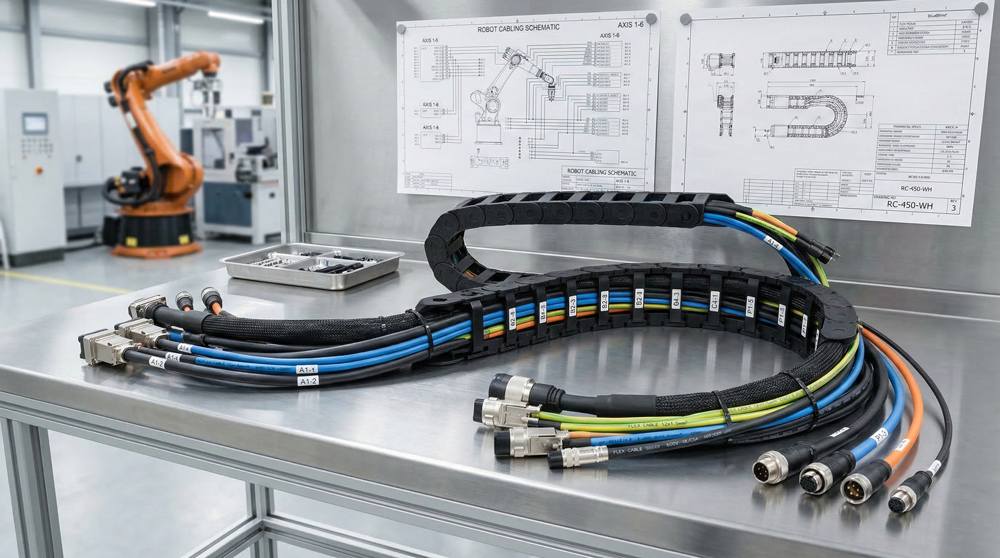
First article inspection for custom cable assemblies is one of the most important checks between pilot confidence and stable OEM production. First article inspection for custom cable assemblies gives the buyer a controlled way to confirm that the released design, approved materials, labels, workmanship, and key dimensions are all showing up correctly in the first real production-representative build.
For OEM buyers, this is not just a quality formality. It is a practical control step that helps engineering, procurement, and quality teams verify that the factory is building the right product before routine supply begins. When first article inspection is weak, the project becomes more vulnerable to version drift, label mistakes, material mismatches, and early-lot confusion. When it is handled well, the move into production becomes much more stable.
Table of Contents
ToggleWhy FAI Matters
A sample can prove that a cable assembly can be built. A pilot can show that the supplier is getting closer to repeatable production. But first article inspection, often called FAI, is where the buyer checks whether the factory’s actual build output matches the approved baseline closely enough to support controlled release.
This matters because many OEM projects fail in small ways before they fail in big ways. The connector is correct, but the label format is slightly wrong. The route is generally acceptable, but one breakout position has drifted. The protective sleeve is present, but not the approved version. The packaging looks usable, but the outer identification does not match the released logic. These issues may not stop a sample review, but they do create downstream risk in receiving, line feeding, traceability, and service.
That is why FAI matters. It turns “looks good” into “verified against the released standard.” In custom cable assemblies, that difference is often what protects the first real production lots from avoidable mistakes.
Define the FAI Scope
The first question in FAI is not what to inspect first. It is what the inspection is supposed to confirm. In some projects, the first article is meant to validate the full released baseline before normal production. In others, it is tied to a specific ECN, a pilot correction, a supplier change, or a process shift. The scope should match that purpose.
A useful way to define the scope is to ask what would create meaningful risk if it were wrong. In custom cable assemblies, that usually includes connector identity, cable type, critical lengths, breakouts, labels, protection materials, workmanship at key transitions, packaging logic, and the revision basis itself. Some projects may also require special attention to shielding, sealing, or service-related features.
When the scope is not defined, FAI becomes too loose. One person checks the visible build. Another assumes materials were already confirmed. Another assumes labels are a later topic. That is how important gaps survive the inspection stage. A better FAI begins with a clear answer to one question: what must this first article prove before the buyer is comfortable moving forward?
Confirm the Baseline
FAI is only meaningful when the inspection is tied to the correct baseline. Before checking the assembly itself, the buyer should confirm which drawing revision, BOM status, label format, packaging rule, and special notes are being used as the reference.
This is more important than it sounds. In many OEM projects, the factory may be building from the latest drawing but still using an older label format, or following the right BOM but carrying a packaging assumption from the pilot stage. If the baseline is fragmented, the first article can still look acceptable while not actually matching the intended production release.
That is why a strong FAI should begin by confirming the active release package. Which revision is current? Which materials are approved? Which labels are current? Which open points from sample or pilot were already closed? If the buyer cannot answer those questions clearly, the inspection is already operating with unnecessary risk.
This is also why Cable Assembly Change Control and Production Readiness and How OEM Buyers Manage Cable Assembly ECN and Revision Changes connect directly to FAI. Weak baseline control weakens first article inspection immediately.
Match the First Article
The first article itself should be treated as a defined reference unit, not just as “one of the early pieces.” The buyer should know which exact unit or lot is being inspected and why that unit represents the current released build.
This means the supplier should identify the first article clearly enough that engineering, procurement, and quality are all reviewing the same thing. If the buyer reviews one physical unit while the supplier later treats a slightly different unit as the formal first article, confusion begins immediately. Clear first-article identity supports later traceability, correction closure, and production handoff.
In practical terms, the first article should be linked to the current drawing revision, the intended production method, and the material set the supplier expects to use moving forward. If the factory builds a “show unit” with extra manual care that does not reflect the normal process, the first article loses much of its value. A good FAI should inspect something that is genuinely representative, not just visually presentable.
Check the Build
Physical build inspection is still central to FAI, but it should be more structured than a general visual review. The buyer should confirm whether the assembly matches the released design in the ways that matter operationally.
That usually includes connector orientation, wire routing, breakout positions, protection placement, strain-relief behavior, tie or wrap consistency where relevant, overall finish, and general assembly logic. The real question is not only whether the cable assembly looks acceptable. The stronger question is whether it looks like the released product, built in a way that can be repeated.
For OEM teams, this step is especially useful because it often reveals the difference between good prototype execution and real production discipline. A factory may build an acceptable sample by carefully managing details one by one. First article inspection is where the buyer checks whether those details are now being controlled as part of the process rather than as individual corrections.
Verify the Materials
Material confirmation is a core part of first article inspection for custom cable assemblies because many launch issues begin with material drift rather than visible design failure. The connectors may look right, yet the cable construction, shielding variant, label material, sleeve type, or protection part may differ from the intended baseline.
FAI should therefore confirm the real material set being used in the first article. This includes connectors, terminals where relevant, cable family, insulation or jacket type if critical, sleeves, tubes, heat shrink, labels, boots, and packaging items that matter to operations. If any approved alternates are in use, those should be visible and accepted in the correct control path.
This is especially important after pilot, because factories sometimes refine material choices between sample, pilot, and early production. Some of those changes may be legitimate and helpful. But if they are not explicitly controlled, the project can enter production with a build that does not exactly match what the buyer believed had been approved. FAI is the right place to stop that drift.
Review the Dimensions
Dimensions in cable assemblies are often more practical than formal, which is exactly why they need careful first article review. A cable may be electrically correct and still difficult to install because one branch is too short, one breakout is shifted, or one routed section does not follow the intended build logic.
During FAI, the buyer should review the dimensions that matter most to fit, installation, and service. These may include overall length, breakout positions, branch lengths, connector orientation, and any feature that affects how the assembly sits in the product. Not every project needs exhaustive measurement of every non-critical detail, but the inspection should focus on the dimensions that drive real assembly success.
This is especially relevant in compact equipment, routed assemblies, and appearance-sensitive builds. A few millimeters may not matter in one project and may matter a great deal in another. Good FAI does not measure everything equally. It measures what the actual OEM application cannot afford to get wrong.
Confirm the Labels
Labels should be part of FAI, not a separate afterthought. In many OEM cable assembly programs, labels affect receiving, line-side use, service replacement, and traceability just as much as they affect product appearance.
The buyer should confirm label content, position, readability, orientation, consistency, and material suitability for the intended environment. If the label logic includes internal part numbers, customer numbers, date codes, or lot references, those elements should be checked during first article review. A label that is present but awkward, inconsistent, or operationally unclear can create much more trouble later than it seems to at inspection time.
This is particularly important because label errors often survive early reviews. They are small enough to overlook, yet large enough to cause receiving confusion or service mistakes once production starts. FAI is one of the best places to close label issues before they become launch issues.
Check the Records
A physical first article is not enough by itself. The supporting records also matter because they show whether the supplier is controlling the build in a way that can be repeated and understood later.
The buyer should know which drawing revision was used, which material assumptions were active, whether any deviations existed, and how the first article is identified in the supplier’s system. This does not mean every project needs a heavy document package, but the basic build basis should be visible and consistent. If the factory cannot explain clearly what was built and against which release state, then the value of the inspection is reduced.
This is where FAI becomes more than a visual event. It becomes a controlled link between released definition and actual output. In OEM sourcing, that link is important because later lots, receiving decisions, and even service support may depend on how clearly the project can trace back to the first approved production-representative unit.
Set the Status
A useful FAI ends with a clear status, not with vague approval language. The team should know whether the first article is fully accepted, accepted with actions, accepted for limited release, or not yet ready for production use.
This distinction matters because many projects use “approved” too broadly. Engineering may think the first article is close enough to move forward with corrections. Procurement may hear “approved” and release orders. The supplier may hear “approved” and begin normal production. If the actual status was only partial approval, the project is now misaligned.
A practical FAI status model can be simple:
| FAI result | Meaning |
|---|---|
| Accepted | First article matches the released baseline well enough for next-step release |
| Accepted with actions | Minor items remain and must close by defined timing |
| Limited acceptance | Build is usable for controlled follow-up only, not general release |
| Rejected | Key gaps remain in materials, build, labels, or baseline alignment |
A clear outcome protects everyone. It makes the next sourcing decision obvious instead of assumed.
Link FAI to Release
FAI should always feed directly into the next production decision. If the first article is accepted, what exactly happens next? Does the project move to controlled first production? Does incoming inspection remain heightened? Are there still pilot-level conditions on the first orders? Does a packaging or label correction need to close first? The inspection should answer those questions, not postpone them.
This is why FAI is such a strong bridge between pilot and production. A good pilot may prove process direction, but FAI proves whether the released product is actually showing up correctly in the first production-representative build. Once that happens, the buyer has a much better basis for deciding what the first regular orders should look like and how tightly the early lots should be monitored.
This also connects naturally to the next article in the series, Incoming Inspection Standards for OEM Cable Assemblies. If FAI is done well, incoming inspection becomes more focused because the buyer already knows what the first accepted build standard looks like.
Common Gaps
Several common gaps show up during first article inspection. One is a correct-looking build tied to the wrong revision baseline. Another is a generally correct assembly with wrong or outdated labels. Another is a material assumption that was never fully approved but slipped into the first article because it looked close enough. Another is a route or breakout detail that is individually small but creates fit or service risk in the real product.
A different kind of gap happens on the buyer side. Teams sometimes treat FAI as a quick visual sign-off because schedules are tight, especially after pilot seems successful. In doing so, they miss the main value of first article inspection, which is structured verification before routine supply begins.
These gaps are not rare. But they are also not hard to reduce when FAI is treated as a real control point instead of a ceremonial step.
Use FAI Better
A stronger FAI does not always require more bureaucracy. Usually it requires better focus. The buyer needs to know what matters most, what the true baseline is, and what decision the first article is supposed to support.
A practical way to improve FAI is to make the review cross-functional enough to catch different kinds of risk. Engineering may focus on fit and design intent. Quality may focus on labels, records, and consistency. Procurement may focus on whether the supplier is actually building the quoted and approved version. Operations may focus on handling and usability. When those views are combined, first article inspection becomes much more useful than a narrow technical sign-off.
That is especially valuable in custom cable assemblies because the real risk is often spread across several small details rather than one obvious defect.
Conclusion
First article inspection for custom cable assemblies should be treated as a controlled verification step between pilot confidence and routine production release. For OEM buyers, the strongest FAI confirms the baseline, identifies the exact first article, checks the build, verifies the materials, reviews the dimensions, confirms the labels, checks the records, and ends with a clear release status.
When teams use FAI this way, they reduce the chance that early production begins on a weak or drifting baseline. In custom cable assemblies, that often means cleaner first orders, better receiving control, and fewer avoidable problems once supply starts to scale.
FAQ
What is first article inspection in a cable assembly project?
It is the structured review of the first production-representative build to confirm that the released design, materials, labels, and key details match the approved baseline.
Is FAI different from a pilot run?
Yes. A pilot checks whether the process and factory output are becoming repeatable. FAI checks whether the first production-representative article matches the released product definition closely enough for the next release step.
What should be checked during cable assembly FAI?
Typical checks include the revision basis, materials, connectors, cable type, key dimensions, breakouts, labels, packaging-relevant details, workmanship, and supporting records.
Can FAI be accepted with comments?
Yes. But the remaining actions should be listed clearly, and the release status should reflect reality instead of implying full unrestricted approval too early.
Why are labels part of first article inspection?
Because labels affect receiving, traceability, service, and operational accuracy. A cable assembly can be physically correct and still cause downstream problems if the labels are wrong or unclear.
CTA
If you are preparing first article inspection for a custom cable assembly, the best first step is to confirm whether the released baseline, material set, labels, and key dimensions are all clearly defined before the factory’s first production-representative build is reviewed.
You can send your drawing package, BOM, first article photos, sample comments, and release questions through Contact. Our team can help review the FAI basis and support a more controlled OEM release decision before production expands.