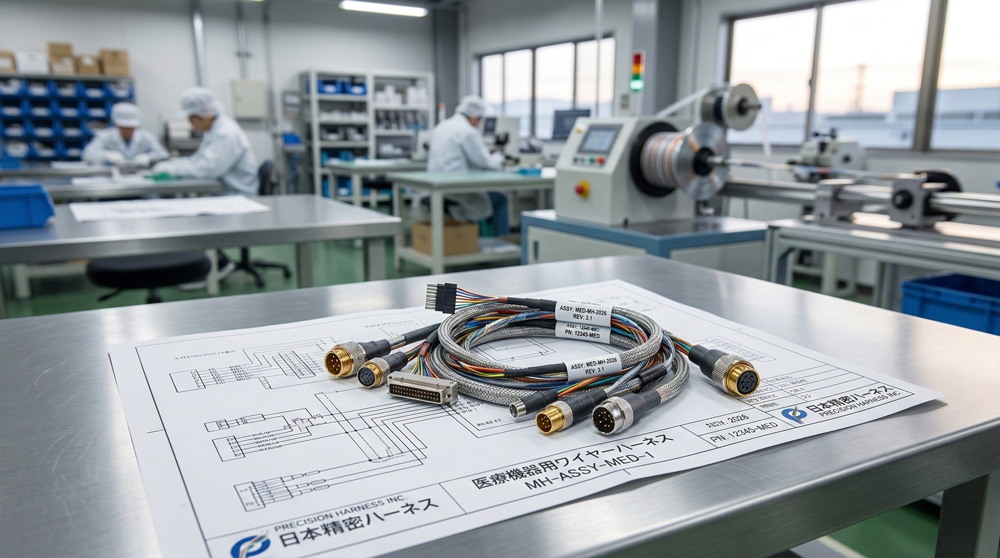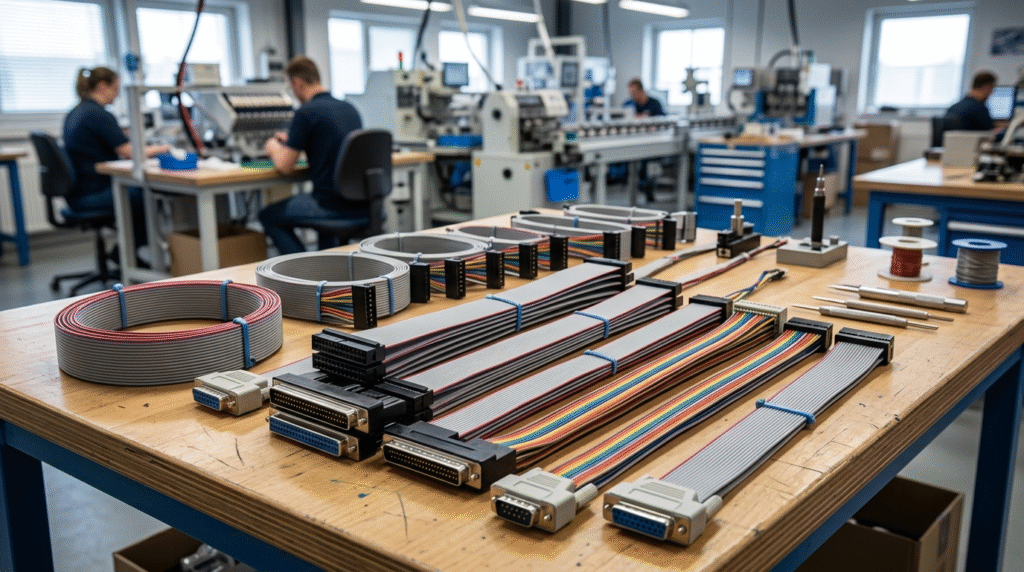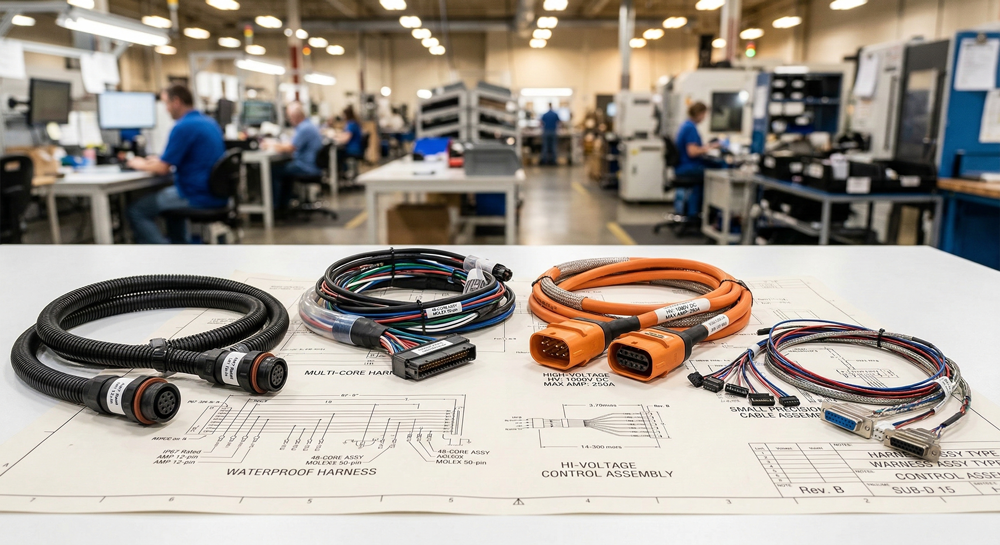
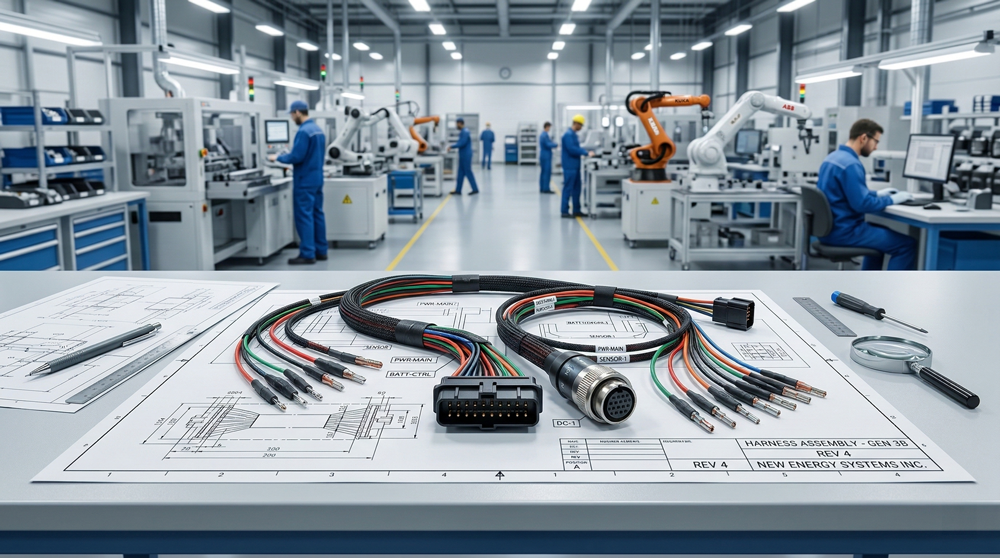
Power cord assembly mistakes are often expensive because they do not always appear during a quick sample check. A cord can look correct, fit the connector, and pass a simple continuity test, but still be wrong for the equipment if the rating is mismatched, the conductor is undersized, the jacket is unsuitable, the termination is weak, or the test plan is too vague.
For OEM buyers, the real risk is not only electrical failure. The bigger cost is often delayed sample approval, production rework, failed incoming inspection, field heat problems, wrong-market cord versions, or repeated clarification with the supplier after the design should already be stable. That is why custom power cords should be managed as controlled power-delivery assemblies, not commodity cables.
Table of Contents
ToggleTreating It as Commodity
The first mistake is treating a power cord as a simple accessory. In OEM equipment, the power cord is part of the power path. It must support the equipment load, match the target rating, survive the environment, fit the routing path, hold the termination securely, and pass the release test plan.
A commodity mindset usually leads to a weak RFQ: length, jacket color, connector photo, and target price. That may be enough for a rough quote, but it is not enough for a production-ready custom power cord. The supplier still needs voltage, current, duty cycle, target market, wire gauge, material exposure, termination details, grounding, strain relief, and testing expectations.
This is the same logic behind your Custom Power Cord and Electric Wire Harness pages: power wiring should be defined around safe, repeatable power delivery, not only physical appearance.
Missing Load Data
A common power cord mistake is failing to define the load clearly. Buyers may ask for a cord by length and connector type, while leaving out normal current, peak current, voltage, duty cycle, and operating environment. Interpower states that amperage and voltage requirements are crucial when selecting a power cord or cord set, and that amperage can affect plug patterns and cable size.
This mistake is especially risky in industrial machines, heaters, motors, inverters, chargers, battery systems, energy storage equipment, and high-power appliances. These applications may have startup current, long operating cycles, high ambient temperature, or confined routing. A cord that works during a short bench check may still become too warm or unstable during real operation.
A better RFQ should state what the cord powers, whether the load is continuous or intermittent, whether startup current matters, and whether the cord is used as an external input, internal power link, or subassembly connection.
Wrong Rating Logic
Another major mistake is assuming that one strong component makes the whole cord safe. It does not. A power cord or cord set is limited by the lowest-rated component in the path. Interpower explains that the plug, cable, and connector are considered separately, and the component with the lowest rating determines the rating of the entire assembly.
This creates a real sourcing risk. A heavier cable cannot compensate for an underrated plug. A strong plug cannot fix a smaller cable. A good-looking connector cannot solve a weak terminal or poor crimp. When rating logic is not reviewed as a complete assembly, the buyer may approve a cord that looks oversized in one area but is still limited by another component.
OEM buyers should define the required rating for the complete power cord assembly and ask the supplier to confirm that the cable, plug, connector, terminal, grounding path, overmold, and strain relief are aligned with that rating.
Choosing Gauge by Price
Wire gauge is one of the most common areas where short-term cost thinking creates long-term risk. If the conductor is too small, the cord may suffer from heat rise, voltage drop, or premature aging. If the conductor is larger than necessary, the cord may become stiff, bulky, expensive, and difficult to route.
The mistake is not choosing a smaller gauge or a larger gauge. The mistake is choosing gauge before defining current, length, temperature, routing, and termination. Voltage drop is affected by current and circuit length, which is why wire size, current carrying capacity, and length must be considered together.
For OEM buyers, gauge should be approved as part of the full cord design. The conductor size should match the load, the jacket should match the environment, and the termination should match both the conductor and the current requirement. If any of those inputs changes, the gauge decision may need to be reviewed again.
Ignoring Heat Risk
Heat is one of the most damaging power cord failure modes because it can appear after the sample has already passed basic tests. A cord may pass continuity and still run hot under continuous load, in a tight enclosure, near a motor, or inside a high-temperature cabinet.
Heat can come from undersized conductors, high current, poor crimp quality, high contact resistance, tight bundling, cabinet heat, or unsuitable insulation. Cable current ratings also depend on application and environmental conditions, including temperature and installation method.
The RFQ should therefore include ambient temperature, enclosure conditions, nearby heat sources, bundling, duty cycle, and whether the cord is used in open air, cabinet routing, conduit, or a compact machine compartment. Without this context, the supplier cannot reliably design around heat.
Wrong Jacket Material
A power cord can be electrically correct and still fail because the insulation or jacket material does not match the environment. This is common in industrial machines, outdoor equipment, oil-exposed systems, and portable devices.
LAPP’s cable material guidance explains that sheath material protects the cable from external mechanical, thermal, chemical, or physical damage, and material selection must match conditions such as abrasion, flexibility, oil resistance, and other application demands. UL also emphasizes that wire and cable suitability depends on ratings, intended uses, and product identification, not just generic cable type.
The mistake is writing “PVC jacket” or “black cable” without defining heat, oil, coolant, UV, abrasion, cleaning chemicals, movement, or outdoor exposure. PVC, rubber, PUR, TPE, silicone, XLPE, and fluoropolymer materials all have valid use cases, but none is automatically correct for every custom power cord.
Weak Termination Control
Many power cord failures start at the termination. The cord may use a molded plug, IEC connector, ring terminal, spade terminal, quick-disconnect terminal, appliance connector, internal plug, panel connector, or customer-specific interface. Each one has its own crimp, contact, strain relief, and inspection risks.
A weak termination can create intermittent power loss, local heating, loose contacts, failed pull tests, or service failures. This is why your Tests & Inspections page is important as a supporting internal page: crimp inspection, pull-force testing, continuity checks, and visual inspection all belong in a proper power cord release process.
Buyers should not approve a power cord only by cable type and connector photo. The RFQ should define the terminal series, mating part, crimp requirement, polarity, grounding, insulation support, strain relief, overmold or boot requirement, and whether the connection will be factory-installed or serviced in the field.
Poor Strain Relief
Strain relief is often treated as a mechanical add-on, but in power cords it is a reliability feature. If a cord is pulled, bent, dragged, clamped, or serviced, stress can transfer directly into the termination area. Over time, that can cause conductor breakage, terminal loosening, insulation damage, or intermittent faults.
This mistake is especially common when the cord passes through a panel, exits an enclosure, connects to a portable device, or is handled by operators. A cord may pass electrical testing when new but fail after shipping, installation, or repeated service access.
OEM buyers should define whether the cord is stationary, occasionally moved, frequently handled, externally exposed, or installed in a confined enclosure. The supplier can then recommend molded strain relief, boots, clamps, grommets, sleeves, conduit, or mechanical anchoring where needed.
Polarity and Grounding Errors
Continuity alone does not prove that the cord is wired correctly. A power cord can be continuous but still have line, neutral, ground, or pinout assigned incorrectly. Interpower’s cord testing information notes that polarity and continuity checks verify each conductor, including line-to-line, neutral-to-neutral, and ground-to-ground connection logic.
Grounding errors are especially important in grounded industrial equipment, metal enclosures, power supplies, cabinets, and high-power systems. A weak or incorrect protective earth path may create safety risk even if the cord appears functional.
The RFQ should define conductor colors, terminal assignment, plug orientation, connector pinout, grounding location, and labels. If the cord connects into a larger Custom Cable Assemblies system or Electric Wire Harness, polarity should be checked against the equipment-level wiring logic, not only the cord itself.
Vague Test Plans
One of the most common OEM power cord mistakes is writing “100% tested” without defining the actual tests. That phrase can mean continuity only, or it can include polarity, hipot, pull-force checks, visual inspection, dimensional inspection, markings, and records. If the buyer does not define the scope, the supplier’s interpretation may not match the equipment risk.
Hipot or dielectric withstand testing is used to stress an insulation barrier with high voltage; if the insulation breaks down, it indicates insufficient insulation and possible shock hazard. For some power cords, this may be required by the application, customer requirement, or approval path. But it should be defined with voltage, duration, leakage limit, test points, and frequency, not simply requested as a vague “hipot test.”
A good test plan should define prototype, pilot, and production checks separately. Prototype testing proves the design. Pilot validation proves repeatability. Production release controls routine quality.
No Fit Review
A power cord can pass electrical tests and still fail because it does not fit the equipment. The connector may be too bulky, the jacket may be too stiff, the bend radius may be too large, the cord may be too short, or the strain relief may not seat properly in the enclosure.
Fit problems are common in control panels, inverters, battery systems, appliances, cabinets, charging equipment, and industrial machines. A bench-tested cord is not always a product-ready cord. The sample should be installed in the real equipment or a representative fixture when routing is tight or when the cord interacts with covers, panels, grommets, clamps, or adjacent components.
This is where internal linking to Prototype to Production Guide makes sense. Fit should be validated before mass production, not discovered during line assembly.
Wrong Market Version
Power cords are market-sensitive products. A cord for North America may not share the same plug form, rating logic, voltage environment, cable marking, or approval path as a cord for Europe, Australia, Japan, or another region. Interpower notes that North American and international cord requirements differ, and country-specific cord selection starts with the export country, then rating, cable, and connector choices.
The mistake is treating target market as a sales note instead of a technical requirement. If the finished equipment is sold globally, the buyer should plan market versions early. That may affect plug type, cable marking, packaging, documentation, labeling, and inventory control.
A good RFQ should define the target country or region, whether the cord is detachable or fixed, and whether the same equipment platform needs multiple regional versions.
Weak Marking Control
Markings are not just decoration. They help receiving teams, inspectors, technicians, and customers identify the correct cord, rating, version, and intended use. UL’s wire and cable guide explains that wire and cable suitability includes ratings, intended uses, and product identification.
OEM buyers often under-specify markings, labels, part numbers, revision codes, or lot traceability. This can become a major problem when multiple cord versions look similar. It can also create delays during incoming inspection or field service.
The RFQ should define cable markings, plug markings, label content, customer part number, revision number, region, rating, packaging label, and whether shipment photos or inspection reports are required.
No Change Control
A hidden but serious mistake is allowing material, plug, cable source, terminal, overmold, jacket compound, or crimp process to change without reapproval. The first sample may be correct, but production may drift if the build specification is not controlled.
This is especially important for power cords because small changes can affect rating, flexibility, heat, fit, strain relief, marking, or test results. A supplier may think a substitute is equivalent, while the OEM buyer sees a product change.
Buyers should define which changes require approval. At minimum, changes to cable type, wire gauge, jacket material, plug, connector, terminal, crimp process, overmold, strain relief, labeling, or market marking should trigger review. Your Quality Guarantee page is a useful internal link here because the point is process control, not only final inspection.
Poor Documentation
Many custom power cord issues come from weak documentation. A photo, a target price, and a rough length are not enough for repeatable production. A correct sample is useful, but it should become a controlled build record, not a memory-based reference.
Good documentation should include drawings, approved sample photos, conductor size, cable type, plug or connector details, terminal information, polarity, grounding, length tolerance, material specification, markings, packaging, testing, inspection records, and revision history.
Without documentation, repeat orders become risky. If a customer asks why a cord changed, why a shipment failed inspection, or which lot used a certain material, the buyer may not have a clear answer.
How to Prevent Them
The best way to prevent power cord assembly mistakes is to move key decisions upstream. Define the load before selecting gauge. Define the target market before selecting plug and markings. Define the environment before selecting insulation. Define routing before approving length and stiffness. Define testing before approving samples.
A strong RFQ should include the following items:
| Risk area | Prevention method |
|---|---|
| Load mismatch | Define voltage, current, duty cycle, startup current |
| Rating mismatch | Confirm lowest-rated component in the full assembly |
| Heat risk | Define temperature, bundling, enclosure, nearby heat |
| Wrong material | Define oil, abrasion, UV, chemicals, movement |
| Weak termination | Define terminal, crimp, polarity, grounding, inspection |
| Poor strain relief | Define pull, handling, routing, enclosure exit |
| Test gaps | Define continuity, polarity, hipot, pull, visual checks |
| Fit issues | Validate in equipment or fixture before release |
| Wrong market | Define country, region, plug, markings, approval path |
| Process drift | Control material, component, and tooling changes |
This approach does not make the project slower. It reduces avoidable back-and-forth and makes supplier quotations more accurate. A clear specification helps the supplier build the correct first sample and repeat it in production.
Final View
Most power cord assembly mistakes are predictable. They come from missing load data, wrong rating logic, poor wire-gauge selection, heat risk, unsuitable jacket material, weak terminations, poor strain relief, polarity mistakes, vague testing, poor fit review, wrong market assumptions, weak markings, and uncontrolled changes.
For OEM buyers, the practical takeaway is simple: do not source custom power cords by appearance. Source them by power requirement, environment, termination, market, testing, and process control. When those inputs are clear, the power cord becomes easier to quote, easier to approve, and much safer to repeat in production.
A custom power cord is successful when it supports the load, survives the environment, fits the machine, matches the target market, and can be tested and built consistently. That is the standard OEM buyers should use before releasing a power cord into production.
FAQ
What is the most common power cord assembly mistake?
One of the most common mistakes is defining the cord by length and connector photo without providing voltage, current, duty cycle, target market, material exposure, termination details, and testing requirements.
Can a cord pass continuity and still be wrong?
Yes. Continuity only confirms that a circuit is connected. It does not prove correct polarity, grounding, insulation strength, pull strength, markings, material suitability, or product fit.
Why does rating mismatch happen?
Rating mismatch happens when buyers look at one component instead of the complete assembly. The whole cord set is limited by its lowest-rated component, such as the plug, cable, or connector.
Why do power cords overheat?
Common causes include undersized conductors, high current, poor crimp quality, contact resistance, tight bundling, cabinet heat, nearby hot components, and unsuitable insulation or jacket material.
What should buyers define before approving samples?
Buyers should define load, rating, wire gauge, material, plug or terminal, polarity, grounding, strain relief, routing, fit, testing, markings, and change-control requirements.
CTA
If your OEM equipment needs a custom power cord, do not let small assumptions become production problems. Define the load, rating, material, termination, routing, testing, and records before sample approval. For related capabilities, see Custom Power Cord, Electric Wire Harness, Custom Cable Assemblies, Tests & Inspections, Quality Guarantee, and Prototype to Production Guide.