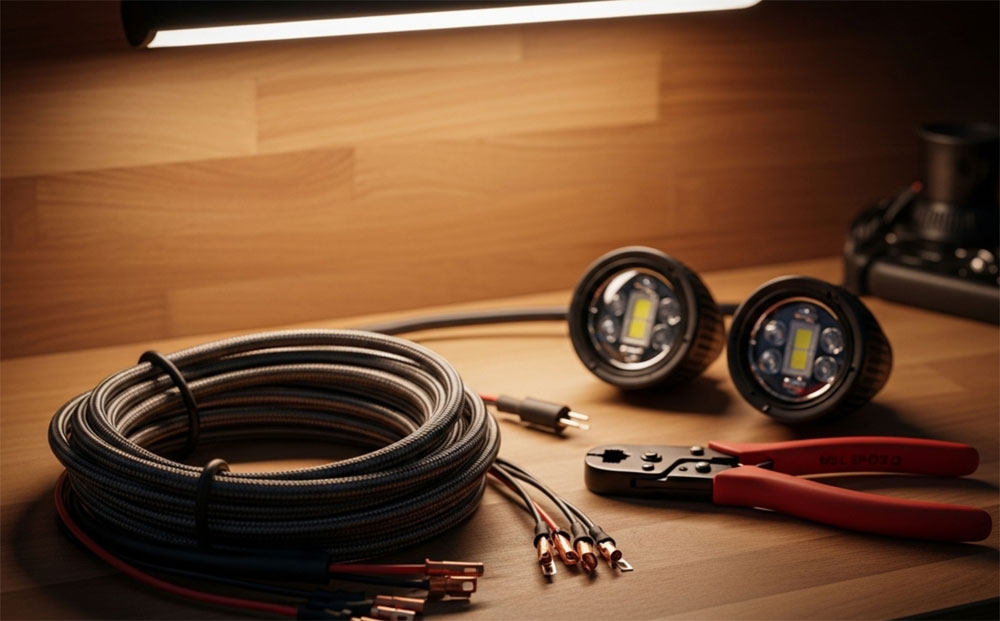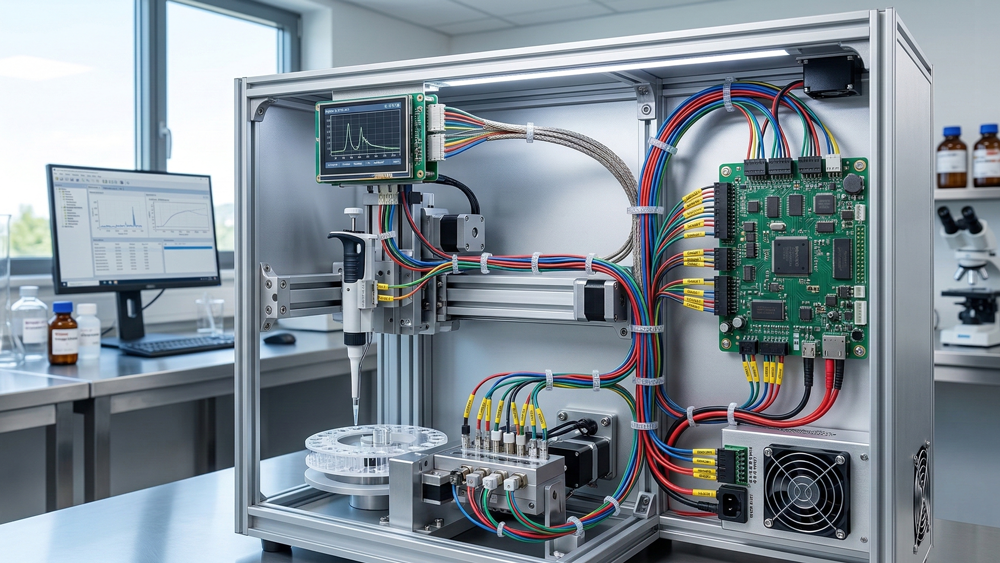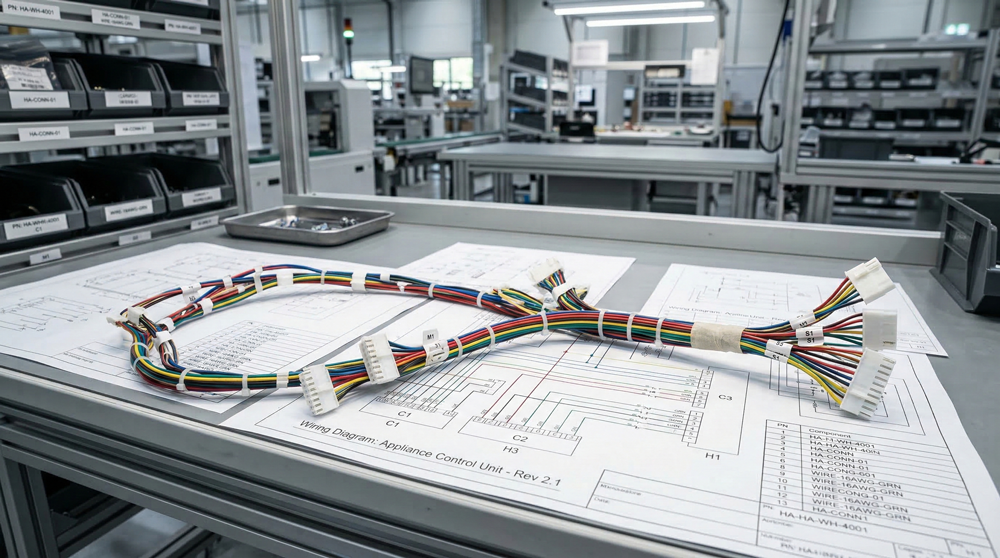
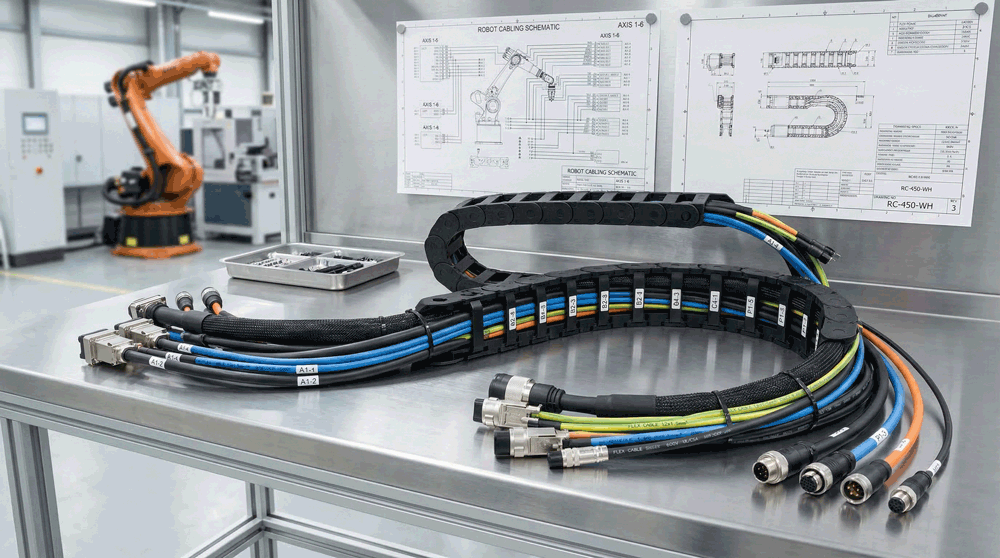
Cable Assembly Change Control and Production Readiness is a critical topic for OEM buyers because a cable assembly project does not become safe simply when the drawing is finished or the sample works. It becomes safer when the product baseline is controlled, changes are visible, materials are aligned, pilot output is reviewed properly, and the factory is ready to build the same assembly repeatedly without version drift or avoidable surprises.
For procurement, engineering, Supplier Quality Engineering (SQE), and project teams, this is where sourcing decisions turn into operational reality. A supplier may quote well and support early samples, but if change control is weak and production readiness is overstated, the project can still suffer from wrong revisions, mixed labels, inconsistent packaging, unstable workmanship, or delayed release. That is why change control and production readiness should be managed as one system, not as two unrelated tasks.
Table of Contents
ToggleWhy It Matters
In OEM cable assembly programs, many of the most expensive problems appear between sample approval and stable production. The design is “basically done,” the supplier is “basically ready,” and the team wants to move quickly. But this is exactly where hidden risk sits. A drawing may still have unresolved notes. An approved Engineering Change Notice (ECN) may not yet be reflected in all linked documents. A cable substitution may be accepted informally but not controlled formally. Labels may still follow a prototype format. Packaging may still be treated as a later detail. The sample may have been built carefully by a senior technician, but the factory may not yet be ready to repeat it under normal production conditions.
That is why production readiness is not just a manufacturing question. It is also a change-control question. If the project baseline is unstable, production readiness is weak by definition. And if the factory is not ready to follow the baseline consistently, even a good change-control process on paper will not protect the program.
For B2B buyers, this matters because cable assemblies are often low in piece cost but high in schedule sensitivity. A wrong revision, missing identifier, or mixed-lot shipment can disrupt a much larger product build. In other words, the risk is often operationally larger than the part itself.
Define the Baseline
Before a team can control change, it must define what exactly is being controlled. That sounds obvious, but in real projects the “current version” is often less clear than people assume.
A proper baseline should include the released drawing revision, the approved Bill of Materials (BOM), label logic, packaging method, test expectations, and any linked work instructions or customer-specific requirements that materially affect the build. If the project still depends on email explanations, supplier memory, or prototype-stage exceptions, the baseline is not fully stable yet.
This is where many production-readiness reviews become too optimistic. The team may believe the design is frozen because the sample passed, but the real product definition may still be split across multiple places. One note is on the drawing, another is in the RFQ, another is buried in a sample email thread, and another is “already understood” by the current supplier. That kind of fragmented baseline is exactly what creates wrong-version builds later.
A clean baseline reduces that risk. It gives procurement a clearer sourcing reference, gives quality a clearer inspection reference, and gives the factory a clearer production target. It also makes later internal links to processes such as How to Prepare a Better RFQ for Custom Cable Assemblies and Sample Approval Before Volume Cable Assembly Orders much more meaningful, because those stages only work well when the project definition is controlled.
Control ECNs
Engineering Change Notice (ECN) control is one of the most important parts of cable assembly change management because cable assemblies are especially vulnerable to “small” changes that look minor but create outsized confusion in production.
A connector suffix change, cable construction adjustment, label update, protection-part change, breakout shift, or packaging revision may all look manageable in isolation. But unless the change is recorded, approved, communicated, and linked to the correct release boundary, the factory can easily produce a mix of old and new assumptions. This is particularly risky when sample, pilot, and first production orders overlap or when more than one supplier is involved.
Strong ECN control does not mean every change needs unnecessary bureaucracy. It means every meaningful change needs visibility. The team should know what changed, why it changed, who approved it, which documents were updated, which lots are affected, and when the change becomes effective. Without that, production readiness is always overstated because the factory may be building to a moving target.
For OEM buyers, a useful rule is simple: if the change would affect how the part is identified, built, inspected, packaged, or serviced, then it deserves formal control. Silence is not a change process.
Freeze the Right Things
One of the most practical production-readiness decisions is deciding what must be frozen before release and what can remain open for future optimization. Many projects become unstable because the team tries to freeze everything too early or, more commonly, freezes too little.
Core product-definition items usually need stronger control before release. These include the correct connectors, cable family, circuit logic, critical lengths, label content, packaging format where relevant, and any protection details that influence fit or function. If these are still open, the project is not really ready for production.
At the same time, not every improvement idea has to be closed before release. Some non-critical items can remain open for later cost-down or process optimization, as long as they are clearly identified as out of scope for the first production baseline. The problem begins when these boundaries are vague. Then the supplier starts “helping” by making changes informally, and the buyer discovers later that the released product is no longer exactly the one that was reviewed.
Freezing the right things creates a stable starting point. It also makes later improvement work cleaner because the team knows what it is changing from, not just what it hopes to improve.
Qualify the Pilot
A pilot run should not be treated as a larger sample batch. It should be treated as the first meaningful test of whether the factory can convert the approved baseline into repeatable production behavior.
This means the buyer should review more than electrical pass/fail. The pilot should show whether the supplier can build consistent routing, stable labels, correct protection details, repeatable branch geometry, and predictable packaging using the intended production methods. It should also show whether records, lot references, and shipment logic are good enough for the next stage.
This is why the locked follow-up topic Cable Assembly Pilot Run Checklist Before Mass Production matters in this series. Pilot is the bridge between engineering confidence and purchasing confidence. A factory that produces a good sample but a weak pilot is not production-ready yet.
For OEM teams, the real pilot question is not “Can they build twenty pieces?” It is “Can they build this assembly in a way that looks scalable, controllable, and supportable?” That is the right standard before mass production.
Align the Factory
Production readiness is not only about documents. It is also about whether the factory is aligned internally around the same build logic.
This alignment usually shows up in simple ways. Does the quotation team, engineering contact, production contact, and quality contact appear to be working from the same understanding? Does the supplier answer questions consistently, or does the explanation change depending on who replies? Are sample assumptions being carried correctly into pilot planning, or is the factory treating the production order as a fresh interpretation?
A well-aligned cable assembly factory usually gives the buyer confidence that internal handoff is working. Questions about labels, materials, revision status, and packaging are answered consistently. Open items are visible. Corrections made after sample review actually appear in later builds. This kind of operational coherence is one of the strongest practical signs of production readiness.
A weakly aligned factory often shows the opposite pattern. Sales understands one thing, engineering another, and production another. The sample looks right, but the order acknowledgment suggests uncertainty. The drawing revision is correct in one place and outdated in another. These are not small warning signs. They usually predict later release problems.
Control Materials
Material control is one of the easiest places for production readiness to drift, especially in custom cable assemblies where many parts look similar but are not commercially or technically interchangeable.
The project team should therefore know which materials are fixed, which alternates are approved, and which substitutions require review before use. This includes connectors, terminals, cable types, shielding variants, labels, sleeves, tubes, boots, and packaging items when those affect operations. If the sample was built with one material set and production is expected to use another, that difference must be visible and intentionally approved.
This is especially important when lead-time pressure enters the project. Factories often face real sourcing constraints, and some alternatives may be completely reasonable. But if alternative usage is not controlled, the project no longer has one stable baseline. It has a flexible interpretation of one. That is dangerous during launch.
A useful internal link here is How OEM Buyers Compare Cable Assembly Quotations, because many future production issues actually begin in quotation assumptions about materials. Production readiness becomes stronger when those assumptions are already cleaned up before release.
Approve the Release
One of the most common mistakes in OEM programs is using vague release language. People say the project is “ready,” “approved,” or “good to go,” but those phrases often hide unresolved details.
A stronger approach is to use clear release status. The team should know whether the assembly is approved for engineering use only, approved for pilot, approved with comments, or approved for unrestricted production release. These distinctions reduce confusion between engineering, procurement, quality, and the supplier.
A simple structure can help:
| Release status | Meaning |
|---|---|
| Engineering approved | Design intent accepted, not yet ready for standard production |
| Pilot approved | Ready for controlled pilot build and review |
| Production approved with conditions | Production may start, but listed items must close by defined timing |
| Fully released | Baseline, documents, materials, and controls support normal production |
| On hold | Open issues block production release |
The point is not to create more paperwork. The point is to make the next decision obvious. If the status is clear, the supplier knows what can ship, procurement knows what can be ordered, and quality knows what should be inspected against.
Manage Early Production
Even after a production release, the first several lots deserve closer attention. Early production is where the project proves whether change control and readiness were real or only optimistic.
This stage often reveals practical gaps. Labels may still vary slightly. Packaging may not support the warehouse flow as intended. Lot references may be usable but not yet clean. A minor unresolved assumption may resurface when production volume increases. These issues are not unusual. The important thing is that they are seen early and closed systematically.
For buyers, this means early production should not be treated as “normal supply” immediately. It should be treated as a monitored phase. Incoming inspection may be tighter. Shipment documentation may be reviewed more closely. Supplier response speed may be watched more carefully. This is not because the supplier is presumed weak. It is because launch-stage learning is much cheaper than later field correction.
In practical terms, strong production readiness is proven not at release meeting time, but in the first repeatable shipments afterward.
Use Clear Ownership
Change control fails most often when everyone assumes someone else owns it. Engineering thinks procurement will communicate the latest revision. Procurement thinks quality will confirm the release status. Quality thinks the supplier will follow the most recent file automatically. The supplier thinks “no news” means “keep going.”
That is why ownership must be explicit. Someone should own the baseline. Someone should own ECN communication. Someone should own release status. Someone should own early-production monitoring. In many projects these responsibilities are split across functions, which is normal, but they still need named ownership.
This is especially important in OEM cable assembly programs because the parts themselves often look simple. When the product seems simple, people are more likely to underestimate the need for role clarity. Yet that simplicity is exactly what allows version mix-up to happen quietly.
A strong ownership model does not need to be heavy. It needs to be visible and actionable.
Common Mistakes
A common mistake is treating sample success as proof of production readiness. A sample may show that the design can be built once. It does not prove that the documents, materials, internal handoffs, and release logic are stable enough for production.
Another mistake is allowing ECN activity to continue informally during launch. This creates a moving baseline that neither the buyer nor the supplier can fully control. A third mistake is leaving packaging, labels, or traceability logic to be “finalized later.” Those details often become operational problems much faster than expected.
A fourth mistake is assuming the supplier will naturally know which version is current because the project has been discussed for weeks. In reality, factories need controlled release boundaries, not memory-based confidence. A fifth mistake is giving the project a vague release status that different teams interpret differently. This is one of the fastest ways to create premature orders and misaligned expectations.
Conclusion
Cable Assembly Change Control and Production Readiness should be managed as one connected system because production readiness is weak when change control is weak, and change control has little value if the factory is not ready to follow it consistently. For OEM buyers, the most reliable path is to define a clean baseline, control ECNs visibly, freeze the right items, qualify the pilot seriously, align the factory, control materials, use clear release status, and monitor early production with intention.
When teams do this well, they reduce the risk of wrong revisions, mixed assumptions, inconsistent early lots, and avoidable launch noise. In custom cable assemblies, that is often the difference between a clean product introduction and a release that looks finished on paper but remains unstable in practice.
FAQ
What does production readiness mean for cable assemblies?
Production readiness means the assembly is not only designed and sampled, but also supported by a controlled baseline, stable materials, clear release status, and a factory process that can repeat the build reliably.
Why should ECN control be part of production readiness?
Because unresolved or poorly communicated Engineering Change Notices create moving baselines, and a factory cannot be truly production-ready if the target keeps shifting informally.
Is a successful sample enough to prove readiness?
No. A successful sample proves limited build success. Production readiness also requires document control, pilot discipline, material alignment, and clear release logic.
What is the biggest early production risk?
One of the biggest risks is version drift, where labels, materials, notes, or packaging follow different assumptions across sample, pilot, and first production lots.
Who should own change control in an OEM project?
Usually it is shared across engineering, procurement, and quality, but the specific ownership for baseline control, ECN communication, release status, and early-production monitoring should be explicit.
CTA
If you are moving a custom cable assembly project from sample stage toward pilot or mass production, the best first step is to review whether your current baseline, ECN logic, material approvals, and release status are truly ready for factory execution.
You can send your drawing set, BOM, ECN history, sample comments, and launch timing through Contact. Our team can help review production readiness and support a more controlled OEM release path before ordering scales.