Connector Availability and Approved Alternates
Connector availability can decide whether a custom wire harness project moves quickly or becomes delayed for weeks. Many OEM buyers focus first on the harness drawing, wire length, pinout, or unit price, but in real production, connectors and terminals often become the main bottleneck. A simple cable assembly can be built quickly when all parts are available. The same project can become slow, expensive, or uncertain when one connector has a long lead time, high MOQ, limited stock, or unclear part number.
For custom wire harness and custom cable assembly projects, connector selection is not only a design decision. It is also a sourcing decision, a lead time decision, and a production risk decision. If the exact connector is available from reliable channels, the project is easier to quote and produce. If the connector is obsolete, difficult to identify, or out of stock, the buyer and supplier must decide whether an approved alternate can be used.
Approved alternates can help reduce lead time and protect production continuity, but they must be handled carefully. A connector that looks similar is not automatically equivalent. It must be reviewed for mating compatibility, pitch, keying, locking structure, terminal system, electrical rating, sealing, mechanical fit, and application environment.
This article explains how connector availability affects custom harness projects, when approved alternates may be useful, and how OEM buyers can work with suppliers to manage connector sourcing risk without creating quality problems.
Table of Contents
ToggleWhy Connectors Delay Projects
In many wiring harness projects, the assembly process itself is not the longest part of the schedule. The real delay often comes from connector sourcing. A supplier may be ready to build samples, but production cannot start until the correct housings, terminals, seals, backshells, or accessories are available.
Connector delays happen for several reasons. Sometimes the buyer provides a drawing but the connector part number is incomplete. The drawing may show only the connector series, but not the exact housing, terminal, seal, or cavity plug. Sometimes the project starts from an old sample, and the supplier has to identify the connector from photos or physical inspection. In other cases, the connector is known, but stock is limited or the lead time from the original manufacturer is long.
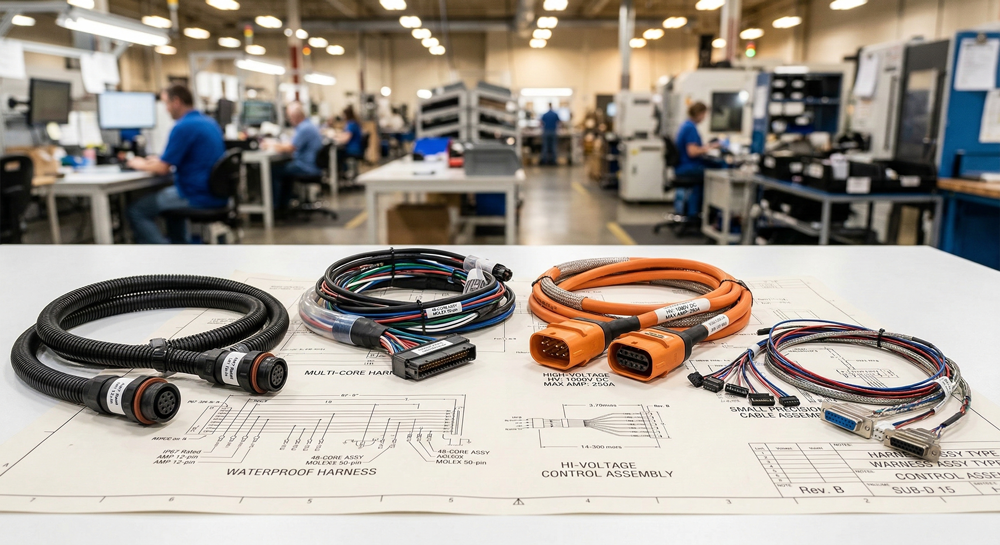
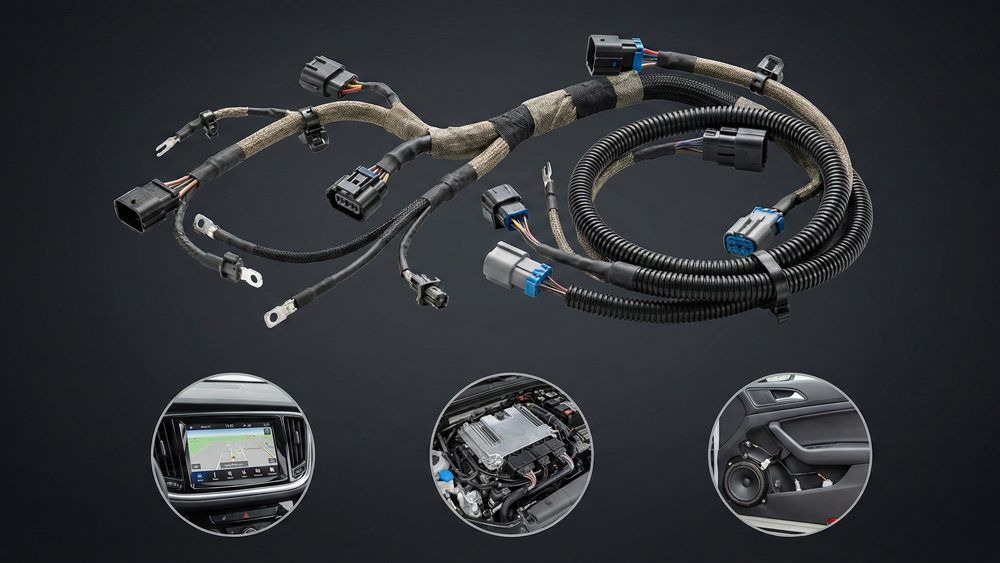
This is common in projects using branded connectors such as Molex, JST, TE Connectivity, Deutsch, Hirose, Amphenol, M8/M12, waterproof circular connectors, automotive-style connectors, or customer-specific interfaces. Many of these parts are reliable and widely used, but not every exact part number is always available in small quantities or on short notice.
Connector availability also affects quotation accuracy. If the supplier does not know whether the exact connector can be sourced, the quoted price and lead time may be based on assumptions. This creates risk for both sides. The buyer may expect a fast delivery, while the supplier later discovers that one component has a long lead time or MOQ requirement.
Exact Part Numbers Matter
A connector family name is not enough for production. Many connectors have similar appearance but different details. A small difference in pitch, keying, locking tab, terminal type, seal design, or mating direction can make two parts incompatible.
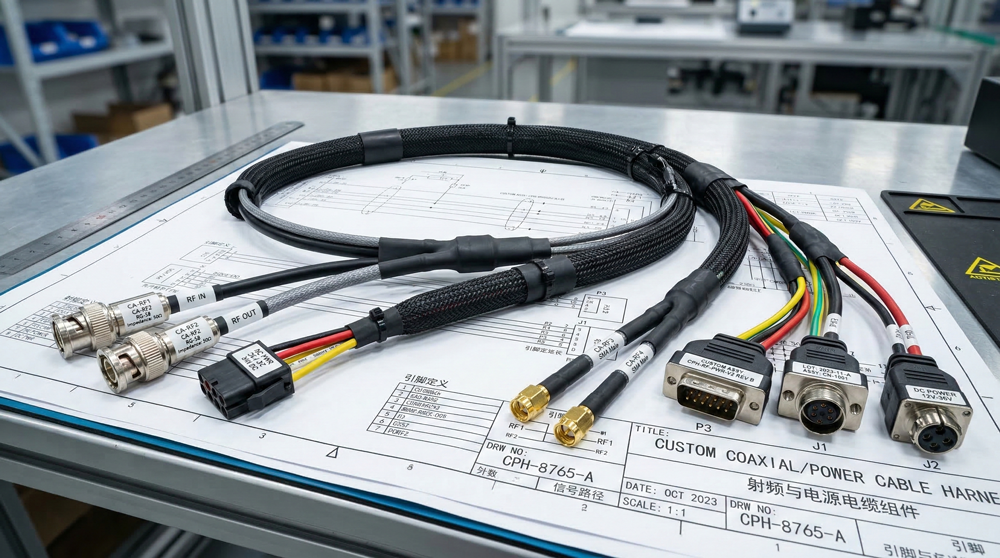
For example, two connector housings may both have the same number of pins, but one may use a different terminal series. Another connector may look correct from the front but have a different latch position. A waterproof connector may require specific seals, cavity plugs, or backshells to meet the sealing requirement. In a cable harness assembly, these details affect not only fit but also reliability.
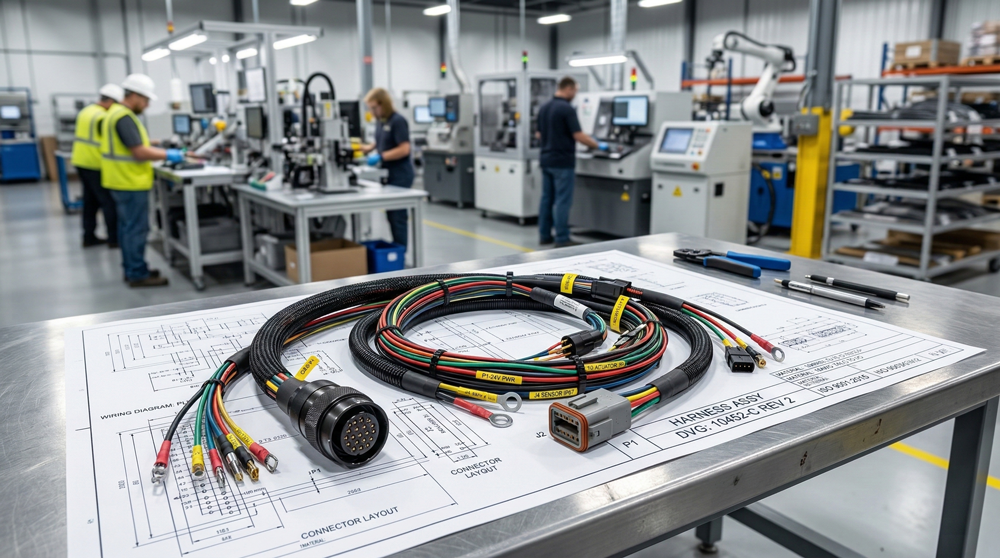
When buyers send an RFQ, the best information is the complete manufacturer part number. If the connector has separate components, the BOM should include housing, terminal, seal, wedge lock, backshell, cable gland, or related accessories. If the buyer only has photos or an old sample, clear pictures of the mating face, side view, rear view, and wire entry can help the supplier identify the part.
If the harness connects to a PCB, sensor, control module, power supply, or another cable, the mating side should also be checked. A supplier may identify a connector housing correctly, but if the mating interface is unknown, there is still compatibility risk. For replacement parts and supplier transition projects, connector mating must be verified carefully.
When Alternates Are Considered
Approved alternates are usually considered when the exact connector is unavailable, too expensive, has a long lead time, or creates MOQ problems. They may also be considered when the buyer is developing a new product and has some design flexibility.
In a new product development project, an alternative connector may be acceptable if it meets the electrical, mechanical, and environmental requirements. The engineering team may even prefer an alternate if it improves availability, cost, assembly efficiency, or future sourcing stability. In this case, the supplier can help compare options before the design is frozen.
In a replacement harness project, alternates are more difficult. The replacement harness must connect to existing equipment. If the connector does not mate correctly, the part is unusable. Even a small mechanical difference can create field service problems. For this reason, replacement projects often require exact connectors unless the mating side can also be changed or the buyer approves a complete interface revision.
In supplier transition projects, the decision depends on the existing design. If the buyer wants the new supplier to match the old harness exactly, alternates should be avoided unless absolutely necessary. If the old design has sourcing problems, the transition may be a good time to review approved alternatives, but the approval process must be controlled.
What Makes an Alternate Acceptable
A connector alternate should be reviewed as an engineering decision, not only a purchasing shortcut. The first question is whether the connector mates correctly with the existing or planned interface. If it does not mate reliably, it cannot be considered an equivalent part.
Mechanical fit is also important. The connector must fit the available space, cable exit direction, panel opening, mounting method, latch position, and routing path. In compact equipment, a slightly larger housing or different cable exit angle may create installation problems.
Electrical rating must match the application. The alternate connector should support the required current, voltage, contact resistance, insulation resistance, and temperature range. If the harness carries power, signal, communication data, or mixed circuits, the connector choice should reflect those requirements.
Environmental performance must also be reviewed. A connector used inside a dry control cabinet does not have the same requirements as one used on outdoor machinery, agricultural equipment, battery systems, medical devices, or moving industrial equipment. Waterproofing, dust protection, vibration resistance, oil resistance, UV exposure, and temperature range may all affect the decision.
Terminal compatibility is another critical point. A connector housing is only one part of the system. The terminal, crimping method, wire gauge range, seal, and extraction tool must also be suitable. If the alternate housing uses a different terminal system, the supplier may need to validate crimping and pull force again.
An approved alternate should not be approved by appearance alone. It should be reviewed, sampled, tested, and documented.
Approval Before Production
Connector alternates must be approved before production begins. This sounds obvious, but in urgent projects, buyers and suppliers sometimes make fast decisions by email or message without updating the drawing or BOM. This creates long-term risk.
A proper approval should define the exact alternate part number, the reason for substitution, and the conditions under which it can be used. For example, an alternate may be approved only when the original connector is unavailable, or it may become a permanent replacement in the BOM. These two situations should be handled differently.
The sample should be checked in the actual application whenever possible. For a replacement cable assembly, the connector should be mated with the existing equipment. For a new product, the engineering team should check fit, locking, routing, assembly process, and electrical performance. If the connector is waterproof or used in harsh conditions, the buyer should confirm whether additional validation is needed.
Once approved, the alternate should be recorded in the drawing, BOM, or approved vendor list. This prevents confusion in future orders. Without documentation, the supplier may use the original part in one batch, an alternate in another batch, and a different substitute later. That kind of uncontrolled substitution can create quality and traceability problems.
Impact on Cost and MOQ
Connector availability affects cost in several ways. If the exact connector is in stock and available in small quantities, pricing is usually straightforward. If the connector has high MOQ, long lead time, or limited channels, the supplier may need to buy more parts than the immediate order requires. This can increase upfront cost.
For low MOQ custom wire harness projects, connector MOQ is often more important than assembly MOQ. A buyer may want 50 harnesses, but the connector supplier may require 1,000 pieces of a housing or terminal. This creates a commercial decision. The buyer and supplier must decide whether to absorb the extra material cost, hold remaining stock for future orders, or look for an approved alternative with better availability.
Alternates can sometimes reduce cost, but they should not be selected only for price. A cheaper connector that creates installation problems, testing failures, or field service risk is not a real saving. The better goal is total project stability: reasonable cost, acceptable lead time, reliable mating, and repeatable sourcing.
For OEM buyers, it is useful to ask the supplier whether the quotation is based on exact connectors, available stock, or assumed alternatives. This makes price comparison more realistic.
Impact on Lead Time
Connector lead time can decide the full project schedule. Even if wire cutting, crimping, assembly, labeling, and testing take only a few days, the whole project may wait weeks for one connector.
Early connector review is therefore one of the best ways to reduce harness lead time. During the quotation stage, the supplier should check whether key connectors and terminals are available. If the connector is uncertain, the supplier should inform the buyer before confirming delivery time.
In urgent projects, the buyer may have several options. If exact connectors are in stock, the project can move quickly. If exact connectors are not available, the buyer may approve an alternate after review. If no alternate is acceptable, the buyer may decide to accept a longer lead time. If the project is for new development, the engineering team may redesign the interface around a more available connector.
The right decision depends on the project type. A direct replacement part may require exact fit, even if it takes longer. A prototype may allow more flexibility. A production transfer project may need a phased plan, using available connectors for samples and approved sourcing for production.
Managing Alternates in the BOM
A BOM should not list alternates casually. If more than one connector is allowed, the BOM should show which part is primary and which part is approved as an alternate. The approval conditions should be clear.
For example, the primary connector may be the original design part. The alternate may be allowed only after customer approval for each order. Or the alternate may be fully approved and interchangeable for all future orders. These rules should be written clearly because they affect purchasing, production, inspection, and traceability.
If the connector affects the drawing, the drawing should also be updated. A different connector may change dimensions, label position, cable exit direction, strain relief, or assembly method. Even when the electrical function is the same, the physical harness may no longer be identical.
Inspection should also reflect the approved part list. The quality team needs to know which connectors are allowed. Otherwise, an inspector may reject an approved alternate or accept an unapproved substitute.
Good BOM control protects both the buyer and supplier. It allows flexibility without losing control.
Supplier Responsibility
A professional custom wire harness supplier should not treat connector sourcing as a simple purchasing task. The supplier should review whether the connector is identifiable, available, compatible, and suitable for production. If there is uncertainty, the supplier should raise questions early.
The supplier should also avoid unapproved substitution. Even when an alternate appears equivalent, using it without customer approval can create serious problems. The customer may have compliance requirements, internal approval rules, equipment compatibility needs, or field service constraints that the supplier does not fully see.
At the same time, a good supplier can add value by identifying sourcing risks early. If a connector is difficult to buy, the supplier can inform the buyer before the project becomes urgent. If an approved alternate may reduce lead time, the supplier can present the option clearly. If exact matching is required, the supplier can explain the lead time impact.
For OEM buyers, the supplier’s sourcing discipline is part of supplier qualification. A supplier that manages connectors carefully is more likely to support stable production.
Buyer Responsibility
The buyer also plays an important role in connector availability management. If the buyer has exact part numbers, they should be shared early. If the buyer has a mating connector, PCB header, old BOM, approved sample, or original supplier information, this can help the new supplier identify the correct parts.
The buyer should also explain whether alternatives are allowed. Some projects require exact connectors because the harness is a replacement part or because the connector is already approved by the customer’s engineering team. Other projects allow alternates if they meet the same function. The supplier needs to know the rule before quotation.
Fast approval is important when lead time is tight. If the supplier proposes an alternate but the buyer takes too long to review it, the project may still be delayed. A clear internal approval process helps keep the schedule under control.
Finally, the buyer should update internal documentation after approving an alternate. If purchasing, engineering, quality, and service teams use different information, future orders may become confused.
How Infinite Possibilities Supports Connector Review
Infinite Possibilities supports OEM customers with custom wire harness and custom cable assembly projects where connector availability, sourcing risk, or approved alternates need to be reviewed. Many projects begin with incomplete drawings, old samples, photos, or unclear connector part numbers. We help customers organize the available information and identify what needs confirmation before quotation or production.
Our team can review connector photos, inspect physical samples, check mating requirements, identify possible connector series, and help prepare preliminary BOM information. If exact parts are difficult to source, we can discuss possible alternatives for customer approval. We do not recommend uncontrolled substitution, especially for replacement harnesses, supplier transition projects, or equipment with fixed mating interfaces.
For production support, we can build samples, confirm pinout, support 100% continuity testing, review labels and packaging, and help customers move from sample approval to low MOQ or repeat production. When connector lead time affects schedule, we can help identify the practical options and explain the trade-offs clearly.
If your project has connector shortages, unclear part numbers, or possible alternative parts, send us the photos, drawings, samples, application details, and quantity requirements. We can review the project and help you decide the safest path forward.
Final View
Connector availability is one of the most important factors in custom wire harness projects. It affects quotation accuracy, material cost, MOQ, sample timing, production lead time, and long-term supply stability. A harness may look simple, but one unavailable connector can delay the entire project.
Approved alternates can help reduce risk, but they must be managed carefully. A similar-looking connector is not automatically equivalent. Mating compatibility, mechanical fit, electrical rating, environmental performance, terminal system, and customer approval must all be reviewed.
For OEM buyers, the best approach is to provide exact connector information whenever possible, check availability early, decide whether alternatives are allowed, approve substitutions formally, and keep the BOM updated. For suppliers, the responsibility is to identify sourcing risk, communicate clearly, and avoid unapproved substitution.
A stable connector plan helps the entire wire harness project become more predictable. It reduces lead time surprises, prevents compatibility problems, and supports repeatable production.
FAQ
1. Why do connectors often delay custom wire harness projects?
Connectors can delay projects because exact part numbers may be missing, stock may be limited, MOQ may be high, or the original connector may have a long lead time. In many projects, connector sourcing takes longer than the harness assembly process itself.
2. Can a supplier use an equivalent connector?
Sometimes, but only after approval. The equivalent connector must be reviewed for mating compatibility, electrical rating, mechanical fit, terminal system, environmental performance, and application requirements.
3. Are connector alternates suitable for replacement harnesses?
Replacement harnesses usually require more caution because they must mate with existing equipment. Alternates may be possible, but they should be tested with the actual mating interface and approved by the customer before production.
4. How can buyers reduce connector-related delays?
Buyers can reduce delays by providing exact connector part numbers, mating connector information, old BOMs, samples, clear photos, and approval rules for alternates. Early connector availability checks also help.
5. Should approved alternates be added to the BOM?
Yes. Approved alternates should be documented in the BOM, drawing, or approved vendor list. This helps purchasing, production, inspection, and future reorders stay consistent.
CTA
Need help with connector availability or approved alternates for a custom wire harness project?
Send us your drawings, connector photos, old samples, application details, quantity, and target lead time. Our team can review the connector requirements and help you identify a practical sourcing and approval path.
Contact Infinite Possibilities for Connector and Wire Harness Review