Wire Harness Replacement Parts for OEM Aftermarket and Service Teams
Wire harness replacement parts are often needed long after the original equipment has entered the market. For OEM aftermarket teams, service departments, repair centers, and equipment distributors, the challenge is not always developing a brand-new harness. The challenge is often rebuilding, replacing, or reordering an existing wiring harness for machines, devices, or systems that are already in use.
In many cases, the original production supplier may no longer support the project. The old drawing may be incomplete. The connector may be difficult to source. The equipment model may be discontinued, but customers still need repair parts. A field service team may need a small batch of replacement cable assemblies to keep installed equipment running. These situations are common in industrial equipment, medical devices, agricultural machinery, test instruments, automation systems, and outdoor machines.
Sourcing a replacement wire harness is different from sourcing a harness for a new product. Compatibility becomes the first priority. The new harness must fit the existing equipment, mate with existing connectors, follow the correct pinout, match the installation space, and meet the required quality level. At the same time, OEM service teams often need smaller quantities, faster response, clear labels, and packaging that supports field repair.
This guide explains how OEM buyers and service teams can prepare a replacement harness project, what information a supplier needs, and how to reduce risks when the original drawing or supplier is no longer available.
Table of Contents
ToggleWhy Replacement Harnesses Matter
A wire harness may be a small part of the overall equipment cost, but it can stop an entire machine when it fails. A broken connector, damaged cable, loose terminal, wrong pinout, or worn sleeve can make equipment unreliable or unusable. For customers in the field, a replacement harness is not just a component. It is a way to restore equipment operation.
For OEMs, aftermarket service is also part of brand reputation. If a customer cannot obtain replacement parts for a machine that is still in use, the customer may lose confidence in the equipment supplier. Even when the original product is no longer in active production, service support can still influence customer satisfaction, distributor relationships, and future sales.
Replacement harness demand is often less predictable than regular production demand. A service team may need 20 pieces this month, 50 pieces next quarter, and only a few pieces later. This makes it difficult to work with suppliers that only accept large-volume orders. A flexible custom wire harness manufacturer can help OEM teams support older products without committing to large inventory.
For many companies, the problem is not whether the harness can technically be made. The problem is how to rebuild it accurately, control quality, and supply it in quantities that make sense for service needs.
Different From New Production
Replacement wiring harness projects have a different logic from new product development. In a new project, the buyer may still have design flexibility. The engineering team can change connectors, adjust branch lengths, revise labels, or redesign the harness to improve assembly. In a replacement project, the new harness usually has to match an existing product.
This means the supplier must be careful with dimensions, connector compatibility, pinout, mounting position, and routing. A small change that seems harmless may cause installation problems. For example, a connector with the same number of pins but a slightly different keying structure may not mate with the existing equipment. A branch that is slightly shorter may create stress during installation. A different label format may confuse field technicians.
At the same time, exact copying is not always possible. The old connector may be obsolete. The wire marking may no longer match available stock. The original sleeve material may be replaced by a modern equivalent. The old supplier may have used a special terminal or tool that is no longer accessible. In these situations, the supplier and buyer must decide which details must match exactly and which details can be changed with approval.
A good replacement harness project balances compatibility, availability, cost, and service practicality. The goal is not only to copy the old part visually. The goal is to supply a reliable part that can be installed correctly in the existing equipment.
Start with the Existing Part
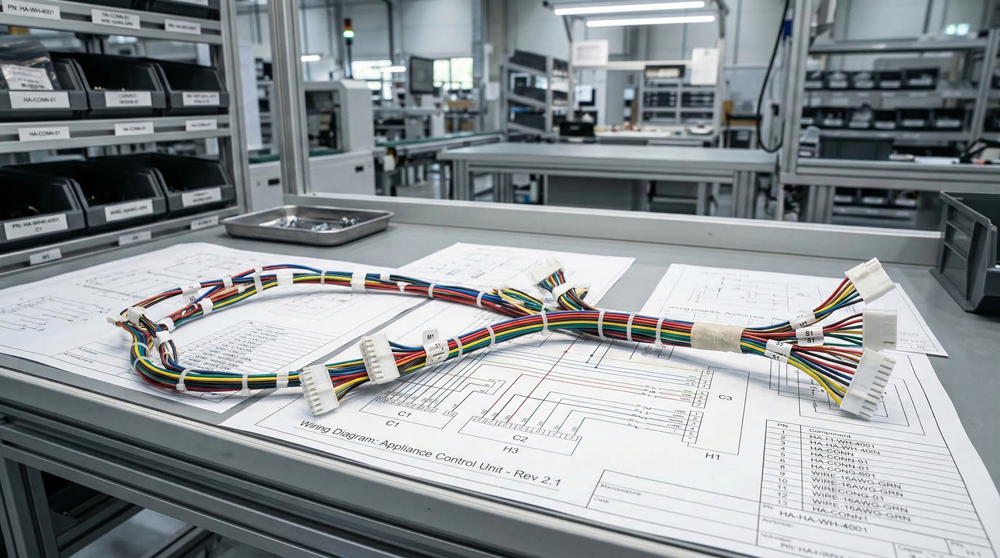
The best starting point for a replacement wire harness is an approved existing part. This may be a new spare part, a harness removed from equipment, or a used sample from the field. If the original drawing and BOM are available, they should be sent together with the sample. If the documents are missing, the sample becomes the main physical reference.
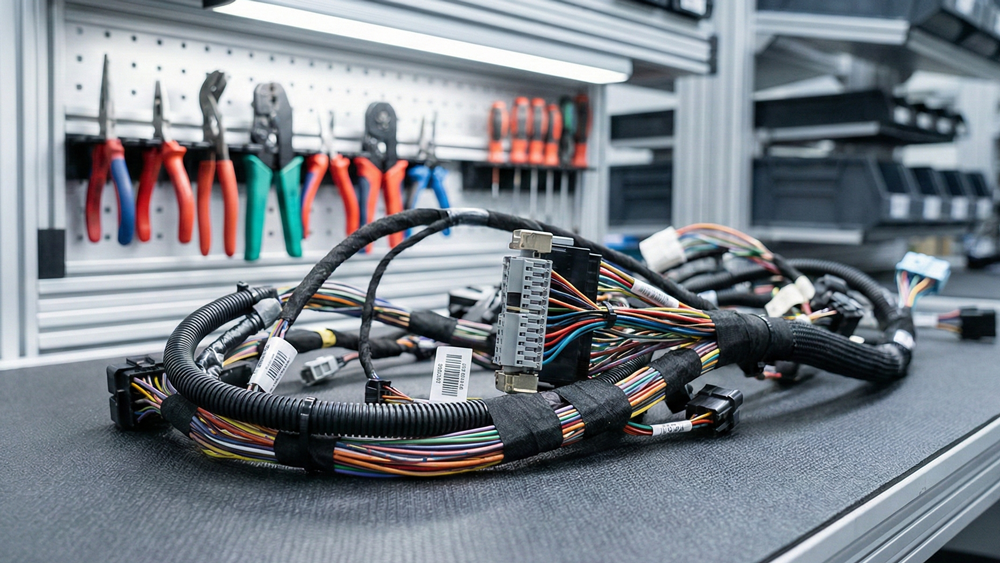
A supplier can learn a lot from an existing part. The sample shows connector types, wire colors, branch layout, protective materials, label positions, and general assembly method. It can also help the supplier measure the harness and prepare a preliminary drawing. If the harness has printed wire markings, part labels, serial numbers, or revision information, these details should be recorded.
However, a used part should be treated carefully. It may be stretched, bent, repaired, or damaged. A harness removed from a machine may not show the original shape perfectly. If the harness failed, the damaged area may also reveal a design weakness. For example, a broken wire near a connector may suggest poor strain relief. Abrasion on the sleeve may suggest routing problems. Corrosion at a connector may suggest sealing or environmental issues.
For this reason, the supplier should review the existing part as both a copy reference and a risk indicator. The buyer should also confirm whether the sample represents the latest approved version.
When Drawings Are Missing
Many replacement projects start without complete drawings. The OEM may have sold the equipment for years, but the original harness file may be missing, outdated, or held by the previous supplier. This is inconvenient, but it does not automatically block the project.
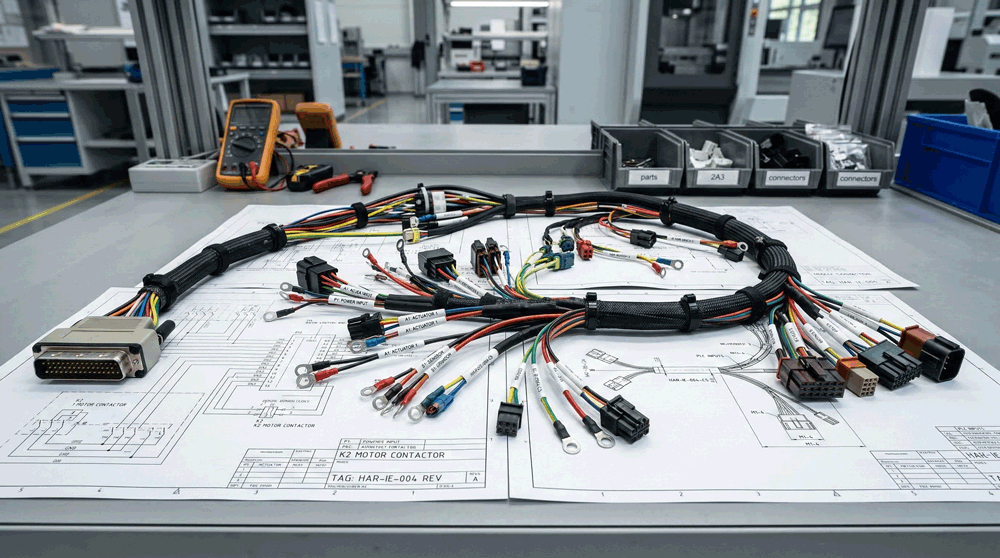
When drawings are missing, the supplier may help reverse engineer the replacement harness. This usually means measuring the sample, identifying connectors, checking wire count, tracing pinout, recording colors and labels, and preparing a new drawing and BOM. The first version may not be perfect, but it creates a technical foundation for quotation, sample approval, and future repeat orders.
The buyer still needs to confirm critical information. Pinout is especially important. If the supplier traces the sample, the customer should review and approve the traced pinout before production. If the harness connects to a PCB, sensor, motor, power supply, or control module, the electrical function should be confirmed as much as possible.
A replacement project should not remain dependent on a physical sample forever. Once the new harness is approved, the drawing, BOM, pinout table, and test requirements should be saved. This helps the OEM reorder parts later without repeating the same reverse engineering work.
Connector and Material Challenges
Connector availability is one of the most common issues in replacement wire harness projects. Older equipment may use connectors that are discontinued, hard to source, or available only with long lead times. The previous supplier may have stocked the parts for years, but a new supplier may need to source them again from the market.
If the exact connector is still available, the project is simpler. If not, the supplier may need to suggest an alternative. But alternative connectors must be reviewed carefully. A replacement connector must mate with the existing equipment or mating cable. It must also meet electrical, mechanical, and environmental requirements.
Material substitution can create similar risks. A supplier may be able to replace an old sleeve, tube, heat shrink, or wire type with a modern equivalent, but the buyer should approve the change. For example, an outdoor harness may need UV resistance, oil resistance, waterproof protection, or abrasion resistance. A medical or laboratory equipment harness may require cleaner appearance, consistent labeling, and reliable signal performance. An industrial control harness may need stable crimping, proper labeling, and easy installation.
For service parts, availability matters. If the exact original material causes long delay or high cost, an approved equivalent may be reasonable. But the approval should be documented so future orders remain consistent.
Low MOQ for Service Needs
Replacement harness demand is often small or irregular. An OEM service team may not need thousands of pieces. They may need 10 pieces for urgent repair, 30 pieces for distributor stock, or 100 pieces for annual service kits. This is very different from regular production purchasing.
Low MOQ support is important in this situation. If a supplier requires a large minimum order, the OEM may have to hold unnecessary inventory. This increases cost and creates risk if the equipment model is old or demand is uncertain. A flexible custom wiring harness supplier can help service teams order practical quantities without overcommitting.
However, low MOQ does not mean no preparation is needed. Even small batches require correct materials, pinout confirmation, testing, and packaging. The supplier still needs to understand the application and the replacement requirements. For small-volume service parts, documentation becomes even more important because future reorders may happen months apart.
A good approach is to start with a small validation batch. Once the harness is approved by the service team and tested in the equipment, the OEM can place periodic orders based on real demand.
Packaging for Service Teams
Packaging is more important for replacement harnesses than many buyers realize. In normal production, parts may go directly to an assembly line where trained operators know how to install them. In aftermarket service, the parts may be shipped to distributors, repair centers, field technicians, or end users. Clear identification becomes essential.
A replacement harness should be easy to recognize. The packaging may need a part number, revision, equipment model, installation location, and quantity label. If several similar harnesses are used in the same machine, each part should be separated clearly to avoid mistakes. For service kits, the harness may need to be packed together with labels, clips, sleeves, or installation notes.
Good packaging reduces service errors. A technician working in the field may not have time to compare several similar cable assemblies carefully. If the part is labeled clearly and packed logically, installation becomes faster and safer.
For OEMs, packaging is also part of professional service support. A well-labeled replacement harness helps distributors and repair teams manage stock more effectively.
Testing and Quality Control
Replacement wire harnesses should not be treated as low-priority parts just because they are ordered in small quantities. In many cases, they are used to repair equipment that has already failed or stopped working. A defective replacement part can create another service call, increase cost, and damage customer confidence.
At minimum, replacement harnesses should be checked for continuity, short circuits, and correct pinout. If the application requires higher reliability, additional testing may be needed. HiPot testing, insulation resistance testing, pull force checks, shielding continuity, or functional testing may apply depending on the harness design and equipment risk.
Visual inspection is also important. The supplier should check connector orientation, terminal seating, label accuracy, sleeve position, heat shrink placement, and packaging. For replacement parts, even a small labeling error can cause confusion during installation.
The buyer should define testing requirements clearly before quotation. If one supplier quotes only visual inspection and another quotes 100% continuity and pinout testing, the prices are not directly comparable. For aftermarket and service parts, reliable testing is usually worth the cost.
Avoiding Compatibility Problems
Compatibility is the central requirement for replacement harnesses. The new part must fit the existing equipment, connect to the mating parts, and perform the same function as the original.
The best way to avoid compatibility problems is to test the first sample in the actual equipment. A table inspection is helpful, but installation testing is more reliable. The buyer should check whether the connectors mate smoothly, whether the branches reach the right locations, whether the harness can be routed without stress, and whether the labels match the service process.
If the harness is part of a larger service kit, the kit should also be checked as a complete package. Sometimes the cable itself is correct, but the packaging, label, or accessory part causes confusion. These issues are easier to correct during sample approval than after field shipment.
When a change is approved, it should be documented. If an alternative connector, different sleeve, revised label, or updated length is accepted, the drawing and BOM should be updated. This prevents future orders from returning to the old version by mistake.
Forecasting and Reorder Planning
Replacement harness projects often have irregular demand, but some planning is still useful. If the OEM has service history, installed base data, warranty records, or distributor demand estimates, this information can help the supplier plan materials and lead time.
For example, if an OEM expects small but regular demand, the supplier may suggest periodic production batches. If the connector has a long lead time, the buyer may choose to order a small safety stock. If the equipment is being phased out, the buyer may place a last-time buy to support future service needs.
Planning is especially important when connectors or special materials are difficult to source. A supplier cannot always deliver replacement harnesses quickly if critical components are unavailable. Sharing expected annual demand helps the supplier give more realistic lead time and pricing.
For service teams, the goal is not always the lowest possible unit price. The goal is stable availability, reasonable MOQ, predictable lead time, and correct parts when customers need repairs.
How Infinite Possibilities Supports Replacement Harness Projects
Infinite Possibilities supports OEM customers who need wire harness replacement parts, custom cable assemblies, and low MOQ service parts for existing equipment. We understand that many aftermarket projects begin with incomplete drawings, old samples, photos, or discontinued supplier information.
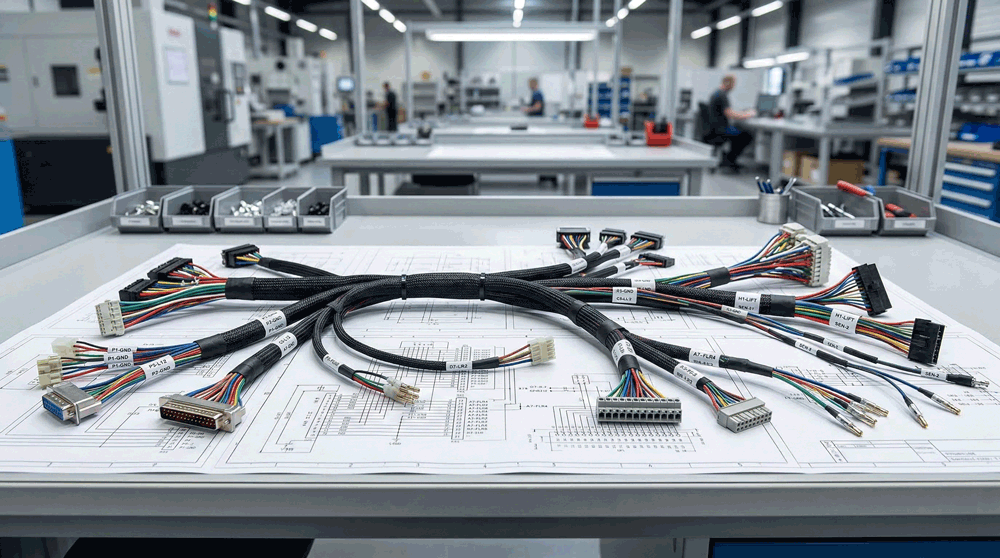
Our team can review existing harness samples, identify connectors, measure dimensions, trace wiring, prepare preliminary drawings, build replacement samples, and support small-batch production. We can also help customers document the approved version so future reorders are easier and more consistent.
For replacement projects, we support 100% continuity and pinout testing, visual inspection, labeling review, kitting, and packaging according to customer requirements. If the original connector or material is difficult to source, we can help review possible alternatives for customer approval.
Whether you need a few pieces for urgent repair, a small batch for distributor stock, or a stable long-term source for OEM aftermarket parts, we can help you move from old sample or photos to a practical replacement harness solution.
Final View
Wire harness replacement parts are different from new production harnesses. They must match existing equipment, support service teams, and often be supplied in small or irregular quantities. The project may start from an old sample, damaged harness, incomplete drawing, or photos, but the final part still needs controlled documentation, confirmed pinout, reliable materials, and proper testing.
For OEM aftermarket teams, the best approach is to collect the existing part, review any available drawings, confirm the application, define the required quantity, and work with a supplier that can support low MOQ custom production. If the original documentation is missing, reverse engineering can help rebuild the technical package. If materials or connectors are obsolete, approved alternatives should be reviewed carefully.
A good replacement harness is not only a copy of an old part. It is a reliable service part that can be installed correctly, tested consistently, packed clearly, and reordered when customers need support.
FAQ
1. Can a replacement wire harness be made from an old sample?
Yes. A supplier can often review an old sample, measure dimensions, identify connectors, trace wires, and prepare a replacement harness. However, the customer should approve the final drawing, pinout, and sample before production.
2. What if we do not have the original drawing?
A project can still start from a physical sample, photos, or a sketch. The supplier may help create a preliminary drawing and BOM through reverse engineering. Critical details such as pinout and application requirements should still be confirmed.
3. Can replacement harnesses be ordered in low quantities?
Yes. Many OEM service projects require low MOQ support because replacement demand is smaller and less predictable than regular production. Low-volume production is suitable for service stock, repair kits, discontinued equipment, and pilot replacement batches.
4. What information is needed for a replacement harness quote?
Useful information includes the old sample or photos, application, equipment model, estimated quantity, connector details, pinout, length, material requirements, testing requirements, and packaging needs.
5. Can obsolete connectors be replaced with alternatives?
Sometimes, but alternatives must be approved carefully. The new connector must match the mating interface and meet electrical, mechanical, environmental, and installation requirements. Any approved change should be documented for future orders.
CTA
Need wire harness replacement parts for OEM service or aftermarket support?
Send us your old harness sample, photos, equipment application, target quantity, and any available drawings or pinout information. Our team can review the project and help you develop a practical replacement harness solution for service, repair, or repeat supply.
Contact Infinite Possibilities for Wire Harness Replacement Parts