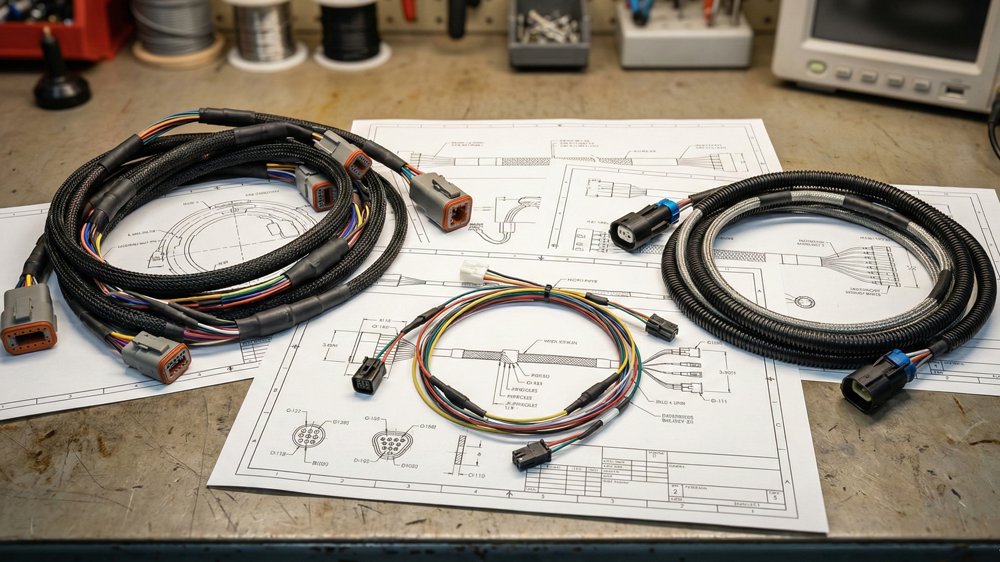
Waterproof cable assembly projects often fail not because the design is impossible, but because the testing plan is incomplete. Many teams define an IP rating and run a basic ingress test, then assume the waterproof requirement is fully validated. In field use, failures still appear because the test scope, assembly state, mechanical stress, or acceptance criteria did not reflect real operating conditions.
This waterproof cable testing guide for OEM buyers explains how to build a practical validation and inspection approach for waterproof cable assemblies. It is written for engineering, sourcing, and quality teams that need better supplier alignment before sample approval and mass production release.
If you are building the full waterproof specification package, this article works together with our Waterproof Cable Assemblies Design Guide for OEM Buyers, IP67 vs IP68 for Waterproof Cable Assemblies, Waterproof Connector Selection for Cable Assemblies, and Waterproof Cable Assemblies Overmolding and Sealing Guide.
Table of Contents
ToggleWhy Waterproof Cable Testing Must Match Real Use Conditions
A waterproof cable assembly can pass a lab test and still fail in the field if the validation setup does not represent real installation and use conditions. This is common when the test focuses only on connector ingress rating while the actual leak path is the cable exit, overmold transition, panel interface, or a stress-damaged seal.
For OEM buyers, the goal is not only to confirm that a sample can pass one test. The goal is to confirm that the selected design and process can maintain sealing performance under the actual product conditions.
That means waterproof cable testing should be built around:
- real exposure conditions,
- sealing boundary definition,
- tested assembly state,
- mechanical stress factors,
- functional acceptance criteria,
- and repeatability expectations.
Define the Waterproof Testing Scope Before Testing Starts
One of the biggest causes of confusion is starting tests before defining the testing scope. “Waterproof test” can mean very different things to different suppliers.
OEM teams should define:
- what part of the system is being tested,
- what leak paths are in scope,
- what assembly condition is tested,
- what standards or internal methods apply,
- and what constitutes pass/fail.
Without this, one supplier may test only the mated connector interface while another tests the complete assembly with cable transition and installed orientation. Both may report a “pass,” but they are not validating the same risk.
For internal alignment, it helps to connect the testing scope with your Tests & Inspections and Quality Guarantee requirements.
IP Rating Scope and Waterproof Cable Assembly Testing
IP ratings are useful, but only when the rating scope is clearly tied to the cable assembly configuration. OEM teams should not treat “IP67” or “IP68” as complete test instructions.
In waterproof cable assembly testing, define whether the rating applies to:
- connector interface only,
- complete mated cable assembly,
- panel-mounted installed condition,
- cable exit and overmold transition,
- or the final product system including the cable assembly.
This scope directly affects fixture setup, sample preparation, and result interpretation. A test result is meaningful only when the tested configuration matches the real design intent.
If your team is still finalizing rating definitions, align this step with IP67 vs IP68 for Waterproof Cable Assemblies.
Test the Correct Assembly State
Waterproof performance can change significantly depending on how the assembly is configured during testing. A connector may meet its ingress claim only in a specific mating condition or installed panel state. Rear cable seals may also behave differently depending on cable routing and strain.
OEM buyers should define the tested state clearly, such as:
- unmated connector,
- mated connector,
- panel-mounted and torqued condition,
- full cable assembly installed in representative orientation,
- post-handling or post-mechanical stress condition.
Testing the wrong state can produce false confidence. The sample may pass in an ideal setup but fail in the field because the real installed condition was never validated.
Preconditioning Before Waterproof Testing
Preconditioning is often the missing step in waterproof cable validation. Some assemblies pass ingress testing when new and unstressed, but leak after bending, pulling, vibration, or temperature change affects the sealing interface.
Depending on product risk, OEM teams should consider preconditioning steps such as:
- cable bending near the exit area,
- pull or handling stress,
- mating and unmating cycles,
- vibration or motion exposure,
- temperature cycling.
The purpose is not to over-test without reason. The purpose is to simulate realistic conditions that may weaken the seal before ingress testing is performed. This is especially important for designs using overmolding, seal boots, or compression-based rear seals.
For structural review before testing, coordinate with Overmolding Services and Assembly Capabilities early.
Ingress Testing for Waterproof Cable Assemblies
Ingress testing is the core of waterproof validation, but OEM teams should define more than the rating label. A useful ingress test plan describes the exact condition to be used and how results are judged.
A practical ingress testing plan should define:
- test configuration and fixture setup,
- sample orientation (if relevant),
- exposure condition details,
- test duration,
- sample quantity,
- pass/fail criteria for leakage and function.
In many projects, the most important improvement is not adding more tests, but documenting the ingress test condition clearly so supplier results can be compared consistently.
Leak Checks Beyond Basic IP Testing
A single ingress test may not provide enough diagnostic information, especially during development. If a sample fails, the team still needs to identify where and why leakage occurred.
OEM teams often add leak-focused checks or inspection steps during development and sample verification, such as:
- visual leak path inspection after test,
- inspection of cable exit and sealing transitions,
- internal moisture checks (where applicable),
- interface compression review,
- post-test functional checks.
The exact methods depend on the product and assembly design, but the principle is the same: testing should help decision-making, not only generate a pass/fail label.
Functional Validation After Waterproof Testing
Waterproof testing should not end with “no visible water.” OEM buyers should define what functional performance must be maintained after test exposure.
Depending on the product, functional validation may include:
- continuity or insulation checks,
- signal integrity or communication checks,
- power delivery stability,
- intermittent fault checks after handling,
- visual inspection of seal-related damage.
This is important because some assemblies may not show obvious leakage but still suffer performance degradation due to moisture ingress, seal shift, contamination, or mechanical damage introduced during testing.
For production and supplier alignment, tie these checks to your Tests & Inspections workflow.
Mechanical Stress and Waterproof Testing Integration
Many field leaks appear only after mechanical stress. That is why waterproof validation should be integrated with mechanical stress conditions when the application includes cable motion, vibration, or installation pull force.
OEM teams should decide whether mechanical stress is applied:
- before ingress testing,
- after ingress testing,
- or both (for higher-risk applications).
The correct sequence depends on what failure mode you are trying to detect. If the concern is seal weakening during installation, pre-test stress may be more valuable. If the concern is hidden damage after exposure, post-test checks may be more valuable.
This step should be aligned with the actual application profile, especially in Industrial & Robotics environments.
Sample Size and Repeatability in Waterproof Cable Validation
A single passing sample is not enough for most OEM decisions. Waterproof cable assembly performance can be sensitive to cable OD variation, assembly technique, molding variation, and installation differences.
OEM buyers should define:
- number of samples for validation,
- whether samples come from one build or multiple builds,
- repeatability expectations across samples,
- retest conditions (if failures occur),
- criteria for engineering correction and resubmission.
Repeatability matters because the project risk is in production consistency, not only prototype success. A supplier that passes once but cannot repeat the result reliably creates downstream quality risk.
For supplier screening, combine test results with evidence from Assembly Capabilities and Quality Guarantee.
Validation Testing vs Production Inspection
OEM teams often mix validation testing and production inspection into one idea, but they serve different purposes.
- Validation testing confirms that the design and process can meet the waterproof requirement under defined conditions.
- Production inspection confirms that ongoing builds remain within the approved process and quality controls.
A production inspection plan may not repeat full validation tests on every batch. Instead, it should focus on the inspection points that protect the validated sealing architecture, such as critical dimensions, assembly steps, torque controls, visual sealing features, and defined sampling tests.
Separating these two layers helps control cost while maintaining reliability.
Common Waterproof Cable Testing Mistakes
A common mistake is specifying only an IP rating with no tested state, no scope definition, and no pass/fail details. Another is validating the connector interface while ignoring the cable exit transition, which is often the actual weak point.
Some teams run ingress testing on one sample with no preconditioning, then treat the result as production-ready validation. Others approve samples based on supplier claims without documenting the exact test method used.
Another costly mistake is changing cable jacket material, connector alternatives, or overmold compounds after validation and skipping revalidation. Small material or geometry changes can shift waterproof performance significantly.
OEM RFQ Checklist for Waterproof Cable Testing Requirements
A strong RFQ should include testing and validation requirements, not only design targets. This reduces ambiguity and improves quote quality.
A practical RFQ for waterproof cable assembly testing should define:
- target IP rating and intended test condition,
- rating scope and sealing boundary,
- tested assembly state,
- preconditioning requirements (if any),
- ingress test configuration expectations,
- functional checks after testing,
- sample quantity and repeatability expectations,
- pass/fail criteria,
- production inspection expectations,
- change-control and revalidation triggers.
If you already have field failure history, include photos and failure descriptions. This helps suppliers build a more realistic validation plan.
How OEM Buyers Compare Suppliers on Waterproof Testing Capability
Supplier comparison should include testing capability and documentation discipline, not only the final pass result. Two suppliers may both claim waterproof success, but one may have a much stronger validation framework and production control method.
Useful comparison points include:
- clarity of test scope definition,
- ability to test the correct assembly state,
- preconditioning and mechanical stress capability,
- documentation quality and traceability,
- repeatability across samples,
- response quality when failures occur and redesign is needed.
For project alignment, your Custom Cable Assemblies, Tests & Inspections, and Strong Technical Support pages can support a clearer evaluation framework.
Conclusion
Waterproof cable assembly testing is not just an IP check. For OEM buyers, reliable validation requires a defined test scope, correct assembly state, realistic preconditioning, functional acceptance criteria, and repeatability across samples.
The best results come from treating waterproof testing as part of the full design-and-process approval plan. That approach improves supplier alignment, reduces sample rework, and creates a stronger foundation for mass-production reliability.
FAQ
Is an IP67 or IP68 test enough to validate a waterproof cable assembly
Not always. The test is only meaningful if the scope, assembly state, and conditions match the real product use. Many failures happen because the wrong configuration was tested.
Should OEM buyers test the connector only or the full cable assembly
Whenever possible, test the full cable assembly in the intended installed or mated state. Connector-only testing may miss leaks at the cable exit, overmold transition, or panel interface.
Why is preconditioning important in waterproof cable testing
Because seals can degrade after bending, pull force, vibration, mating cycles, or temperature changes. Preconditioning helps reveal failures that a new, unstressed sample may hide.
What is the difference between validation testing and production inspection
Validation testing proves the design and process can meet requirements. Production inspection verifies ongoing builds remain within the approved process and quality controls.
What should be included in waterproof cable testing requirements in an RFQ
Include IP target, scope, tested state, preconditioning, ingress test expectations, functional checks, sample quantity, pass/fail criteria, and revalidation triggers.
CTA
Need Help Defining Waterproof Cable Testing for an OEM Project
If your team is preparing an RFQ or reviewing supplier samples for a waterproof cable assembly, we can help define a practical testing and validation plan before production release.
We can support:
- waterproof test scope and sealing boundary definition,
- tested assembly state and fixture planning,
- preconditioning and mechanical stress review,
- functional acceptance and inspection planning,
- supplier comparison from a validation capability perspective.
If you already have drawings, sample photos, or test reports, contact us through our Contact page. You can also review our Waterproof Cable Assemblies Design Guide for OEM Buyers, Tests & Inspections, and Quality Guarantee pages before starting the discussion.