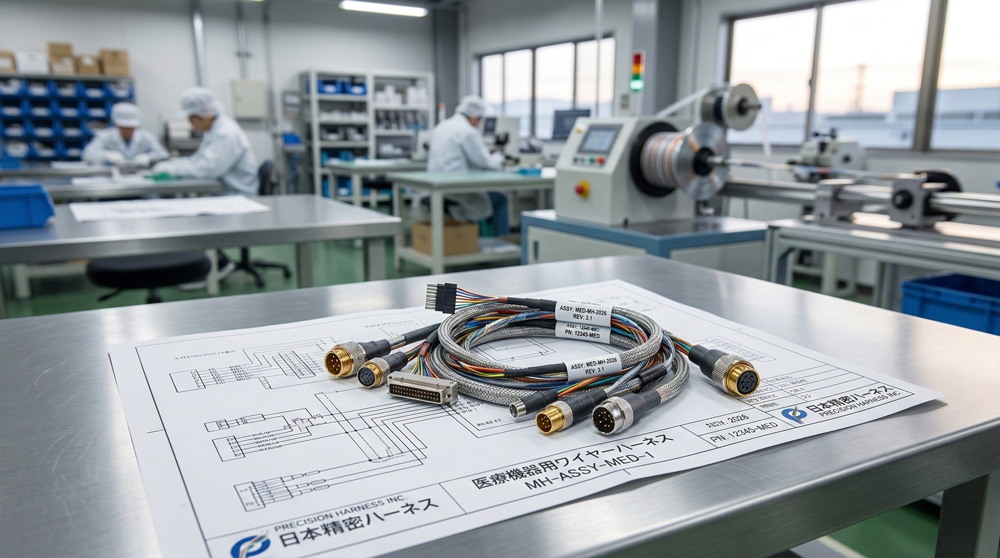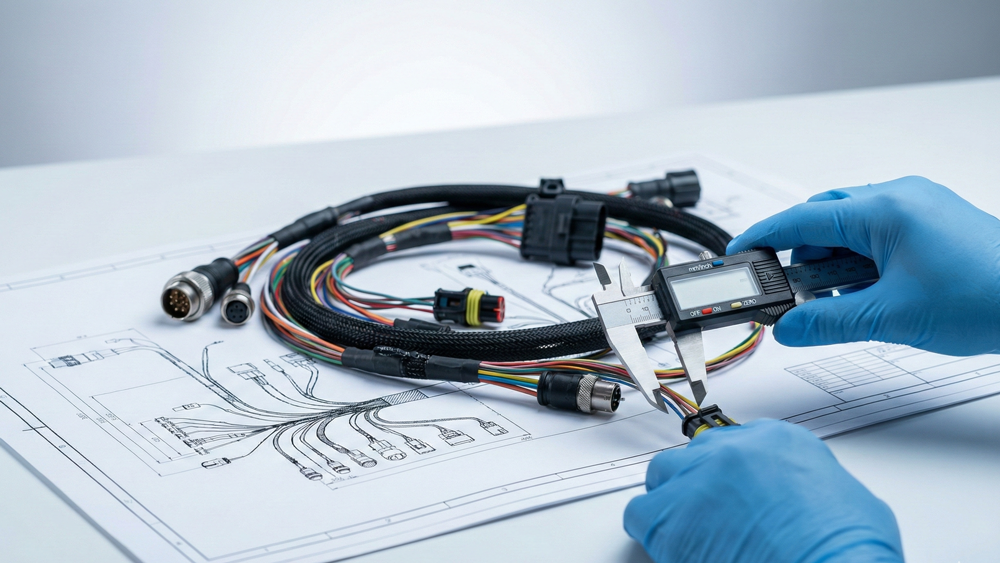
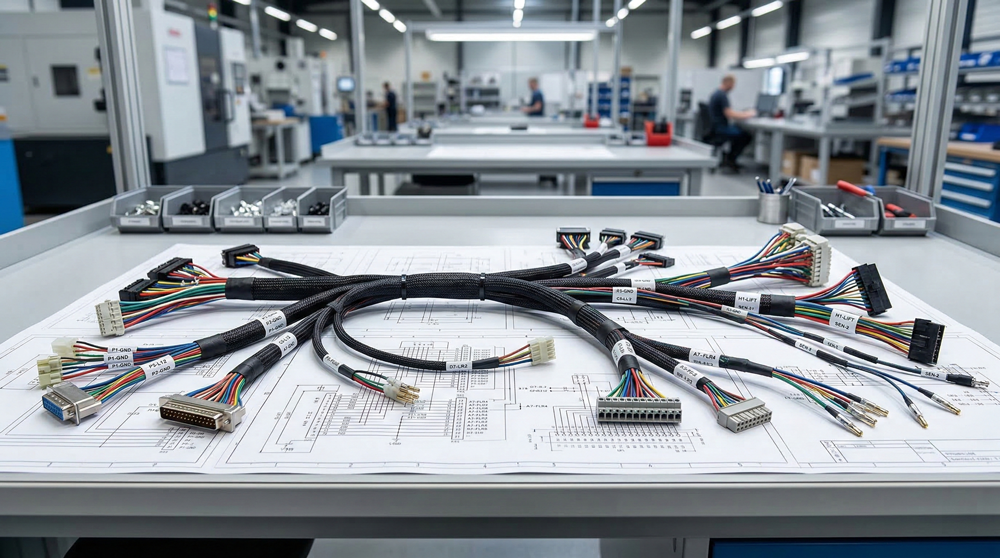
Wiring harness label and packaging cost control matters because labels and packaging often look small on a BOM while creating recurring cost in production, receiving, storage, service, and supplier handling. Wiring harness label and packaging cost control is not about making labels cheaper at any price or stripping packaging until the product becomes harder to manage. It is about reducing unnecessary complexity while keeping the cable assemblies easy to identify, protect, ship, receive, and use.
For OEM buyers, this is a strong cost-down area because label and packaging waste often survives long after the product design is stable. A wiring harness or cable assembly may still be carrying extra label formats, duplicate identifiers, overbuilt bags, low-value inserts, or awkward pack logic that were reasonable during development but no longer add real value in repeat supply. When those items are cleaned up properly, the savings are usually safer than cutting core functional materials.
Table of Contents
ToggleWhy It Matters
In many OEM cable assemblies, label and packaging cost is underestimated because the unit cost of each item looks small. The buyer sees a connector line, a cable line, and a label or bag line, and naturally focuses on the more expensive parts first. But labels and packaging do more than add material cost. They also affect labor, warehouse handling, incoming inspection, stock control, service support, and version control.
This is why a weak label or packaging system can become expensive in ways that do not appear clearly in a purchase quotation. If a label is too complex, the factory spends more time printing and applying it. If the package is awkward, the supplier spends more labor loading it and the buyer spends more labor receiving it. If the outer labels are unclear, warehouse teams lose time confirming the right lots. If the packaging tangles assemblies or hides part IDs, production and service teams lose time later. Those are real costs, even if they are not all visible in the BOM.
For B2B buyers, label and packaging cost control is attractive because it often reduces waste without changing the electrical or mechanical function of the cable assembly. That makes it one of the cleaner places to improve margin while keeping the product stable.
Start with the Purpose
The first step is to define what the label and the packaging are supposed to do. If the team cannot answer that clearly, cost-down usually becomes too random.
A wiring harness label may exist for several reasons at once. It may identify the part for the supplier, for incoming inspection, for warehouse stock control, for assembly-line issue, for customer delivery, or for future service replacement. Packaging may protect the cable, prevent tangling, preserve labels, support counting, group variants, or improve line feeding. Once those purposes are visible, the team can judge what is necessary and what is legacy complexity.
This matters because many OEM programs carry old label fields and package details that no longer serve an important purpose. A data field once needed for launch may now be unused. A special bag or insert introduced for pilot may still be in place even though the product now ships differently. Cost control begins when those old assumptions are challenged against current reality.
Cut Label Complexity
One of the safest savings areas is unnecessary label complexity. Many cable assemblies carry more label content than the actual OEM flow requires.
This may show up as duplicated internal and customer part numbers, extra date fields, repeated text on both inner and outer labels, multiple barcode formats, or variant-specific formatting rules that no longer add enough value to justify the work. In some cases, the label itself is not expensive, but the time to generate, check, print, apply, and inspect it becomes a recurring burden.
A stronger label cost-down review asks which data must remain for production, receiving, traceability, and service, and which data is simply still present because nobody removed it. In many wiring harness and cable assembly programs, simplifying the label logic creates savings in both material and labor. It also tends to reduce errors, which creates another indirect saving.
The goal is not to make labels minimal in an abstract sense. The goal is to make them useful and no more complex than the process actually needs.
Standardize the Label
Standardization is often the best label cost-down move. If related cable assemblies can use the same label size, print logic, placement rule, or outer carton format, both the buyer and the supplier usually benefit.
This improves purchasing leverage on label materials, simplifies setup at the supplier, reduces operator confusion, and makes incoming inspection faster. It also helps with version control because the number of acceptable formats is lower. In some OEM wiring harness programs, label standardization creates more savings than changing the label material itself.
That is why buyers should review whether multiple products can share more of the same label system safely. If the application and customer flow allow it, standardization usually improves both cost and control at the same time.
Review Label Material
Label material is another cost area, but it should be reviewed carefully. Some projects use premium label stocks for good reasons. Others continue using them long after the original reason is gone.
A more durable material may be necessary when the cable assembly faces outdoor use, oil, cleaning chemicals, repeated handling, or long service life. In those cases, the material is buying real value. But in protected internal cable assemblies or in packaging labels that never face harsh conditions, the same premium stock may be unnecessary.
The best question is not “Can we make the label cheaper?” It is “What environment does this label actually have to survive?” Once that answer is clear, the buyer can judge whether the current material is right, over-specified, or under-specified. Safe cost control comes from matching the material to the real use case, not from lowering the grade automatically.
Simplify Placement
Label placement also affects cost more than many teams expect. A good label in the wrong place can still add unnecessary labor or create later handling problems.
If the factory needs extra manual positioning time, if the label interferes with routing or packaging, or if the label becomes hard to read during receiving or service, then the project is paying hidden cost. In many cases, moving the label to a more practical location creates savings with almost no material change at all.
This is especially useful in custom cable assemblies where label application time varies because the route, branch shape, or protective material makes some placements harder than others. A smarter placement often lowers labor, improves repeatability, and makes incoming inspection easier. That is a good cost-down result because it improves process quality while reducing recurring effort.
Cut Packaging Waste
Packaging waste is often one of the easiest cost-down opportunities in OEM cable assemblies. Waste can appear as oversized bags, unnecessary inner wraps, too many small pack variants, low-value inserts, redundant ties, or carton configurations that protect the product more than necessary for the actual shipping and receiving flow.
The key is to distinguish real protection from habitual over-packaging. Some packaging elements are essential because they prevent damage, preserve label visibility, or stop assemblies from tangling. Others remain in the process because they were introduced during development, early pilot, or a specific shipping event and never reviewed again.
Good packaging cost control removes those low-value elements first. This kind of change often produces savings not only in material, but also in labor and warehouse flow. Less unnecessary packaging means faster packing, simpler receiving, and cleaner stock handling.
Standardize the Pack
As with labels, packaging standardization is a strong cost-control tool. If the OEM program uses too many bag sizes, carton sizes, or custom packing patterns for very similar cable assemblies, the supplier and the buyer are both carrying unnecessary complexity.
Standardizing the package can improve purchasing leverage, reduce supplier setup variation, simplify warehouse handling, and make incoming checks easier. It also helps service stock control when the same assembly family follows a more consistent identification and packing logic.
This matters especially in medium-volume and repeat OEM cable assembly programs, where the savings may look small at unit level but become meaningful across regular supply. Standardization is often safer than aggressive downsizing because it reduces waste without challenging the protection function too directly.
Protect the Product
Packaging cost control should never ignore what the packaging is protecting. A lower-cost package is not a real savings if it increases damage, tangling, connector stress, label loss, or receiving mistakes.
This is why buyers should review packaging against the actual cable assembly. Does the assembly have exposed connectors, delicate transitions, molded ends, long loose runs, or multiple branches that can tangle? Does the package protect the right areas? Does it preserve the label in a visible state? Can warehouse teams count and identify the contents without excessive unpacking? If the answer is yes, then packaging may already be doing important work.
The best cost-down in packaging removes waste while keeping that protection logic intact. In many B2B cable assemblies, the right packaging is part of the operational system, not just the shipment presentation.
Improve Outer Labels
Outer labels deserve separate attention because they drive receiving speed and stock control. A carton or bag may contain the right product, yet still create cost if the outer identification is weak or unnecessarily complicated.
A strong outer label should help warehouse teams confirm part identity, count, lot information where relevant, and current version logic quickly. If the label is cluttered, duplicated, inconsistent, or too dependent on manual interpretation, receiving cost rises. If the label requires special handling or multiple review steps, the same thing happens.
This is why cost control often comes from improving clarity rather than simply reducing label size or material. A clearer outer label can lower internal handling cost while still using less print space or fewer duplicated fields. In OEM wiring harness supply, that is a very useful kind of efficiency.
Use Supplier Input
Suppliers usually have strong insight into where label and packaging cost is being created. They see which steps take time, which formats create confusion, which packaging types are inefficient, and which low-volume exceptions are hurting productivity.
That is why good OEM buyers use supplier input when reviewing label and packaging cost. The best question is not only “Can you quote this lower?” A more useful question is “Where is the label or packaging process consuming cost without adding enough value?” The answer may reveal opportunities in print setup, pack count, standard carton use, label placement, bag type, or handling flow that are not obvious from the OEM side alone.
Of course, supplier ideas should still be reviewed carefully against receiving, warehouse, and service needs. But in many cable assembly programs, the supplier sees real recurring waste earlier and more clearly than anyone else.
Validate the Change
Label and packaging changes often look small, which is exactly why they are easy to under-control. A changed label field, a different bag type, or a new outer carton format may not seem like a major product change, but it can still affect receiving, traceability, version control, service, and line use.
That is why these changes should still be validated. The depth of validation depends on the risk. Some changes may only need internal approval and a controlled first lot. Others may need sample packaging review, pilot confirmation, or tighter incoming checks after release. The important point is that the buyer should not treat label and packaging changes as too minor to manage.
In OEM cable assemblies, small changes often create the most frustrating operational problems because they are easy to overlook until they affect real flow.
Avoid Common Mistakes
One common mistake is trying to save label cost by stripping away information that incoming inspection or service actually needs. Another is reducing packaging so aggressively that the product becomes harder to count, protect, or identify. A third is leaving too many customer- or project-specific formats in place when a cleaner standard could work across multiple assemblies.
Another frequent mistake is changing the label or packaging material without checking whether the environment, storage time, or handling method still supports the new choice. A final mistake is failing to update receiving and release logic when label or packaging rules change. In those cases, the project may save a little on print or bag cost and lose much more in control.
Use a Practical Review Framework
A simple framework makes label and packaging cost control easier to manage.
| Review area | Key question |
|---|---|
| Label purpose | What must the label really do in production, receiving, and service |
| Label complexity | Which fields or formats no longer add enough value |
| Label standardization | Can related cable assemblies share more of the same label logic |
| Label material | Is the current material stronger than the environment requires |
| Placement | Is the label in the easiest useful position |
| Packaging waste | Which pack elements protect nothing important |
| Pack standardization | Can bag and carton logic be simplified across families |
| Product protection | Does the lower-cost package still protect connectors and labels |
| Validation | What release and incoming checks are needed after the change |
This kind of structure keeps the cost-down practical and lowers the chance of saving money in the wrong way.
Conclusion
Wiring harness label and packaging cost control works best when OEM buyers simplify what is unnecessary, standardize what can be shared, protect what truly matters, and validate changes before release. The strongest savings usually come from reducing label complexity, improving placement, standardizing formats, removing low-value packaging waste, and keeping the protection and identification logic that the product and the warehouse still need.
When teams do this well, they lower recurring cost without weakening control. In OEM cable assemblies and wiring harness programs, that is exactly what good cost-down should accomplish.
FAQ
What is the safest label cost-down move?
Usually it is simplifying unnecessary fields and standardizing label formats before changing materials or reducing important traceability content.
Can packaging cost be reduced without increasing risk?
Yes, when the reduction removes low-value waste rather than weakening the real protection, counting logic, or identification needs of the cable assembly.
Why do labels create hidden cost?
Because labels affect printing, application labor, receiving, stock control, version identification, and service handling, not just raw material cost.
Is label placement really a cost issue?
Yes. If placement makes the label harder to apply, inspect, or read, it increases labor and handling cost even when the label material itself is cheap.
Do packaging changes need validation?
Usually yes. Even small packaging changes can affect protection, label visibility, warehouse flow, and incoming control, so release discipline still matters.
CTA
If you are reviewing label or packaging cost in OEM wiring harness and cable assembly programs, the best first step is to identify which parts of the current system are truly supporting receiving, service, and protection, and which parts are only legacy complexity.
You can send your label format, packaging photos, BOM, annual volume, and cost target through Contact. Our team can help review the label and packaging flow and support a more practical OEM cost-down path before release.