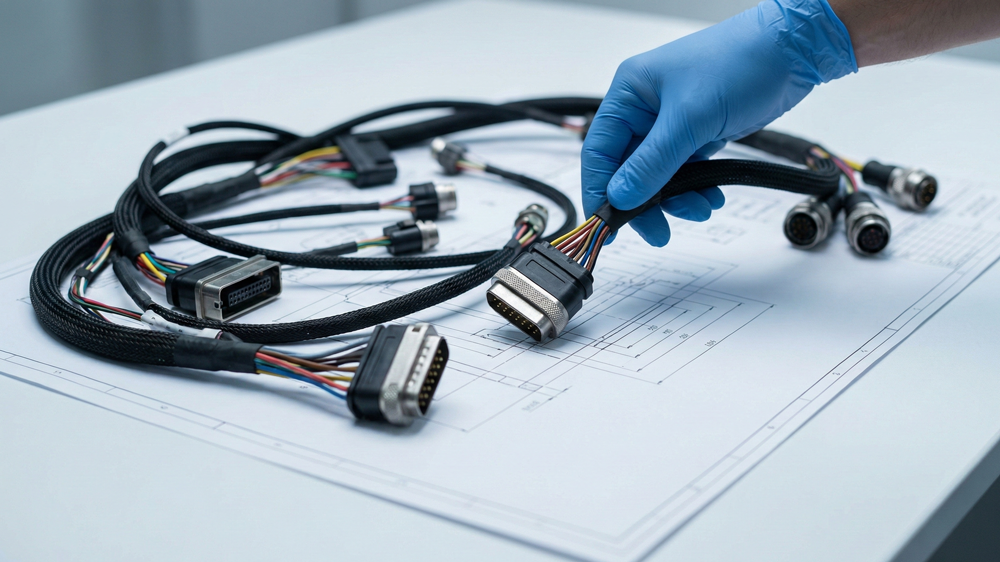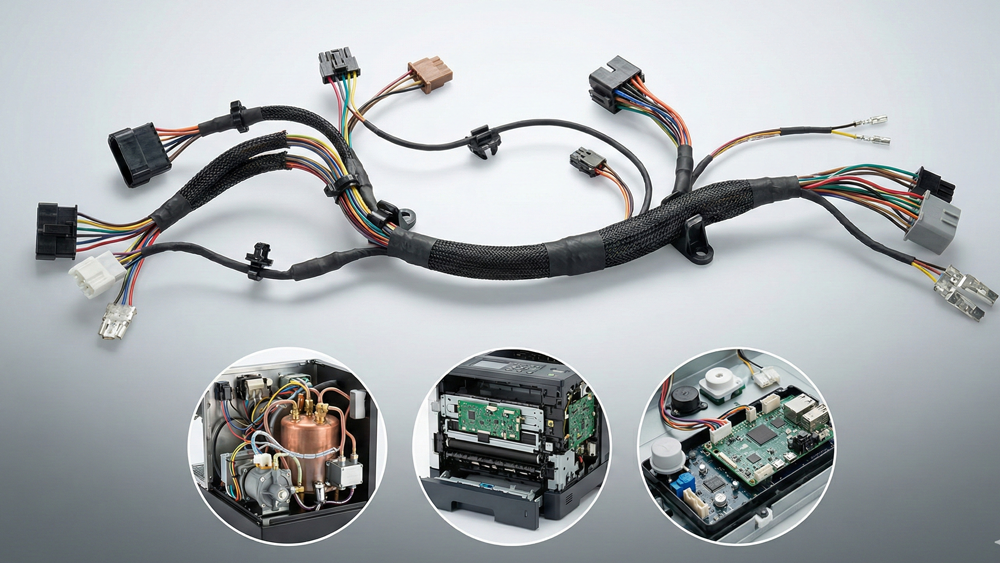
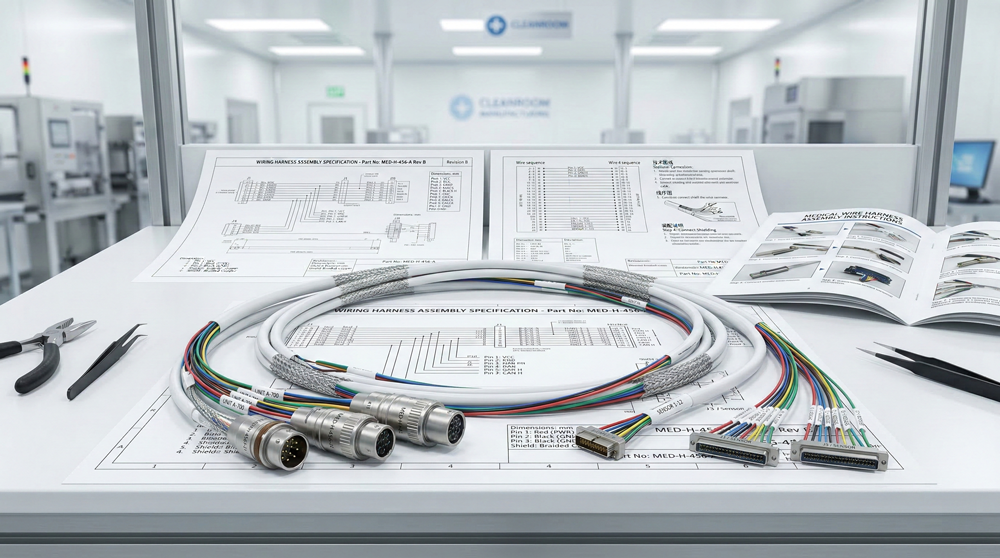
OEM cable assemblies cost-down guide should help buyers reduce cost without creating new reliability, quality, or supply risk. In real B2B sourcing, cost-down is not only a purchasing exercise. It is a cross-functional decision that affects connector choice, cable type, shielding, labels, packaging, labor content, inspection burden, and the long-term stability of the whole wiring harness or cable assembly program.
For OEM buyers, the right cost-down strategy is not about making the BOM look cheaper at any price. It is about finding where cost can come out safely, where it cannot, and how to validate changes before those changes damage pilot results, incoming quality, or field performance. When this is done well, cable assemblies become more competitive without becoming weaker. When it is done badly, the project may save a little on paper and lose much more through rework, service calls, delivery instability, and customer complaints.
Table of Contents
ToggleWhy Cost-Down Matters
Cost-down matters because cable assemblies often sit in products that are highly price-sensitive, even when the assemblies themselves are not the highest-value components in the system. A few dollars saved in a wiring harness or cable assembly can look meaningful in annual procurement planning, especially at OEM volume. But those same savings can become misleading if they come from the wrong place.
In many projects, the first cost-down discussion happens after the design is already stable and initial sourcing is complete. The buyer has a working part, a working supplier, and a production path. At that point, pressure usually comes from one of three directions. Procurement wants a better purchase price. The customer wants annual savings. Or the internal team wants to improve margin without reopening the full product design. All three are normal. The mistake is assuming that every visible cost line is equally safe to cut.
A better cost-down mindset starts with understanding what the cable assembly is really doing in the product. Is it static or moving? Is it signal-sensitive? Is it exposed to vibration, moisture, or service handling? Is the connector easy to access? Is the package stable? Once these questions are clear, the team can separate controllable cost from dangerous cost. That is the real purpose of a cost-down guide.
Start with Total Cost
A strong OEM cost-down review always starts with total cost, not unit price alone. Unit price is visible and easy to compare. Total cost is harder to see, but far more useful.
In cable assemblies, total cost includes much more than connectors, wire, sleeves, and labels. It also includes assembly labor, scrap exposure, inspection time, sample iteration, incoming handling, warranty risk, service replacement cost, and the commercial cost of supplier instability. A connector that saves money but increases field failures is not really a cost-down. A label that is cheaper but slows receiving and service work is not really a cost-down either. A cable that lowers BOM cost but creates routing stress and rework during assembly is also not a good savings decision.
This is why OEM buyers should ask a stricter question at the beginning: where is the cost today, and which part of that cost is actually safe to challenge? Once that question is answered, the project becomes much easier to improve without damaging the business around it.
Map the Cost Stack
Before reducing cost, the team should understand where cost really sits in the cable assembly. Many buyers naturally focus on major visible parts such as connectors and cable, and those do matter. But in custom cable assemblies, cost is usually spread across several layers.
The first layer is material cost. This includes connectors, terminals, cable, shielding, sleeves, labels, boots, tubes, heat shrink, tapes, ties, and packaging materials. The second layer is assembly cost, which depends on routing complexity, stripping and termination steps, branch count, shielding work, label application, and final handling. The third layer is quality cost, including inspection, first article review, pilot checks, incoming inspection, and any extra rework or containment caused by unstable builds. The fourth layer is lifecycle cost, which includes service replacements, field failures, engineering support, and supplier-driven instability.
When teams skip this mapping step, they often attack the wrong area. They try to save one dollar in a connector while ignoring three dollars of recurring labor inefficiency. Or they push cable cost down while ignoring the fact that packaging waste, label handling, or repeated inspection is quietly consuming more margin than the cable itself. Good cost-down work starts by seeing the full stack clearly.
A simple view is often helpful:
| Cost area | Typical drivers | Common safe opportunities |
|---|---|---|
| Materials | Connectors, cable, sleeves, labels, packaging | Standardization, over-spec removal, approved alternates |
| Labor | Routing complexity, branch count, handling time | Simplified layout, easier assembly flow, reduced manual touchpoints |
| Quality | Inspection effort, rework, pilot corrections | Better standardization, fewer open assumptions, cleaner labeling |
| Lifecycle | Warranty, service, supplier instability | More stable design, clearer version control, fewer field-sensitive compromises |
This kind of cost map keeps the discussion commercial and practical instead of emotional.
Cut the Right Costs
The most important principle in OEM cable assemblies cost-down work is that not every cost should be reduced with the same aggression. Some costs are good candidates for optimization. Others are protecting the program from bigger losses.
Costs are usually safer to challenge when they sit in areas such as over-specified packaging, unnecessarily complex labeling, cosmetic-only material choices, avoidable handling steps, redundant protection materials, or inconsistent low-volume legacy decisions that were never cleaned up after development. Costs are much riskier to challenge when they protect retention, signal quality, sealing, serviceability, mechanical durability, or stable sourcing in a demanding application.
This distinction matters because many cost-down failures begin with a simple spreadsheet mindset. The team sees a cheaper connector, a thinner sleeve, a lower-cost label, or a simpler cable option and asks why that item was not chosen earlier. Sometimes that is a very good question. Sometimes the answer is that the earlier team was protecting the product from a risk that is not visible in the raw BOM.
Good OEM buyers therefore try to identify “good cost” and “bad cost.” Good cost is cost that buys real performance, process stability, or lifecycle protection. Bad cost is cost that remains in the assembly only because no one challenged it after the project matured. The goal is to remove bad cost without stripping out good cost.
Standardize Where Possible
One of the safest and most effective ways to reduce cost in wiring harness and cable assembly programs is standardization. Standardization reduces material variety, quoting complexity, incoming handling burden, and build variation at the same time.
This can happen in several ways. The OEM may reduce the number of connector variants used across related products. It may align on fewer cable families where the application truly allows it. It may standardize labels, bag types, carton IDs, or packaging sizes. It may reduce unnecessary variation between similar harnesses that were originally released under different project timelines. Even small improvements in standardization can help both the buyer and the supplier by improving predictability and reducing hidden process waste.
Standardization is particularly useful because it often reduces cost without weakening the product. In fact, it often improves quality at the same time. A supplier can build more confidently when fewer unnecessary variables are floating through the line. Procurement can quote and negotiate more effectively when the spend is concentrated. Quality can inspect more consistently when the number of acceptable formats is lower. This is one of the reasons standardization is often the cleanest first move in cost-down work.
Review Connector Cost
Connector cost is one of the first places buyers look, and for good reason. Connectors often represent a meaningful share of material cost in OEM cable assemblies. But connector cost-down has to be handled carefully because connector changes can affect lock strength, package size, service access, mating stability, sealing, and even the assembly route.
A better connector cost review asks several questions. Is the current connector over-specified for the real environment? Is there an approved family variant that meets the need more efficiently? Is the connector cost high because the project is carrying too many low-volume variants? Is the current part commercially narrow in a way that hurts sourcing leverage? Or is the connector expensive because it is genuinely solving a product-risk problem that should not be touched casually?
In many cases, the safest connector savings do not come from forcing a visibly cheaper connector into the design. They come from reducing unnecessary variant count, cleaning up legacy choices, simplifying options across a family, or re-evaluating whether a premium feature is still needed in the actual use case. This connects directly to the P22 series work around How to Choose the Right Connector for Cable Assemblies and How to Balance Connector Cost and Reliability. A connector cost-down is only good when the connector still fits the real product.
Review Cable Cost
Cable cost is another major opportunity area, but it is also one of the easiest places to create false savings. A cable may look oversized or overbuilt in a purchasing table while still being the right answer for routing, flex, signal, or environmental reasons.
A stronger cable cost-down review starts with use case, not price. Is the selected cable truly required for the route, flex pattern, temperature range, shielding need, or handling profile? Or is the project still carrying a development-stage cable that was chosen conservatively and never optimized later? Is the selected jacket solving a real problem, or just inherited from an earlier build? Is the shielding necessary across the whole family, or only in certain assemblies? Are there places where a simpler cable can safely be used without touching the high-risk applications?
The key is to reduce cable cost by removing over-spec, not by removing safety margin blindly. In some projects, the right answer is a lower-cost cable family. In others, the right answer is keeping the cable and reducing cost elsewhere. This is why the P22 articles on How OEM Buyers Select Cable Types for Different Applications and Shielded vs Unshielded Cable Assemblies are useful references when cost-down work begins.
Reduce Labor Cost
A lot of cable assembly cost-down work focuses too heavily on materials and not enough on labor. In many custom cable assemblies, labor is one of the most powerful and safest improvement areas if the design is reviewed intelligently.
Labor cost is often driven by avoidable complexity. Too many branches, awkward routing, repeated handling, over-complicated labels, unnecessary protection steps, inconsistent tie points, or build features that were acceptable in prototype but inefficient in production can all add quiet cost to the assembly. A cable assembly may be technically sound and still be more expensive than necessary because it takes too many manual steps to produce repeatably.
This is where manufacturing-oriented review adds real value. Can the route be simplified? Can a label be moved to a more efficient position? Can branch logic be standardized? Can protection materials be reduced or combined without hurting the application? Can packaging be improved so the finished part handles more easily after assembly? These kinds of changes often reduce recurring cost while also reducing variation. In OEM projects, that is far safer than aggressive BOM cutting alone.
Control Label Cost
Labels are rarely the biggest visible cost line, but they often create more hidden cost than buyers expect. Label complexity affects print setup, application time, receiving, warehouse clarity, service identification, and revision control.
A better label cost-down review asks whether the current label system is doing too much or simply doing it inefficiently. Is the project carrying multiple label formats where one would do? Are there extra data fields that are rarely used? Are internal and customer labels being duplicated unnecessarily? Is the placement making application harder than it needs to be? Is a higher-cost material being used where a more efficient one would still support the environment?
At the same time, buyers need to be careful. A cheaper label that reduces readability or traceability can become expensive very quickly in receiving, service, and version control. That is why label cost-down is usually strongest when it simplifies and standardizes rather than just cheapens the material.
Control Packaging Cost
Packaging is another cost area that is often overlooked until the project becomes mature. In many OEM cable assemblies, packaging choices made during pilot or early launch remain in place long after the original reasons have disappeared.
Safe packaging cost-down often comes from reducing excess materials, standardizing bag or carton sizes, simplifying inner pack logic, removing unnecessary custom inserts, or improving the package so it handles more efficiently through receiving and storage. In some cases, a less complex package can actually improve flow while lowering cost.
But packaging is also an operational control. If the package protects the cable, supports label visibility, and keeps assemblies organized for receiving or service stock, then that value should be preserved. The best packaging savings usually come from removing waste, not from making the product harder to handle.
Work with the Supplier
Cost-down efforts are strongest when the supplier is treated as a real input source rather than only the target of a price request. A good cable assembly supplier often sees practical opportunities that the buyer does not, especially in assembly flow, material standardization, label logic, and route simplification.
This does not mean every supplier suggestion should be accepted. It means the OEM should ask the right questions. Where is labor being consumed unnecessarily? Which materials are over-specified? Where are there low-volume variants hurting efficiency? What packaging steps add cost without adding value? What could be standardized across related assemblies? When suppliers answer these questions well, cost-down becomes a joint engineering-commercial exercise rather than a one-sided negotiation.
This is also why series work like OEM Cable Assembly RFQ and Supplier Selection Guide and What Makes a Cable Assembly Supplier Reliable matters here. Better suppliers usually support better cost-down because they understand how to reduce waste without undermining control.
Validate Before Release
One of the biggest mistakes in cost-down work is assuming that because the change looks small, it can go straight into production. That is exactly how low-visibility problems slip into OEM cable assemblies.
Any meaningful cost-down change should be validated according to what it affects. A connector variant change, cable-type change, shielding reduction, label simplification, or packaging update may need sample review, pilot confirmation, first article inspection, or tighter incoming inspection in the first lots. The validation depth should match the risk, but the principle stays the same: cost-down should not bypass release discipline.
This is especially important because good cost-down changes often look harmless. That is why they can be dangerous if handled casually. The product still looks similar, but the risk may now sit in fit, handling, service logic, or process repeatability. Strong validation keeps those issues visible before the change becomes standard.
Avoid Common Mistakes
Several mistakes repeat in OEM cost-down programs. One is chasing visible connector or cable savings while ignoring labor waste. Another is reducing material cost without checking the real application. A third is using a supplier quote difference as proof that a lower-cost design is automatically safe. A fourth is simplifying labels or packaging in a way that weakens receiving, traceability, or version control. A fifth is treating validation as optional because the revised assembly still “looks the same.”
Another common mistake is making too many small changes at once. When several cost-down moves are introduced together, it becomes harder to know which one created a later issue. A staged approach is often much easier to control.
Use a Practical Cost-Down Framework
A simple framework can help buyers structure the decision before pushing the supplier or internal team into rushed changes.
| Review area | Key question |
|---|---|
| Application | What part of the assembly is truly high-risk in the real product |
| Material cost | Which components are over-specified or overly fragmented |
| Labor cost | Where is manual complexity adding recurring cost |
| Labels | Can the label system be simplified without harming control |
| Packaging | Can packaging be standardized or reduced safely |
| Supplier input | What opportunities does the factory see in real production |
| Validation | What level of sample, pilot, or FAI review is needed |
| Release control | How will the new version be introduced without drift |
This kind of structure keeps cost-down tied to real product control instead of turning it into an isolated price exercise.
Conclusion
OEM cable assemblies cost-down guide should help buyers reduce cost where the product can safely absorb change and protect cost where the product is relying on real margin for reliability, handling, and control. The strongest cost-down work starts with total cost, maps the real cost stack, standardizes where possible, reviews connectors and cable intelligently, reduces labor waste, simplifies labels and packaging carefully, uses supplier input, and validates changes before release.
When teams do this well, they lower cost without weakening the assembly. In OEM wiring harness and cable assembly programs, that usually means better margins, cleaner releases, and fewer downstream problems than the project would have created by chasing the cheapest visible BOM.
FAQ
What is the safest place to start cost-down in cable assemblies?
A safe starting point is often standardization, labor reduction, packaging simplification, or removal of low-value complexity before changing high-risk functional parts.
Should OEM buyers reduce connector cost first?
Not always. Connector cost can be a good target, but only if the application, lock strength, service need, and supply stability still support the lower-cost option.
Is cable cost-down usually safe?
It depends on the use case. A cable can sometimes be optimized safely, but only when the environment, routing, signal needs, and handling profile are reviewed carefully first.
Why does labor matter so much in cost-down?
Because many custom cable assemblies carry recurring manual cost from avoidable complexity, and labor improvements often reduce both cost and variation at the same time.
Do cost-down changes need validation?
Yes. Even small-looking changes can affect fit, handling, labeling, packaging, or reliability, so sample, pilot, FAI, or incoming checks may still be needed before release.
CTA
If you are reviewing cost-down options for a wiring harness or cable assembly project, the best first step is to identify whether the real cost sits in materials, labor, labels, packaging, or unmanaged complexity before pushing the BOM lower.
You can send your drawings, BOM, annual demand, current supplier quote, and cost targets through Contact. Our team can help review the cost stack and support a more practical OEM cost-down path before release.