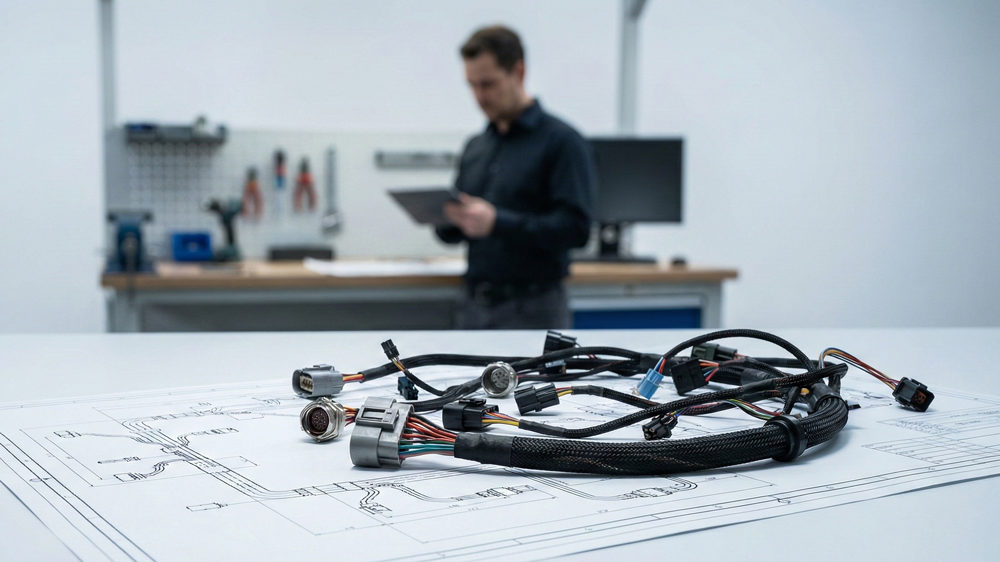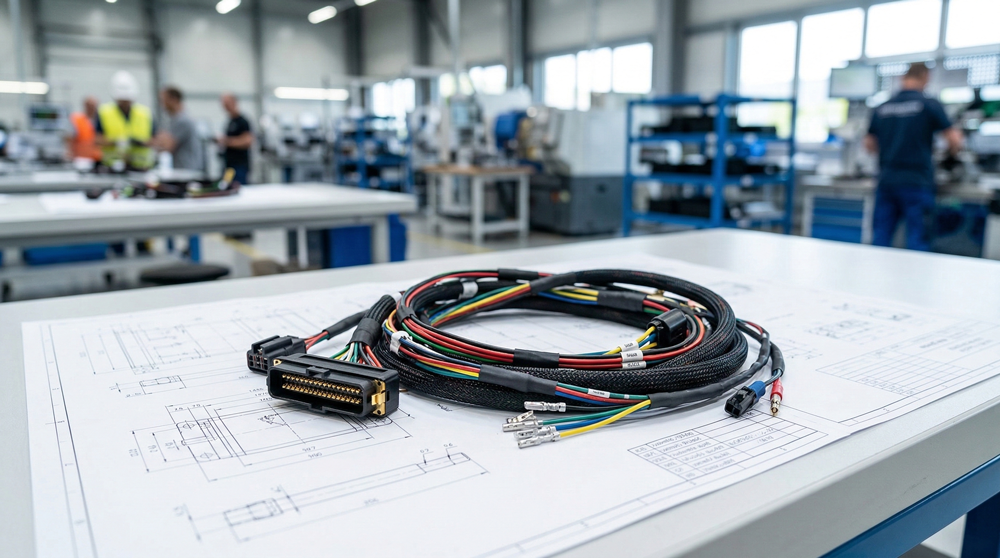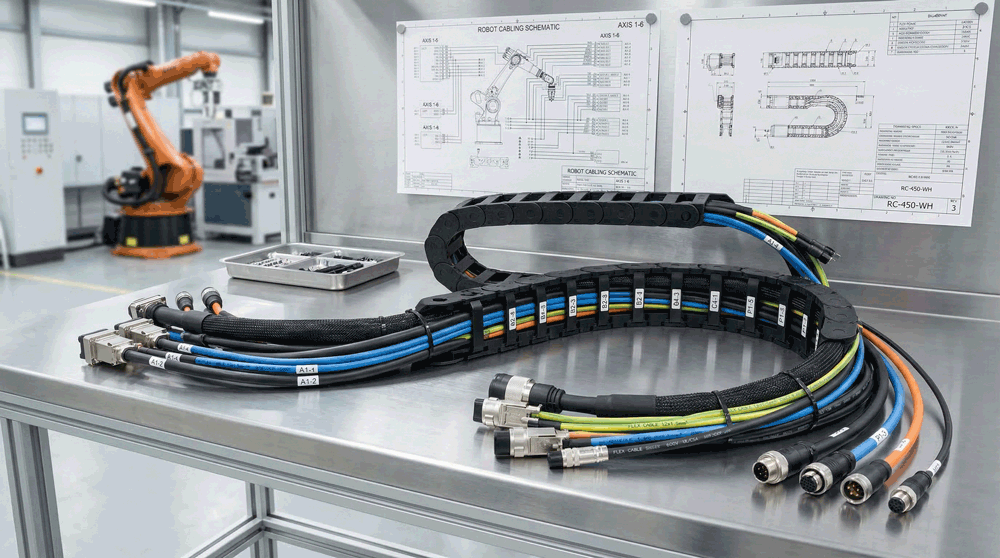
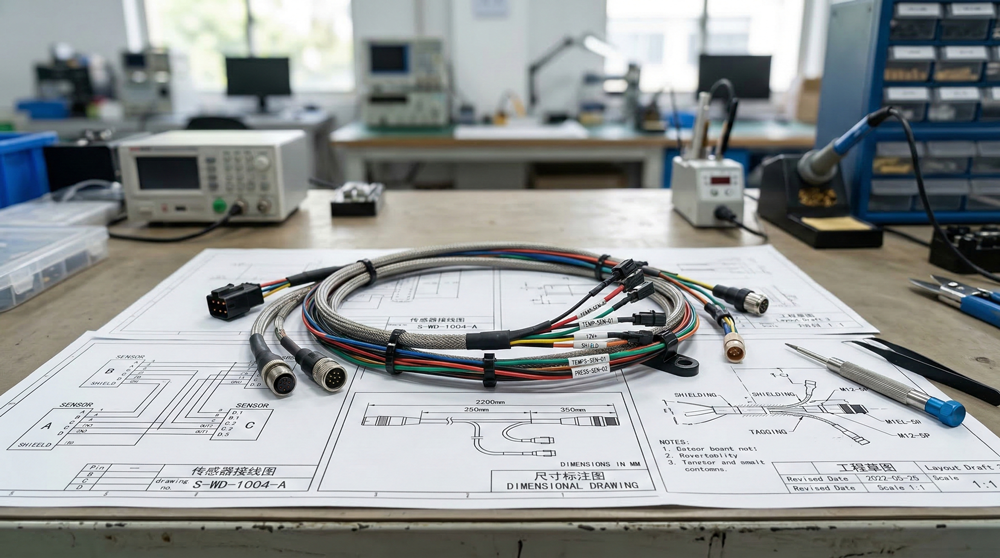
Wiring harness and cable cost reduction should help OEM buyers lower material and assembly cost without creating new risk in routing, flex, shielding, service, or supply control. Wiring harness and cable cost reduction is not about forcing a cheaper wire into every project. It is about knowing where the current harness or cable is over-specified, where material variety is too high, and where safe simplification can improve the commercial result without weakening the finished cable assembly.
For procurement, engineering, and supplier teams, this topic matters because cable and wire often look like obvious cost targets. They are visible on the BOM, they affect quoted price directly, and they exist in every assembly. But they also influence bend behavior, package space, connector fit, signal stability, handling, and long-term durability. That is why the best savings come from disciplined review, not blunt substitution.
Table of Contents
ToggleStart with the Use
The first step is to confirm what the wire or cable actually has to do in the product. A static indoor wiring harness does not need the same cable strategy as a robotics assembly, an outdoor product, a medical cable, or an automotive auxiliary harness. If the use case is light, there may be safe room to optimize. If the use case is demanding, the current material may already be buying real protection.
A useful review asks a few practical questions. Is the assembly static or moving? Does it face vibration, bending, twisting, heat, moisture, or chemicals? Is shielding truly needed? Does the cable route through a tight enclosure? Will the harness be handled in service? Once these answers are clear, cost-down becomes far safer because the team knows which features are necessary and which may be legacy over-spec.
Find the Over-Spec
A large share of harness and cable cost-down comes from removing over-spec that no longer matches the real application. In many OEM projects, the original wire or cable choice was made early, often with conservative assumptions, limited time, or incomplete route data. Later, the product stabilizes, but the material selection stays heavier than necessary.
Over-spec can appear in several forms. The cable may carry stronger shielding than the route really needs. The jacket may be chosen for a harsher environment than the actual product sees. The conductor size may be more generous than the real load requires. The flex rating may exceed the actual movement pattern. The result is a harness that works, but costs more than it needs to.
The key is to remove only the cost that no longer buys useful value. If the higher-spec cable is protecting a real routing, signal, or handling risk, then it is not excess. If it is only surviving because nobody revisited the original assumption, it becomes a valid cost-down candidate.
Reduce Cable Variety
One of the safest and most effective cost-down moves is reducing unnecessary cable variety. Many OEM cable assemblies carry too many close cable types across related products, often because projects were launched at different times under different assumptions.
This variety hurts cost in several ways. It fragments purchasing volume. It weakens supplier leverage. It increases stock complexity. It also makes engineering changes and incoming control harder. In many cases, two or three cable families could safely cover work that is currently spread across five or six part numbers.
Reducing variety does not mean forcing one cable into every application. It means grouping products by real need and using fewer cable families where the application genuinely allows it. This often creates savings without changing the visible product at all. For wiring harness manufacturers and OEM buyers, that is usually one of the cleanest forms of cost reduction.
Review Conductor Size
Conductor size can be another cost driver, but it should be reviewed carefully. A larger conductor may have been chosen for comfort, early uncertainty, or engineering caution. In some products that choice remains fully justified. In others, it creates avoidable material and handling cost.
A smaller conductor can reduce cable cost, lower weight, and improve routing flexibility. But this only works when the real electrical load, temperature rise, voltage drop, and mechanical needs still remain properly covered. If the change reduces useful margin too far, the savings are false.
This is why conductor-size review should be application-led, not procurement-led alone. The question is not “Can we go smaller?” The better question is “Is the current conductor size larger than the real product needs today?” That change in wording leads to better engineering and sourcing decisions.
Review Shield Cost
Shielding is often one of the most expensive parts of cable cost, especially in signal-driven assemblies. That makes it a natural review point. But shielding should only be reduced when the buyer is sure the product can still tolerate the real route and noise environment.
In some OEM cable assemblies, the project carries shielded cable because the earliest design assumed a noisy environment, even though the final route is shorter, cleaner, or more controlled than expected. In other cases, only a subset of the product family truly needs shielding, while the rest could move to an unshielded option safely. Those are good cost-down opportunities.
What should not happen is reducing shielding just because the price looks attractive. If the assembly runs near motors, drives, power electronics, or sensitive signal paths, shielding may still be doing essential work. The correct move is to remove unnecessary shielding, not necessary shielding.
Improve the Route
Route quality has a direct effect on wire and cable cost. A poor route often forces the use of heavier, more protective, or more flexible materials than the product would otherwise need. A cleaner route can sometimes allow a lower-cost cable choice without sacrificing reliability.
For example, if the harness currently bends sharply at one point, the project may be using a more expensive cable to survive that stress. If the route can be improved, the material may not need to work as hard. If the cable is running too close to noisy electronics, shielding may be compensating for the route rather than reflecting true product need. If the package is crowded, oversized cable may be driving more labor and handling cost than the BOM reveals.
That is why route review should be part of harness cost-down. In many projects, better geometry creates safer savings than weaker material.
Cut Handling Cost
Wire and cable cost is not only material cost. It also affects labor. A stiffer cable, a bulky harness, or a poorly matched jacket may slow handling, increase manual touches, and make production more variable.
A lower-cost cable can sometimes save twice: once in material and once in labor, but only when the new choice also improves or at least preserves handling. On the other hand, a cable that looks cheaper on the BOM but becomes harder to strip, harder to route, or more awkward in assembly may erase its own savings quickly.
This is why buyers should ask the factory where real handling cost sits. Does the current wire create extra manual effort? Does the harness need repeated repositioning during build? Are there cable types that are functionally acceptable but unnecessarily hard to process? In custom cable assemblies, those answers often reveal better savings than raw price comparison alone.
Use Standard Length Logic
A surprising amount of harness cost hides in length variation. Projects often carry multiple near-identical lengths because of legacy drawings, product variants, or early prototype decisions that were never cleaned up. This creates more cut waste, more stock fragmentation, and more quoting complexity.
Where the application truly allows it, standardizing length bands can create useful savings. This may not apply to every routed harness, because fit still matters. But in many cable assemblies, a small amount of controlled standardization can reduce waste without changing the real product outcome.
This is especially helpful in product families where the cable differences are commercial rather than technical. If three lengths exist where two would work, or if the length margin is broader than the application needs, the project may be carrying cost that no longer buys value.
Review Supplier Sources
Material cost is also affected by how the supplier is sourcing the wire and cable. Two projects using similar materials can still show different cost depending on buy volume, supplier base, and whether the cable family is strategically managed or only purchased reactively lot by lot.
A good wiring harness supplier can often show where a cable family is too fragmented, where a more standard material would improve buying leverage, or where alternate approved sources could create stronger commercial control. This is especially valuable when the OEM runs multiple related harnesses and cable assemblies, because the supplier may see cross-program opportunities the buyer has not yet grouped together.
For B2B buyers, this means cable cost-down should include supply-path review, not only design review. The better material is not always the cheapest catalog option. It is often the material that matches the application and sits in a stronger sourcing structure.
Protect the Connector Fit
Wire and cable changes should never be reviewed separately from the connector system. A lower-cost cable that no longer fits the seal range, bend behavior, or exit geometry of the chosen connector can create new problems at the transition point very quickly.
This is especially important in sealed products, compact assemblies, or service-handled cables. A cheaper cable might still be electrically valid and still be the wrong commercial choice if it weakens sealing, stiffens the exit, or creates more strain at the connector. The same is true in the other direction: a cable cost-down may be safe if the connector system still supports it cleanly.
That is why a proper cost-down review always asks whether the new wire or cable still works as part of the full cable assembly, not just as a standalone material line.
Validate the Change
Cable and wire changes should always be validated according to what they affect. Even when the assembly looks similar after the change, the real risk may sit in handling, route fit, signal behavior, or durability.
Some changes may only need a controlled sample review. Others may need a pilot run, first article check, or tighter incoming inspection on the first lots. The validation level should match the risk. A jacket change in a static indoor assembly may need less proof than a shield change in a signal cable or a flex-related change in a moving harness.
The key principle is simple: cable cost-down is still a product change. It should enter production through the same kind of controlled path the OEM would use for other meaningful design updates.
Common Mistakes
One common mistake is cutting cable cost only by raw material price and ignoring what the cable is doing in the real product. Another is reducing shielding or flex capability because the early sample still “looks fine.” A third is leaving too many similar cable variants in the system and then trying to negotiate price harder instead of simplifying the family first.
Another frequent mistake is failing to review route and connector fit after a cable change. A material that seems cheaper and similar on paper may behave very differently in the assembly. The final mistake is skipping validation because the cable change looks small. In wiring harness and cable assembly work, small-looking changes often create the most frustrating operational problems later.
Use a Practical Review Framework
A simple framework makes cable cost-down easier to control.
| Review area | Key question |
|---|---|
| Use case | What must the cable survive in the real product |
| Over-spec | Which features may exceed actual need |
| Variety | Are too many cable families fragmenting spend |
| Conductor size | Is the current size larger than needed |
| Shielding | Is shielding truly required in this route |
| Route | Can geometry improvements reduce material pressure |
| Handling | Does the cable create avoidable labor cost |
| Connector fit | Does the new cable still support the chosen connector |
| Validation | What proof is needed before release |
This kind of structure keeps the cost-down practical, cross-functional, and easier to release safely.
Conclusion
Wiring harness and cable cost reduction works best when buyers reduce over-spec, simplify variety, review conductor size and shielding honestly, improve route logic, lower handling cost, and protect connector fit through controlled validation. In OEM cable assemblies, the safest savings usually come from better alignment between the cable and the real use case, not from pushing a cheaper material into a design that still needs more protection.
When teams do this well, they cut cost without weakening the harness. That is the kind of savings OEM buyers can keep with confidence.
FAQ
What is the safest way to reduce cable cost?
A safe approach usually starts with removing over-spec and reducing unnecessary cable variety before making more sensitive changes to shielding, conductor size, or flex performance.
Can OEM buyers reduce shielding cost safely?
Yes, but only when the real route and signal environment still support the change. Shielding should be reduced only when it is no longer buying useful protection.
Why does cable variety increase cost?
Because too many cable families fragment purchasing volume, increase stock complexity, weaken supplier leverage, and make control more difficult across related assemblies.
Should conductor size be reduced for cost-down?
Sometimes, but only after reviewing the real electrical and mechanical requirements. A smaller conductor saves cost only if it still fits the application safely.
Do wire and cable changes need validation?
Yes. Even small-looking cable changes can affect routing, handling, connector fit, signal behavior, or durability, so controlled review before release is important.
CTA
If you are reviewing wire or cable cost in OEM cable assemblies or wiring harness projects, the best first step is to confirm whether the current material is truly required by the application or simply carried over from an earlier design stage.
You can send your drawings, BOM, cable spec, annual volume, and cost target through Contact. Our team can help review the cable cost path and support a more practical OEM cost-down decision before release.
Related Articles
- OEM Cable Assemblies Cost-Down Guide
- Where OEM Buyers Cut Cost in Cable Assemblies
- How to Reduce Connector Cost in OEM Cable Assemblies
- Wiring Harness Label and Packaging Cost Control
- Validating Cost-Down Changes in Cable Assemblies