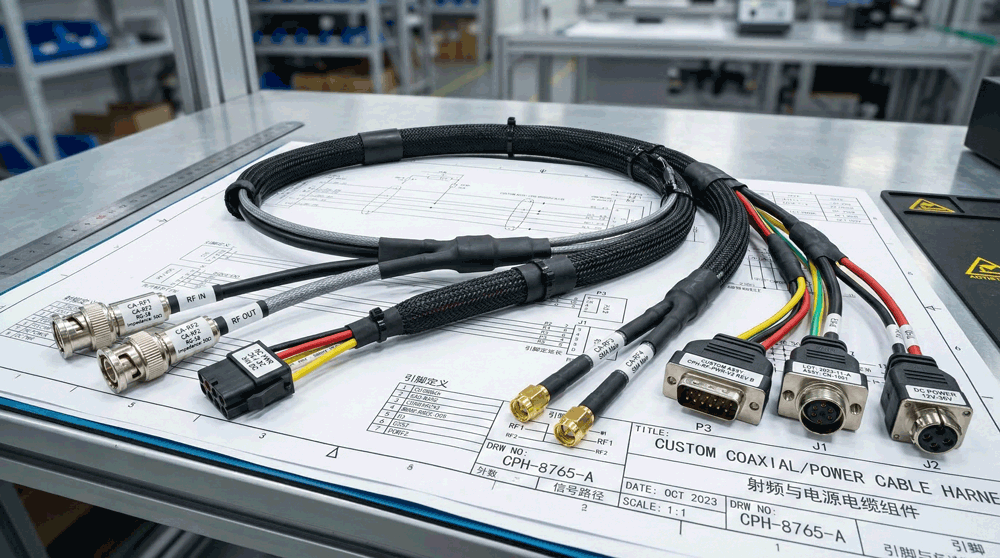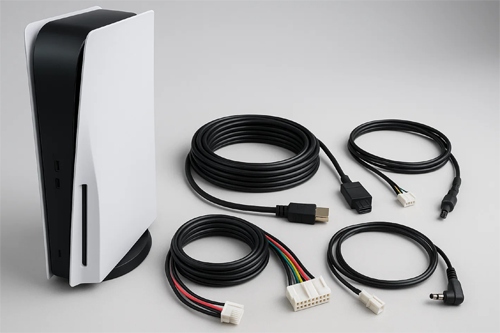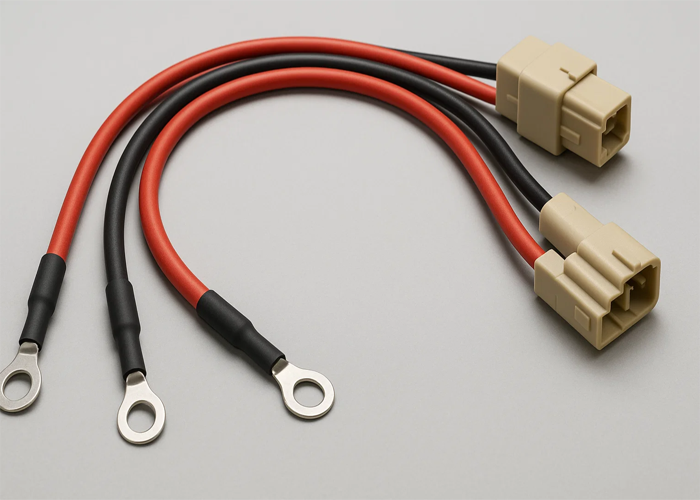
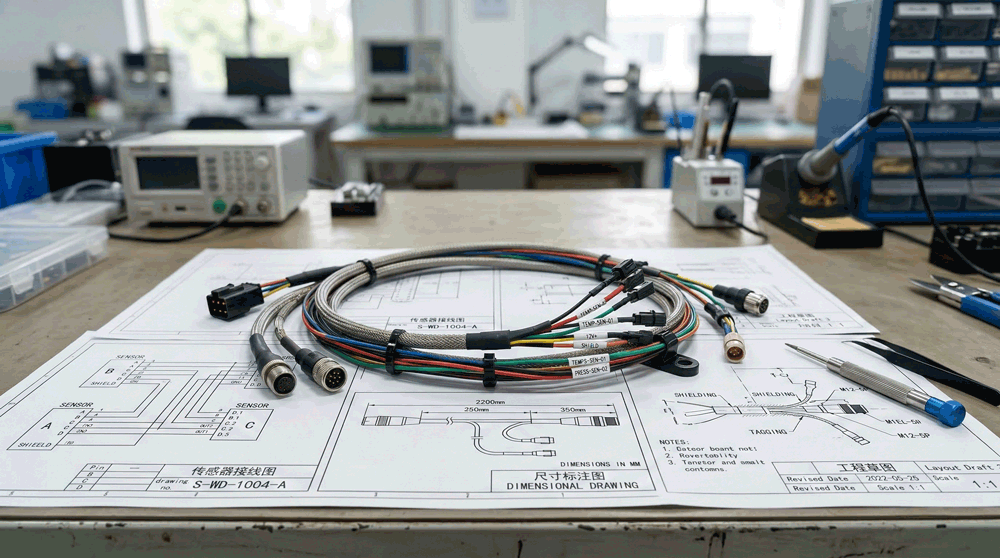
Control panel wiring harnesses help organize the electrical connections inside control cabinets, operator panels, PLC systems, and OEM equipment. When they are clearly specified, they can reduce wiring errors, speed up assembly, improve serviceability, and support repeatable production.
For OEM buyers, a control panel wiring harness is not only a group of wires inside a cabinet. It is part of the machine’s control structure. This guide explains how engineering and procurement teams should define control panel wiring harnesses before requesting a quote or approving samples.
Table of Contents
ToggleStart with the Panel
A control panel wiring harness should be designed around the panel layout.
Many wiring problems begin when the harness is specified separately from the actual control cabinet or panel design. A drawing may show wire lengths and terminals, but if the supplier does not understand the panel layout, routing path, terminal block position, PLC location, relay position, and door movement, the finished harness may be difficult to install.
Control panels may include PLCs, I/O modules, power supplies, relays, breakers, terminal blocks, switches, indicators, HMIs, sensors, actuators, and communication modules. Each connection has its own installation and service requirement.
For OEM buyers, the first step is to explain the panel structure. Is the harness used inside a fixed control cabinet? Does it connect a panel door to the cabinet body? Does it link PLC modules to terminal blocks? Does it connect operator buttons and indicator lights? Does it need to support field service or quick replacement?
A harness used inside a compact machine panel is different from one used in a large industrial control cabinet. A harness that crosses a hinged door needs different flexibility and strain relief from a harness fixed on a backplate.
If the project involves broader control cable assemblies beyond one panel, buyers can link this design back to Control Cable Assemblies for OEM Equipment.
Define Devices
The connected devices define the wiring harness structure.
A control panel wiring harness may connect PLC modules, I/O terminals, relays, switches, emergency stop buttons, indicator lamps, touch panels, sensors, actuators, motor controllers, power supplies, or external interfaces. Each device may require different wire size, terminal type, signal name, label format, and routing method.
For example, a PLC input harness may use many small signal wires that must match I/O channel numbers. A relay harness may require clear terminal positions and correct coil/contact wiring. A panel button harness may need consistent color coding, labels, and enough flexibility for door movement. A power-related control line may need a larger conductor size and stronger insulation.
For OEM buyers, the RFQ should define what devices the harness connects. It should also show how each connection relates to the electrical schematic. If the harness is used in a panel with PLCs and terminal blocks, the supplier should know the PLC model, terminal block layout, and signal list whenever possible.
Device information helps the supplier avoid assumptions. Without it, the harness may be electrically connected but not convenient for assembly or maintenance.
Control Terminals
Terminals are one of the most important details in control panel wiring harnesses.
A control panel harness may use ferrules, ring terminals, spade terminals, quick-disconnect terminals, plug-in terminals, crimp terminals, PCB connectors, or terminal block contacts. The correct terminal depends on the device, wire gauge, current, panel layout, and assembly method.
A frequent mistake is specifying wire length and color but not defining terminal type. This forces the supplier to guess, or it creates extra back-and-forth before quotation. If the wrong terminal is used, the harness may not fit the terminal block or device connection point.
For OEM buyers, terminal details should include part number, terminal style, wire gauge compatibility, insulation support, plating requirement if any, and whether the terminal needs a ferrule or crimped end.
Crimp quality should also be controlled. A weak terminal crimp may pass a quick visual inspection but fail during vibration, pulling, or field service. For panel harnesses, pull-force checks may be needed depending on the terminal type and application risk.
If a harness connects to screw terminals, the stripping length and ferrule length should be defined. If it connects to plug-in terminals, the terminal position and insertion direction should be clear.
Use Wire Labels
Wire labels are critical for control panel wiring.
Inside a control panel, many wires may look similar. Without clear labels, assembly workers and service technicians must trace wires manually, which increases assembly time and troubleshooting risk. In OEM production, unclear labels can also create inconsistent wiring between batches.
A good control panel wiring harness should use a label system that matches the electrical drawing. Labels may include wire numbers, signal names, terminal numbers, connector names, revision codes, part numbers, or barcode information.
For OEM buyers, the label format should be defined before sample production. Should the label show wire number only, or wire number plus destination? Should the label be printed on heat shrink, sleeve, wrap-around label, or marker tube? Should labels be readable after installation? Should both ends of each wire be labeled?
Label position also matters. A label that looks good on the bench may be hidden after installation. If technicians need to read the label during service, the position and orientation should be checked during sample approval.
Label durability should match the panel environment. A clean indoor cabinet may only need standard labeling. A panel exposed to oil mist, heat, vibration, or moisture may need more durable marking.
Plan Routing
Routing should be considered before the harness is built.
A control panel wiring harness may need to route along a backplate, through wire ducts, across a hinged door, around electrical devices, or between fixed and moving sections. If routing is not considered, the harness may be too short, too long, too stiff, or difficult to organize.
For OEM buyers, the drawing should define total length, branch length, exit direction, bend area, mounting points, and tolerance. If the harness connects a door-mounted HMI or button panel to the main cabinet, the harness should allow door movement without pulling on terminals.
Routing near power lines should also be reviewed. Sensitive control signals should not be forced to run tightly along high-current power cables, motor wires, or drive output lines without considering EMI risk. Separation, shielding, or routing control may be required.
Wire duct size and fill should also be considered. A harness that is too bulky may not fit neatly into the panel. A harness that is too loose may look disorganized or interfere with maintenance.
If the harness is used in a compact control cabinet, installation photos or a panel layout drawing can help the supplier understand real routing constraints.
Separate Signals
Signal separation helps reduce wiring risk and noise problems.
Control panels often include different types of circuits: low-voltage control signals, analog signals, communication lines, relay lines, power supply lines, and sometimes motor-related wiring. These circuits should not always be treated the same way.
For OEM buyers, the harness design should identify which wires are sensitive signals and which wires carry higher current or switching noise. Analog inputs, encoder signals, communication lines, and low-level sensor signals may need more careful routing or shielding than simple digital signals.
If power and control signals are combined in one harness, the buyer should review whether separation, twisted pairs, shielding, or different cable groups are needed. In some cases, it may be better to split the harness into separate assemblies to improve installation and reduce noise risk.
The supplier can help build the harness, but the equipment design team should define signal importance and noise-control strategy. If the system has EMI concerns, the harness design should be reviewed before samples are released.
For broader shielding support, buyers can review Shielded Cable Assemblies.
Choose Materials
Material selection should match the control panel environment and production needs.
For control panel wiring harnesses, material decisions may include wire gauge, insulation material, wire color, terminal material, sleeves, cable ties, labels, heat shrink, spiral wrap, braided sleeve, and connector housings.
Wire gauge should match current, voltage drop, terminal compatibility, and installation length. In control panels, many circuits carry low current, but this does not mean any wire can be used. The wire must still fit terminals, meet mechanical requirements, and support reliable crimping.
Wire color should follow the buyer’s electrical standard or internal assembly logic. Consistent color coding can reduce wiring errors and make service easier. If the buyer has a wire color standard, it should be included in the RFQ.
Sleeving and protection may be needed when wires pass near sharp edges, moving doors, or high-vibration areas. Heat shrink can help protect terminals, label ends, or branch points. Cable ties and clips can support neat routing, but they should not create excessive stress.
For OEM projects, materials should be controlled after sample approval. If the supplier changes wire, terminal, label, sleeve, or connector without approval, repeat orders may not match the approved harness.
Build Samples
Samples should validate panel installation, not only electrical connection.
A control panel wiring harness may pass a bench test but still fail during installation. The wire may be too short to reach the terminal block comfortably. A branch may exit in the wrong direction. Labels may be hidden inside wire duct. A ferrule may not fit the terminal. A door harness may be too stiff when the panel opens.
For this reason, samples should be installed in the real panel or a representative fixture whenever possible. This allows the buyer to check wire length, terminal fit, routing, label visibility, door movement, branch position, and service access.
Feedback should be specific. Buyers should provide photos, marked drawings, measurements, and notes. If a wire is too short, state how much longer it should be. If a label is hidden, mark the desired position. If a terminal is wrong, provide the correct terminal reference.
After sample review, the drawing should be updated. A physical sample alone is not enough to control future production. The approved version should include wiring table, terminal details, label format, material list, and test requirements.
For sample-to-production workflow, buyers can review Prototype to Production Guide.
Test Before Release
Testing should confirm that the harness is ready for panel assembly and production.
Basic continuity testing is necessary, but control panel wiring harnesses often need more than simple continuity. The test plan may include pinout, polarity, short-circuit testing, wire label inspection, terminal pull-force checks, dimensional inspection, connector fit, ferrule quality, and visual workmanship.
For harnesses with many similar wires, pinout and label checks are especially important. A wire may be electrically connected but mislabeled, which can still create assembly or service errors. If the harness connects to PLC I/O channels, each wire should match the approved wiring table.
Terminal crimping should be checked according to application risk. Poor crimping can lead to intermittent faults, loose wires, or field service problems.
If shielding is used, shield continuity and drain wire treatment should be verified. If the harness includes a hinged-door section, the sample should be checked for movement and strain relief.
Testing requirements should be defined before production release. For related inspection support, buyers can review Tests & Inspections.
Control Production
Production consistency is essential for OEM control panels.
A control panel wiring harness may be ordered repeatedly for the same equipment model. If each batch is slightly different, assembly workers may face confusion, and field service may become more difficult.
The supplier should control drawing revision, wire colors, terminal types, label content, label position, wire length, branch layout, sleeve material, and test method. Any change should be reviewed before production.
Work instructions are important. They should define cutting, stripping, crimping, ferrule installation, label placement, branch routing, sleeve installation, connector assembly, and final inspection. This helps operators build the same harness consistently.
Quality records can also support repeat production. Depending on project requirements, records may include electrical test results, inspection sheets, crimp pull-force records, material traceability, and batch identification.
For quality-related support, buyers can review Quality Guarantee.
Prepare RFQ
A complete RFQ helps the supplier quote faster and build a better sample.
| RFQ Item | What OEM Buyers Should Define |
|---|---|
| Panel type | Control cabinet, operator panel, PLC panel, machine panel |
| Devices | PLC, I/O, relay, switch, HMI, terminal block, power supply |
| Drawing | Wire length, branch length, routing, tolerance, layout |
| Wiring table | Wire number, signal name, terminal position, pinout |
| Terminals | Ferrule, ring, spade, plug-in terminal, connector contact |
| Labels | Wire number, destination, part number, barcode, position |
| Materials | Wire gauge, color, insulation, sleeve, heat shrink, cable ties |
| Routing | Wire duct, door movement, bend area, mounting points |
| Testing | Continuity, label check, terminal pull, pinout, polarity |
| Quantity | Prototype, pilot build, annual demand |
| Records | Test report, inspection sheet, batch traceability |
If the full panel design is not ready, buyers can still provide preliminary drawings and mark uncertain items as “to be confirmed.” A capable supplier can review the open points and help prepare a practical sample plan.
Avoid Mistakes
Many control panel wiring harness problems come from small specification gaps.
One common mistake is missing terminal details. If the supplier does not know the exact terminal type, the harness may not fit the panel devices.
Another mistake is weak labeling. A harness may pass electrical testing, but if labels are missing, unclear, or hidden after installation, assembly and service become difficult.
A third mistake is poor routing definition. If the harness is too short, too long, too stiff, or routed near noise sources, it may create installation or performance problems.
Wire color inconsistency can also cause confusion. If wire colors change between sample and production, technicians may lose a useful identification reference.
Testing gaps are another risk. Continuity testing alone may not catch wrong labels, poor crimping, incorrect ferrules, weak strain relief, or panel fit problems.
Finally, weak drawing control can create repeat order inconsistency. The approved harness should be controlled by drawing, wiring table, material list, label rule, and test plan.
Final View
A control panel wiring harness should make panel assembly faster, cleaner, and more reliable.
For OEM buyers, the key is to define the panel layout, connected devices, terminals, wire labels, routing, signal separation, materials, testing, and production control before sample approval. A well-defined harness reduces wiring errors, improves serviceability, and supports repeatable production.
A capable supplier should help convert panel wiring requirements into a manufacturable harness design, support sample fitting, verify wiring, and maintain consistency for repeat orders.
At Infinite Harness, we support custom control panel wiring harnesses, control wire harnesses, PLC cable assemblies, control cable assemblies, and small-batch OEM wire harness projects. If your equipment needs a control panel wiring harness, send us your panel layout, wiring table, terminal requirements, label rules, sample photos, and target quantity. We can help review the specification and provide a practical manufacturing solution.
FAQ
What is a control panel wiring harness?
A control panel wiring harness is a custom wire assembly used inside control cabinets, operator panels, PLC panels, and OEM equipment to organize connections between devices, terminals, switches, indicators, relays, and control modules.
What information is needed for a quote?
Buyers should provide the panel layout, wiring table, wire lengths, terminal types, labels, wire colors, connected devices, routing requirements, testing expectations, and target quantity.
Why are wire labels important?
Wire labels help production workers and service technicians identify each connection. Good labeling reduces wiring errors, improves troubleshooting, and supports repeatable panel assembly.
Should control panel harnesses be tested?
Yes. They should be tested for continuity, pinout, polarity, short circuits, label accuracy, terminal quality, dimensional fit, and visual workmanship. Additional tests depend on the application.
Can control panel wiring harnesses reduce assembly time?
Yes. A well-designed harness can reduce manual point-to-point wiring, improve installation consistency, and make OEM panel assembly faster and easier to control.
Related Articles
Control Cable Assemblies for OEM Equipment
PLC Cable Assemblies for Industrial Automation
Shielded Control Cable Assemblies
Control Cable Assembly Test Plan
Control Cable Assembly Mistakes