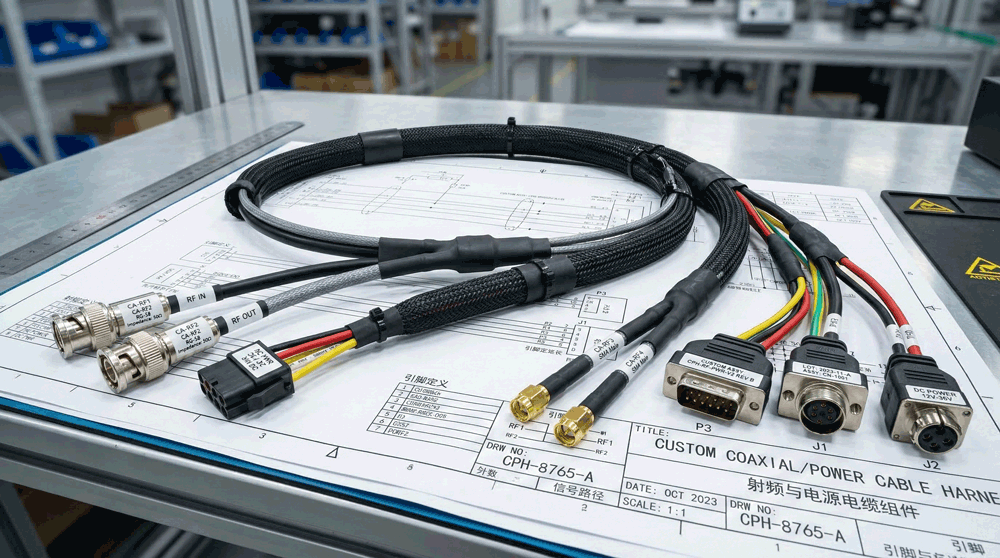
Supplier Transition Guide for Custom Wire Harness Projects
Changing a wire harness supplier is not only a purchasing decision. For many OEM buyers, it is a production continuity decision, a quality risk decision, and sometimes a business recovery decision. A supplier transition may be needed because the current supplier has long lead times, unstable quality, rising prices, poor communication, limited capacity, or no willingness to support low-volume custom projects. But if the transition is not handled carefully, the new supplier may repeat old mistakes or create new risks.
A custom wire harness may look simple from the outside, but it often contains many hidden requirements. Connector compatibility, pinout, wire gauge, branch geometry, labeling, packaging, testing, material approval, and revision control all affect whether the new harness can replace the old one smoothly. If the buyer only sends an old sample and asks the new supplier to copy it quickly, the first quotation may look easy, but sample approval and production transfer may become difficult later.
This guide explains how OEM buyers can switch wire harness suppliers with less risk. It covers what information should be collected from the existing project, how to review old samples and drawings, how to qualify a new supplier, and how to move from sample review to pilot production and repeat orders.
Table of Contents
ToggleWhy Buyers Change Suppliers
Most OEM buyers do not change suppliers without a reason. Supplier transition creates extra work for engineering, purchasing, quality, and production teams. If the current supplier is stable, responsive, and cost-effective, there is usually no need to change. But when problems begin to affect delivery, quality, or long-term supply, a new supplier becomes necessary.
One common reason is lead time. If a current supplier cannot deliver samples quickly or production orders are repeatedly delayed, the buyer may need a second source. This is especially important when the harness is used in equipment production and one missing cable assembly can stop the final assembly line.
Another reason is quality instability. A wire harness supplier may pass one batch but fail the next batch because of wrong pinout, loose terminals, inconsistent branch length, unclear labeling, or insufficient testing. These problems create rework, installation delays, and customer complaints. When the buyer cannot trust batch-to-batch consistency, supplier transition becomes a practical option.
Cost pressure can also drive transition. However, switching suppliers only for a lower price is risky if the new supplier does not understand the original requirements. A cheaper quote may exclude testing, use different materials, ignore packaging needs, or assume easier production conditions. A good supplier transition should compare the full supply package, not only the unit price.
Some buyers also change suppliers because the old supplier does not support small or medium-volume custom work anymore. Many OEM projects require prototype builds, pilot runs, engineering changes, and flexible communication before reaching stable production. If the existing supplier only wants large-volume orders and refuses engineering support, a more flexible custom wire harness manufacturer may be a better fit.
The Main Risk in Supplier Transition
The biggest risk in wire harness supplier transition is incomplete information. The old supplier may know many production details that are not written on the drawing. The buyer may have an approved sample but no complete BOM. The drawing may show the main dimensions but not the exact label position. The pinout may be correct in the old production file but missing from the buyer’s records. The packaging method may have been agreed years ago but never documented.
When these details are missing, the new supplier has to make assumptions. Some assumptions may be harmless, but others can cause serious problems. A connector that looks similar may not mate correctly. A wire gauge that seems close may not meet current requirements. A branch length copied from a used sample may not match the original design. A missing label may create assembly mistakes. A different test standard may allow defects to leave the factory.
Supplier transition should therefore begin with documentation control. The goal is not only to find a new manufacturer. The goal is to rebuild a reliable technical and commercial package that can support repeat production.
Start with Current Project Review
Before sending an RFQ to a new supplier, the buyer should review what is already available. This includes drawings, old samples, approved samples, BOM files, test reports, purchase history, inspection records, and any quality complaints from previous batches. Even incomplete information is useful if it helps the new supplier understand the project.
If the current drawing is available, check whether it matches the actual harness. In many older projects, drawings and real production parts may not be fully aligned. The old supplier may have made small adjustments during production, but the drawing was never updated. If the buyer provides only the outdated drawing, the new supplier may build a technically correct part that does not match the currently used harness.
If an approved sample is available, it should be treated as a physical reference. The new supplier can measure it, inspect connectors, identify wire colors, review sleeves or protection materials, and compare it with the drawing. However, the sample should also be checked carefully. A sample removed from used equipment may be bent, worn, repaired, or modified. It should not automatically be treated as the perfect standard.
If test reports or inspection records are available, they can help define the quality level. For example, the existing supplier may have performed 100% continuity testing, HiPot testing, pull force checks, or functional testing. If these requirements are not shared with the new supplier, the new quote may not include the same inspection scope.
Rebuild the Technical Package
A successful supplier transition usually requires rebuilding or cleaning up the technical package. This package does not need to be perfect at the first contact, but it should become clear before production release.
The most important file is the wire harness drawing. It should show total length, branch length, connector positions, wire colors, protective materials, labels, tolerance requirements, and any special assembly notes. If the original drawing is missing, the new supplier may help create one from the approved sample.
The BOM is also important. It should list connectors, terminals, wires, sleeves, heat shrink, labels, seals, cable ties, tubes, and other materials. If the exact connector part numbers are unknown, the supplier may need to identify them from samples or photos. When the original part is obsolete or difficult to source, approved alternatives should be discussed carefully.
The pinout table must be confirmed. In many custom wiring harness projects, pinout is the highest-risk item. A new supplier may trace the sample, but the final pinout should be approved by the customer. Wire color alone should not be used as the only wiring reference.
Testing requirements should also be included. A transition project should not reduce quality just because the buyer is changing suppliers. If the old supplier performed continuity testing, short-circuit testing, HiPot testing, or insulation resistance testing, the buyer should decide whether the same requirements apply to the new supplier.
Evaluate the New Supplier
A new supplier should not be evaluated only by price. In custom wire harness projects, supplier capability matters because the product is often built according to customer-specific requirements. The supplier must be able to review incomplete information, ask useful questions, identify risks, build samples, control revisions, and test every harness consistently.
A good supplier should be able to explain how they will review the sample, create or check the drawing, identify connectors, confirm pinout, manage material sourcing, and control production. If the supplier only says “we can copy it” without asking about application, current, voltage, testing, or quantity, the buyer should be careful.
Communication is also part of supplier qualification. During transition, many details need to be clarified. The supplier should respond clearly and document assumptions. If the new supplier cannot communicate well during the RFQ stage, production communication may also become difficult.
For OEM buyers, flexibility is another important factor. Supplier transition often starts with a small batch. The buyer may need 10 pieces for sample validation, 50 pieces for pilot build, and then larger production orders after approval. A supplier that supports low MOQ custom wire harness manufacturing can help the buyer reduce transition risk before committing to larger volume.
Compare Old and New Samples
The first new sample should be compared against both the old sample and the approved technical requirements. This comparison should not focus only on appearance. The buyer should check fit, function, connector mating, branch length, label accuracy, routing, protection, and electrical performance.
Connector mating is a key point. Even if the connector looks correct, it should be tested with the actual mating part or equipment. Small differences in housing, lock, seal, terminal position, or keying may cause assembly problems. If the connector is replaced with an alternative, the approval process should be even more careful.
Branch length and breakout position should also be checked inside the equipment. A harness may look correct on a table, but installation may show that one branch is too tight or too long. When a harness is routed through a machine, control cabinet, device enclosure, or moving assembly, small dimensional differences can affect installation quality.
Electrical testing should confirm continuity, pinout, short-circuit status, and any agreed high-voltage or insulation requirements. If the harness has shielding, shield continuity and grounding method should also be reviewed. If the harness is part of a signal or communication system, functional testing may be needed on the customer side.
Any differences between old and new samples should be documented. Some differences may be acceptable improvements. Others may require correction. The final approved version should be reflected in the drawing, BOM, and inspection standard.
Pilot Run Before Full Transfer
A pilot run is one of the best ways to reduce supplier transition risk. Instead of moving directly from sample approval to full production, the buyer can place a small production batch to test repeatability. This helps confirm whether the new supplier can produce consistent parts beyond one or two hand-built samples.
During the pilot run, the buyer should monitor dimensional consistency, connector quality, terminal crimping, label position, packaging, test records, and installation feedback. If the harness is installed on an assembly line, production workers may notice issues that were not obvious during sample review.
The pilot run also helps validate packaging and kitting. In many OEM projects, packaging is not just a logistics detail. It affects how quickly and correctly the harness can be installed. If the harness is supplied as a kit, each part must be easy to identify. If the same equipment uses several similar harnesses, labeling and separation become even more important.
After the pilot run, the buyer and supplier should close all open issues before repeat production. This is the right time to update drawings, confirm material alternatives, adjust labels, improve packaging, and freeze the production version.
Manage Material and Connector Risk
Material availability is often a hidden problem in supplier transition. The old harness may use a connector that is now obsolete, expensive, or difficult to source. The previous supplier may have old stock, but the new supplier may need to buy fresh material from the market. This can change lead time and cost.
For this reason, connector and terminal availability should be checked early. If exact parts are available, the transition is simpler. If not, the supplier may need to suggest alternatives. However, alternatives should not be selected casually. The buyer should review mating compatibility, electrical rating, mechanical fit, seal performance, terminal compatibility, and installation requirements.
Wire and protection materials also need attention. If the original harness used a specific UL style, temperature rating, jacket material, sleeve, or tubing, the new supplier should either match it or propose an approved equivalent. For outdoor, medical, industrial, battery, or high-flex applications, material substitution can affect performance.
A good transition plan should define which parts must be exact and which parts may have approved alternatives. This prevents future confusion and helps reduce lead time risk.
Control Revision and Approval
Revision control is one of the most important parts of supplier transition. If the buyer and supplier are not using the same revision, the project can quickly become confused. One team may refer to the old sample, another may refer to the updated drawing, and production may follow a BOM that does not include the latest change.
Before production transfer, the buyer should define the approved revision. The drawing, BOM, pinout table, sample, test requirement, and quotation should all match. Any change after approval should be recorded clearly.
This does not need to be complicated. Even a simple revision table can help. It should show what changed, when it changed, who approved it, and whether the change affects price, lead time, or production process. For OEM projects, this discipline helps avoid repeat mistakes and supports long-term production stability.
Common Transition Mistakes
Many supplier transition problems come from moving too fast. The buyer may be under pressure to reduce cost or solve a delivery problem quickly, so they send a sample, request a fast quote, approve a sample visually, and place a production order. This shortcut may work for simple harnesses, but it is risky for custom cable assemblies with multiple connectors, branches, labels, or testing requirements.
Another common mistake is comparing quotations without comparing assumptions. One supplier may quote with exact connectors, 100% continuity testing, individual packaging, and approved labels. Another supplier may quote with substitute materials, basic visual inspection, and bulk packaging. The second price may look better, but it may not represent the same product or service level.
A third mistake is ignoring old design problems. If the current harness has field failures, installation complaints, or quality issues, the transition should not simply copy the same design. The buyer should use the transition as a chance to identify why the old design caused problems and whether small improvements are needed.
How Infinite Possibilities Supports Supplier Transition
Infinite Possibilities supports OEM customers who need to transition custom wire harness and cable assembly projects from an old supplier to a new manufacturing partner. We understand that many transition projects begin with incomplete drawings, old samples, unclear BOMs, or limited production records.
Our team can review existing samples, identify connectors, check harness structure, prepare preliminary drawings, support BOM cleanup, build prototype samples, and help customers move into pilot production. We can also support low MOQ production, supplier replacement projects, old harness rebuilding, and custom cable assemblies for OEM equipment.
For quality control, we support 100% continuity and pinout testing, visual inspection, labeling review, and customer-specific inspection requirements. When material or connector availability creates lead time risk, we can help review possible sourcing options and approved alternatives.
If you are switching from an existing wire harness supplier, you do not need to have a perfect documentation package before starting. Send us the drawing, old sample, photos, quantity, application, and any available test or quality requirements. We can help identify what is ready, what is missing, and what should be confirmed before sample approval and production transfer.
Final View
A wire harness supplier transition should be managed as a controlled production transfer, not just a price comparison. The buyer needs to review the old project, collect available documentation, confirm pinout and materials, evaluate the new supplier, approve samples carefully, and use a pilot run before full production when possible.
The most successful transition projects are built on clear information. A sample is useful, but it should be supported by drawings, BOMs, pinout data, testing requirements, and revision control. When some information is missing, the supplier should help identify the gaps instead of guessing.
For OEM buyers, changing suppliers can reduce lead time, improve communication, support small-batch custom production, and create a more stable long-term supply chain. But the transition must be done with proper technical review and sample validation. A lower unit price alone is not enough. The real goal is a reliable harness that can be built repeatedly, installed correctly, tested consistently, and delivered on time.
FAQ
1. When should an OEM buyer consider changing wire harness suppliers?
An OEM buyer may consider changing suppliers when the current supplier has repeated delivery delays, unstable quality, poor communication, rising costs, limited engineering support, or no flexibility for low-volume custom production.
2. What is the biggest risk when switching wire harness suppliers?
The biggest risk is incomplete information. If drawings, BOMs, pinout tables, materials, testing requirements, or revision history are missing, the new supplier may make assumptions that create sample or production problems.
3. Can a new supplier build from an old sample?
Yes, a new supplier can often start from an old sample. However, the sample should be reviewed carefully, and the final drawing, BOM, pinout, and sample should be approved before production.
4. Should we place a pilot order before full production?
Yes, a pilot run is recommended for most supplier transition projects. It helps verify repeatability, installation fit, packaging, labeling, testing, and batch consistency before larger orders are released.
5. How can we compare quotations from different wire harness suppliers?
Compare not only the unit price, but also connector assumptions, material grade, testing scope, packaging, sample support, lead time, MOQ, revision control, and supplier communication. A lower price may not include the same requirements.
CTA
Planning to switch your wire harness supplier?
Send us your current drawings, old samples, photos, target quantity, application details, and any available testing requirements. Our team can review the project and help you build a safer supplier transition plan from sample evaluation to pilot production.
Contact Infinite Possibilities for a Custom Wire Harness Supplier Transition Review