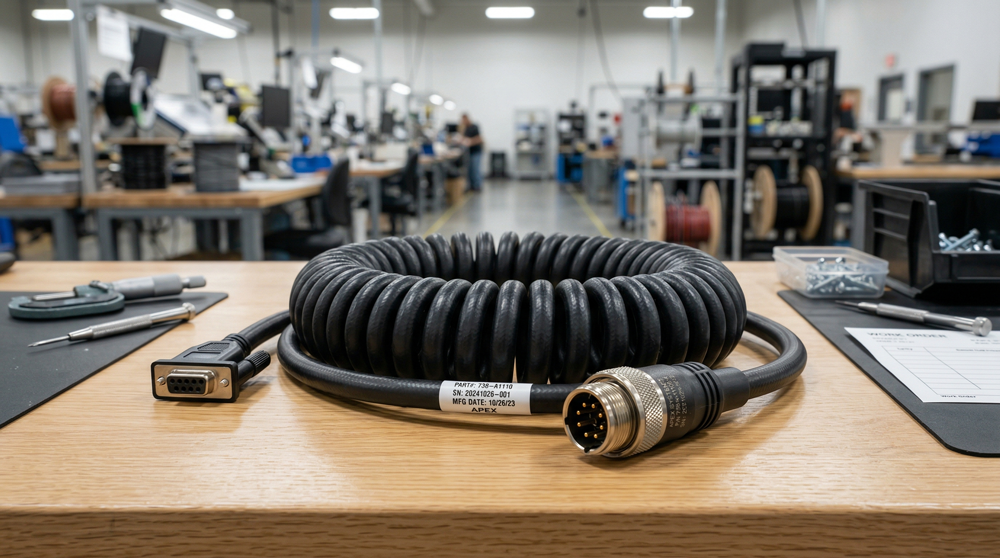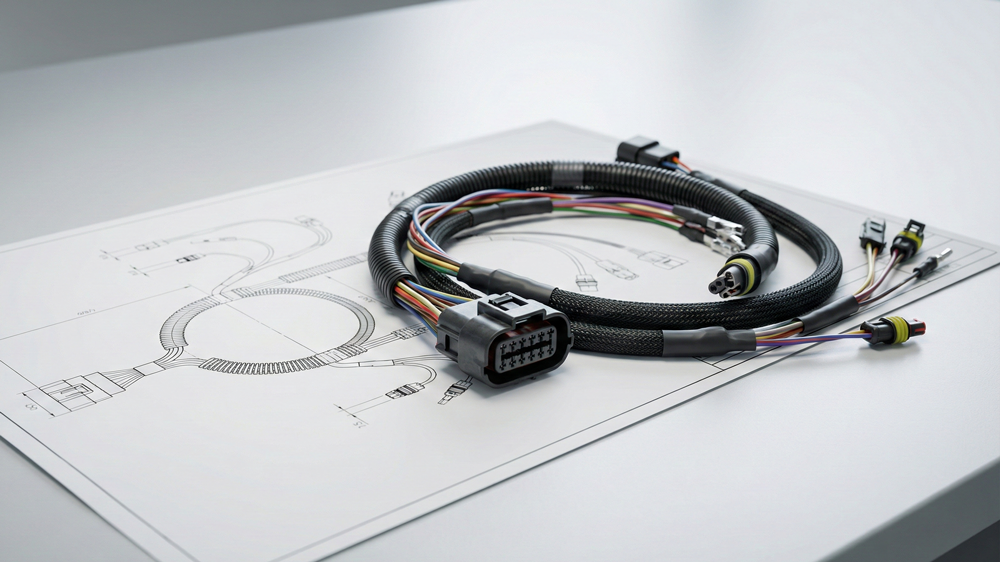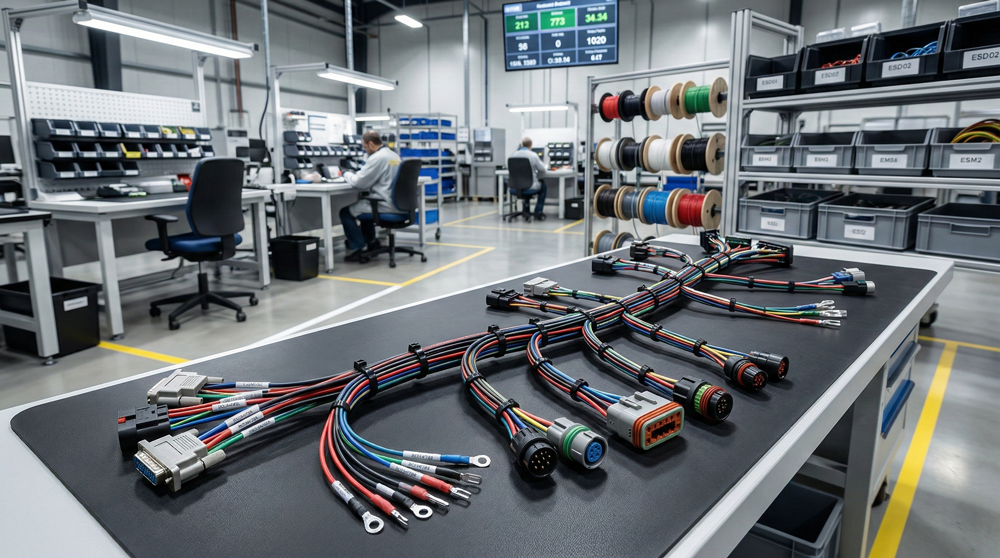
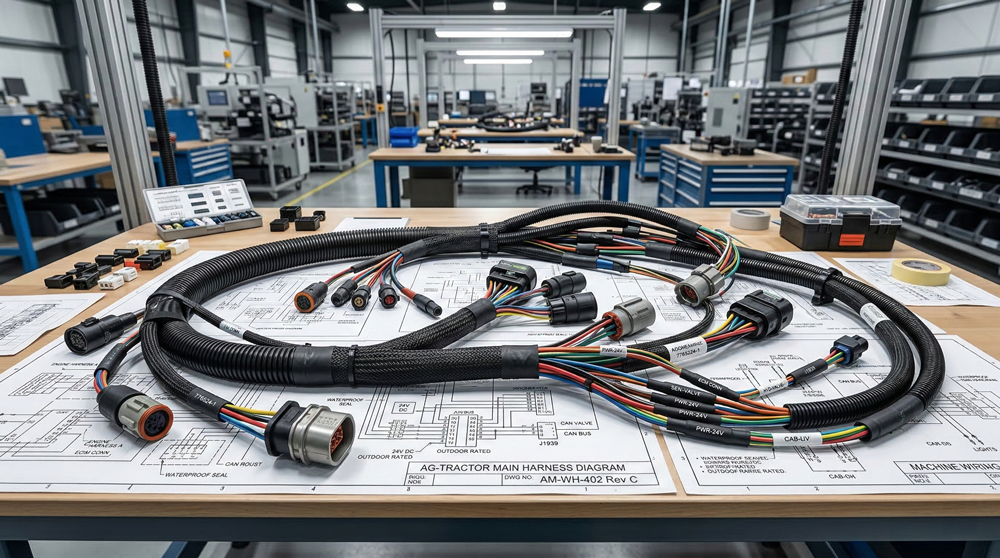
Choosing an RF connector is not just a matter of picking a familiar interface name. In a custom RF cable assembly, the connector helps define the usable frequency range, the impedance path, the mechanical retention method, the package size, and the way the assembly behaves in the real product. Your own RF service page already frames custom RF cable assemblies around signal integrity, connector precision, shielding continuity, and measured RF performance, which is exactly the right starting point for OEM buyers.
That is why connector choice should come after the application is defined, not before it. Mini-Circuits notes that selecting the right RF coaxial cable assembly requires prioritizing the actual application requirements, including connector type, cable type, flexibility, shielding, and frequency range, rather than treating every coax assembly as interchangeable.
Table of Contents
ToggleStart with the application, not the catalog
A good RF connector decision begins with a few practical questions. What frequency band does the assembly need to support? Is the path 50 ohms or 75 ohms? Will the assembly sit in a tight enclosure, a vibration-prone product, an outdoor device, a vehicle, or a test setup? Will operators mate and unmate the connector frequently, or is it mostly a one-time installation? Those questions matter because connector families solve different problems. Amphenol’s RF connector portfolio spans multiple impedance types, form factors, and frequency ranges specifically because no single connector family fits every use case.
For OEM buyers, this is the key mindset shift: do not begin with “we need SMA” unless you already know why SMA fits the electrical and mechanical environment. Begin with the signal path and product constraints, then choose the connector family that matches them.
The five selection factors that matter most
The first factor is frequency range. Some connector families are intended for relatively modest RF bands, while others are designed for higher-frequency use. Amphenol lists standard SMA to 18 GHz, with extended-range designs up to 34 GHz; TNC up to 11 GHz, cable-dependent; N-Type up to 18 GHz in extended designs; MCX up to 12 GHz; MMCX up to 6 GHz, cable-dependent; and standard FAKRA to 6 GHz, with some flexible broadcast cable assemblies to 12 GHz. BNC is commonly positioned around standard RF use to about 4 GHz, with some video-grade setups higher depending on application and cable.
The second factor is impedance system. SMA is a 50-ohm family in the context discussed here. TNC is available in 50-ohm and 75-ohm versions. BNC is also available in 50-ohm and 75-ohm forms. FAKRA is nominally 50 ohms for RF applications, while MCX and MMCX are commonly used in 50-ohm systems, with MCX also available in 75-ohm versions. If the system impedance is not defined clearly, even a physically correct connector choice can produce a mismatched assembly.
The third factor is mechanical coupling style. Some connectors use threaded coupling for stronger retention, while others use bayonet or snap-on coupling for speed and compactness. Amphenol describes SMA as threaded, TNC as threaded, N-Type as threaded, BNC as bayonet, MCX as snap-on, MMCX as push-on, and FAKRA as keyed snap-fit with color coding. That means connector choice affects not just RF performance but also serviceability, vibration behavior, assembly error prevention, and user convenience.
The fourth factor is size and packaging. MCX and MMCX are attractive in compact devices because they reduce interface size and support dense layouts. SMA is still compact, but it needs room for threaded coupling. N-Type is larger and better suited to more rugged, higher-power, outdoor, or infrastructure-style applications. FAKRA is bulkier because of the keyed housing, but that same housing helps prevent mating errors in automotive environments.
The fifth factor is environment and durability. Amphenol positions SMA and TNC around vibration-resistant threaded coupling, N-Type around weatherproof and vibration-resistant applications, and FAKRA around automotive-grade keyed and rugged mating. That means the connector family should reflect the real operating environment, not just the desired RF band.
When SMA is the right choice
SMA is a strong default when the project needs a compact 50-ohm threaded connector with broad RF relevance and good vibration resistance. Amphenol describes SMA with precision 1/4-36 threaded coupling, robust vibration resistance, high durability up to 500 mating cycles, and standard frequency performance from DC to 18 GHz, with extended-range options higher than that. Those characteristics make SMA a practical fit for antennas, radios, test equipment, drones, and many OEM RF interconnects.
For custom cable assemblies, SMA is especially useful when the assembly must stay secure under vibration, the product can tolerate threaded mating, and the frequency target fits within the family’s practical range. It is less ideal when the packaging is extremely tight or when rapid snap-on connection matters more than secure threaded retention.
When BNC makes more sense
BNC is useful when fast connect and disconnect behavior matters more than threaded retention. Amphenol describes BNC as using a bayonet coupling style, offering 50-ohm and 75-ohm variants, and supporting standard RF use to around 4 GHz, with video-oriented applications extending higher depending on cable and setup. That makes BNC attractive in instrumentation, legacy RF systems, video-related environments, and applications where quick mating is important.
For OEM buyers, the practical limit is that BNC is usually not the first choice when the product needs a smaller connector, stronger vibration resistance, or a higher-frequency path than the connector family comfortably supports in normal use.
When TNC is better than BNC
TNC exists partly because some applications need the familiarity of the BNC family but with threaded coupling for better retention and higher-frequency performance. Amphenol lists TNC with threaded coupling, vibration resistance, 50-ohm and 75-ohm versions, and performance up to 11 GHz, cable-dependent. That makes TNC a logical option when BNC-like usability is appealing but the application demands stronger mating security or higher RF performance.
In real OEM work, TNC becomes more attractive in antennas, industrial wireless systems, military or rugged products, and outdoor builds where vibration and secure retention matter more than quick quarter-turn mating. Amphenol’s IP67 TNC positioning reinforces that use case.
When N-Type is the right answer
N-Type is the connector family to look at when the application needs a larger, durable, weather-resistant RF interface with strong outdoor relevance. Amphenol positions N-Type as durable, weatherproof, 50-ohm, and suitable for antennas, base stations, radar systems, and WLAN, with performance from DC to 18 GHz in its extended-frequency offerings.
For OEM buyers, that usually means N-Type is worth considering when the product is not especially space-constrained and the mechanical environment is more demanding than what a small internal RF jumper would typically see. It is often a better fit for infrastructure-style RF links than for dense compact electronics.
When MCX and MMCX are the better fit
MCX and MMCX are useful when the main challenge is connector size and packaging density. Amphenol positions MCX as a compact snap-on family with broadband performance up to 12 GHz and both 50-ohm and 75-ohm options. MMCX is even smaller, with 50-ohm nominal impedance, push-on mating, and performance to 6 GHz, cable-dependent.
That makes MCX attractive for compact wireless devices, GPS units, broadband modules, and small RF interconnects where a snap-on interface is desirable. MMCX becomes relevant when space is tighter still and the operating band stays within its practical range. The tradeoff is that these families are chosen more for miniaturization and packaging efficiency than for rugged threaded retention.
When FAKRA is the correct choice
FAKRA should be considered when the application is automotive or automotive-like, where keyed mating, color coding, assembly error prevention, and vibration-capable retention matter as much as RF performance. Amphenol describes FAKRA as a 50-ohm RF interface with standard performance to 6 GHz, some flexible cable assemblies to 12 GHz, snap-fit latch coupling, and keyed color-coded housings for reliable, error-free mating.
For OEM buyers in ADAS, telematics, GPS, camera systems, or vehicle connectivity, FAKRA is often a system decision rather than just a connector decision. The keying and housing are part of why the connector is chosen. A plain SMA or MCX may work electrically in some cases, but not as well operationally inside an automotive production environment.
What buyers most often get wrong
One common mistake is choosing the connector by frequency alone. Frequency range is critical, but it is not enough. A connector can be electrically suitable and still be wrong because the mating style is poor for the use case, the package is too large, the coupling is too weak for vibration, or the installation team is likely to mis-mate similar-looking interfaces.
Another mistake is choosing by familiarity alone. SMA is widely known, but that does not make it the best answer for every RF cable assembly. BNC may be faster to handle, TNC may be more secure in vibration, N-Type may be better outdoors, MCX/MMCX may fit better in dense electronics, and FAKRA may be the only sensible choice in a keyed vehicle environment.
A third mistake is failing to define connector orientation and mounting style. In custom cable assemblies, buyers should not stop at “SMA” or “TNC.” They should specify straight versus right-angle, plug versus jack, bulkhead versus free-hanging, and whether the enclosure imposes routing constraints. Your own RF service page already supports this broader configuration mindset by offering multiple connector families, cable types, and custom transitions instead of one default build style.
How OEM buyers should make the decision
The most useful selection sequence is straightforward. First, define the frequency band and impedance system. Second, define the mechanical environment, including vibration, moisture, service access, and packaging space. Third, decide whether the application needs threaded retention, bayonet speed, push-on compactness, or keyed foolproof mating. Fourth, confirm the cable family and routing environment so the connector and cable behave as one RF path, not two independent choices. This follows the connector-family distinctions in Amphenol’s product data and the application-first logic in Mini-Circuits’ selection guidance.
For sourcing, that means the RFQ should describe the application, band, impedance, connector family candidates, mounting style, cable family, and validation expectations. Buyers should not ask only “Can you make this connector?” They should ask “Which connector family is best for this RF path and product environment?”
Final view
RF connector choice is really a system choice. The right connector is the one that fits the frequency range, impedance path, package, mating style, vibration level, environmental exposure, and assembly workflow together. Amphenol’s connector-family data shows clearly that SMA, BNC, TNC, N-Type, MCX, MMCX, and FAKRA are not interchangeable labels. They are different answers to different RF and mechanical problems.
For OEM buyers, the practical takeaway is simple: choose the connector after the application is clear, not before. That reduces sample churn, improves cable-assembly fit, and makes it much easier for the supplier to build a custom RF path that actually works in the product.
FAQ
Is SMA always the best default RF connector
No. SMA is a strong default for many 50-ohm compact RF applications, but it is not always the best choice when the product needs faster connect/disconnect, a smaller snap-on interface, keyed automotive mating, or a larger weather-resistant outdoor connector.
When should I choose TNC instead of BNC
TNC is usually the better choice when you want stronger threaded retention and higher-frequency capability than standard BNC-style use, especially in vibration-prone or outdoor-related applications.
When is N-Type better than SMA
N-Type is often better when the application is larger, more rugged, more weather-exposed, or more infrastructure-oriented, and space is less constrained than in compact internal RF assemblies.
What is the difference between MCX and MMCX
Both are compact snap-on style RF families, but MMCX is smaller and typically used to 6 GHz, cable-dependent, while MCX is slightly larger and commonly positioned up to 12 GHz with both 50-ohm and 75-ohm options.
Why is FAKRA so common in automotive RF systems
Because FAKRA adds keyed, color-coded, snap-fit housings that reduce mating errors and support automotive assembly requirements alongside RF performance.
CTA
If your project needs a custom RF cable assembly, do not choose the connector by habit alone. Start with the band, impedance, enclosure, mating style, and environment, then choose the connector family that matches the real job. This article can naturally connect to your RF & SMA Cable service page as the RF-series landing point.