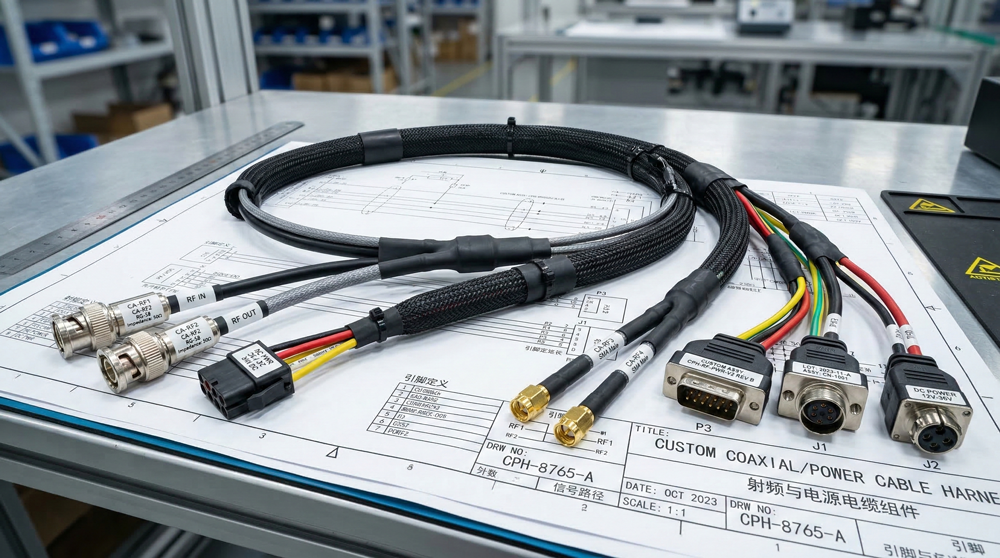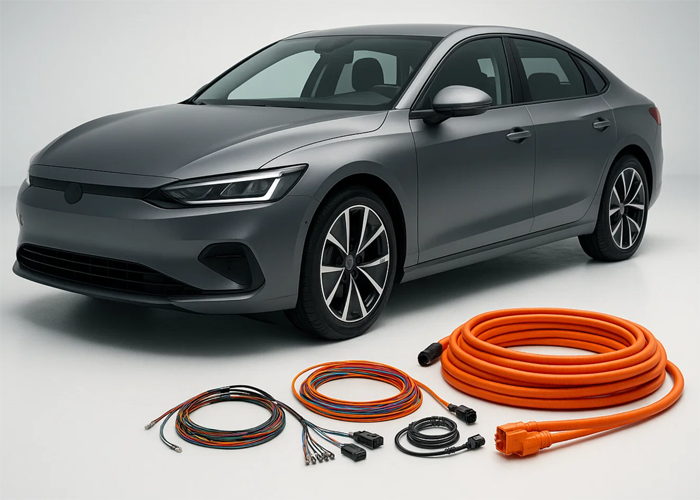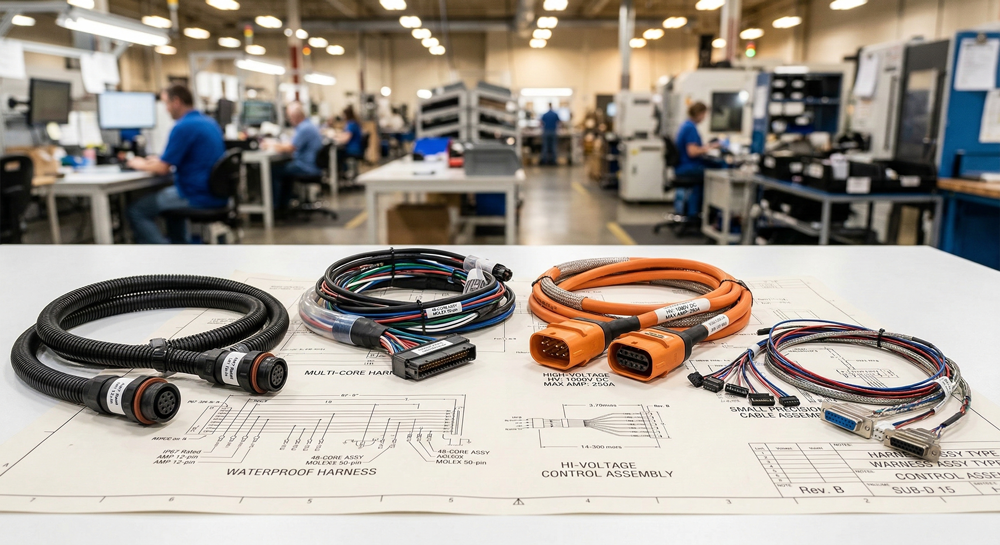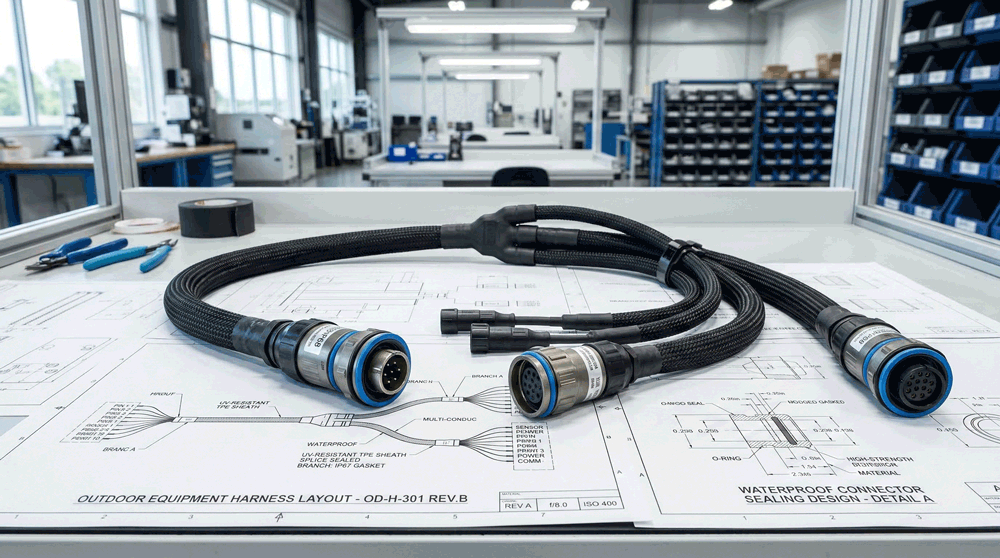
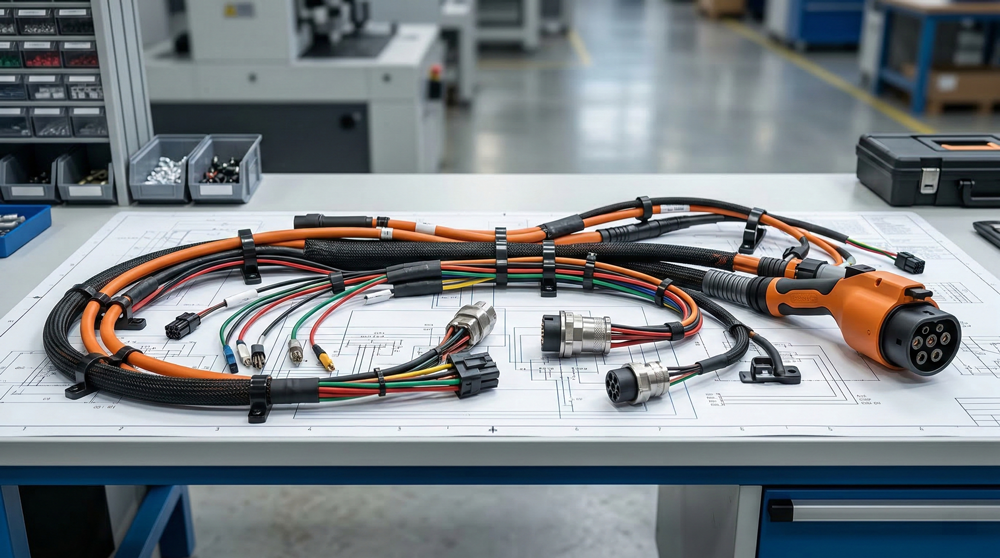
How to reduce connector cost in OEM cable assemblies is a question that should be answered with engineering discipline, not only with price pressure. How to reduce connector cost in OEM cable assemblies is not about forcing the cheapest connector into the design. It is about finding where connector spend is inflated by over-spec, low-volume variation, weak standardization, or poor sourcing structure, and then reducing that cost without creating higher failure risk in the finished product.
For OEM buyers, this matters because connectors often sit near the top of the visible BOM cost, especially in custom cable assemblies and wiring harness projects. That makes them an obvious target. But connectors also influence retention, serviceability, routing, sealing, and field reliability. A good connector cost-down lowers spend while protecting those functions. A bad one saves money in procurement and gives it back in production, warranty, or service.
Table of Contents
ToggleWhy Connector Cost Runs High
Connector cost is often high for reasons that have little to do with true product need. Some programs carry premium connector families because the early design team wanted extra margin and no one reviewed the choice later. Others use too many connector variants across similar assemblies, which fragments volume and weakens pricing leverage. Some projects lock in expensive families because the first prototype used them, even though the final application no longer needs that level of performance.
Another common reason is low-volume complexity. A connector may be technically good but commercially inefficient because it sits in a family with too many colors, keyings, shell variants, or sealing options that are not really adding value to the OEM program. In these cases, the connector cost problem is not only the connector itself. It is the way the project is structured around it.
That is why strong cost-down work starts by asking why the connector is expensive today, not simply how to buy it cheaper.
Start with the Application
The first step is to confirm what the connector really has to do in the finished cable assembly. Some connectors are expensive because the application truly needs stronger locking, better sealing, better vibration resistance, or more demanding mating performance. In those cases, the cost may be justified. In other cases, the current connector may be more capable than the product actually requires.
A static indoor assembly, for example, may not need the same connector cost structure as a moving industrial cable, an outdoor product, a service-heavy medical device, or an automotive auxiliary harness. If the use case is lighter than the connector family suggests, then the buyer may have a safe cost-down path. If the use case is demanding, then cutting connector cost too aggressively may simply move failure risk downstream.
The right question is not “Can this connector be cheaper?” It is “What level of connector performance does this OEM cable assembly actually need?”
Remove Over-Spec
One of the safest ways to reduce connector cost is to remove over-spec. Many OEM projects carry connector features that were once useful during development but are no longer necessary in the released product.
This can happen in several ways. A connector may have a sealing level the application does not truly need. It may have a mating-cycle capability far above the real service requirement. It may include a premium retention feature where the cable is actually static and protected. It may use a higher-cost family because that was convenient during prototyping, not because it remains the best commercial fit for production.
Removing over-spec does not mean weakening the connector blindly. It means matching the connector more precisely to the real product. In B2B cable assemblies, this is often the cleanest connector cost-down path because it keeps the design strong while removing cost that no longer buys meaningful value.
Reduce Variant Count
Connector cost is often driven less by one expensive part and more by too many similar parts. Variant count creates quiet cost in purchasing, production, incoming inspection, and stock control.
If the same OEM program uses several close connector variants where one or two would do, the business loses price leverage and increases handling complexity. Small differences in keying, color, locking option, or shell style may all be valid individually, yet still create unnecessary commercial fragmentation when viewed across the whole product family.
That is why variant reduction is one of the best connector cost-down tools. If related cable assemblies can share more connector families safely, the buyer often gains stronger supplier pricing, simpler inventory, and lower risk of wrong-part use. This kind of saving is usually safer than changing to a visibly cheaper connector family because it improves both cost and control at the same time.
Standardize Across Families
Beyond reducing single-project variant count, OEM buyers should also look for connector standardization across product families. This is especially powerful when the company runs several related cable assemblies or wiring harnesses with overlapping application demands.
A standardized connector strategy helps procurement pool volume more effectively. It also helps the supplier build with fewer low-volume exceptions, which often lowers total cost indirectly. Engineering benefits too, because standard families are easier to document, inspect, and support through ECN, pilot, and service.
Of course, standardization should not force the wrong connector into a product just to simplify purchasing. The goal is to standardize where the application genuinely allows it. When that balance is handled well, connector standardization becomes one of the strongest long-term cost-down moves an OEM cable assemblies program can make.
Review the Lock
Connector locking is one of the first areas where buyers should be careful. A lower-cost connector may look attractive until the locking method becomes the weak point in the field.
That does not mean every project needs the most robust lock available. It means the lock should match the real environment. If the cable assembly is static, protected, and rarely handled, a simpler lock may be fully acceptable. If the product sees vibration, repeated mating, awkward service access, or user handling, the lock is buying real reliability and should not be cut too casually.
A good connector cost review therefore asks whether the current lock is appropriately specified, under-specified, or over-specified. In some projects, the answer will support a safe downgrade. In others, it will show that the apparent cost problem is actually protecting the product from much bigger failure cost later.
Review the Route
Connector cost should also be judged against the cable route. Some lower-cost connectors create hidden system cost because their size, exit direction, or mechanical form make the route more difficult.
If the connector forces a sharper bend, crowds the enclosure, weakens strain relief, or makes service access worse, the saved connector price may be offset by higher assembly labor, more awkward handling, or more long-term reliability risk. In these cases, the connector is not only a component choice. It is a routing decision.
This is why buyers should review the connector in the actual cable assembly geometry, not only in the BOM. A connector that is slightly more expensive but fits the route naturally may still be the lower-cost business decision.
Match the Cable
Connector cost-down work should always be reviewed together with the cable. A connector that looks like a savings opportunity can become a poor choice if it no longer matches the cable construction, seal range, shielding logic, or bend behavior.
This is especially important when the cable is already optimized for the application. A cheaper connector may still mate electrically, yet create more stress at the transition or weaken sealing if the cable diameter and stiffness are not a good fit. Conversely, if the cable itself is over-specified, then a connector change alone may not be the right cost-down move. The project may need a broader review of the whole interconnect system.
That is why the best connector savings usually come from reviewing the connector and the cable as one assembly, not as separate cost lines. In OEM cable assemblies, system fit matters more than isolated component savings.
Use Approved Alternatives
A good way to reduce connector cost without raising failure risk is to develop and control approved alternatives where the application allows it. This is different from allowing loose substitution. Approved alternatives should be qualified, documented, and tied to the same product intent.
This approach helps in two ways. First, it can improve price leverage by giving procurement more than one commercially usable source path. Second, it can reduce supply risk, which is itself a kind of cost protection. A connector with strong technical performance but fragile sourcing is not always the best business choice.
The key is discipline. Alternatives must still support the required lock, route, cable match, service behavior, and environmental fit. If they do, the OEM gains commercial flexibility without sacrificing product control.
Use Supplier Input
Suppliers often know where connector cost is being driven unnecessarily. They see where the family is fragmented, where similar variants are being quoted separately, where a connector is harder to source than the OEM team realizes, or where the current selection is carrying more cost than the application really needs.
That is why good connector cost-down work should include supplier feedback early. The right question is not only “Can you lower the connector price?” A stronger question is “Why is this connector expensive in this program, and what changes would reduce cost safely?” The answer may point to better family alignment, lower variant count, improved sourcing structure, or a more suitable commercial alternative.
This does not mean every supplier proposal should be accepted. But in many B2B cable assembly programs, the supplier has the clearest view of the recurring connector cost drivers in real production.
Protect the Service Model
A connector cost-down that weakens serviceability is often a false saving. If the connector becomes harder to access, harder to release, easier to mis-handle, or more fragile during replacement, the business may pay for the lower unit cost later through longer service time and more support work.
This matters especially in industrial equipment, medical products, outdoor systems, and automotive-related assemblies where field maintenance is part of the real lifecycle. In those products, a connector is not only part of the BOM. It is part of the service model.
That is why OEM buyers should check whether the lower-cost connector still supports the way the product will actually be maintained. If not, the connector price alone is not telling the full commercial story.
Validate the Change
Connector changes should not move directly into production just because the new choice looks small on paper. Even modest connector cost-down actions can affect lock feel, cable exit, route behavior, labels, packaging, service access, or assembly stability.
That is why validation matters. Depending on the size of the change, the buyer may need a new sample, a pilot review, a first article check, or tighter incoming inspection on the first lots. The goal is not to slow the project down unnecessarily. The goal is to make sure the cost-down still supports the same product intent.
This is especially important because connector changes are often deceptively simple. The part number changes, but the assembly still “looks about the same.” That visual similarity is exactly why the change needs disciplined review before release.
Avoid Common Mistakes
A common mistake is reducing connector cost by part price only and ignoring lock, route, service, or cable-fit consequences. Another is assuming the most expensive connector is automatically over-specified. A third is changing connectors before reducing unnecessary family variation or poor volume structure.
Another frequent mistake is letting the supplier substitute a “similar” connector without formal review, then discovering later that the service feel, route, or labeling logic changed in the process. A final mistake is validating the lower-cost connector too lightly because the electrical interface still looks correct. In many projects, the real risk is mechanical and operational, not purely electrical.
Use a Practical Cost Review
A simple review framework helps buyers make better connector cost decisions.
| Review area | Key question |
|---|---|
| Application | Is the current connector stronger than the real use case requires |
| Variant count | Are too many connector versions fragmenting spend |
| Standardization | Can related cable assemblies share more connector families |
| Lock | Can the lower-cost option still protect retention properly |
| Route | Does the connector still support the real cable path |
| Cable match | Does the connector still fit the actual cable construction |
| Supply | Does the change improve or weaken sourcing stability |
| Service | Will the connector still support maintenance well |
| Validation | What proof is needed before release |
This kind of structure makes the discussion more useful than a simple price comparison.
Conclusion
How to reduce connector cost in OEM cable assemblies is really about removing unnecessary connector spend without weakening the product. The strongest path usually starts with application review, over-spec reduction, variant cleanup, family standardization, controlled alternatives, supplier input, and disciplined validation rather than with a blind push toward the cheapest visible connector.
When buyers do this well, they lower BOM cost while protecting lock strength, route stability, serviceability, and supply control. In OEM cable assemblies and wiring harness programs, that is what real connector cost-down should look like.
FAQ
What is the safest first step in connector cost-down?
A strong first step is usually reviewing over-spec and variant count before trying to switch directly to a much cheaper connector family.
Can buyers lower connector cost without increasing failure risk?
Yes, if the lower-cost option still matches the application, cable, route, lock requirement, and service model, and if the change is validated properly.
Is variant reduction really a connector cost tool?
Yes. Too many close connector variants reduce purchasing leverage and increase handling cost, so simplification can create meaningful savings.
Should connector cost-down be reviewed together with the cable?
Yes. Connector fit, seal range, exit behavior, and transition stress all depend on the actual cable, so the assembly should be reviewed as one system.
Do connector changes need sample or pilot validation?
In many cases, yes. Even small connector changes can affect route behavior, service use, or retention, so proof before release is important.
CTA
If you are reviewing connector cost in OEM cable assemblies or wiring harness projects, the best first step is to identify whether the current connector cost comes from real product need, unnecessary over-spec, or avoidable family fragmentation.
You can send your drawings, BOM, connector options, annual volume, and target savings through Contact. Our team can help review the connector cost path and support a more practical OEM cost-down decision before release.