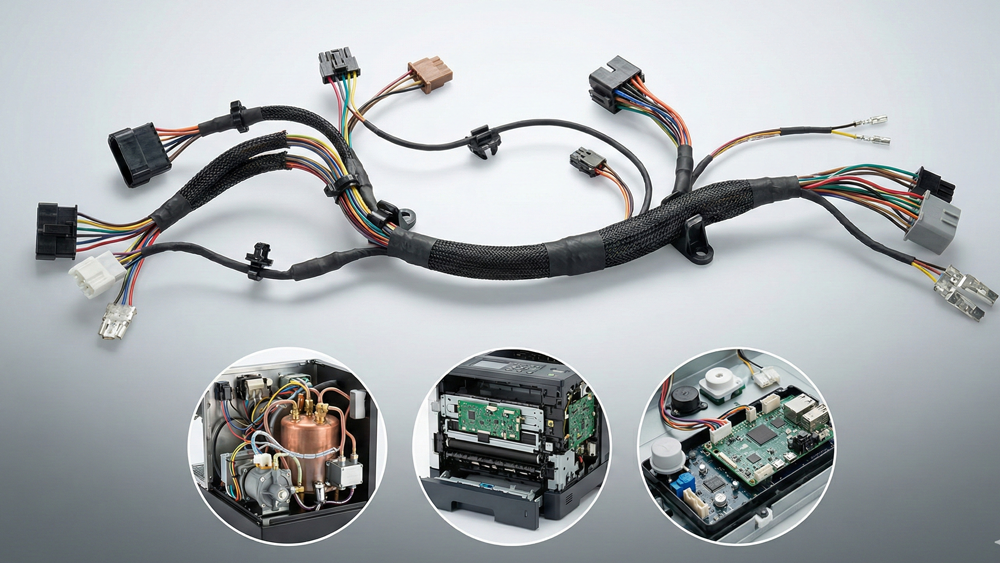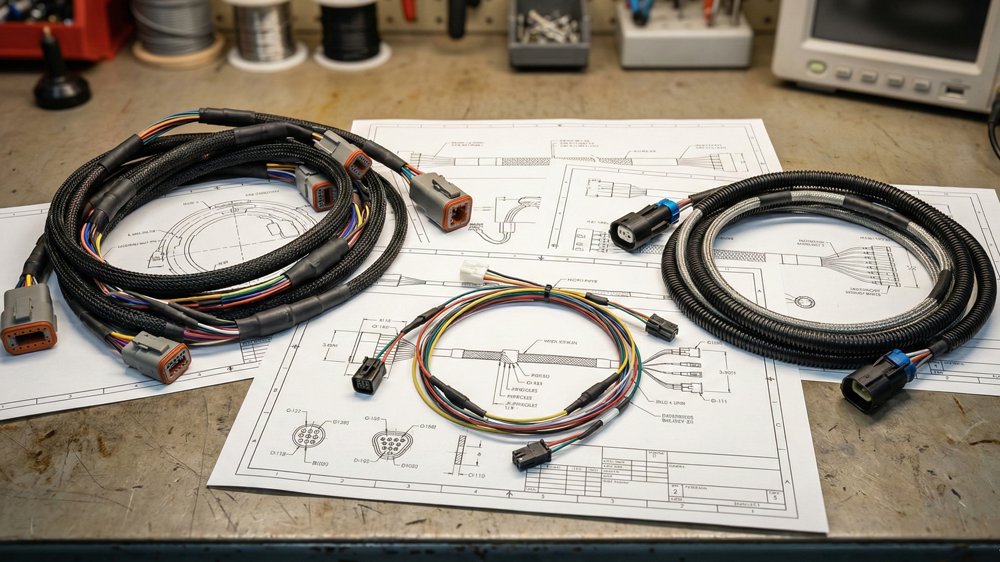
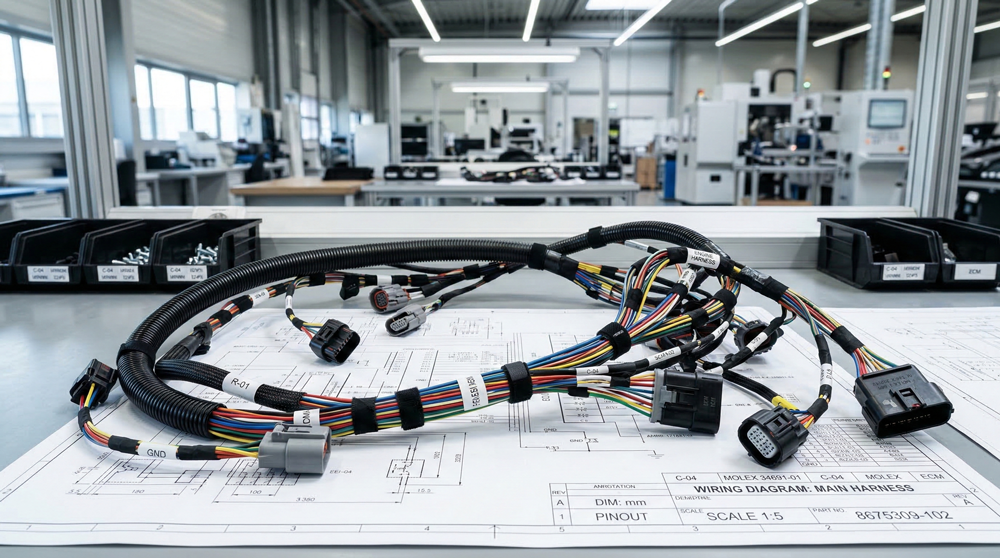
How to balance connector cost and reliability is one of the most practical decisions in OEM cable assembly sourcing. How to balance connector cost and reliability is not about choosing between “cheap” and “good” in a simplistic way. It is about understanding when a lower-cost connector is fully acceptable, when a higher-cost option prevents much larger downstream loss, and how buyers should judge that trade-off before the project is locked.
For OEM teams, this matters because connector cost is visible early, while connector reliability cost often appears later. The unit price is easy to compare in a quotation sheet. The cost of weak retention, poor fit, difficult service access, unstable mating, or early field replacement is much harder to see until the product is already in pilot, production, or customer use. That is why connector selection should be judged by total business impact, not only by purchase price.
Table of Contents
ToggleWhy This Trade-Off Matters
Many cable assembly projects feel cost pressure from the beginning. Procurement wants a competitive quote. Engineering wants a stable design. The supplier wants to keep the BOM commercially workable. In that setting, connectors are often one of the first places people look for savings, because the price line is visible and the function may appear straightforward.
The problem is that connectors do much more than complete a circuit. They influence lock strength, routing, vibration resistance, service behavior, signal stability, sealing performance, and assembly consistency. That means a connector with a lower unit price may still create a higher total cost if it makes the finished cable assembly harder to build, easier to damage, or less stable in the real application.
This is especially important in OEM products where the cable assembly sits inside a higher-value system. A small connector problem can stop a larger machine, create a service call, delay an installation, or damage buyer confidence. In those cases, the price difference between two connector options is often much smaller than the operational difference they create.
Start with the Application
The best way to balance connector cost and reliability is to begin with the real use case. A connector that is completely acceptable in one product may be a poor commercial choice in another.
If the cable assembly is static, protected, lightly handled, and used in a quiet indoor environment, a more economical connector may be perfectly reasonable. If the assembly is exposed to vibration, movement, moisture, repeated mating, harsh handling, or service pressure, then the cost logic changes. In those cases, higher connector reliability is often worth more because the application punishes weak interfaces much faster.
This is why buyers should not ask only, “How much does this connector cost?” They should first ask, “What will this connector have to survive in the real product?” Once that answer is clear, cost comparison becomes more intelligent because the buyer is comparing against actual operating risk rather than against a generic component category.
Know What Reliability Means
Connector reliability is often discussed too loosely. In sourcing conversations, it helps to define what reliability actually means for the project.
In some products, reliability mainly means the connector stays mated securely and does not loosen under normal use. In others, it means the connector handles repeated plugging and unplugging without performance drift. In more demanding environments, reliability may mean sealing stability, resistance to vibration, clean signal continuity, strong terminal retention, or resistance to contamination and handling damage. In service-heavy products, it may also include how easily the connector can be used correctly in the field.
This matters because the buyer cannot balance cost well if the reliability target is vague. A project that only needs stable one-time mating does not need the same connector solution as a product that must survive motion, field use, or outdoor exposure. Reliability has to be defined in context, or else the cost discussion becomes too abstract to guide a good decision.
Look Beyond Unit Price
Unit price is real, but it is only one layer of connector cost. In OEM cable assemblies, the connector also affects labor, build consistency, rework exposure, packaging efficiency, pilot risk, and after-sales cost.
A lower-cost connector may save money at purchase stage but require more care during assembly, more difficult termination handling, or tighter process discipline to avoid damage. A slightly more expensive connector may reduce those issues by improving fit, lock strength, or termination stability. That difference does not always show up in the quote sheet directly, but it still affects the business.
The same is true after shipment. A connector that creates intermittent faults, poor retention, or weak field durability often costs much more than its price line suggests. The buyer may pay through warranty cases, service time, replacement shipments, customer dissatisfaction, or extra internal engineering support. This is why the strongest sourcing decisions look beyond purchase price and ask what the connector does to the total cost of ownership.
Compare Failure Cost
A very useful sourcing question is: what happens if this connector is the weak point? That question often makes the cost-versus-reliability trade-off much clearer.
If a failure would only create a minor inconvenience in a non-critical internal assembly, then a more economical connector may be commercially acceptable. If the same failure would stop a machine, create a field complaint, interrupt a production line, or require difficult service access, then the value of reliability rises sharply. In those cases, even a modest connector upgrade may be one of the cheapest forms of risk reduction in the whole assembly.
This is why good buyers compare connector options against failure cost, not only against each other. A two-dollar savings means something very different in a low-risk static assembly than it does in a vibration-prone industrial product or a frequently handled medical or outdoor device. Once failure consequence is visible, connector cost usually becomes easier to judge rationally.
Check the Lock
Retention is one of the clearest places where cost and reliability intersect. A cheaper connector may still mate correctly, but if the lock is weaker, less clear, or less stable in the application, the total cost picture changes.
A weak lock may not fail immediately. It may loosen gradually under vibration, side load, or repeated handling. It may seem acceptable in early sample review and then show trouble only after field use. In those cases, the original price savings disappear quickly because the connector has shifted risk into the operating phase of the product.
That is why buyers should evaluate lock behavior carefully. Is the latching method clear? Is it strong enough for the environment? Does it remain serviceable? Does it depend too much on perfect operator behavior? A stronger connector often justifies its cost when it reduces the chance of disconnect-related problems later.
Check the Route
Connector cost should also be judged against the cable route. Some lower-cost connectors are not weak electrically, but they create routing stress because of size, exit direction, or mechanical form. That stress may not be obvious until the assembly is built into the product.
If the connector forces a tight bend, creates poor strain relief, or crowds the enclosure, the total assembly becomes more difficult and more failure-prone. In those cases, a more suitable connector may cost more per unit but still save money at system level by improving packaging, assembly ease, and transition stability.
This is one reason why connector choice should always be reviewed together with cable and route. A connector cannot be judged well in isolation. A low-cost part that creates a weak route is rarely a good commercial decision in the long run.
Think About Service
Serviceability often changes the whole connector cost discussion. A connector that is cheap but difficult to release, hard to identify, or awkward to handle may create much larger downstream cost if the product is expected to be maintained in the field.
This is especially relevant in industrial equipment, medical devices, outdoor systems, and automotive-related applications. In these products, service time has a real cost. A connector that helps technicians work faster and more accurately can create real value even if its unit price is higher. By contrast, a connector that saves a little in purchasing but slows service or increases mis-handling risk may be the more expensive choice over the life of the product.
That is why buyers should ask whether the connector supports the real service model. If the assembly will be unplugged or replaced later, connector usability should be treated as part of reliability, not as an optional convenience.
Match the Volume
Connector cost and reliability should also be judged against the production model. The same connector decision may make sense in one volume scenario and not in another.
In low-volume programs, buyers sometimes choose a slightly higher-cost connector because it reduces engineering risk and field uncertainty, and the total annual spend difference is still manageable. In high-volume programs, the per-unit cost difference becomes more significant, so the connector needs to justify its premium more clearly. At the same time, higher volume usually means process consistency, line speed, and warranty exposure matter more too. That can strengthen the business case for a more reliable connector if the lower-cost option would narrow the process window too much.
This is why the right question is not whether the connector is expensive in absolute terms. The better question is whether the connector’s cost makes sense within the expected production volume and failure exposure of the project.
Review Supply Stability
A connector can look attractive on both cost and reliability and still be the wrong choice if the supply path behind it is unstable. This is another reason why pricing and reliability must be judged together with sourcing reality.
If one connector family offers better cost but very weak availability, long lead times, or poor alternate options, the total commercial position may become fragile. A slightly higher-cost connector with better availability or broader supply resilience may actually protect the program better. This is especially important in OEM programs expected to scale or remain active over a long period.
For buyers, connector reliability therefore includes supply reliability as well. A technically good connector that creates repeated sourcing risk is not fully reliable from a business perspective. That is why cost balancing should always include component availability and future sourcing flexibility.
Use Samples to Test the Trade-Off
The sample stage is one of the best places to see whether the lower-cost connector and the higher-reliability connector really behave differently in the product. On paper, the difference may look small. In the sample, it often becomes clearer.
A useful sample comparison should ask whether the connector routes naturally, whether the lock feels appropriate, whether service access is acceptable, whether the connector exit creates strain, and whether the assembly feels stable during realistic handling. If the lower-cost connector performs cleanly, then the buyer has stronger evidence that the savings are real. If the sample reveals awkwardness, weak retention, or greater assembly sensitivity, then the price difference should be judged against those visible weaknesses.
This is why sample review is such a strong filter. It turns the connector cost debate into a product-level decision rather than an abstract price discussion.
Avoid False Economy
False economy is one of the biggest risks in connector sourcing. This happens when a lower-priced connector reduces BOM cost but increases total program cost through rework, instability, or service burden.
The connector may not fail dramatically. It may simply be less tolerant, less stable, or less user-friendly. That small weakness then multiplies through production variation, customer handling, field use, or poor installation conditions. In OEM cable assemblies, these are the kinds of costs that rarely appear in the original quotation review yet often dominate the real commercial outcome.
A stronger sourcing mindset tries to avoid false economy by checking where the connector cost is being saved and what risk is being accepted in return. If the answer is “very little real risk,” then the cheaper connector may be a smart choice. If the answer is “uncertain reliability, tighter process margin, or harder service,” then the savings may not be worth it.
Use a Practical Cost Framework
A simple framework helps buyers judge connector cost more clearly.
| Review area | Key question |
|---|---|
| Application | How demanding is the real use case |
| Failure impact | What happens if the connector becomes the weak point |
| Lock | Is retention strong enough for the environment |
| Route | Does the connector support a clean cable path |
| Service | Does the connector support real maintenance needs |
| Volume | Does the price difference matter enough to change the decision |
| Supply | Is the sourcing path stable enough for the program |
| Sample proof | Does the lower-cost option still perform well in the real build |
This kind of structure is useful because it prevents the decision from becoming too emotional or too simplistic. It turns “cheap versus good” into a more useful business question.
Common Mistakes
One common mistake is assuming the most expensive connector is automatically the most reliable choice. Another is assuming the cheapest connector is acceptable because it meets the visible electrical requirement. Both shortcuts ignore the application context.
A third mistake is over-focusing on unit price in a project where service or downtime cost is much larger than the connector delta. A fourth is ignoring route and exit behavior until the sample stage. A fifth is reviewing connector cost without reviewing supply stability. In all of these cases, the sourcing decision becomes weaker because the trade-off is being judged on too little information.
The strongest buyers avoid these mistakes by comparing connector options at the product level, not just at the part level.
Conclusion
How to balance connector cost and reliability is really about deciding where connector price creates true savings and where it creates hidden risk. For OEM buyers, the strongest decisions come from starting with the real application, defining what reliability means in context, looking beyond unit price, checking failure impact, reviewing lock strength, route fit, service needs, volume effect, and supply stability, and then using samples to confirm the trade-off in the real product.
When teams do this well, they avoid both over-specification and false economy. In custom cable assemblies, that usually leads to cleaner sourcing, better product stability, and a connector choice that supports the business rather than only the BOM.
FAQ
Is the cheapest connector usually the wrong choice?
Not always. A lower-cost connector can be the right choice when the application is low-risk and the connector still supports the needed route, lock, service, and supply requirements.
When is a higher-cost connector worth it?
Usually when it prevents larger downstream cost in vibration, handling, service, field reliability, or supply stability.
Should connector cost be reviewed together with the cable route?
Yes. A connector that looks economical in isolation may create a weak route or poor strain-relief behavior in the finished assembly.
Does serviceability affect connector cost decisions?
Yes. If the connector will be handled, unplugged, or replaced in the field, service ease can justify a more reliable or easier-to-use connector.
How can buyers avoid false economy in connector sourcing?
By comparing connector options against total project risk, not only against purchase price, and by using real samples to confirm whether the lower-cost option truly performs well enough.
CTA
If you are comparing connector options in a new OEM assembly, the most useful first step is to review the real application, route, handling, and service risk before choosing only by the lowest connector price.
You can send your drawings, BOM, route photos, connector options, and sourcing questions through Contact. Our team can help review the trade-off and support a more practical OEM connector decision before the design is frozen.