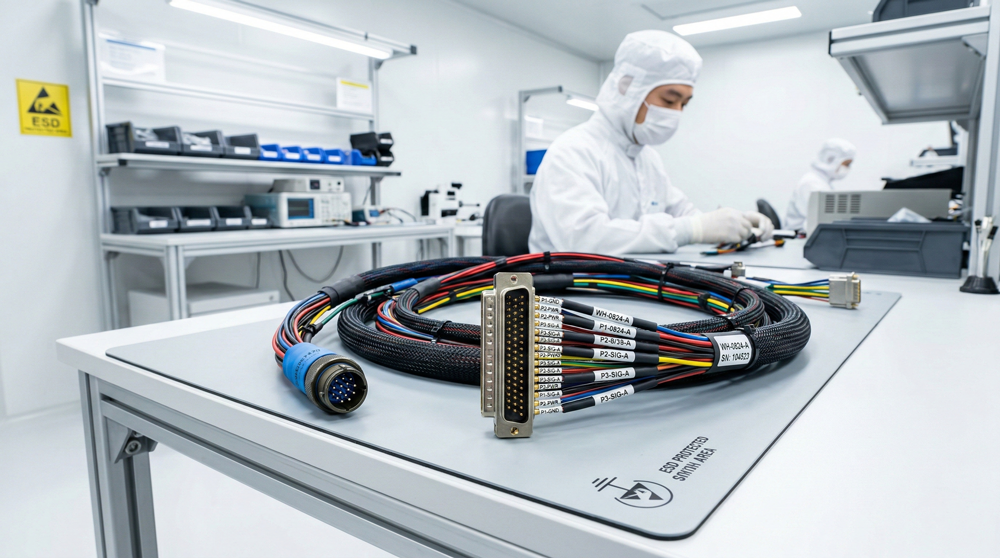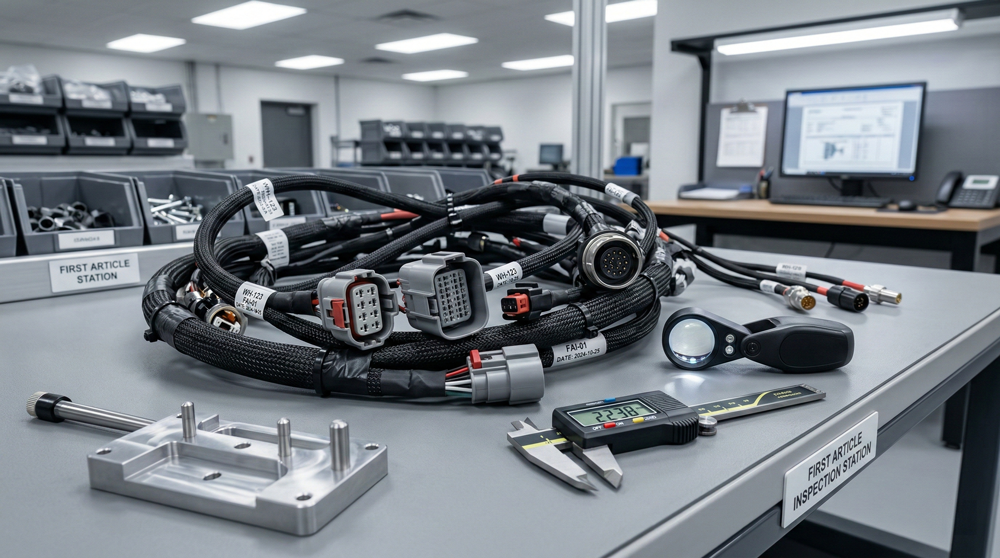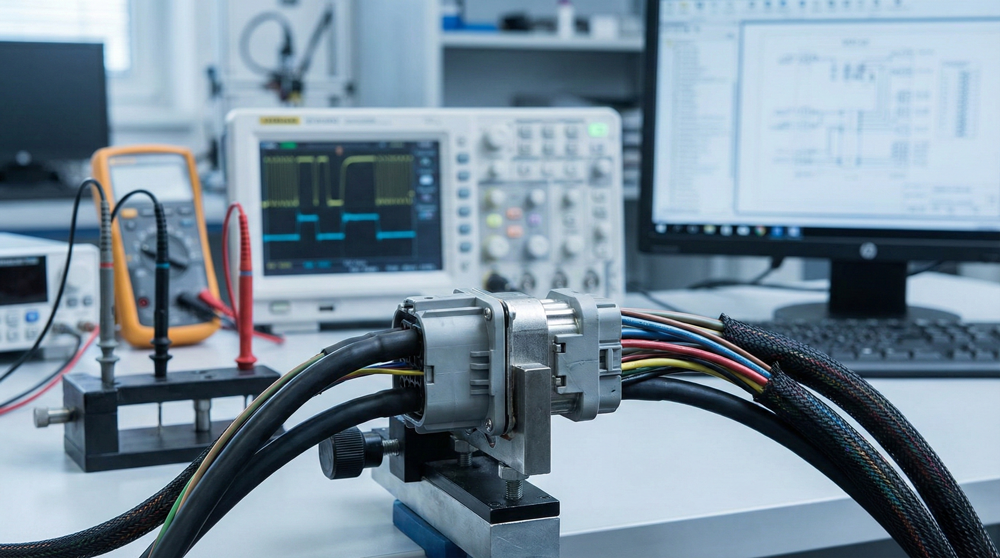
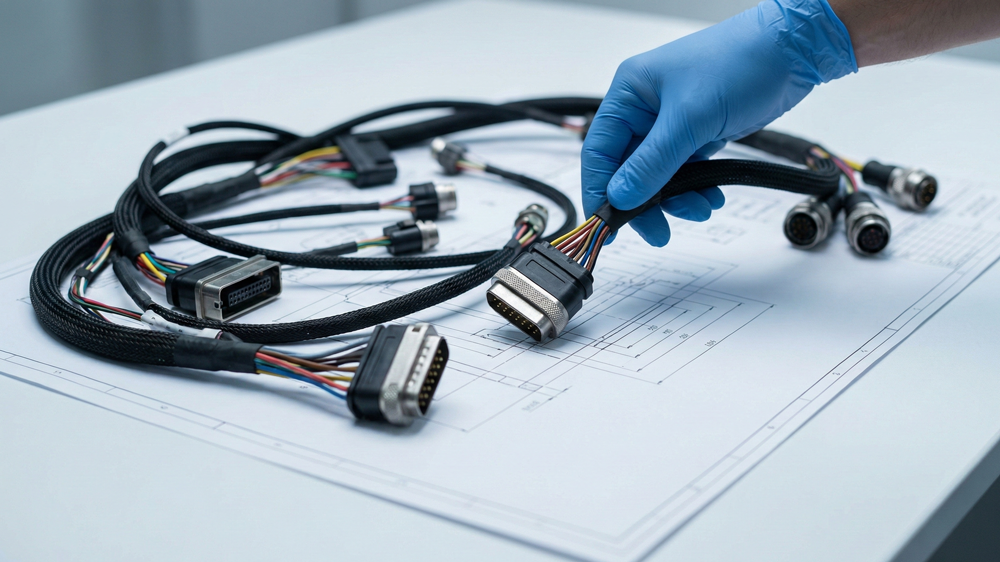
Wire harness process cost reduction is one of the most practical ways to lower total project cost without weakening the approved product baseline. In many OEM programs, cost-down discussions begin with material pricing because material cost is easy to see on the Bill of Materials (BOM). But in a large number of custom harness projects, a meaningful share of avoidable cost is actually created by the process itself. The harness may use acceptable materials and still cost too much because the production route is harder, slower, and less stable than it needs to be.
That is why wire harness process cost reduction should not be understood as “doing the same job with less control.” In a mature B2B setting, it means removing wasted motion, repeated interpretation, unnecessary handling, fragmented workflow, and preventable rework while protecting fit, function, quality, traceability, and delivery reliability. When process cost reduction is done well, quality usually becomes easier to maintain, not harder.
Table of Contents
ToggleWhy Process Cost Matters
In custom wire harness manufacturing, process cost is often hidden inside labor time, internal handling, rework, supervision, inspection effort, and schedule instability. It rarely appears as one dramatic line item, which is why buyers sometimes underestimate it. But once a harness enters repeated production, even small inefficiencies in the process can become significant across annual volume.
A harness that requires repeated repositioning, multiple manual confirmations, excessive work-in-progress movement, or unclear work instructions will almost always cost more than a harness that flows through production in a cleaner sequence. That extra cost does not only stay inside the factory. It affects quotation margins, lead-time confidence, pilot turnaround, and the supplier’s willingness to support urgent changes. In other words, a weak process raises cost across the whole project.
This is also why process cost reduction often creates more durable savings than pure negotiation pressure. A supplier can only cut price so far before the commercial room disappears. But a better process can keep reducing waste every time the harness is built. That is much more valuable in a long-running OEM program.
Start with Process Mapping
The first step in wire harness process cost reduction is to understand how the harness is actually being built today. Many cost-down projects fail because the buyer and supplier talk about price without first mapping the workflow. If the process is not visible, the real sources of labor waste remain hidden.
A process map does not need to be complicated. It simply needs to show the main production steps clearly. Where is material picked? How is wire cut and identified? How are crimped subcomponents staged? At what point is the harness bundled, protected, labeled, tested, packed, and recorded? Where does the product wait between steps? Where are operators making judgment calls instead of following a stable sequence? Those questions usually expose the real process burden very quickly.
This is where pages such as Wire Harness Prototype Review and Pilot Build and Wire Harness Drawing Review become very relevant. A harness that is difficult to pilot or difficult to interpret on paper will often become expensive in process as well. If the build route depends too heavily on tribal knowledge, then process cost is being driven by design ambiguity rather than by necessary production value.
Process mapping is therefore not just a supplier exercise. It is also a way for OEM buyers to see whether the current process is expensive because the supplier is inefficient, or because the product definition itself is forcing unnecessary complexity.
Cut Handling Waste
One of the biggest hidden contributors to wire harness process cost is handling waste. This includes all the time spent moving, reorienting, sorting, staging, turning, separating, and repositioning the harness or its components before real value is added. In many factories, handling waste becomes normalized because each individual movement looks small. But across repeated production, it becomes one of the clearest sources of labor loss.
A harness that moves through too many stations, or requires too much manual rearrangement between operations, will usually cost more than a harness that follows a cleaner route. The same is true when subcomponents are prepared in one area, partially verified in another, bundled elsewhere, and then returned for label or packing correction. The problem is not only the physical motion. The problem is that every extra handling point creates more waiting, more mix-up risk, and more dependence on operator memory.
Process cost reduction here often comes from sequence redesign rather than from equipment investment. Sometimes the best improvement is simply to reorganize the order of steps so that the harness is touched fewer times. In other cases, better staging of prepared wires, terminals, labels, or protections can shorten build flow substantially. A well-organized workstation can reduce handling cost without changing the product at all.
For the buyer, this matters because handling waste is one of the safest areas to reduce cost. It usually lowers labor without touching approved material or customer-facing function.
Reduce Rework Risk
Rework is one of the most expensive forms of process waste because it consumes labor twice while also increasing quality risk. A harness that must be corrected after partial build, retested after adjustment, or reopened because of label or routing issues is carrying process cost that often stays invisible during quotation but becomes very real during supply.
The strongest way to reduce rework is not to inspect more after the mistake happens. It is to design the workflow so that the mistake is less likely to happen in the first place. If an operator repeatedly confuses similar branch paths, that is a process problem. If label placement is frequently adjusted at the end of build, that is a process problem. If test failure often traces back to inconsistent sequence upstream, that is a process problem too.
This is where Wire Harness BOM and Part Control and Wire Harness Test Reports and Quality Documents connect directly to cost-down. A cleaner BOM reduces material confusion during assembly. Better test and record structure reveals where rework is occurring repeatedly rather than randomly. When the supplier can identify rework patterns accurately, process cost reduction becomes much more specific and much more credible.
For OEM buyers, rework reduction is especially valuable because it usually improves both cost and delivery stability at the same time. Less rework means fewer surprises in lead time and fewer hidden risks inside otherwise acceptable lots.
Simplify Work Instructions
A large amount of process cost comes from unclear or overly complicated work instructions. If the harness depends on experience more than documentation, then labor time becomes less predictable and quality becomes more operator-dependent. That is expensive, especially when volume grows or when new operators need to be trained.
Work instructions should not be treated as a separate administrative matter. In recurring wire harness production, they are part of the process design. A strong instruction set makes the correct sequence easier to follow. A weak instruction set forces operators to interpret drawings, memorize exceptions, or rely on verbal guidance. That slows production and increases the chance of rework.
Process cost reduction often comes from making instructions more practical rather than more detailed. The goal is not to bury the operator in paperwork. The goal is to make the critical sequence, orientation, branch logic, label points, protection transitions, and test expectations easier to follow consistently. If the supplier can reduce uncertainty at the workstation, labor becomes more stable and inspection burden usually falls as well.
This is one reason Wire Harness Drawing Review matters beyond engineering. A clear drawing supports clearer work instructions. If the drawing is already overloaded with ambiguity, process cost will keep rising downstream no matter how much the supplier tries to improve line efficiency.
Improve Tooling Flow
Tooling flow is another major factor in wire harness process cost. A harness can use good materials and still be expensive because the required tools, fixtures, applicators, and test resources are not aligned with a smooth production rhythm. If operators wait for shared tools, switch setups too often, or depend on unstable fixture availability, the process becomes fragmented.
Process cost reduction in this area often comes from better alignment rather than radical change. If similar harness families can be grouped more logically, setup loss may fall. If tool access is reorganized around production sequence, waiting time may fall. If fixtures are designed to support more consistent orientation, both labor time and variation can improve. The key point is that tooling should support flow, not disrupt it.
This is especially important in programs that started with low-volume prototype logic and later moved into recurring production. What worked during early pilot may not be the most cost-effective structure for steady manufacturing. That is why Wire Harness Prototype Review and Pilot Build should not only be used to validate product behavior. It should also be used to reveal whether the process and tooling route are ready for real production economics.
A buyer reviewing process cost should therefore ask not only about labor content, but also about how the supplier’s tooling path supports or slows repeatable flow.
Standardize Testing Steps
Testing is essential in wire harness production, but poorly designed test flow can add unnecessary process cost. The right goal is not to test less. The goal is to test more efficiently and more predictably.
In some programs, testing becomes expensive because the handoff into test is unstable. The harness arrives inconsistently prepared, labels are applied too late, records are matched manually, or retest logic is unclear. In other cases, the problem is that the production route creates avoidable failures that overload the test stage with correction work. That means the test station is no longer functioning as a confirmation step. It is functioning as a filter for upstream variation.
A stronger process keeps testing standardized and well integrated into the build flow. The harness should arrive at test in a repeatable condition. The operator should know what lot, revision, and documentation path apply. The system should make it easy to distinguish first-pass success from rework-driven retest. When this is done well, testing remains rigorous while process burden drops.
This is one reason Wire Harness Test Reports and Quality Documents and Wiring Harness Quality Evidence Pack Guide are useful in cost-down discussions. Good test records do not only support quality. They also make process loss visible, which is exactly what allows cost reduction to be based on evidence rather than assumption.
Improve Packaging Handoff
Packaging is often treated as a downstream logistics issue, but in many wire harness projects it is also a process-cost issue. If the handoff from final build into packing is inefficient, then labor is being consumed at the end of the line in ways that are often underestimated.
A harness may require unnecessary rearrangement before it can be packed. Labels may need to be corrected or relocated. Inner packaging may not match the natural production batch. Protection features may force awkward carton use. Documentation may be matched manually instead of flowing cleanly with the lot. These do not look like production problems at first glance, but they are all part of the process.
This is where Cable Assembly Packaging and Logistics Cost Guide becomes directly relevant. Packaging decisions affect not only freight and damage risk, but also labor at the point of final handoff. If packing is awkward, the supplier pays in labor time and the buyer often pays later through receiving inefficiency or inconsistent presentation.
Process cost reduction should therefore ask whether the harness flows naturally into packaging or whether the end-of-line handoff is carrying unnecessary waste. Sometimes a packaging change solves that. Sometimes a design change solves it. Sometimes the answer is simply a more stable line-side packing sequence. But the savings can be very real.
Use Pilot Data
One of the most useful sources of process cost insight is pilot data. Too often, pilot is treated only as a technical milestone. The harness is built, basic issues are reviewed, and the project moves forward. But for cost-down work, pilot is also the point where process friction becomes visible under realistic conditions.
A good pilot reveals where labor clusters unnaturally, where operators need too much clarification, where repeated handling occurs, where testing becomes a bottleneck, and where packing or traceability causes late-stage delay. Those signals are extremely valuable because they are grounded in actual build behavior, not theoretical assumptions.
This is why Wire Harness Prototype Review and Pilot Build should be seen as part of process-cost analysis, not only part of product qualification. Pilot tells the buyer which parts of the route are naturally stable and which parts are expensive because the workflow still depends on extra attention. If those findings are used properly, process cost can often be reduced before the harness reaches higher recurring volume.
For B2B buyers, the key is to ask suppliers not only whether pilot passed, but what pilot revealed about time, handling, rework, and sequence. That is where meaningful process savings usually begin.
Protect Traceability
A common mistake in process cost reduction is assuming that documentation and traceability are pure overhead. In reality, weak traceability often makes the process more expensive because uncertainty spreads through receiving, testing, packing, and corrective action.
The goal should not be to remove traceability steps carelessly. The goal should be to make traceability easier to maintain inside the process. If lot identity flows naturally with the harness, if records are linked cleanly to the correct stage, and if final documentation is prepared in a stable sequence, then the traceability burden becomes lighter without becoming weaker.
This is where Wiring Harness Quality Evidence Pack Guide and Wire Harness Traceability and Containment are important. They show that traceability is not only a quality-system topic. It is also part of production efficiency. A supplier with a cleaner evidence flow usually spends less time fixing records, investigating stock identity, or resolving shipment questions later.
For cost-down, this means traceability should be streamlined, not abandoned. A weak record path may look cheaper in the moment, but it usually creates more expensive disruption later.
Control Process Changes
Process cost reduction only becomes durable when the new workflow is controlled. If the supplier finds a faster route but the formal operating baseline does not reflect it, then the project becomes dependent on memory and informal habit. That is risky, especially when personnel change, volume changes, or a second supplier is introduced later.
This is why Wire Harness ECO and Revision Control matters even when the cost-down focus is “only process.” If the process change affects how the approved build is achieved, how the harness is labeled, how traceability flows, or how any controlled aspect of the product is handled, then the business needs to decide how that change is documented. Otherwise the cost-down remains fragile.
The exact level of formal control depends on the change. A minor workstation improvement may not need a design release. A sequence change that affects label timing, evidence flow, or inspection logic may need clearer documentation. The important point is that process savings should not live only in verbal agreement. They should be stable enough to survive future production pressure.
A Practical Process Review
A simple framework can help keep process cost reduction focused.
| Process area | Main cost question | Strong outcome |
|---|---|---|
| Handling | Is the harness touched too many times | Fewer moves, less reorientation, smoother flow |
| Rework | Are errors being corrected after value is already added | Higher first-pass yield and less retest |
| Work instructions | Do operators rely too much on memory | Clearer sequence and less interpretation |
| Tooling flow | Do setup and tool access interrupt rhythm | Better utilization and less waiting |
| Testing | Is test flow stable or overloaded by upstream variation | Faster confirmation and cleaner records |
| Packaging handoff | Is the line-to-pack transition inefficient | Less end-of-line labor and clearer presentation |
| Traceability | Does record flow create extra work | Stronger lot control with less friction |
| Change control | Will the better process survive future production | Savings become part of the controlled baseline |
This kind of review is useful because it connects each process-saving idea to both efficiency and control. That is exactly what keeps cost reduction from becoming hidden instability.
What Strong Suppliers Do
A strong supplier does not respond to process cost pressure by simply asking operators to work faster. A strong supplier looks for the places where the process is carrying unnecessary burden and explains that burden in a way the buyer can understand. They show where handling is excessive, where pilot revealed repeated friction, where work instructions create avoidable interpretation, where test flow is overloaded, and where packaging or traceability is adding labor without enough value.
More importantly, they connect these observations to stable improvement. They do not present cost-down as a gamble. They present it as a cleaner route to the same approved product. That is what OEM buyers should want, because real process savings usually come from better structure, not weaker discipline.
Conclusion
Wire harness process cost reduction is one of the most effective ways to lower total cost without sacrificing quality, but only when it is treated as a structured review of workflow, handling, rework, instructions, tooling, testing, packaging handoff, traceability, and change control. The strongest savings usually come from making the process simpler, more stable, and less dependent on repeated human interpretation.
For OEM buyers, the key principle is clear: a lower-cost process should produce the same approved harness with less friction, less rework, and more predictable flow. If the process savings achieve that, the cost-down is real. If they only remove discipline or hide risk, then the saving is not real at all.
FAQ
What is wire harness process cost reduction?
It is the reduction of avoidable manufacturing cost by improving workflow, handling, instructions, testing, packaging handoff, and traceability without weakening the approved product baseline.
Is process cost reduction mainly about cutting labor?
Not directly. It is more about removing waste that consumes labor, such as repeated handling, rework, unclear instructions, unstable handoffs, and inefficient sequencing.
Can process cost reduction improve quality?
Yes. In many cases, the same changes that reduce process waste also reduce variation, rework, and operator dependence, which makes quality easier to hold.
Why is pilot important for process cost review?
Pilot reveals where the real production route is still inefficient. It shows where sequence, handling, test flow, or instruction clarity are creating avoidable cost before recurring volume grows.
Does process improvement need formal change control?
If the improved process affects controlled aspects of labeling, traceability, inspection flow, or the approved operating baseline, it should be documented clearly so the saving remains stable over time.
CTA
If you are reviewing a harness program for process-driven cost reduction, the best starting point is usually not asking for a general labor discount. It is mapping the actual build route, identifying repeated handling, rework, test bottlenecks, and packaging handoff loss before deciding where savings are real.
You can send your drawing set, BOM, current labor concerns, pilot observations, and annual volume through Contact. Our team can help review process-saving opportunities using references such as Wire Harness Drawing Review, Wire Harness Prototype Review and Pilot Build, Wire Harness Test Reports and Quality Documents, and Wiring Harness Quality Evidence Pack Guide.