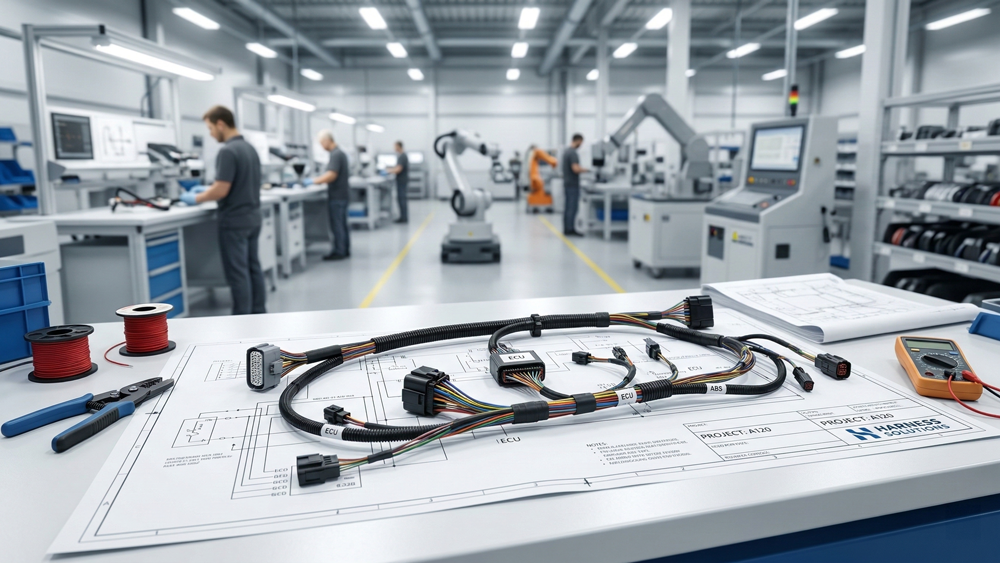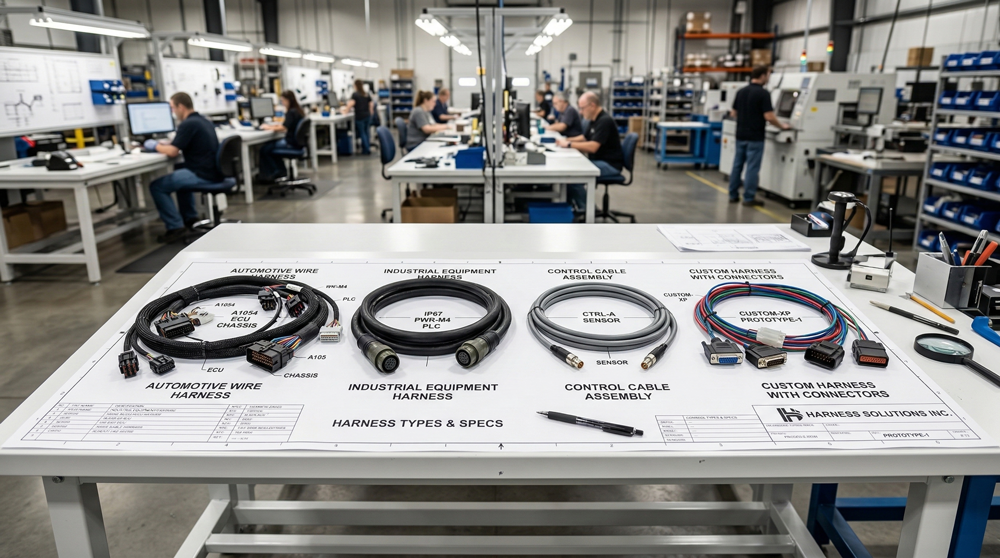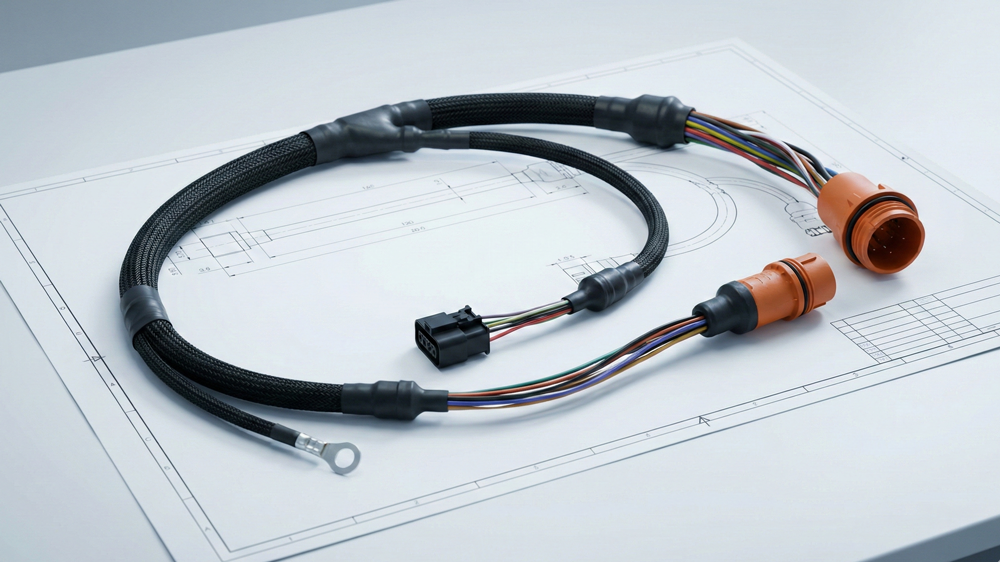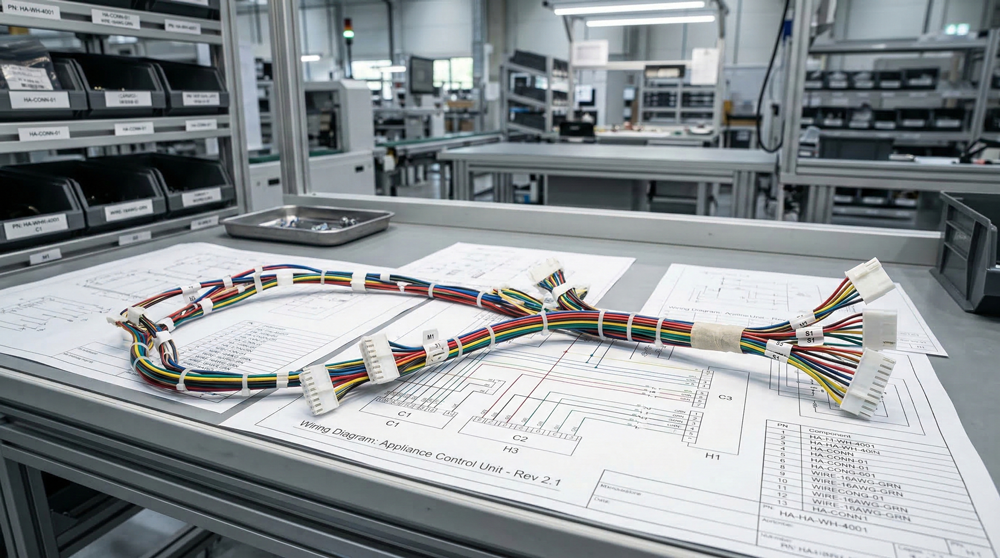
Wire harness failure analysis is valuable only when it does two things at the same time: explain why the failure happened and stop the same failure from happening again. Many companies do the first part halfway and never really do the second part. They identify a symptom, replace a few assemblies, maybe issue a short report, and then move on. Months later the same field issue comes back under a different lot number, a different customer, or a different application. At that point the business is no longer dealing with a technical nuisance. It is dealing with repeat warranty cost, trust erosion, delayed shipments, and internal frustration.
For B2B cable assembly sourcing, that is why wire harness failure analysis should never be treated as a narrow engineering activity. It is part of the supplier management system. A good failure analysis process protects commercial outcomes: fewer repeated returns, faster containment, lower downtime cost, shorter dispute cycles, and more confidence when the next shipment is released. A weak process does the opposite. It produces reports without learning, containment without clarity, and corrective actions that sound good but do not change the real production controls.
This article explains how buyers, supplier quality teams, and engineering teams should approach failure analysis and CAPA for cable assemblies. The aim is not to create paperwork. The aim is to create a repeatable closed loop from symptom to root cause to prevention. For the larger commercial framework behind this, connect this article to Warranty Reduction Guide for Cable Assemblies, where field-failure cost is explained in sourcing terms rather than only technical terms.
Table of Contents
ToggleWire harness failure cost
A wire harness failure is rarely expensive because of the harness itself. In most industrial and OEM programs, the harness value is small compared with the cost of diagnosing the issue, stopping production, dispatching service labor, expediting a replacement, sorting suspect stock, and defending the customer relationship afterward. If the failure is intermittent, those costs rise further because the first diagnosis may be wrong and the actual root cause may take days or weeks to isolate.
That is why buyers should think about failure analysis as a cost-reduction activity, not an after-sales formality. If a supplier can isolate the issue quickly, determine which lots are affected, and prove what changed in the process, the total commercial damage drops sharply. If the supplier cannot do those things, the buyer is forced into broad containment, conservative quarantines, and repeated internal escalation. The cost of uncertainty often exceeds the cost of the defect itself.
This is also why failure analysis should be linked to traceability and change control. Without those systems, the best technical engineer in the world may still arrive too late to prevent a large operational loss.
Cable assembly failure patterns
Most cable assembly failures fall into a small number of recurring patterns. Some are mechanical, such as conductor fatigue, terminal pull-out, seal damage, cracked housings, or bent contacts. Some are electrical, such as intermittent opens, unstable resistance, shorts, or voltage drop under load. Some are environmental, such as corrosion growth, moisture ingress, contamination, or chemical attack. Others are process-related, such as wrong parts, incorrect cavity population, label mismatch, revision mixing, or undocumented substitutions.
The important thing is not to memorize every pattern. The important thing is to classify the failure quickly and consistently. A supplier who starts with “bad harness” has not started analysis at all. A supplier who begins with a specific pattern such as “intermittent resistance instability after vibration near connector A” is already much closer to a useful containment and root-cause path.
Classification matters because different patterns require different first actions. A short circuit caused by strip-length error is not investigated the same way as corrosion-driven resistance drift in a sealed connector. A terminal pull-out is not investigated the same way as a harness routed too tightly around a moving bracket. Commercially, this matters because the wrong first hypothesis wastes time and makes containment more expensive.
Field return analysis
Field return analysis should start with discipline, not opinion. When a returned harness arrives, the instinct is often to test it immediately in whatever way is easiest. That can be useful, but only after the basic context is captured. A good field return process first locks the evidence state. What product was returned? What revision? What lot or serial number? What environment did it operate in? What was the reported symptom? Was the failure continuous or intermittent? Was the harness reworked, disconnected, or partially disassembled before return?
Without those details, even a technically correct bench result may have limited value. A field return that fails after vibration in a wet industrial cabinet needs to be understood differently from a harness that failed during initial installation or after exposure to transport damage. The returned hardware is only one part of the story. The context often tells you where to look first.
A strong supplier should also compare the returned harness against retained records immediately. Which materials were used? Were there any deviations on that lot? Was the build before or after an ECO? Did any packaging or routing instructions change? If these basic questions cannot be answered quickly, containment becomes broad because no one knows what else might be affected.
Intermittent fault diagnosis
Intermittent faults are some of the most commercially destructive wire harness failures because they are hard to reproduce and easy to misdiagnose. A harness may pass continuity on the bench and still fail in service under motion, temperature, vibration, or load. Technicians often reseat connectors, move the cable slightly, or replace adjacent components, temporarily masking the real issue. Every unsuccessful service action increases cost and reduces customer confidence.
Intermittent fault diagnosis therefore needs dynamic thinking. Instead of asking only whether the circuit is open right now, the analysis should ask what condition causes instability. Does the fault appear when the harness is flexed near a connector exit? Does it appear only after thermal soak? Does resistance drift under load? Does vibration create short-duration opens that disappear after the motion stops? Dynamic electrical monitoring is often more valuable than static pass/fail checks in this stage.
Commercially, intermittent faults are exactly why suppliers need stronger evidence than a generic “tested good” statement. If the delivered evidence pack contains method-defined electrical data, lot traceability, and first-article records, the investigation starts with a baseline. If the supplier shipped only a pass stamp, the buyer pays for the missing information later.
Connector failure analysis
Connector-related failures are often misclassified as wire failures, especially when the visible symptom is an intermittent open or unstable signal. In reality, many field problems originate at the contact interface, in the housing retention features, or in the sealing geometry around the rear cavity. A connector may be electrically fine in a new, clean, static condition but unstable after repeated mating, slight seating variation, contamination, or vibration.
A good connector failure analysis looks at contact wear, terminal seating, housing damage, locking features, mating alignment, seal position, corrosion evidence, and any sign of micro-motion. It should also consider whether the failure is isolated to one cavity or systemic across the connector family. If several returns show the same cavity problem, the issue may be process-related rather than random.
For buyers, connector failure analysis is useful only if it feeds back into sourcing controls. If the root cause is incomplete seating, the supplier should not only report that finding. The supplier should show how seating verification, training, and reaction plans changed afterward. That is where CAPA begins to matter.
Crimp failure root cause
Crimp failures remain one of the most important categories in cable assembly analysis because a poor crimp can create both mechanical and electrical instability. Some crimp failures are obvious, such as low pull strength or a conductor that pulls out easily. Others are subtle, such as marginal compaction that causes resistance drift after vibration or temperature change.
Root-cause analysis for crimp failures should review strip length, strand condition, crimp height control, applicator alignment, terminal-wire compatibility, and any recent tooling or material changes. The analysis should also distinguish between conductor crimp issues and insulation support issues. A strong conductor crimp with weak insulation support may still fail early because the flex point moves directly into the conductor exit.
This is why failure analysis and test method discipline must be connected. When needed, suppliers should link findings back to method-based validation such as Pull Force Test Guide for Cable Assemblies and Contact Resistance Testing Guide. A root cause becomes much more credible when it is supported by controlled measurements instead of by visual judgment alone.
Corrosion and ingress analysis
Corrosion-driven failures are especially expensive because they are often slow, cumulative, and difficult to identify early. A harness may leave the factory with acceptable electrical performance and later drift into instability because moisture, chemicals, or dust reached an interface that was assumed to be protected. By the time the field return arrives, the original ingress pathway may no longer be obvious.
That means corrosion and ingress analysis needs system thinking. Investigators should examine not only the visible corrosion product but also the likely path of entry, the compatibility of wire OD and seals, the condition of seals after insertion, the routing and strain relief around the connector, and the environmental conditions reported by the customer. The question is not only “what corroded,” but “why did this interface become vulnerable in the first place.”
This is where the supporting articles in this series reinforce each other. If the harness program includes sealing or environmental exposure risk, the analysis should connect directly to Environmental Testing Guide for Cable Assemblies and Wire Harness Sealing and IP Protection. Failure analysis becomes more powerful when it can compare a field failure against the assumptions and controls that were supposed to prevent it.
Root cause analysis
Root cause analysis should be narrower and more evidence-based than many organizations make it. The most common mistake is to stop at a descriptive cause instead of a causal chain. “Wire broke at connector exit” is not a root cause. “Repeated bending at connector exit because clamp location forced motion into a high-stress zone” is closer. “Repeated bending at connector exit because the routing review did not include the final service movement envelope, and no flex validation was run on the installed geometry” is closer still.
The point is not to make the report longer. The point is to identify the first process or design condition that, if corrected, would have prevented the failure. Good root cause is specific enough to change the control plan. Weak root cause simply restates the symptom in different words.
Buyers should therefore evaluate supplier root-cause reports with a simple test: after reading the report, is it obvious what control will change and why that control will stop recurrence? If the answer is no, the analysis is incomplete even if the language sounds technical.
CAPA for cable assemblies
CAPA, or Corrective and Preventive Action, matters because failure analysis alone does not reduce warranty cost. The cost drops only when the result of the analysis changes future behavior. In cable assemblies, a meaningful CAPA should contain four parts: containment, verified root cause, implemented correction, and proof that the correction works over time.
Containment protects the customer and the buyer immediately. Root cause explains what failed in the process or design. Correction changes something specific—such as inspection logic, tooling maintenance interval, routing rule, seal-fit approval, or training requirement. Verification proves that the same failure mode is no longer showing up under the same or similar conditions.
This last part is where many CAPAs become weak. Suppliers state an action, but they do not show whether the action prevented recurrence. For buyers, recurrence prevention is the entire value of CAPA. If there is no evidence that the fix held across later lots or validation checks, the corrective action remains a theory.
8D report for wire harness defects
Many buyers use an 8D structure because it forces discipline into the response. The value of 8D is not the template itself. Its value is that it pushes the supplier to move from immediate response to long-term prevention in a structured sequence. For wire harness programs, that structure is useful because the same failure can involve engineering, production, quality, and logistics at once.
A strong 8D response for a harness defect should show who contained the issue, how the affected scope was identified, what evidence was reviewed, what testing confirmed root cause, what changed in the process, and how effectiveness was verified after implementation. If the supplier jumps directly to “corrective action completed” without showing how the root cause was proved, the buyer should be skeptical.
The same applies to any CAPA format. Buyers do not need a specific brand of report. They need a report that can survive operational scrutiny and that leads to fewer repeated failures.
Supplier corrective action
Supplier corrective action should always be judged by operational impact, not only by report quality. A beautifully formatted response that does not reduce recurrence is less valuable than a plain response that changes the right process control and proves the result. Buyers should therefore ask what changed in the traveler, what changed in inspection, what changed in training, what changed in validation, and what changed in change control.
For example, if a supplier identifies a seal-fit problem, the buyer should see how wire-OD approval was tightened, how seal checks were added, and how future wire changes now trigger revalidation. If the supplier identifies intermittent connector seating issues, the buyer should see how seating verification became more objective, not just how operators were reminded to “be careful.”
That is why corrective action is part of supplier qualification, not just post-failure response. A supplier who can improve after a problem is more valuable than a supplier who only apologizes.
Wire harness defect containment
Containment is the speed layer of failure management. The purpose is to prevent more bad product from reaching customers while the analysis continues. In commercial terms, containment often determines whether the problem becomes a local correction or a major operational event.
Good containment begins with clear traceability. Which lots, work orders, shifts, or materials share the same risk? What inventory is still at the supplier? What inventory is in transit? What inventory is already at the customer? Can the supplier separate confirmed risk from suspected risk, or must everything be quarantined? The faster those answers appear, the smaller the containment cost.
Containment also needs practical rules. Does the supplier sort inventory? Does the buyer stop use immediately? Is rework allowed? Are replacement shipments prioritized? These decisions should not be improvised every time. They should already exist within the supplier quality framework and be supported by evidence and traceability.
This article’s final supporting topic, Wire Harness Traceability and Containment, will go deeper into how lot identification and evidence packs make containment faster and cheaper.
Failure report quality
A failure report should be useful to a busy buyer. That means it should communicate the problem clearly, show the evidence path, state the confirmed root cause, explain the corrective action, and define what proof shows the issue is controlled going forward. Reports become weak when they are full of generic wording, vague claims of operator error, or conclusions that cannot be tied to measurable process changes.
A good report is specific but not overloaded. It should allow procurement, quality, and engineering to reach the same conclusion without a long interpretation meeting. It should also connect directly to the supplier’s evidence systems: travelers, lot records, test reports, first-article data, and ECO history. If the report cannot be linked back to those records, its operational credibility drops.
CAPA effectiveness
CAPA effectiveness is the final and most important gate. Without it, the whole process remains reactive. Buyers should ask how the supplier knows the action worked. Was the affected characteristic trended over later lots? Was the validation method rerun? Was the training audited? Did the defect rate drop? Was the same issue absent in later field exposure? Effectiveness should be demonstrated with evidence, not assumed because the action sounded logical.
Commercially, this matters because recurrence is the most expensive outcome. A single failure can be explained. Repeated failure turns into supplier credibility loss and often changes the sourcing decision entirely. Suppliers who can demonstrate CAPA effectiveness protect not only quality but also customer retention.
Conclusion
Wire harness failure analysis becomes commercially valuable only when it moves beyond symptom description and becomes a disciplined closed loop. Buyers need field return context, consistent failure classification, evidence-based root cause, practical containment, and corrective actions that change real controls. CAPA then turns that learning into future stability by proving that the process, design, or validation plan is stronger than it was before.
In cable assembly sourcing, that is what separates a supplier who merely handles problems from a supplier who actually reduces warranty cost. The technical quality of the harness matters, but so does the supplier’s ability to explain failures, contain them quickly, and prevent recurrence with evidence instead of promises.
FAQ
What is the biggest mistake in wire harness failure analysis?
Stopping at the symptom instead of the real root cause. “Broken wire” or “bad contact” is not enough unless the analysis explains what process or design condition caused it.
Why are intermittent wire harness faults so hard to diagnose?
Because they often appear only under movement, load, vibration, or temperature. Static continuity checks may miss the actual trigger condition.
What makes a CAPA useful for cable assemblies?
A useful CAPA includes containment, verified root cause, implemented correction, and proof that the correction prevents recurrence over later lots or validation checks.
How does traceability affect failure analysis?
Traceability reduces containment scope and speeds investigation by linking field returns to specific lots, materials, revisions, and process windows.
What should buyers request after a field return investigation?
A clear failure report, lot containment status, evidence-backed root cause, corrective action details, and verification that the fix is holding in later production.
CTA
If you are dealing with repeat harness failures, intermittent faults, or slow supplier responses, a stronger root-cause and CAPA framework usually reduces cost faster than another round of generic inspection. Clear reporting, traceability, and control-plan updates make supplier accountability much easier to manage.
Contact, review Tests & Inspections, explore Custom Cable Assemblies, or see Why Choose Us.
Related articles
- Warranty Reduction Guide for Cable Assemblies
- Environmental Testing Guide for Cable Assemblies
- Wire Harness Vibration Reliability and Flex Life
- Wire Harness Sealing and IP Protection
- Traceability and Containment Guide for Cable Assemblies