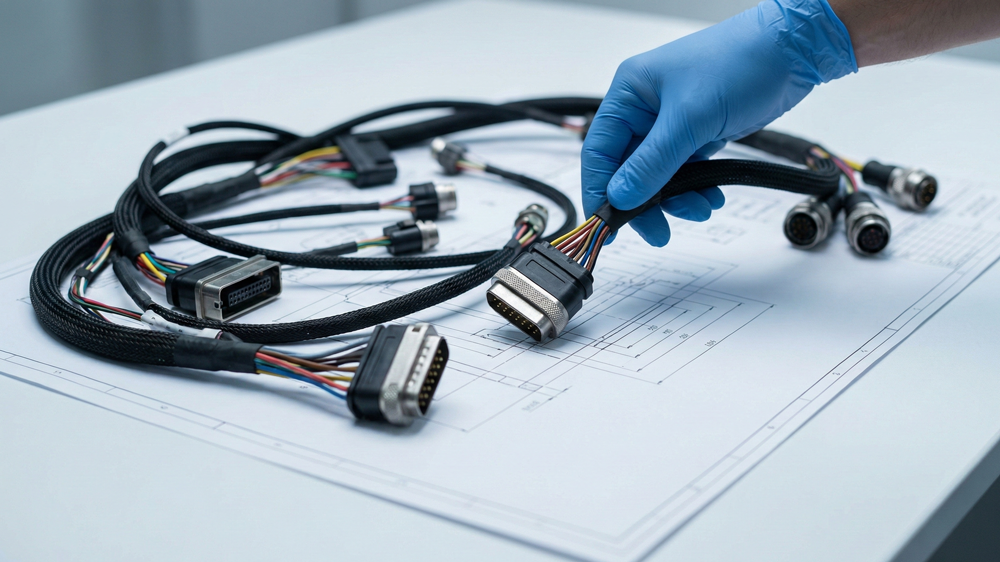

This cable assembly packaging and logistics cost guide helps procurement and operations teams reduce one of the most overlooked drivers of total cost of ownership (TCO): damage, delays, and expediting caused by weak packaging and unclear shipping rules. In wiring harness programs, packaging is not a cosmetic detail. Packaging is part of product integrity. A harness can pass every electrical test and still become a return if terminals bend, housings crack, seals deform, labels smear, or cables develop kinks during transit.
Buyers often try to reduce cost by minimizing packaging and choosing the cheapest freight option. That can be the most expensive decision if it increases returns, slows incoming acceptance, and triggers premium freight re-shipments. This guide gives a practical framework for packaging requirements and logistics planning that reduces damage risk and stabilizes delivery performance.
For the bigger cost model, connect this to Total Cost Guide for Custom Cable Assemblies. For planning and variability control, connect this to Cable Assembly Lead Time Planning Guide.
Table of Contents
ToggleWhy wiring harness packaging drives total cost
Packaging drives cost through three mechanisms: product protection, handling efficiency, and shipment predictability.
Product protection affects return rate and rework rate. Handling efficiency affects packing labor and warehouse time at both supplier and buyer sites. Shipment predictability affects premium freight, missed line-side delivery windows, and the indirect cost of internal expediting.
Packaging is also tied to traceability. If labels are damaged or separated from parts, containment becomes expensive. If revision markings are unclear, incoming acceptance slows down. Packaging decisions must therefore be treated as operational controls, not as afterthoughts.
Cable assembly shipping damage patterns buyers should prevent
Cable assemblies tend to fail in transit in predictable ways. If you prevent these failure patterns, you remove a large fraction of avoidable return loops.
Connector housings can crack from compression or impact when not partitioned correctly. Terminals can bend when connector faces are not protected with caps or inserts. Seals can deform when harnesses are coiled too tightly or packed under load. Cables can kink when minimum bend radius is violated in packaging. Label quality can fail when heat, humidity, abrasion, or friction is not considered. Shielded cables can suffer from sharp bends and handling stress that degrade performance over time.
These are not “rare edge cases.” They are routine failure modes when packaging is not specified.
Wiring harness packaging requirements should be defined early
Packaging requirements should be part of RFQ and part of first-article approval. When packaging is defined late, suppliers either ship with “best effort” packaging or pause shipments waiting for approval, both of which increase cost.
To prevent ambiguity, treat packaging requirements as controlled inputs in your RFQ package using Cable Assembly RFQ Checklist. If packaging rules change over time, control them through ECO discipline so old packaging methods don’t leak into new shipments. Use Cable Assembly Change Control and ECO Guide for that control structure.
Cable assembly packaging level strategy
A practical packaging strategy defines three levels: unit protection, inner pack, and outer pack.
Unit protection is the direct protection of the harness and connectors: caps, bags, sleeves, and strain relief to prevent bending at critical points. Inner pack is how multiple units are grouped: trays, dividers, or compartmented boxes. Outer pack is the shipping carton and any palletization.
Buyers should define the minimum acceptable packaging level based on risk. A low-risk internal harness may require basic bagging and coiling. A high-value harness with fragile connectors may require individual compartment packaging, connector caps, and rigid partitioning.
The right packaging level is not “most packaging.” It is “enough packaging to reduce return probability below your acceptable risk threshold.”
Connector protection packaging for cable assemblies
Connectors are often the highest-value and most fragile portion of a harness. A packaging plan should specify how connector faces are protected and how connectors are prevented from colliding in the carton.
Common protection methods include connector caps, foam inserts, or partitioned trays. The packaging should also prevent harness weight from loading the connector face.
Buyers should specify whether protective caps are required and whether caps are supplied by the buyer or supplier. If caps are supplied by the supplier, define whether caps must be new per shipment and whether caps are considered part of the delivered product.
If your harness category includes custom builds with specialized connectors, the packaging risk is usually higher, which should be aligned with your production scope under Custom Cable Assemblies.
Wiring harness coil method and minimum bend radius packaging
Kinks and permanent set are common packaging failures for cable assemblies. Many assemblies must maintain a minimum bend radius to preserve long-term reliability and installation fit.
Buyers should specify coil diameter rules and the method used to secure coils without crushing the cable. They should also specify whether harnesses are shipped coiled, layered, or extended, and whether strain relief points need special support during packaging.
The packaging method should be validated at first-article stage. A sample that arrives fine is not proof that a master carton shipment will survive distribution. Packaging must be tested at the scale you will actually ship.
ESD packaging for cable assemblies and harness electronics
If harnesses include sensitive electronics, ESD packaging requirements become mandatory. Even without electronics, some programs require ESD compliance due to system integration requirements.
A buyer-friendly packaging requirement specifies: whether ESD bags are required, whether ESD labels are required, and how grounding and handling are controlled during packing. It should also define how ESD packaging interacts with moisture control and labeling.
If ESD is required but not specified, suppliers may ship without protection, creating intermittent failures that are difficult to diagnose later.
Moisture control packaging for wiring harness shipments
Moisture can damage labels, accelerate corrosion risk for some interfaces, and degrade certain materials. If the program is shipped through humid environments or stored long-term, specify whether desiccants or barrier bags are required.
Moisture control is also tied to shelf life for certain components and adhesives. Buyers should define storage expectations and whether the supplier must mark packaging with storage instructions.
The packaging rule should reflect your real storage and logistics environment, not a generic assumption.
Labeling and traceability in cable assembly packaging
Packaging should protect labeling, not damage it. A surprising number of field containment problems start with labels that smear, detach, or become unreadable.
Buyers should specify: label material (wrap label, heat-shrink, tag), label location, minimum legibility, and whether labels must be readable without unpacking. If lot or serial traceability is required, define whether packaging labels must include traceability identifiers and whether those identifiers must match evidence packs.
Traceability is most useful when evidence packs and labeling are synchronized. If you standardize evidence pack deliverables using Quality Evidence Pack Guide, your packaging labeling becomes a direct enabler of faster acceptance and containment.
Freight strategy for cable assembly shipments
Freight is not only cost per kilogram. Freight is also risk, speed, and variability. The right freight choice depends on program urgency, product fragility, and the cost of delay.
Air freight reduces lead time but can increase handling damage risk due to more touch points and higher mechanical stress. Sea freight reduces cost but increases exposure to humidity, long storage, and schedule uncertainty. Ground freight for regional shipments can be predictable if packaging is robust and consolidation is planned.
Buyers should choose freight mode based on the expected cost of delay and the expected cost of damage. A lower freight bill is meaningless if it increases returns and re-ships.
If lead time variance is a major cost driver, connect freight planning to Cable Assembly Lead Time Planning Guide.
Premium freight as a controllable tax
Premium freight often becomes a permanent tax when forecasts are unstable, MOQs are mismatched, and packaging is not standardized. The goal is to reduce premium freight frequency by improving planning systems rather than negotiating shipping discounts.
To reduce expediting, align releases and forecasts using MOQ and Forecast Strategy Guide for Cable Assemblies. When suppliers can allocate materials and plan capacity, expediting frequency drops significantly.
Export documentation for cable assemblies
For international programs, documentation errors can create delays that look like “supplier late delivery” even when production was on time. Buyers should define document requirements early and standardize them.
Typical documentation includes commercial invoice, packing list, country of origin information when needed, and any customer-specific shipping labels. If the buyer requires special carton labels or part number formatting, it must be specified clearly.
If your program includes regulated components or controlled technologies, documentation requirements may be more complex. Even without regulation, consistency is critical. A single mismatch between carton label and invoice part number can create customs holds and downstream delays.
Packaging quality checks as part of supplier verification
Packaging should be audited like a process, not inspected casually. Buyers should verify that packaging instructions exist, that operators follow them, and that packaging outcomes are consistent.
During supplier audits, check packaging station work instructions, sample packaged units, and packaging evidence records if required. Packaging should be part of the supplier’s verification system, and their capabilities should be supported by disciplined execution under Tests & Inspections.
If you run supplier audits regularly, embed packaging checks into Cable Assembly Audit Checklist so packaging discipline is not forgotten.
Packaging and logistics cost tradeoff model
A buyer-friendly model compares packaging cost to expected return cost.
Packaging cost includes additional materials and packing labor. Return cost includes inbound/outbound freight, replacement build cost, acceptance delay cost, and internal time. For many programs, a small packaging cost increase can reduce return probability enough to lower total cost significantly.
This is why procurement should not treat packaging as “shipping overhead.” Packaging is an economic lever.
Conclusion
Cable assembly packaging and logistics are core drivers of total cost. Weak packaging creates damage, return loops, and premium freight. Weak logistics planning creates variability and expediting. When buyers define packaging requirements early, protect connectors and bend radius, synchronize labeling with evidence packs, and choose freight modes based on risk, total cost drops and delivery performance improves.
If you want predictable supply outcomes, treat packaging and logistics as part of the product specification and part of supplier qualification—not as an afterthought.
FAQ
Why do cable assemblies get damaged in transit even when production quality is good?
Packaging is part of product integrity. Bent terminals, cracked housings, and kinked cables usually come from weak connector protection, tight coiling, and carton compression.
Should we standardize packaging across suppliers?
Yes. Standard packaging rules reduce variability, reduce return probability, and make incoming acceptance faster.
How do we reduce premium freight cost over time?
Improve forecast discipline and release structure, stabilize MOQs, and reduce RFQ ambiguity. Premium freight should be an exception, not routine.
What packaging details should buyers specify in the RFQ?
Connector protection, coil diameter and bend radius rules, ESD and moisture requirements, labeling protection, and carton configuration.
How do evidence packs connect to packaging?
Packaging labels and traceability identifiers should match evidence pack records. When synchronized, acceptance and containment are faster and cheaper.
CTA
If you want packaging and logistics rules that reduce returns and stabilize delivery, share your connector types, fragility concerns, shipping lanes, and storage conditions. We can propose a packaging spec and logistics plan that reduces TCO without slowing lead times.
- Discuss your program: Contact
- Explore scope: Cable Assemblies and Custom Cable Assemblies
- Forecast and MOQ control: MOQ and Forecast Strategy Guide for Cable Assemblies
- Evidence discipline: Quality Evidence Pack Guide
- Why buyers select us: Why Choose Us