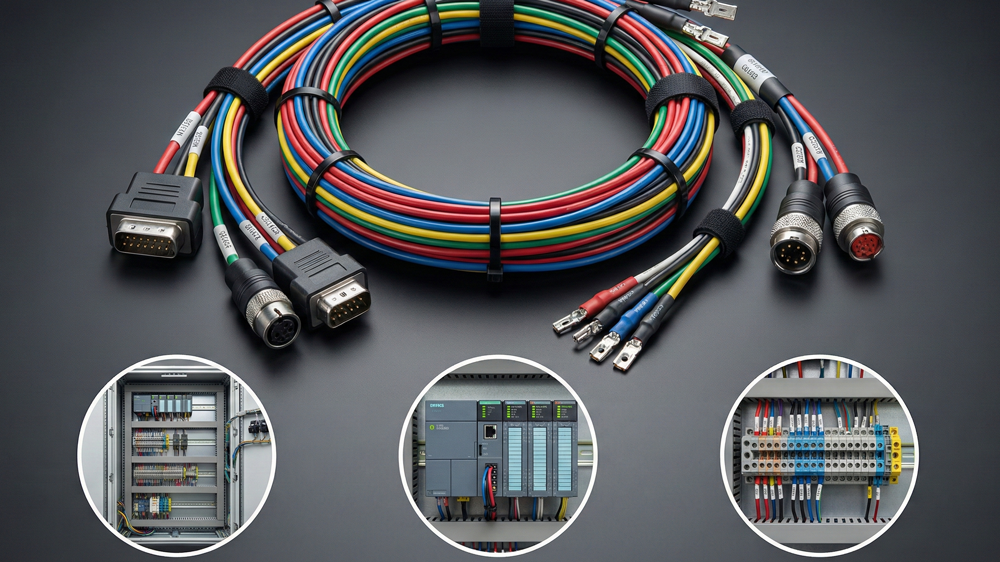
A strong cable assembly RFQ checklist is one of the fastest ways to improve quote accuracy, shorten sourcing cycles, and reduce “surprises after PO.” In cable assemblies, most downstream problems—wrong wire, wrong length reference, missing seals, mismatched labels, incomplete test coverage—start upstream as missing or ambiguous RFQ inputs. When suppliers fill gaps with assumptions, you don’t just get a different quote; you get a different product.
This guide gives procurement and engineering a practical RFQ input structure that drives consistent builds across suppliers, enables apples-to-apples comparisons, and reinforces your value proposition: fewer RFQ loops, faster ramp, and audit-ready documentation.
Table of Contents
ToggleWhy an RFQ checklist protects total cost
Unit price is visible. Rework, delays, engineering firefighting, and warranty exposure are often hidden until late. RFQ completeness is a controllable lever that reduces those hidden costs because it forces key decisions early and makes supplier assumptions explicit.
From a buyer’s point of view, an RFQ checklist is not paperwork. It is a risk-control tool that improves lead time predictability, improves first-pass yield, and makes supplier performance measurable.
If you want the full “supplier qualification” framework that sits above this RFQ tool, use Supplier Qualification Guide for Cable Assemblies. This S1 article focuses on the RFQ package itself.
RFQ checklist structure
A supplier can only quote accurately on what is defined. To make the RFQ actionable, build it around seven sections: program context, technical definition, quality and verification, labeling and traceability, packaging and logistics, commercial terms, and evidence requirements.
You do not need to write a long narrative. You need a complete set of inputs that eliminate “silent assumptions.”
For sourcing scope context, align your RFQ terminology to your supplier’s production categories, such as Cable Assemblies and Custom Cable Assemblies. This keeps supplier responses consistent and reduces mismatched expectations.
Program context inputs
Program context helps suppliers quote lead times, tooling needs, and risk properly. It also helps procurement compare suppliers fairly.
Define whether the RFQ is for prototype, pilot, or production, because suppliers will price and plan differently. Provide annual volume, forecast horizon, and expected ramp timeline. Define target delivery dates, but also define what flexibility exists (split shipments, partial deliveries, or staged releases).
If the assembly will be used in a regulated or high-liability environment, state that up front. Programs that ship into harsh environments or safety-critical systems usually require higher verification intensity and tighter change control.
If you already have a target application area, referencing it improves supplier understanding. For example, programs aligned with Automotive & E-Mobility and Industrial & Robotics often require different validation and packaging expectations than consumer products.
Technical definition inputs
This is the heart of the RFQ. Your objective is to define what the supplier will build in a way that is unambiguous and measurable.
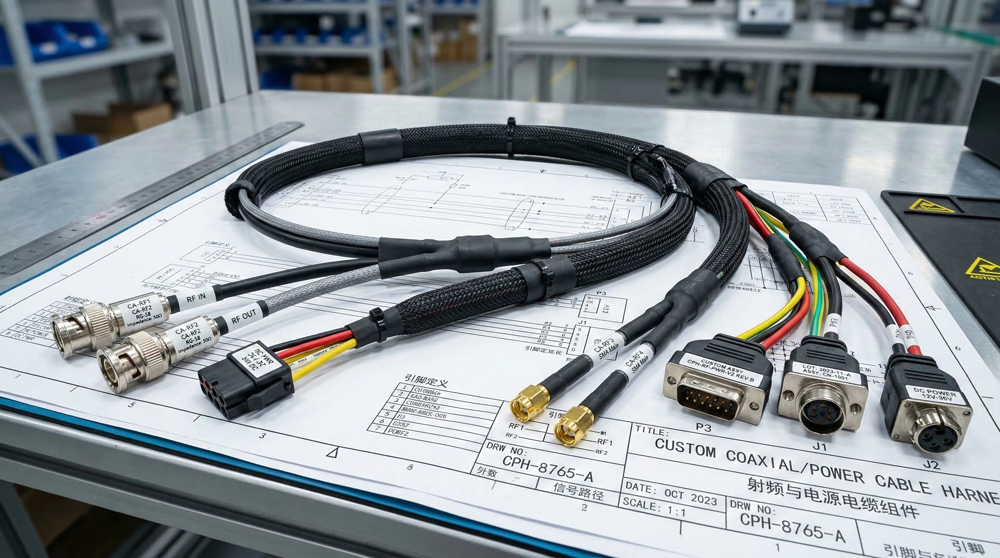
Start with the assembly identifier and revision. If revision control is weak, you will get mismatched quotes and mismatched builds. Include a drawing or sketch with connector callouts, cavity mapping, wire IDs, and length references.
Specify connector housing part numbers and terminal part numbers. If you don’t have terminal part numbers, state whether the supplier is allowed to select terminals and under what approval process. Unapproved terminal substitution is a common source of long-term reliability issues and supplier disputes.
Specify wire type, gauge, conductor material, insulation type, color, and jacket information. If you allow substitutions, define equivalence criteria and require approval. If you use shielding, define shielding type, drain wire handling, termination points, and coverage expectations. If shielding is important, reference your cable category such as Shielded Cable Assemblies to anchor expectations.
Define strip length requirements or at least identify that strip length must follow terminal manufacturer guidance. Strip length is a primary driver of crimp quality and exposed conductor risk.
Define any splices, junctions, solder joints, ultrasonic welds, or overmold features. If overmolding is required, specify geometry intent, material requirements, and any sealing expectations. Overmold requirements should be coordinated early with Overmolding Services to prevent quote-stage assumptions from becoming production-stage delays.
Length definition and tolerance
Length problems are among the most common “simple but expensive” issues in cable assemblies. To avoid disputes, define length measurement method, reference points, and tolerance.
Define where length is measured from and to: housing face to housing face, end of terminal to end of terminal, or another reference that matches your assembly’s real installation condition. State whether length is measured in free state, under light tension, or with a defined fixture.
Define the tolerance as a number and specify whether it is symmetric or asymmetric. If length is critical for routing or strain relief, call that out explicitly.
If you do not define measurement method, suppliers will measure differently and still claim they met tolerance. This is one of the most preventable RFQ mistakes.
Termination and workmanship requirements
Termination reliability is a major cost driver, so your RFQ should not treat it as “standard.” At minimum, state the workmanship baseline and the critical controls you expect suppliers to follow.
If you reference an industry workmanship standard, define it clearly. If you need high reliability, require objective controls such as crimp height checks, seating verification, and standardized inspection evidence.
If your team is standardizing termination requirements, you can reference the P11 termination cluster directly:
- Crimping and Termination Guide for Cable Assemblies
- Crimp Quality Inspection Guide
- Pull Force Test Guide for Cable Assemblies
- Contact Resistance Testing Guide
- Termination Failure Modes Guide
This makes your RFQ language concrete and reduces supplier ambiguity.
Quality and verification requirements
A buyer-friendly RFQ specifies what verification is required, how evidence is recorded, and what triggers re-validation. If you only say “100% test,” suppliers will interpret that differently and you may not get the method you think you’re buying.
At minimum, define electrical checks: continuity, shorts, and any insulation or hi-pot requirements if relevant. Define whether contact resistance trending is required for critical interfaces. Define pull testing requirements if mechanical retention is critical.
If you want suppliers to be audit-ready, tie verification expectations to a defined scope such as Tests & Inspections, then require method details in the evidence pack. Your goal is repeatable evidence, not verbal confirmation.
Labeling and traceability inputs
Labeling is often treated as an afterthought, but it is central to containment and serviceability. Define what labels must include: part number, revision, serial or lot number, date code, and any customer-specific codes. Define label location, orientation, legibility requirements, and material (heat-shrink, wrap label, laser mark).
Define the traceability expectation: at minimum, lot traceability for wire and terminals, and linkage to inspection and test records. If your program is high risk, define a serial traceability requirement and clarify how long records must be retained.
If you do not define traceability at RFQ stage, it will be either missing or expensive to retrofit later.
Packaging and logistics requirements
Packaging failures create hidden defects: crushed housings, bent terminals, abrasion damage, and contamination. Define packaging level (individual bag, inner box, master carton), ESD handling if required, moisture control if needed, and any “do not bend” or “no stacking” constraints.
Define how assemblies are coiled and secured, minimum bend radius during packaging, and whether protective caps are required on connectors. If assemblies are shipped to multiple sites, define labeling and palletization rules per destination.
If the program is time-sensitive, define shipping method expectations and whether the supplier can support quick-turn releases. This is where suppliers who advertise fast and flexible execution can differentiate, but speed must be paired with disciplined verification.
Commercial terms and supplier assumptions
Commercial terms belong in the RFQ because they shape supplier behavior. Define your Incoterms, payment terms, expected quote validity, and whether you require samples, PPAP-like documentation, or pilot-run validation.
Most importantly, require suppliers to list assumptions explicitly. Assumptions should be treated as risks until accepted. When suppliers do not list assumptions, they still exist—just hidden. A good RFQ asks suppliers to identify any gaps and propose options rather than making silent choices.
This is also where you define change-control expectations. If you allow substitutions, define equivalence criteria and approval requirements.
Evidence pack requirements
An RFQ that asks only for price invites price-only behavior. An RFQ that asks for an evidence pack invites disciplined execution.
At minimum, request:
- First-article inspection records with photos for critical terminations and assemblies
- Measurement logs for critical dimensions where applicable
- Test records with method details
- Traceability identifiers linking the lot to materials and records
If you want a standardized template that makes supplier evidence comparable across quotes and production lots, connect this RFQ checklist to the companion article Quality Evidence Pack Guide.
A procurement-ready RFQ checklist table
The table below is designed to be copied into your RFQ document. It is intentionally structured around “inputs suppliers must have” and “evidence suppliers must provide,” so missing items are obvious.
| RFQ section | Required input from buyer | What supplier must confirm | Evidence expectation |
|---|---|---|---|
| Program context | Prototype/pilot/production, volumes, timeline | Capacity fit and lead time plan | Lead time by stage, constraints list |
| Drawing & revision | Assembly ID, revision, drawing/sketch | Build matches revision and callouts | Revision-controlled traveler |
| Connectors & terminals | Housing PN, terminal PN, cavity map | No substitutions without approval | Supplier assumption list |
| Wire & cable | Gauge, type, insulation, color, shielding | Wire equivalence rules | Material lot traceability |
| Length & tolerance | Reference points, method, tolerance | Measurement method matches RFQ | Length check record |
| Termination | Workmanship baseline, critical controls | Crimp process controls stated | First-article photos + logs |
| Electrical tests | Continuity/shorts/hi-pot if needed | Test method and coverage | Test record per lot |
| Mechanical tests | Pull tests if required | Method, fixture, sample plan | Pull data + failure modes |
| Labels & traceability | Content, location, material | Traceability level (lot/serial) | Label sample + record linkage |
| Packaging | Coil method, protection, ESD/moisture | Packaging drawing or description | Packaging photos if requested |
| Change control | Substitution rules, ECO triggers | Approval workflow | ECO log structure |
| Evidence pack | Defined contents | Deliverables per shipment | Pack included with lot |
Common RFQ mistakes and how to avoid them
The highest-impact mistakes are predictable. Missing terminal part numbers leads to uncontrolled substitutions. Undefined length measurement method creates disputes even when tolerance is met. Undefined labeling and traceability creates containment failures later. “Standard test” language leads to non-comparable results between suppliers. Missing packaging details creates transit damage and hidden defects.
The simplest prevention is to require suppliers to respond in a structured format and to highlight any missing inputs and assumptions. Then procurement can resolve gaps before award, not after production starts.
Conclusion
A cable assembly RFQ is not a request for price; it is a request for controlled execution. A strong RFQ checklist eliminates silent assumptions, makes quotes comparable, and forces supplier discipline before you issue a PO. For business outcomes, it reduces RFQ cycles, improves lead time predictability, and reduces field-return risk by aligning technical requirements to evidence you can audit.
If you want to turn this checklist into an end-to-end qualification workflow, connect it back to the hub article Supplier Qualification Guide for Cable Assemblies and continue with the next supporting pieces in this series.
FAQ
Should procurement own the RFQ checklist or should engineering?
Procurement should own the process; engineering should own the technical inputs. The best RFQs use a shared template with clear responsibility for each section.
What is the minimum information needed for an accurate quote?
Connector and terminal part numbers, wire construction and gauge, length method and tolerance, and test requirements. Missing any of these increases risk dramatically.
How do we prevent suppliers from making silent substitutions?
Define substitution rules and require supplier assumptions to be listed explicitly. Tie substitutions to an approval workflow and traceability.
Why is length measurement method so important?
Because “length” can be measured from different reference points. If the method is not defined, suppliers can meet tolerance and still ship a harness that does not fit your installation.
What evidence should we request with shipments?
At minimum: first-article records for setup, lot-level test records, and traceability identifiers. For high-risk programs, expand to include trend data and destructive audit results.
CTA
If you want a ready-to-send RFQ template customized to your connectors and application environment, share your part numbers, volumes, and constraints. We can format the checklist into a supplier-friendly RFQ pack that reduces back-and-forth and improves quote comparability.
- Start a qualification conversation: Contact
- See how we support OEM/ODM buyers: Why Choose Us
- Review verification coverage: Tests & Inspections
Related articles
- Supplier Qualification Guide for Cable Assemblies
- Cable Assembly Audit Checklist
- Quality Evidence Pack Guide
- Change Control and ECO Guide
- Warranty and Return Policy Guide