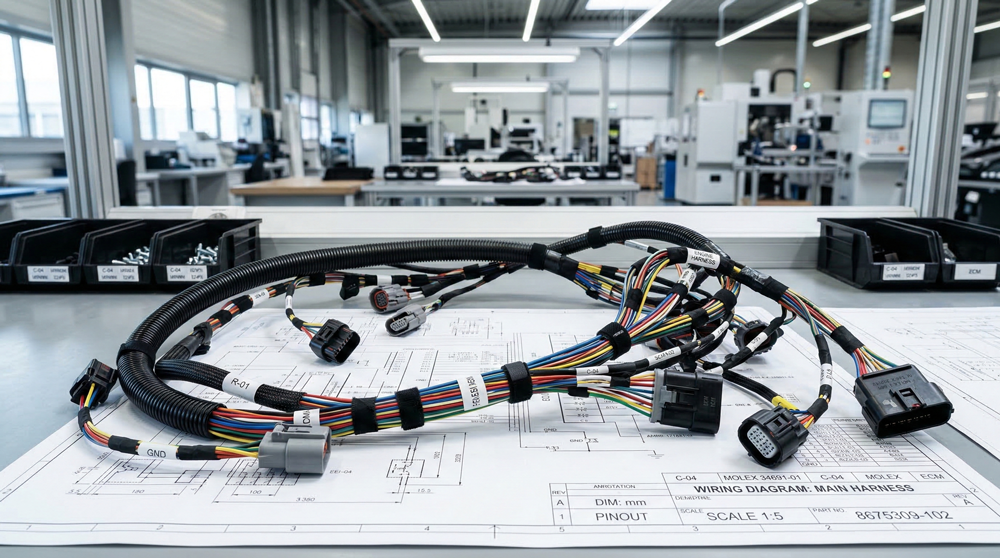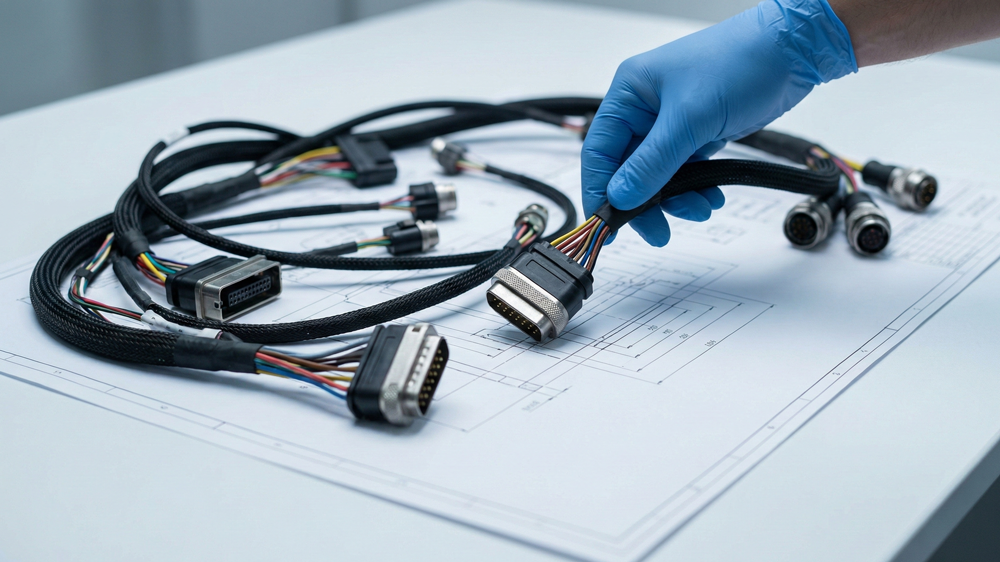
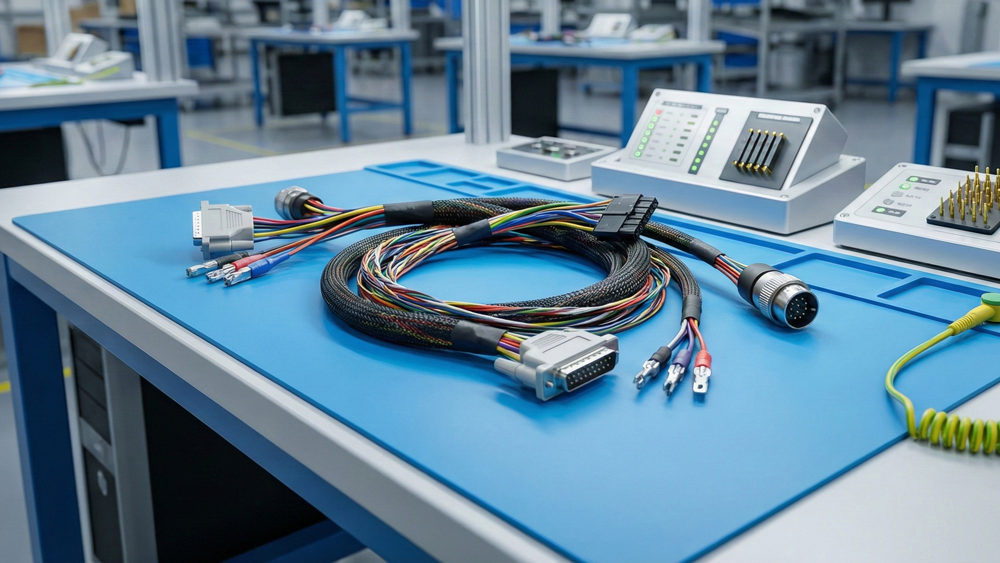
Cable assembly cost optimization is not the same as finding the lowest quote. For OEM buyers, the real goal is to reduce cost while keeping delivery, quality, and field reliability stable. The cheapest build often becomes expensive later through rework, inconsistent production, warranty returns, line downtime, and supplier churn. The best cost outcome usually comes from aligning design, RFQ clarity, production strategy, and quality control—not from negotiating price in isolation.
This cable assembly cost optimization guide for OEM buyers explains how to think about cost drivers, where cost is created in the build process, and how to reduce cost without creating hidden risk. It is written for sourcing, engineering, and quality teams who want cost decisions that hold up in production, not only in a prototype quote.
If your project also involves sealing or connector selection, these articles connect naturally with Environmental Protection Design Guide for Cable Assemblies and Connector Selection Guide for Cable Assemblies. Cost is rarely isolated; it is usually a function of design choices that also affect reliability.
Table of Contents
ToggleCable Assembly Cost Drivers
Cable assembly cost drivers can be grouped into a few practical categories: materials, labor, process controls, tooling, yield risk, and logistics. Most quote discussions focus on materials, but in many OEM assemblies labor and process stability dominate the long-term cost.
A useful approach is to treat cost as the sum of “what the assembly is” and “how difficult it is to build consistently.” Two harnesses can have similar BOM cost yet differ dramatically in labor time, defect rate, and test complexity.
Cable and Connector Cost Drivers
Cable and connector selection sets a baseline cost, but it also sets the complexity of termination, assembly handling, and test. A connector that is slightly cheaper can increase labor time if the termination is difficult, the pin insertion is slow, or the assembly requires careful handling to avoid damage. In production, this “process difficulty cost” often outweighs a small unit price difference.
Connector selection also affects cost through plating options, lock style, and mating-cycle requirements. In serviceable products, a connector that reduces field errors can protect you from warranty cost even if the unit price is higher. If you need the selection logic foundation, see Connector Plating Guide for Cable Assemblies and Connector Locking Systems for Cable Assemblies.
Labor Cost Drivers
Labor is often the largest controllable lever in cable assembly cost. Labor cost is driven by termination count, assembly steps, routing complexity, length variation, inspection requirements, and whether the build process is repeatable. Every “small” manual step adds time, and time multiplies across batches.
If you want meaningful cost reduction, focus on the steps that are repeated on every unit: stripping, crimping, soldering, insertion, labeling, overmolding, potting, shielding termination, and final assembly. Reducing one step by a few seconds can matter more than negotiating a small material discount.
Test and Inspection Cost Drivers
Testing is not free, and it should not be treated as a quote afterthought. A cable assembly that requires only basic continuity checks has a different cost structure than one that requires hipot, insulation resistance, shielding continuity, functional testing, or staged testing with fixtures.
The key point is that test requirements are both a cost driver and a risk control tool. If you cut test too aggressively to reduce cost, you often pay later through field failures. A better approach is to specify test requirements clearly and then optimize how testing is executed. This connects with Tests & Inspections and your release logic under Quality Guarantee.
Tooling and Setup Cost Drivers
Tooling and setup costs can be the silent cost driver that surprises OEM buyers, especially in low-volume projects. Custom fixtures, crimp tooling, overmold tooling, test fixtures, and programming time can create upfront cost that does not scale linearly with unit quantity.
The best strategy is to separate “one-time cost” from “unit cost” clearly, then decide what should be amortized and what should be avoided through design simplification. This is where DFM and MOQ strategy become critical.
Cable Assembly DFM for Cost Reduction
Cable assembly DFM for cost reduction is where most sustainable savings come from. RFQ negotiations can reduce price at the margin, but DFM changes can reduce cost structurally. DFM means designing the harness so it can be built quickly, consistently, and with a lower defect rate.
DFM is also the best way to avoid cost reductions that create quality risk. If a cost reduction depends on “perfect manual work every time,” it is not a real cost reduction.
Termination Count and Cost
Termination count drives labor, defect opportunity, and test time. Even small changes that reduce termination count—such as choosing a connector with better circuit density, reducing redundant branches, or simplifying shield termination requirements—can reduce both cost and defect risk.
Where possible, cost-effective harnesses minimize repeated small operations. The best DFM changes are those that remove steps entirely rather than asking a technician to do the same steps faster.
Part Standardization and Cost
Part standardization reduces cost through procurement stability, supplier consistency, and reduced change-control overhead. When OEM projects use a wide variety of similar parts—multiple connector families, multiple terminal types, multiple wire colors for non-functional reasons—cost and lead time increase.
Standardization does not mean compromising function. It means choosing a controlled set of parts that covers most applications and designing around that set unless a special requirement truly demands a deviation.
Tolerance and Build Repeatability
Tight tolerances and uncontrolled variation create cost through scrap and rework. If your drawing defines lengths with unrealistic tolerances, or if the assembly requires high precision without appropriate fixtures, the defect rate increases and unit cost rises.
A practical DFM review looks at which dimensions truly matter to function and which can be relaxed. Relaxing non-critical tolerances is often one of the simplest ways to reduce cost without changing performance.
Labeling and Packaging Cost
Labeling, packaging, and documentation can be meaningful cost drivers in OEM programs, especially when labeling is complex, sequencing is strict, or packaging is customized. If labeling and packaging requirements are unclear, suppliers may quote conservatively, and later changes can create chaos.
A better approach is to define labeling and packaging requirements early and then simplify where possible while still meeting traceability and customer experience needs.
Cable Assembly RFQ for Cost Comparison
A cable assembly RFQ for cost comparison is the fastest way to prevent “apples-to-oranges” quotes. Many OEM buyers compare quotes that are not comparable because the RFQ leaves key assumptions open—test scope, materials, length tolerance, documentation, packaging, and change control.
The simplest cost optimization move is often improving RFQ clarity so suppliers quote the same thing, using the same assumptions. That reduces quote spread and increases your confidence in supplier selection.
RFQ Scope and Cost Assumptions
A strong RFQ describes the assembly scope clearly: connector part numbers or acceptable equivalents, wire gauge ranges, cable types, length tolerance, branch geometry, overmold or backshell requirements, shielding requirements, test requirements, and acceptance criteria.
When these items are vague, suppliers protect themselves with higher pricing or with assumptions that later cause rework. Clear RFQs reduce both cost and schedule risk.
RFQ Drawings and Manufacturing Notes
Drawings should communicate build intent rather than only geometry. Manufacturing notes about strain relief, bend constraints, cable exit direction, and installation context can reduce misbuild risk and improve quote accuracy. In cost optimization projects, clarity is a direct cost lever.
If you want a supplier to propose cost-reduction alternatives, the RFQ should also define what is flexible. Without a clear “flexible vs fixed” boundary, suppliers either avoid proposing changes or propose changes that create approval delays.
RFQ Test Requirements and Cost Control
Test requirements are a key quote driver. If you need higher reliability, define the tests that protect that reliability. Then optimize cost by improving test efficiency, not by removing risk controls blindly.
In many OEM programs, the best approach is to separate screening tests from release tests, so prototypes are evaluated quickly and production release is controlled. That keeps cost and speed balanced.
MOQ and Batch Cost for Cable Assemblies
MOQ and batch cost for cable assemblies is where many buyers lose leverage. Low volume can be expensive, not because suppliers want high margins, but because setup, procurement, and tooling do not scale down. Your strategy should be to structure volume into phases that make sense for both cost and risk.
A practical approach is to treat volume as three stages: sample, pilot, and production. Each stage can have different cost priorities and different risk controls.
Sample Cost vs Production Cost
Sample builds often include engineering time, setup learning, and process tuning. If you force sample pricing to match production pricing, suppliers either refuse the work or reduce the effort invested in robustness. That may create future cost through unstable designs.
A better approach is to accept that samples cost more, then require that the supplier uses samples to establish a repeatable build method. The cost win comes later through stable production, not through artificially cheap prototypes.
Pilot Batch Cost Strategy
Pilot batches are where OEM teams can optimize both cost and risk. This is the right stage to validate process repeatability, confirm test flow, and fix DFM issues before full production scale. If you skip pilot learning, the first production batch becomes the pilot—usually the most expensive way to learn.
A well-run pilot reduces unit cost later because it removes rework and failure learning from high-volume production.
Production Batch Cost and Amortization
In production, the cost focus shifts to efficiency, yield, and supply stability. This is where amortizing tooling, standardizing parts, and stabilizing process control becomes valuable. If your volumes are uncertain, the amortization plan should be explicit so cost does not become a surprise later.
For OEM buyers, the goal is to align batch structure with real demand so cost drops as risk drops.
Cable Assembly Cost Optimization and Quality Risk
Cable assembly cost optimization fails when it ignores quality risk. Quality risk shows up as field failures, inconsistent units, production delays, and warranty cost. A cost reduction that increases defect rate is not a cost reduction—it is a cost shift.
The best way to control this is to think in terms of total cost of ownership. Your unit price is only one part of cost. Scrap, rework, line downtime, returns, and supplier management time are all real costs that often exceed the savings from a lower quote.
Total Cost of Ownership for Cable Assemblies
Total cost of ownership for cable assemblies is driven by stability. Stable materials, stable processes, stable testing, and controlled changes reduce downstream cost. This is why high-quality suppliers often reduce your total cost even when unit price is not the absolute lowest.
If you need reliability in harsh environments, sealing performance and material compatibility also become cost factors because failures are expensive. This connects with Sealing Materials for Cable Assemblies in Harsh Environments and Waterproof Cable Assembly Testing Guide for OEM Buyers.
Change Control and Cost Stability
Change control protects cost stability. Uncontrolled substitutions—connector alternates, wire changes, plating changes, or process adjustments—can change performance and create variability. Variability is expensive because it increases failure investigation and quality disputes.
A cost-optimized program should define change-control rules early. This prevents “silent changes” from becoming expensive surprises.
Cable Assembly Cost Optimization Plan
A cable assembly cost optimization plan should connect design, RFQ clarity, and production strategy into one decision loop. The most effective OEM approach is to start with a baseline build, identify cost drivers, apply DFM changes, re-quote with clear RFQ assumptions, and then validate repeatability before production release.
When this loop is done correctly, cost drops while reliability stays stable. When it is done poorly, cost drops temporarily and then rises later through failures and delays.
If you want supplier support through this process, the best starting points are Strong Technical Support, Assembly Capabilities, and Custom Cable Assemblies.
Conclusion for Cable Assembly Cost Optimization
Cable assembly cost optimization for OEM buyers is not a negotiation tactic. It is a program-level method. The highest impact cost drivers are often labor, test flow, process stability, and RFQ clarity rather than raw material price. When OEM teams connect DFM, RFQ discipline, MOQ strategy, and quality risk control, they achieve lower cost with fewer surprises.
The best cost outcome is the one that remains stable when volume scales and when the product reaches the field. That stability is what turns cost optimization into a competitive advantage instead of a recurring sourcing problem.
FAQ
How do OEM buyers reduce cable assembly cost without quality risk
Focus on cost drivers that also reduce defects, such as DFM changes, reduced termination count, improved RFQ clarity, and stable test flow. Avoid cost cuts that rely on perfect manual work every time.
Why do cable assembly quotes vary so much
Quote spread usually comes from RFQ ambiguity, different assumptions about test scope, materials, length tolerance, packaging, and change control. Clear RFQs reduce variability and improve comparability.
Are low MOQs always expensive for cable assemblies
Low MOQs are often expensive because setup, procurement, and tooling do not scale down. A staged strategy using sample, pilot, and production phases usually reduces total cost.
Should OEM projects optimize material cost first
Not always. In many builds, labor time, test time, and yield risk are bigger cost drivers than material price. Material cost optimization works best after DFM and process stability are addressed.
What is the biggest hidden cost in cable assemblies
Instability. Uncontrolled changes, inconsistent processes, and unclear test requirements create rework, downtime, and returns that often exceed unit price savings.
CTA
Need Help with Cable Assembly Cost Optimization
If your OEM team is comparing harness quotes, facing high sample pricing, or trying to reduce unit cost without increasing field risk, we can help you build a practical cable assembly cost optimization plan before production release.
We can support cost-driver analysis, DFM recommendations, RFQ clarity improvements, MOQ strategy planning, and repeatability-focused validation so cost reduction is real and sustainable.
If you have drawings, BOMs, target volumes, or supplier quotes, contact us through our Contact page. You can also review our Custom Cable Assemblies, Strong Technical Support, Tests & Inspections, and Quality Guarantee pages before starting the discussion.