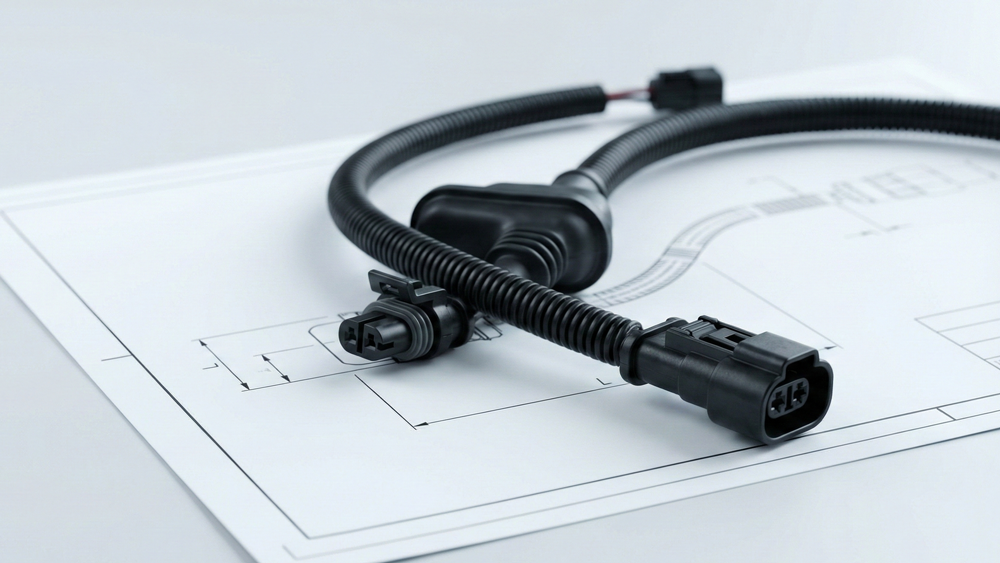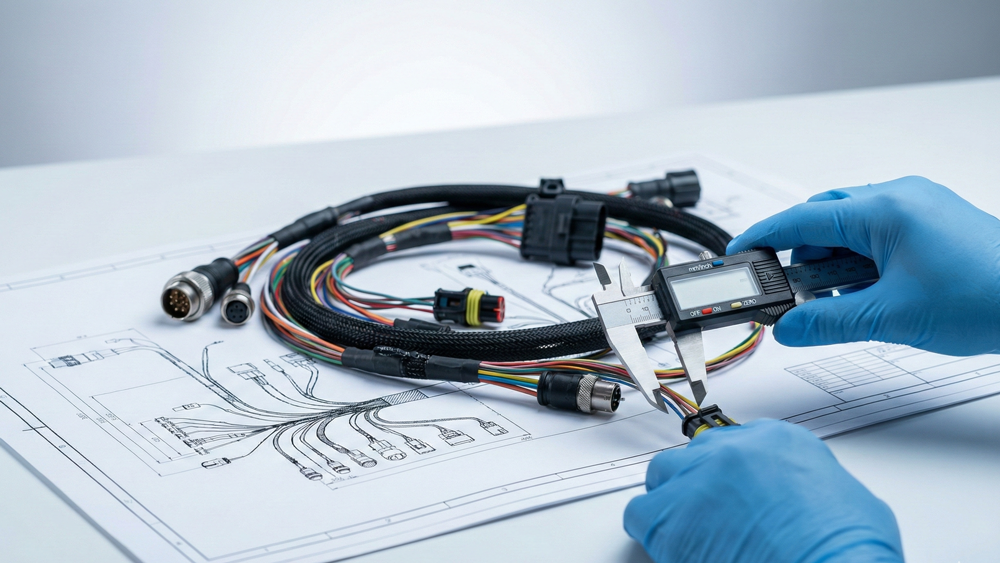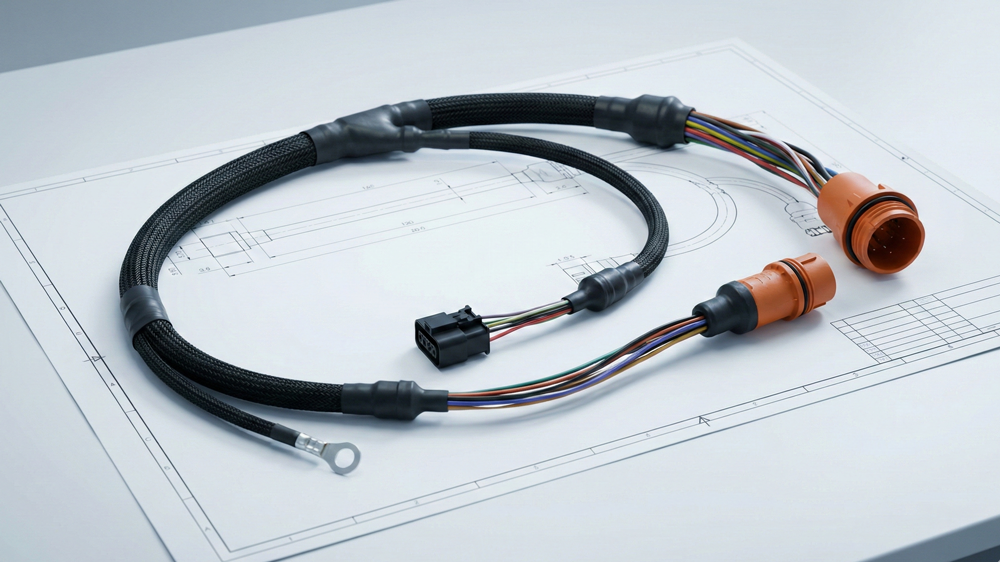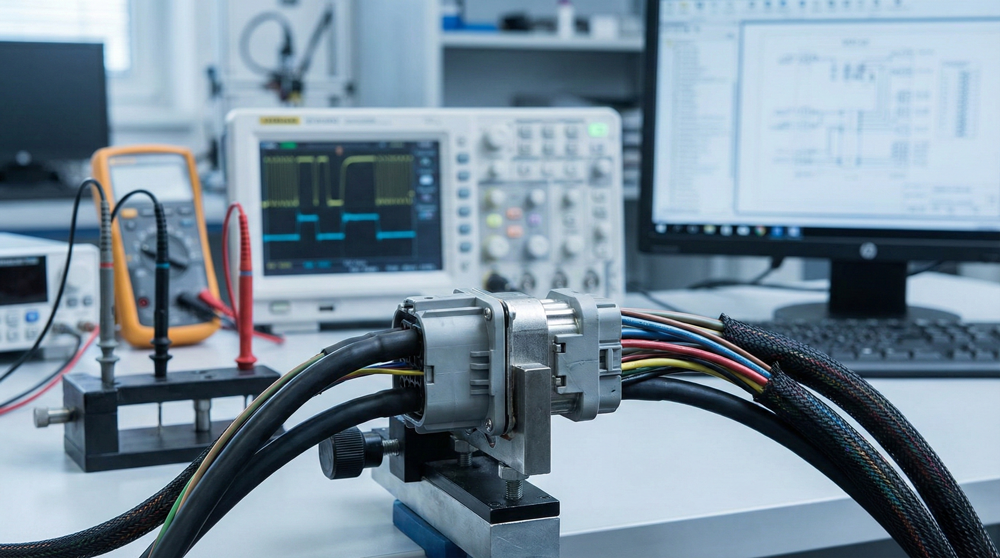
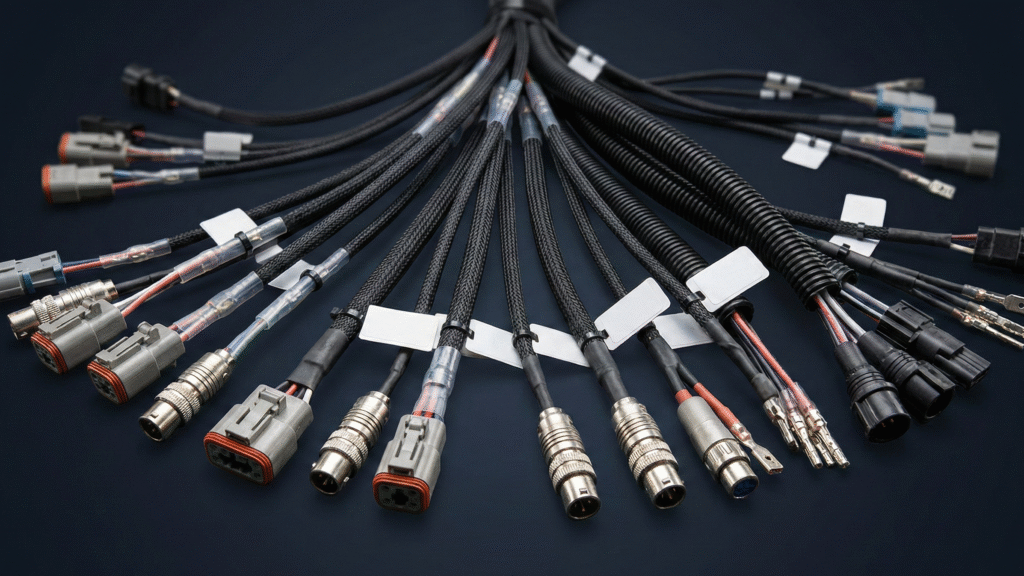
If you buy harnesses long enough, you start to recognize a pattern: failures repeat. Not because engineers are careless, but because the same defect families keep slipping through when suppliers rely on informal workmanship and the OEM relies on drawings alone. Most wiring harness failures are not “mysteries.” They are predictable outcomes of a few controllable process gaps—crimp drift, wrong cavity insertions, missing seals, inconsistent strain relief, inadequate branch protection, mixed revisions, and poor packaging.
This article is a practical defect-prevention guide for OEM buyers evaluating wiring harness supplier quality. It explains the most common defect families, how they show up in the field, why they happen, and what prevention controls actually work. The goal is not to blame suppliers; the goal is to help you define acceptance and evidence so supplier performance stays stable at scale.
If you’re preparing an RFQ and want to lock requirements in a structured way, start with Custom Wiring Harness. If you want your prevention approach to map to verifiable controls, anchor it through Tests & Inspections and the supporting quality pages Quality Guarantee, Quality Policy, and Certificates.
Table of Contents
ToggleThe “defect economics” that OEMs often underestimate
In harness assemblies, the part cost is rarely the true cost. The true cost is diagnosis time, downtime, field labor, scrapped units, shipping replacements, and the trust tax you pay with your customer. A $0.05 missing cavity plug can become a $5,000 service event. A swapped pair of sensor wires can become days of debugging. A marginal crimp can become intermittent failures that nobody can reproduce consistently—until it becomes your brand problem.
That’s why defect prevention must be designed as a system: controlled inputs, repeatable processes, and verifiable outputs. Once you view defects this way, you stop asking suppliers “please be careful” and start asking for evidence-based controls.
Defect family 1: Wrong cavity insertions and wiring swaps
How it shows up: The harness passes a superficial continuity test but the system behaves incorrectly—wrong polarity, inverted sensors, “no communication,” or “works only in one configuration.” This is common when connectors share similar housings, when multiple variants exist, or when documentation is ambiguous.
Why it happens: Pinout verification is missing or incomplete. Operators rely on memory. Similar connectors are mixed in the same work area. Variant controls are weak. Labels are missing or unreadable.
Prevention controls that work: Require mapping verification (pinout test) in addition to continuity/shorts. Require connector and branch labels that match your circuit list and installation docs. Physically separate variants in production and in packaging. Use a final inspection checklist that explicitly includes connector ID verification and mapping records, as described in Tests & Inspections.
Defect family 2: Crimp drift and marginal terminations
How it shows up: Intermittent opens, vibration-only faults, sporadic resets, or “only fails after some time.” Often, these failures disappear during bench testing and reappear in the field.
Why it happens: Crimp height drifts. Tooling wears. Wire construction changes without approval. Stripping nicks strands. Insulation support is inconsistent, transferring strain into the conductor crimp.
Prevention controls that work: Lock terminal P/N and wire construction in the BOM with no substitutions without written approval. Control crimp height as a process variable and verify with pull testing at defined sampling. For high-risk terminations, require microsection evidence during qualification or major changes (as discussed in your microsection article) and align acceptance to terminal manufacturer guidance. Tie evidence to revision and lot/serial traceability where needed.
If you want to present your manufacturing discipline as a supplier, this is where linking your capability and verification pages matters: Assembly Capabilities plus Tests & Inspections creates a coherent evidence story.
Defect family 3: Missing seals, cavity plugs, and ingress vulnerabilities
How it shows up: Corrosion, intermittent faults in humid environments, failures after washdown, or performance issues that correlate with weather and moisture. The harness may work initially and then degrade.
Why it happens: Seals are omitted, damaged, or mismatched to wire OD. Cavity plugs are forgotten. Assembly is rushed. Inspection focuses on electrical tests and ignores environmental protection details.
Prevention controls that work: Include seal and cavity plug checks in final inspection. Define seal-to-wire OD fit requirements and specify approved seal part numbers. Validate that seals and plugs are present on all required cavities and record the inspection step. If the harness is used in harsh environments, treat ingress protection as a critical-to-quality requirement, not an optional detail.
Defect family 4: Poor strain relief and fatigue at breakouts
How it shows up: Cracked conductors near the connector or breakout, intermittent failures that appear after installation, or failures that happen only when the harness is moved. In automation systems, this becomes a maintenance headache.
Why it happens: The conductor crimp is forced to act as strain relief because insulation support is weak. Breakouts have sharp stiffness transitions. The harness is tied down incorrectly due to unclear routing cues. Protective materials are applied inconsistently.
Prevention controls that work: Define insulation support requirements and ensure the supplier checks it consistently. Specify breakout protection—heat shrink, molded transitions, strain relief boots, or reinforcement sleeves—where movement or vibration exists. Control branch lengths and breakout locations so the harness lays naturally without installer forcing.
If your audience includes automation and motion customers, it’s valuable to connect these failure modes to application pages like Industrial & Robotics and control-focused pages like Control Wire Harness.
Defect family 5: Labeling, variant confusion, and mixed revisions
How it shows up: Wrong harness installed, wrong branch routed, wrong connector mated, or service technicians replacing the wrong unit. These are not electrical defects; they are configuration and human-factor defects—and they can be just as costly.
Why it happens: Labels are missing, too small, or placed where they are unreadable in the installed state. Variants share similar geometry but are not clearly separated. Revision discipline is weak. Packaging mixes variants.
Prevention controls that work: Treat labeling as a process control and acceptance criterion. Define label content (connector ID, branch ID, destination, revision/variant) and placement rules for installed-state readability. Separate variants physically and label outer packaging. Tie the shipment to revision control records so you can prove what shipped.
Defect family 6: Shielding and grounding mistakes (for cable assemblies)
How it shows up: Noise, unstable signals, poor communication reliability, or failures that correlate with EMI-heavy environments. Often this is misdiagnosed as a device firmware issue.
Why it happens: Shield terminations are inconsistent. Drain wire is misrouted. Grounding point is unclear. The supplier treats shielding as “just another wire” instead of a system-level requirement.
Prevention controls that work: Define shield termination method clearly in the drawing and acceptance criteria. Verify shield continuity and grounding method during electrical verification. For programs sensitive to EMI, require documented inspection steps for shield termination and record results.
This defect family becomes more relevant as you move from simple harnesses into cable assemblies and higher-frequency or sensor-heavy systems. It can be positioned as a bridge topic to your cable assembly capability content.
Defect family 7: Packaging damage and shipping-induced defects
How it shows up: Bent pins, damaged seals, scuffed insulation, kinked cables, or branches that arrive tangled and stressed. Sometimes the harness passes tests at the factory but fails after shipping because connectors were impacted.
Why it happens: Packaging is treated as a shipping afterthought. Connectors are not protected. Harnesses are coiled too tightly. Variants are mixed. Branches abrade during transit.
Prevention controls that work: Protect connectors and pins with caps or protective packaging. Use coil sizes that avoid kinks and maintain minimum bend radius. Prevent branch tangling and abrasion. Separate variants and label packaging clearly. Kitting to installation sequence reduces handling stress and reduces install errors.
How to turn defect prevention into supplier evaluation
OEM buyers often hesitate to add “quality requirements” because they don’t want to slow down sourcing. The trick is to focus on high-leverage controls and evidence that can be reviewed quickly.
A good wiring harness supplier quality evaluation focuses on four questions.
Can the supplier control critical inputs (terminal P/N, wire construction, seals) with no silent substitutions?
Can the supplier control key process variables (crimp height, strip length, tooling setup) and verify them?
Can the supplier produce verifiable outputs (mapping tests, pull tests, inspection records) tied to revision and traceability?
Can the supplier prevent configuration errors (labeling, variant separation, packaging protection) consistently?
If the answer is yes, you can move faster with confidence. If the answer is no, you may still get a low price—but you’ll pay later.
This is why your public-facing pages matter: when your blog content references Tests & Inspections and Quality Guarantee, you’re not just writing SEO content. You’re pre-qualifying your own supplier story for serious buyers.
FAQ
What are the most common wiring harness defects OEMs see?
Wrong cavity insertions, crimp drift, missing seals/cavity plugs, poor strain relief at breakouts, labeling/variant confusion, shielding mistakes, and shipping damage are the most common high-cost defect families.
How can OEM buyers prevent wiring swaps from suppliers?
Require pinout/mapping verification, clear connector labeling tied to your circuit list, and strong variant separation in production and packaging with recorded evidence.
Why do “intermittent” harness failures happen?
Intermittent failures are often caused by marginal crimps, strand damage, weak insulation support, moisture ingress, or breakouts with poor strain relief—issues that may pass basic tests initially.
What quality evidence should a wiring harness supplier provide?
At minimum: revision-linked test results (continuity + mapping). For higher-risk programs: pull tests, microsection evidence for critical terminations, and traceability records.
How does packaging affect harness reliability?
Packaging can damage connectors, kink cables, abrade insulation, and mix variants. Protective packaging and kitting reduce shipping-induced defects and installation errors.
CTA: Prevent the defects that cost the most—by making quality measurable
If you want stable wiring harness supplier quality, don’t rely on “care” as the control. Define critical input locks, require process controls for crimps and sealing, verify with mapping tests and recorded evidence, and prevent configuration errors through labeling and packaging discipline.
To request a quote with clear acceptance requirements, submit your BOM + drawing + circuit list through Custom Wiring Harness. If you want a supplier-quality review first—defect risk assessment, test strategy, labeling and packaging rules—reach out via Contact. We’ll align prevention controls with Tests & Inspections and document an OEM-ready evidence package.