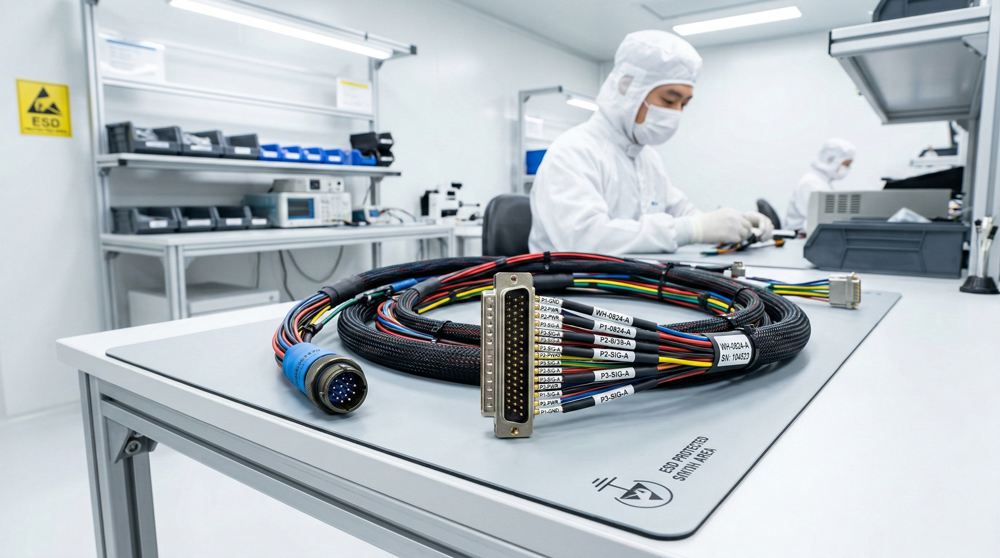
Wire harness UL and CSA support becomes important the moment a project moves beyond “can you build this harness” and into “can you help us launch this product smoothly into the target market.” For many OEM and industrial buyers, that shift happens earlier than expected. The harness itself may appear simple: wire, connectors, terminals, labels, sleeving, and a few outgoing tests. But once the project enters customer approval, quotation comparison, or launch planning, a different set of questions emerges. Are the materials and components aligned with the compliance expectations for the target market? Can the supplier explain what part of the harness is supported by recognized components and what still depends on project-level validation? Can the supplier prepare the right document package without slowing the program? And if the customer later asks for clarification, can the supplier respond with the same answer every time?
That is why wire harness UL and CSA support should not be treated as a last-minute document request. In B2B harness projects, it is part of how buyers judge supplier maturity. A supplier may build an electrically correct harness and still be difficult to approve if the compliance path is vague, if component logic is weak, or if the documentation package depends on individual memory rather than a controlled system. On the other hand, a supplier who understands how UL and CSA expectations intersect with drawings, BOMs, materials, workmanship, and customer approval can remove a surprising amount of project friction.
The commercial value is straightforward. Good compliance support reduces repeated questions during RFQ. It helps buyers compare suppliers more fairly because the scope is better defined. It makes first-article and pilot approvals easier because the evidence is more coherent. It strengthens audit confidence because the supplier can explain not only what was built, but how the compliance-related assumptions were controlled. And it protects long-term supply because future changes are less likely to drift quietly away from the originally approved state.
This article explains how to think about wire harness UL and CSA from a practical OEM project perspective. The goal is not to turn the supplier into a full regulatory advisor. The goal is to make the approval path clearer, reduce misunderstanding, and help buyers ask the right questions early enough that the project does not stall later.
Table of Contents
ToggleWire harness UL and CSA value
The value of UL and CSA support is easiest to see when it is missing. A supplier may quote quickly, build an attractive sample, and pass basic electrical checks. Then the customer asks for clarification around recognized components, market-support documents, or how the harness fits into a larger North American compliance path. If the supplier responds slowly or inconsistently, the project can lose momentum very quickly. Engineering may hesitate to release the design. Procurement may question whether the supplier really understands the market requirements. Quality may delay approval because the product looks technically plausible but commercially under-supported.
That is why UL and CSA support matters well beyond the legal or technical layer. It affects the speed of trust. In OEM projects, trust is often built not only on build quality but also on how predictably the supplier can answer customer-facing compliance questions. The supplier who explains scope clearly, aligns materials to the approved BOM, and prepares coherent records usually feels lower-risk to the buyer, even if the harness itself is not especially complex.
In practical terms, that makes UL and CSA support a competitive differentiator. Buyers are not only purchasing a physical assembly. They are purchasing the ability to move that assembly through internal and customer approval with less confusion.
UL and CSA scope
One of the first mistakes in this area is using “UL” or “CSA” as if each were a single yes-or-no condition for the entire harness. In real projects, the scope is usually more specific. Sometimes the question concerns whether certain wire or cable types are recognized. Sometimes it concerns connector or component selection. Sometimes it concerns whether the supplier can support the documentation expectations for a North American market program. Sometimes it concerns the difference between component-level support and complete product-level approval responsibility.
That means a useful supplier discussion should begin with scope clarification. What exactly is the customer asking? Is the need tied to wire and cable selection? To component compatibility? To an end-product approval package? To customer documentation confidence? Or to an internal purchasing rule that requires recognized materials where possible?
This clarification matters because it prevents two costly misunderstandings. The first is overclaiming, where a supplier speaks too broadly and creates expectations that the project cannot actually support. The second is under-supporting, where the supplier has useful component and document capabilities but fails to present them clearly enough for the buyer to proceed with confidence.
A strong supplier helps the buyer define the requirement in operational terms rather than simply repeating “we can support UL” or “we can support CSA.”
Wire harness compliance path
A wire harness project usually moves through several approval layers. The drawing and BOM define the intended product. The supplier builds a sample or pilot lot. Quality reviews workmanship and tests. The customer or OEM approval team may then ask how the harness aligns with market-facing compliance expectations. If these layers are not connected, the project can become unstable even when the product itself is buildable.
That is why the compliance path should be visible from the beginning. Buyers should know whether the supplier is expected to provide recognized materials, supporting component information, workmanship alignment, test records, or a broader customer approval package. Suppliers should know whether their role is limited to providing component-backed evidence or whether the customer expects more formal approval coordination around the harness as part of a larger end product.
When that path is clear, document requests become easier to manage. When it is unclear, the same project can move through prototype, quotation, and pilot while carrying hidden approval risk that only shows up when the final customer asks the harder questions.
Recognized components
Recognized components are often the practical foundation of UL- or CSA-related support in harness programs. The buyer may not need a full assembly-level certification claim from the harness supplier, but they may still need confidence that the wire, cable, connectors, terminal systems, insulation systems, or other components sit on a supportable compliance path for the product’s target market.
This is where BOM discipline matters. A supplier can only speak clearly about recognized components if the actual part structure is under control. If the BOM is weak, if terminal alternates are loosely handled, or if wire substitutions happen informally, then the compliance story also becomes weak. The supplier may still say the harness uses recognized materials, but the buyer will have less confidence that the actual shipped product remains aligned with that statement over time.
That is why strong suppliers treat component control and compliance support as connected systems. The recognized component story is only credible when the project can prove that those are the components actually being sourced and used within the approved state.
Wire and cable selection
Wire and cable choices have a particularly strong influence on the project’s UL and CSA support path because they sit at the center of material, insulation, temperature, routing, and application logic. A buyer may think of wire selection mainly in electrical terms, but in compliance-driven projects, the selected wire also shapes how easily the supplier can support approval questions later.
This is especially important when a project is trying to balance several things at once: cost, flexibility, bend life, sealing compatibility, lead time, and compliance expectations. If the supplier proposes an alternate wire source or construction, the buyer should not only ask whether it is electrically similar. The buyer should also ask whether the alternate maintains the same supportability within the intended approval framework.
That is one reason BOM review and engineering support remain so important even in a compliance-focused series. Material support is not separate from engineering control. It depends on it.
Connector and terminal support
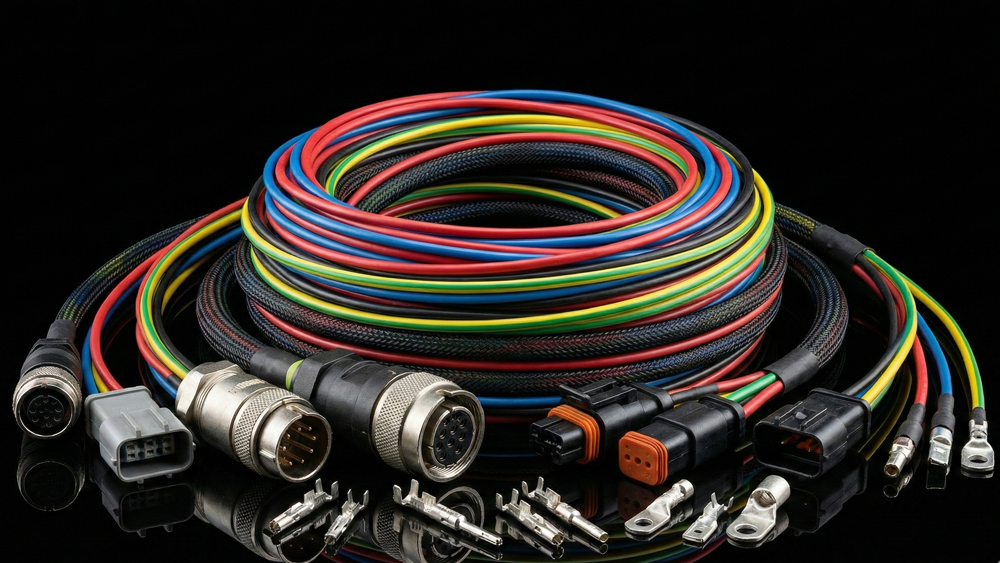
Connectors and terminals are another area where buyers benefit from supplier precision. A harness may use well-known connector families, but the real compliance and approval value depends on how clearly the component set is defined and how stably it is controlled. If the connector housing is specified while the terminal family remains flexible, or if accessories and seals are treated as informal add-ons rather than controlled items, the buyer may later discover that the harness is less approval-stable than expected.
A good supplier should therefore be able to explain connector and terminal logic clearly. Which items are fixed? Which are approved alternates? Which are part of the documented component path the buyer may later rely on in customer-facing discussions? Which changes would require review because they alter the approval story, not just the sourcing story?
The more clearly that is handled, the less likely the harness is to drift into an “almost the same” material state that becomes difficult to defend during audit or customer review.
Workmanship and process control
UL and CSA support in a wire harness program is stronger when workmanship and process control are also visible. Buyers may initially think of certification and workmanship as separate worlds, but in real projects they are connected through confidence. If the material path looks good but the assembly discipline is weak, the buyer still hesitates. If the supplier uses recognized materials but cannot show stable crimp control, seal handling, labeling discipline, or revision management, then the project still carries approval risk.
That is why workmanship baseline and process control contribute to the overall credibility of compliance support. A supplier who can say, “here is the material path, here is the BOM control, here is the build logic, and here is the evidence pack tied to shipment,” gives the buyer a much stronger basis for internal and customer approval. A supplier who can only provide a few static documents without connecting them to execution gives the buyer less confidence, even if the documents are technically valid.
This is one reason buyers often prefer suppliers who combine engineering support, quality discipline, and documentation control rather than sourcing any one of those layers separately.
Wire harness test records
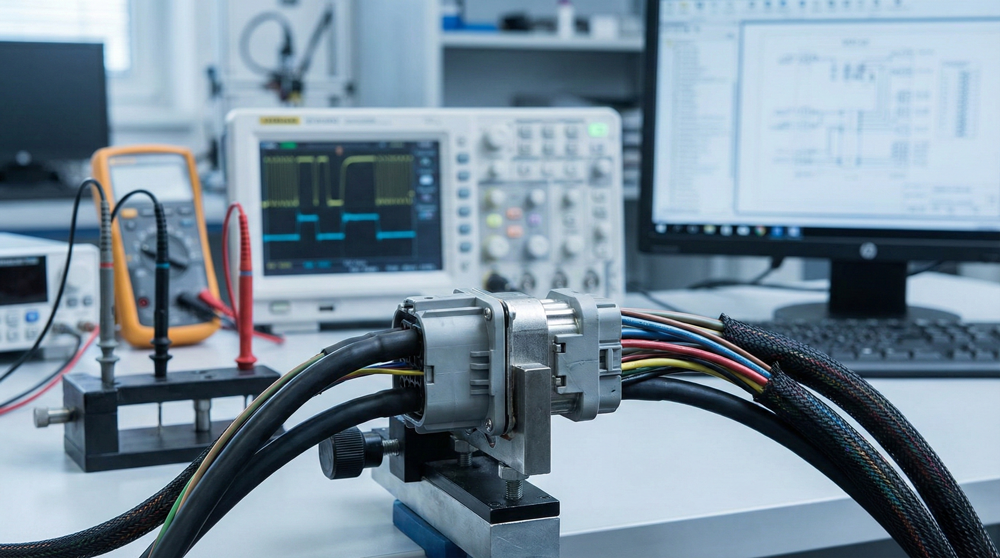
Test records do not replace compliance documentation, but they make it more useful. A customer approval discussion is much stronger when the supplier can link the harness not only to materials and component logic, but also to evidence showing that the delivered product was built and checked under a controlled process.
The exact test package depends on the program. In some cases, standard outgoing electrical checks are enough. In others, the buyer may want stronger first-article or pilot support. What matters is that the records are coherent. The test report should be traceable to the build state, the revision, and the lot. If the harness is being discussed in the context of a North American customer approval path, the supplier should be able to retrieve the relevant records without rebuilding the project file manually.
This is where evidence packs become commercially valuable. They reduce approval friction because they tie the material and process story together in a way the buyer can actually use.
Quality documents
Quality documents should be thought of as part of the approval interface between supplier and buyer. They are not valuable because they exist. They are valuable because they allow the buyer to answer customer-facing questions quickly and consistently. If the buyer asks for a declaration, a test summary, a conformity statement, a first-article package, or shipment-linked evidence, the supplier should know which records belong together and how they connect to the approved product state.
That means the quality-document package should not be assembled as a last-minute reaction every time. A stronger supplier has a practical structure for this already. The package may vary by customer, but the logic remains stable. The records should be current, traceable, and understandable under time pressure.
This is one of the clearest ways to turn compliance support into a business advantage. Buyers remember suppliers who make approvals easier.
Customer approval support
Customer approval is where UL and CSA support often become most visible. The buyer is no longer only asking whether the harness works. The buyer is asking whether the harness can move through their own internal approval process or through a customer-facing review without repeated delays. That includes material support, document coherence, test records, and the supplier’s ability to explain scope without overclaiming.
A supplier who understands customer approval support does not simply send whatever documents happen to exist. They understand which questions the buyer is probably trying to answer. Is the customer trying to confirm recognized materials? Is the customer trying to validate workmanship and test logic? Is the customer checking whether the harness can be included in a larger approval file? Is the customer worried about future document retrieval and traceability?
The better the supplier understands that commercial context, the more useful their support becomes.
Change control
Compliance support becomes fragile when change control is weak. A harness may begin the project with a clear material and documentation path. Then a wire source changes, a connector accessory changes, a label material changes, or a packaging method changes. If that change is handled only as a sourcing or engineering decision, the project may quietly drift away from the originally supported state without anyone explicitly reviewing the compliance impact.
That is why UL- and CSA-related support should be tied to ECO and revision logic. Every meaningful change should trigger a simple review: does this affect the recognized component path, the material declaration path, the customer approval logic, or the document package we have already supplied? If yes, the change is not just technical. It is also part of the compliance system.
Strong suppliers make that connection visible. Weak suppliers treat compliance as static paperwork attached to a moving project, which creates problems later.
Traceability and retrieval
The business value of compliance records rises sharply when they are connected to traceability. If a buyer receives a declaration, test report, or conformity-related document, they should be able to link it to the actual harness lot or shipment in question. Otherwise the file exists, but its operational value is limited.
This becomes especially important during audits, quality reviews, and field issues. A buyer under time pressure does not want to search across disconnected records or wonder whether the document in hand still reflects the current build state. A supplier with good traceability and retrieval logic can answer those questions much faster. That speed lowers the cost of both routine approvals and unexpected issues.
Supplier value
A supplier who handles UL and CSA support well reduces one of the most common forms of hidden project cost: approval friction. They help the buyer move from technical interest to internal confidence. They make it easier to compare and release sources. They reduce the number of customer-facing surprises. And they create a cleaner path for future change because the original support baseline was structured rather than improvised.
That is why compliance support should be seen as part of supplier value, not merely as a document burden. In competitive B2B environments, several suppliers may be able to build the same harness. Fewer can support the project around that harness with enough clarity and discipline to make approvals easier rather than harder.
Conclusion
Wire harness UL and CSA support are most valuable when they are practical, clearly scoped, and tied to the real project baseline. Buyers benefit when suppliers define what the requirement actually means, connect recognized components and materials to a controlled BOM, support customer approval with coherent documents and test records, and keep that support stable through later changes.
That is how compliance becomes an operational advantage instead of a late-stage obstacle. It reduces approval delays, strengthens confidence in the supply base, and makes the harness easier to support across the full life of the program rather than only at first quote.
FAQ
Does wire harness UL and CSA support always mean full assembly certification?
No. In many projects, the real question is about recognized components, material support, and customer approval documentation rather than a blanket certification claim for the complete harness.
Why do buyers ask about UL and CSA so early?
Because those questions often affect supplier selection, BOM choices, customer approval timing, and how smoothly the project can enter the target market.
How does BOM control affect UL and CSA support?
A supplier can only support recognized materials and component logic credibly if the BOM is controlled and substitutions are managed clearly.
What should a supplier provide when a buyer asks for UL or CSA support?
That depends on scope, but useful support often includes clarified component logic, material or component documentation, quality records, and clear explanation of what the support does and does not cover.
Why is change control important for compliance support?
Because even small material or component changes can alter the original approval logic. Without controlled review, the product may drift away from the supported state.
CTA
If your harness project needs North American approval support, it is better to define the compliance scope early than to discover document gaps during customer review. A clearer material path, stronger BOM control, and cleaner quality records usually make the project move much faster.