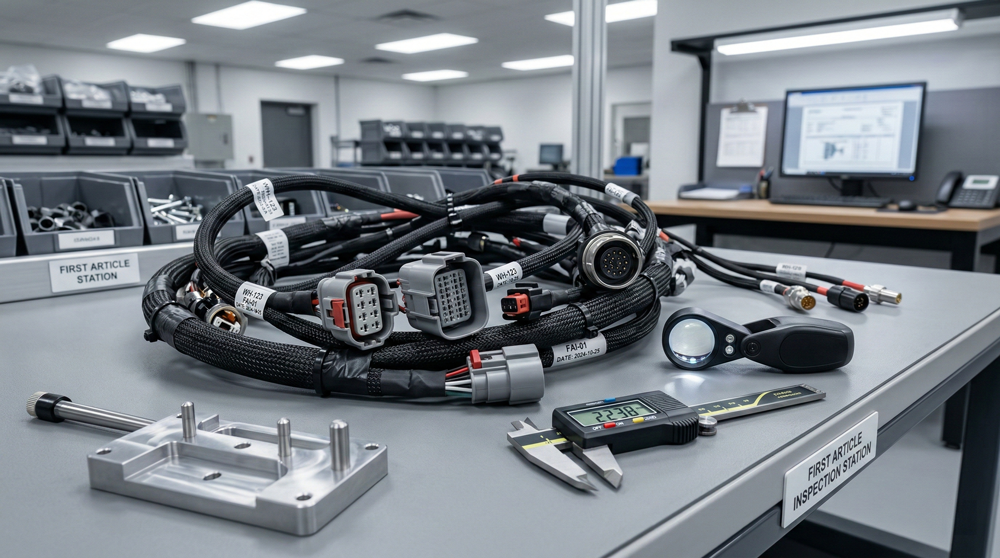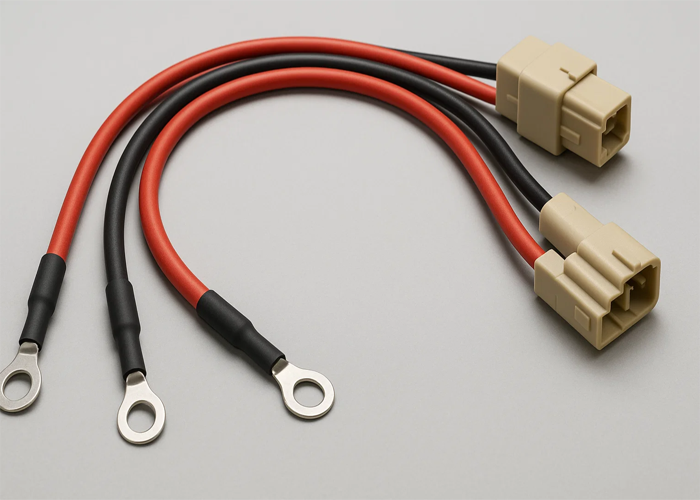

A strong wire harness drawing review is one of the fastest ways to reduce project friction before it becomes cost. Most OEM and custom harness problems do not begin on the production floor. They begin much earlier, when a drawing is “good enough to move forward” but not yet clear enough to build, inspect, quote, and revise without interpretation gaps. Those gaps rarely stay small. They usually turn into repeated engineering questions, sample rework, quote mismatches, pilot-build delays, or revision confusion after launch.
That is why wire harness drawing review is not merely a drafting exercise. It is a project-control activity. It aligns engineering intent, supplier interpretation, manufacturing execution, and quality verification before the harness enters a more expensive stage of the program. For buyers, that has direct commercial value. A better drawing review means fewer hidden assumptions, fewer clarifications after PO, better sample-to-production continuity, and less dependency on verbal explanations that disappear when people or shifts change.
In wire harness projects, drawings often carry more than dimensions. They carry connector definitions, circuit mapping, branch logic, label content, protection requirements, installation assumptions, and test expectations. When any of those are incomplete or ambiguous, the supplier has to guess. And when suppliers guess, buyers pay later. They may pay in schedule slips, material substitutions, assembly variation, or field-return arguments. The whole point of a disciplined drawing review is to stop those costs before they spread.
This article explains how to review a harness drawing from a business and execution perspective. The goal is not to create perfect drawings for their own sake. The goal is to create buildable, reviewable, traceable, revision-controlled information that helps a supplier deliver stable results from prototype through production. For the broader logic behind this series, connect this article to Wire Harness DFM and Engineering Support, where manufacturability is framed as a commercial value proposition rather than just an engineering service.
Table of Contents
ToggleWire harness drawing value
A wire harness drawing has value only when different people can reach the same understanding from it. That sounds basic, but it is the real standard that matters. A drawing may look detailed and still fail that test. It may contain connector callouts, wire labels, and dimensions, yet still leave too much open to interpretation. One engineer may read it one way, the supplier may build it another way, and quality may inspect it using a third assumption. At that point, the drawing is no longer the source of truth. It is only one input among several personal interpretations.
That creates cost very quickly. Procurement may compare quotes that are not based on the same scope. Engineering may approve a sample that matches intent but not the actual document. Manufacturing may build to a practical interpretation that works today but becomes unstable after the next revision. Quality may sign off based on a method that was never clearly specified. Each of those situations increases rework and weakens supplier accountability, because later everyone can argue that their interpretation was reasonable.
A disciplined wire harness drawing review improves commercial clarity. It gives the supplier a cleaner basis for quotation. It gives engineering a better baseline for first-article review. It gives quality a better basis for inspection and evidence. And it gives the buyer a better way to control changes later, because the original design intent was documented clearly enough to compare against the next revision.
Wire harness scope
The first job in a drawing review is to confirm what the drawing is actually trying to define. Some harness drawings define only the physical assembly. Others also define materials, test requirements, labels, packaging notes, or installation assumptions. Problems begin when the buyer thinks the drawing defines all of that, but the supplier reads it as a partial build reference that still needs supporting documents.
A useful review therefore starts by asking what is in scope and what is outside the drawing. Are connector and terminal part numbers fully defined here, or only at BOM level? Are wire colors and gauges controlled on the drawing, or only by a spreadsheet? Are labels specified visually, textually, or not at all? Is packaging referenced? Is testing referenced? Is there a linked revision-controlled BOM or work instruction that fills in the missing pieces?
This matters because an incomplete drawing is not necessarily bad if the supporting structure is clear. But an incomplete drawing with unclear supporting references is a major project risk. In that situation, suppliers often quote from assumptions, then try to stabilize the project later through email clarification. That is expensive and fragile. Drawing review should therefore check not only the drawing itself, but also whether the document package around it is coherent.
Wire harness revision
Revision clarity is one of the most important aspects of a drawing review because every future decision depends on it. If the team cannot say with confidence which drawing is current, then all downstream controls weaken. Sample approval becomes less meaningful. Material approval becomes less stable. First-article evidence becomes harder to compare. And any field-return investigation later may get trapped in the question of which revision was actually built.
A strong drawing review should therefore verify revision status visibly and structurally. The drawing should show the revision clearly, and the rest of the project package should support it. The BOM revision, label format, test requirement references, and change records should align to the same version state. If the drawing says Rev C but the connector table, length note, or customer specification is still sitting at a prior revision, the project is already vulnerable to mixed interpretation.
This is not only an engineering concern. It is a sourcing concern because supplier performance becomes difficult to judge when the information baseline itself is unstable. Buyers often think a supplier “made a mistake,” when in reality the supplier followed an outdated revision or a partially updated data set. That is why drawing review and revision control must work together from the beginning. Later in the P15 series, Wire Harness ECO and Revision Control will develop that topic more deeply, but the foundation starts here.
Wire harness connectors
Connectors are one of the first things a drawing review should challenge because connector ambiguity creates both commercial and manufacturing risk. A harness drawing should make it clear which connector family is required, which housing variant is intended, what keying or coding applies, what mating assumptions exist, and whether terminal definitions are fixed or governed elsewhere.
When connector callouts are vague, several problems follow. Suppliers may quote different variants. Samples may fit in one direction but fail in the final product interface. Seal selection may drift. Tooling and insertion assumptions may differ by supplier. And later, if a field problem appears, no one can easily determine whether the failure is tied to the intended connector family or to an alternate interpretation that slipped in early.
A strong connector review therefore asks whether the drawing provides enough detail to make connector interpretation stable. If not, engineering support should identify that gap early. This is exactly where a supplier adds value through DFM. Instead of waiting for a build issue, the supplier can point out that a connector family is not fully defined, that the orientation note is insufficient, or that the retention or sealing assumptions do not match the drawing package.
Wire harness terminals
Terminal definitions are often left too implicit in early harness drawings, especially when the connector housing is specified but the terminal family is assumed to be “standard.” That assumption can be dangerous. Terminal choice affects crimp method, insertion retention, sealing compatibility, tooling setup, validation requirements, and long-term field reliability. If the terminal is not clearly defined, the buyer may believe they are controlling the connection system when in reality they are controlling only the housing.
A drawing review should therefore confirm whether terminals are directly identified, indirectly controlled through a BOM, or still open for supplier proposal. Any of those approaches can work, but the status must be clear. If terminal choice is left open, then the approval rules for that choice must also be clear. Otherwise, a sourcing decision can become a technical deviation without anyone realizing it until later.
This matters commercially because terminal ambiguity is one of the classic causes of invisible project drift. The harness may pass early checks, but later variation in terminal choice can affect yield, test stability, and field performance. Drawing review is the cheapest point to stop that drift.
Wire harness pinout
Pinout clarity is non-negotiable. A wire harness drawing that leaves pinout interpretation open will eventually create either a build error or a quote error. Buyers often assume pinout is simple because it looks like a basic mapping problem. In practice, pinout errors can be hidden by connector orientation confusion, mirrored views, cavity naming conventions, or branch labeling that is clear to the design team but not to the supplier.
A strong review checks whether the drawing communicates pinout in a way that is unambiguous without side explanation. That may mean clearer connector-face views, stronger cavity numbering visibility, more explicit mating references, or a better connection between the schematic logic and the physical harness drawing. The standard is not whether the design engineer can explain the pinout in a meeting. The standard is whether the drawing explains it by itself.
Commercially, pinout ambiguity is costly because it damages trust quickly. A buyer will tolerate many kinds of engineering change more easily than a wiring error. That is why pinout review deserves extra attention, especially in projects that will later scale across multiple suppliers, sites, or shifts.
Wire harness lengths
Length review is one of the most underestimated drawing tasks in wire harness projects. Length looks simple until different teams measure it differently. One team may assume housing-to-housing, another end-of-terminal to end-of-terminal, another free-state length, another routed length. If the drawing does not define the method clearly, the supplier may build a harness that is “correct” under one interpretation and unusable under another.
A strong wire harness drawing review should therefore verify not only the nominal length but the reference points and the measurement logic. In branched harnesses, it should also clarify branch breakout points and how those relate to the total length logic. If tolerances are critical for routing or installation, those tolerances must be aligned to a measurement method that manufacturing and quality can actually apply.
This has direct sourcing value. Length ambiguity creates sample delays, quote inconsistencies, and field-installation frustration. It is one of the simplest issues to review early and one of the most wasteful to discover late.
Wire harness tolerances
Tolerance notes should be reviewed not just for technical correctness but for manufacturability and cost impact. A tolerance that looks precise in theory may be very expensive in practice if it requires unusual fixturing, repeated rework, or excessive inspection time. The buyer may accept that cost if the requirement is functionally critical, but the cost should at least be visible and intentional.
That is why tolerance review belongs inside DFM. The supplier should be able to say whether a tolerance is standard and stable, technically possible but expensive, or potentially misaligned with the real installation need. This feedback is commercially useful because it helps the buyer spend precision where it creates value and relax it where it only creates hidden cost.
A good drawing review also checks whether tolerances are applied consistently. If one branch length has a defined tolerance but the related branch or breakout point does not, the project may still be underdefined even though the drawing looks controlled.
Wire harness labels
Labels often look secondary on a drawing, but in many B2B programs they are part of product identity, serviceability, and traceability. A weak label definition can create a harness that functions electrically but fails operationally because the customer cannot identify it correctly, the warehouse cannot receive it efficiently, or field technicians cannot service it with confidence.
A drawing review should confirm whether labels are fully defined, where they are placed, how they are oriented, and how they relate to any traceability logic. If the label content is customer-specific or tied to multiple revisions, that complexity should be visible in the review. If the label material must survive heat, abrasion, fluid exposure, or handling, that should also be tied back to the documentation rather than assumed.
This is another example of how drawing quality affects business outcomes. A harness with poor label control may trigger the same kind of commercial frustration as a technical defect, especially in OEM programs where incoming inspection and line-side handling depend on clear product identification.
Wire harness branches
Branch logic often separates easy-to-build harnesses from expensive-to-build harnesses. A drawing review should therefore look closely at branch positions, branch identification, breakout geometry, sleeving transitions, and whether the visual representation actually corresponds to the intended harness architecture.
In branched harnesses, ambiguity tends to multiply. If one breakout point is underdefined, then lengths, labels, strain relief, packaging, and installation can all become inconsistent. For suppliers, branched harnesses also create more opportunity for variation in bundle formation and layout. That makes drawing clarity especially important.
A good review does not just confirm branch existence. It confirms whether branch relationships are clearly buildable and whether the drawing contains enough reference to make the bundle structure stable across different operators and later lots.
Wire harness protection
Protection features such as sleeving, conduit, tape wraps, boots, heat shrink, and overmold transitions should be reviewed as functional design elements, not decorative additions. If their locations, materials, or coverage are unclear, the resulting harness may vary in appearance, stiffness, abrasion resistance, or field durability.
A manufacturability review should therefore ask whether the protective features are fully specified and whether their placement is practical. It should also ask whether the protection interacts with labeling, branch geometry, or bend radius in ways that will affect build consistency. If a protection feature makes the harness harder to inspect or pack, that needs to be known early.
For custom projects, this is where engineering support becomes commercially visible. A supplier who can identify a protection feature that creates hidden process difficulty or later vibration risk is preventing cost, not just raising technical questions.
Wire harness test notes
A harness drawing does not need to become a full test plan, but it should clearly indicate what testing requirements are part of the product definition and where the detailed test method lives. If the drawing implies certain checks while the quote or test fixture assumes something different, the project becomes unstable.
Drawing review should therefore confirm whether the notes around continuity, shorts, insulation, high-potential testing, sealing checks, or any special validation are aligned with the rest of the project package. The supplier should be able to see whether the drawing is asking for standard production test, prototype validation, or some hybrid expectation that needs clarification.
This is commercially important because testing cost and testing evidence affect quotation, first-article release, and later supplier accountability. A harness drawing that quietly implies more testing than the supplier priced can create friction later. A drawing that says too little may create a false sense of control.
Wire harness packaging
Packaging information is frequently omitted from the core drawing and handled through side notes or separate instructions. That can work, but only if the package is clear and stable. In many projects, packaging requirements show up too late, especially when fragile connectors, tight bend-radius requirements, or customer-specific carton labels are involved. By then, the project is already carrying avoidable risk.
A drawing review should therefore check whether packaging-sensitive features exist and whether the packaging definition is ready to support them. If the harness has stiff branches, delicate rear seals, specific coiling limits, or labels that must remain visible, then packaging is already part of manufacturability. It should not wait until shipping.
This is another place where engineering support directly reduces downstream cost. Catching packaging-related design constraints early is much cheaper than replacing damaged shipments or reworking labels after the first delivery.
Wire harness drawing package
The drawing itself is only one part of the information structure. A useful review should evaluate the drawing package as a system. That includes the drawing, BOM, connector tables, label references, test notes, packaging instructions, revision history, and customer-specific specification links where they exist.
If those elements are not aligned, then the project is vulnerable even if each document looks acceptable alone. Buyers should therefore judge a supplier’s drawing review capability by whether they review the full package logically rather than only redlining isolated notes. A good engineering partner sees how one unclear connector note can affect the BOM, the first article, the packaging method, and the later ECO process. That systems view is exactly what makes DFM valuable commercially.
Conclusion
A strong wire harness drawing review prevents expensive ambiguity before it reaches quoting, samples, pilot builds, and production. It improves connector and terminal clarity, stabilizes pinout and length logic, supports BOM and revision control, strengthens testing and labeling expectations, and makes packaging and branch geometry more predictable. None of that sounds dramatic, but together it creates one of the strongest foundations for a stable harness project.
For buyers, that is the real value. Better drawing review means less guesswork, less rework, fewer sample loops, cleaner supplier accountability, and a smoother path from design intent to reliable supply. In wire harness projects, those avoided costs add up quickly, which is exactly why a supplier with strong engineering support is worth more than a supplier who only waits for finished documentation.
FAQ
What is the main goal of a wire harness drawing review?
The main goal is to make sure the drawing can be interpreted consistently by engineering, sourcing, manufacturing, and quality without relying on verbal explanation.
Why do drawing issues become expensive later?
Because unclear drawings create hidden assumptions. Those assumptions later show up as quote mismatches, sample delays, pilot-build variation, or revision disputes.
Should terminals always be defined in the drawing?
Not necessarily, but the control method must be clear. If terminal choice is governed elsewhere, the drawing package must still make that relationship unambiguous.
Why are length references such a common problem?
Because different teams often measure harness length differently unless the drawing defines exact reference points and the intended measurement method.
What makes a supplier good at drawing review?
A good supplier identifies build-risk, interpretation gaps, and process consequences early, then converts those findings into clearer documentation and more stable execution.
CTA
If your harness drawing is still evolving, a structured review usually saves more time than another uncontrolled sample loop. Clarifying connectors, BOM logic, pinout, labels, branch geometry, and revision boundaries early can make the next stage of the project much smoother.
Contact, review Tests & Inspections, explore Custom Cable Assemblies, or see Why Choose Us.