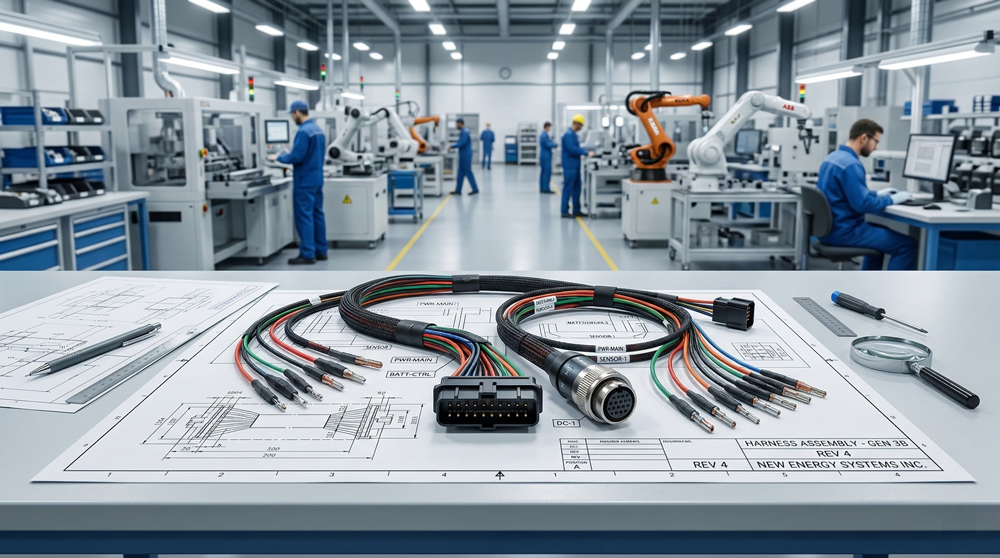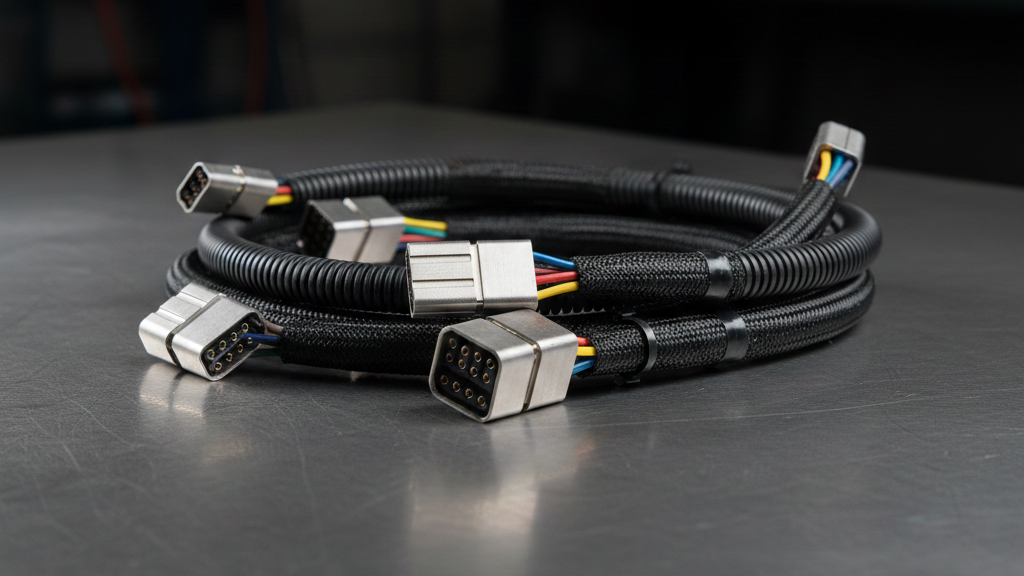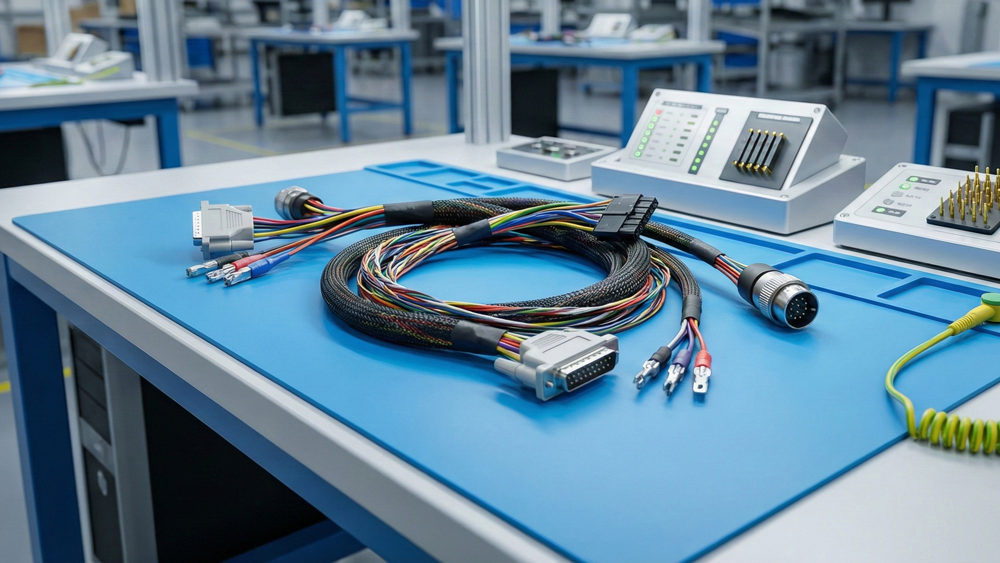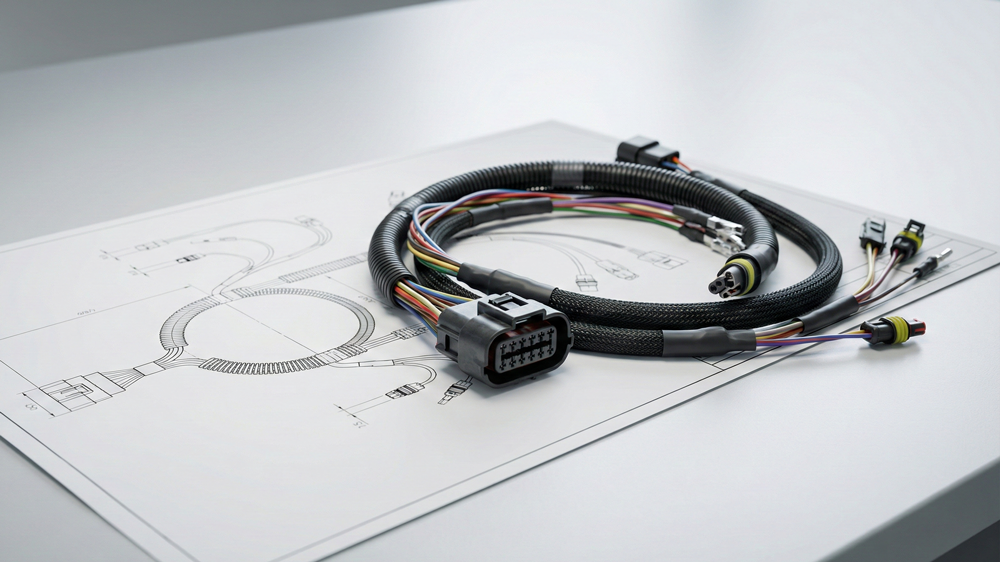
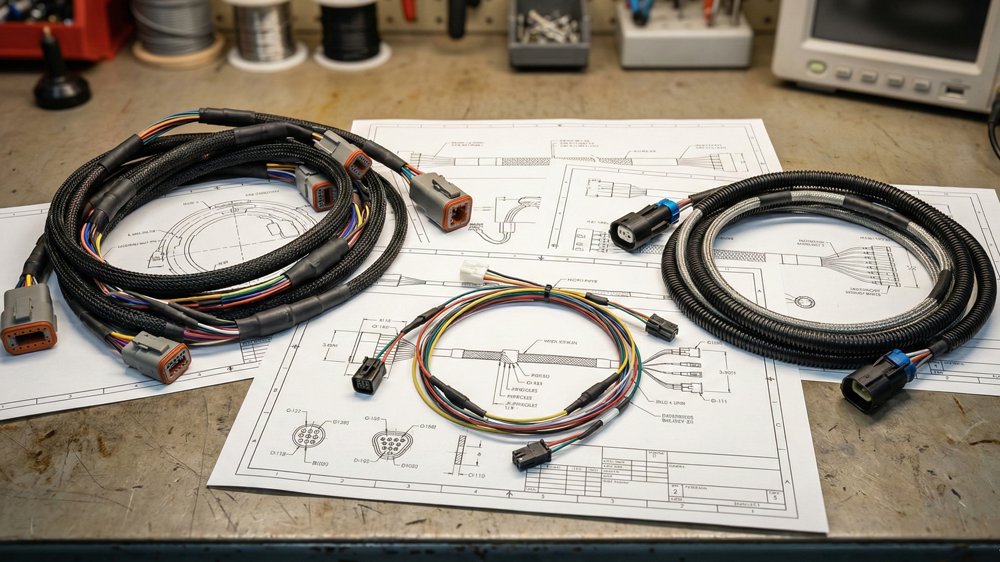
Wire harness design simplification is one of the safest and most scalable ways to reduce cost without losing quality. In many OEM projects, the first instinct in a cost-down discussion is to push material pricing or ask for a better quotation. Sometimes that helps, but the most durable savings often come from simplifying the harness design itself. When a harness becomes easier to understand, easier to build, easier to inspect, and easier to install, cost tends to come down in several places at once. Labor improves. Yield improves. Material usage becomes more consistent. Packaging often becomes cleaner. Documentation becomes easier to control. The result is not just a lower quoted price. It is a more stable supply model.
That is why wire harness design simplification should not be treated as cosmetic editing. It is a structural cost-down method. A harness that carries unnecessary branch complexity, redundant labels, over-complicated protection strategy, fragmented connector logic, or difficult installation features will usually cost more than a harness that achieves the same function with cleaner design discipline. More importantly, the complex harness often carries hidden quality burden as well. It needs more operator interpretation, more training, more inspection attention, and more exception handling during build.
For OEM buyers, this matters because design cost is rarely isolated inside engineering. A complicated design affects procurement, production, quality, and after-sales support at the same time. If a drawing is harder to read, the supplier quotes with more caution. If a branch structure is awkward, build time rises. If the label logic is redundant, labor and documentation both increase. If installation allowance is poor, production may succeed at the supplier while final assembly struggles at the customer side. In other words, design simplification is not about making the harness look cleaner. It is about removing avoidable complexity that creates cost and risk across the entire project.
This is exactly why pages such as Wire Harness Drawing Review, Wire Harness BOM and Part Control, Wire Harness ECO and Revision Control, and Wire Harness Prototype Review and Pilot Build matter so much in a cost-down context. They show that design, BOM structure, change control, and pilot discipline are already part of how your site frames stable B2B harness supply, not separate topics.
This article explains how OEM buyers should approach wire harness design simplification as a controlled cost-reduction method. The goal is not to remove features blindly. The goal is to simplify the design where complexity is not creating real value, while protecting fit, function, reliability, and approval logic.
Table of Contents
ToggleWhy Design Cost Matters
Many buyers think of design as a technical subject and cost as a commercial subject. In custom wire harness projects, that separation is often misleading. Design decisions create cost long before procurement negotiates the first unit price. The way the harness is laid out, identified, protected, branched, and installed determines how many interpretation points exist during production. Every unnecessary interpretation point usually becomes labor, inspection, or risk.
For example, a harness with excessive branch crossings, redundant breakout points, too many label locations, or inconsistent connector logic is harder to build consistently. The supplier may still meet the functional requirement, but the path to that outcome contains more manual handling, more judgment calls, and more chances for variation. That is cost. It may not be obvious as a separate BOM line, but it appears in labor time, training burden, line balancing, defect opportunity, and engineering clarification loops.
This is why design simplification is often one of the cleanest cost-down levers. It reduces cost by reducing ambiguity. A simpler harness is easier to quote, easier to source, easier to build, easier to inspect, and often easier to support in the field. When simplification is done well, quality does not fall. It usually becomes easier to hold.
Start with Drawing Review
The best design simplification work usually begins with the drawing, not with the quotation sheet. A wire harness drawing often contains the clearest map of where cost-driving complexity lives. If the drawing is crowded, repetitive, hard to interpret, or dependent on historical side notes, then the harness is probably carrying design complexity that deserves review.
A strong Wire Harness Drawing Review is therefore not just a documentation exercise. It is a cost review tool. It helps the team identify whether branch lengths are unnecessarily complicated, whether labels are duplicated, whether protection callouts are excessive, whether connector and accessory logic is fragmented, and whether installation intent is clearer in people’s memory than in the released package. That page is currently live on your site and already positions drawing review as a business-relevant control activity rather than a drafting formality.
The key question during review is not “Can we redraw this more neatly?” The key question is “Which design elements create build and control burden without giving proportional application value?” Once the team starts reading the drawing through that lens, simplification opportunities become much easier to see.
Reduce Part Count
One of the most direct ways to simplify a harness design is to reduce part count where practical. This does not mean deleting necessary components. It means reviewing whether the current design uses more distinct parts than the application truly needs.
Part-count complexity often builds up gradually. A launch team may add a label for one program reason, then keep it long after the process changed. A protective sleeve may be split into multiple segments because early prototypes were being adjusted manually. Small clips, ties, or mounting aids may be carried from one installation version to another even when the later product no longer uses them the same way. Each individual item looks harmless. Together they create more procurement lines, more handling steps, more inspection points, and more operator decisions.
This is where Wire Harness BOM and Part Control becomes central to design simplification. That live article on your site frames BOM control as a commercial and change-control discipline, which is exactly the right foundation for part-count review. If the BOM is weak, the team cannot tell whether a line is function-driven or simply inherited. If the BOM is clean, part-count reduction becomes a controlled design decision rather than a guess.
A good simplification review asks whether each part is serving a current need in installation, traceability, protection, or serviceability. If the answer is unclear, the part deserves scrutiny.
Simplify Branch Layout
Branch design is one of the most common hidden cost drivers in wire harness projects. A harness can be electrically correct and still be expensive because the branch logic is awkward. Excessive branching, difficult breakout geometry, or inconsistent routing assumptions make the harness harder to build repeatably. They also make the drawing harder to interpret and the finished product harder to inspect.
Simplifying branch layout does not mean flattening every harness into the shortest possible shape. It means asking whether the current branch structure reflects actual installation need or historical drafting habits. In some cases, two adjacent breakout sections can be rationalized. In others, branch lengths may be defined in a way that forces unnecessary operator handling even though the final installation would accept a cleaner structure. Sometimes a branch layout was inherited from a prototype routing condition and never optimized for series production.
The commercial value of branch simplification is significant because branch complexity drives both labor and inconsistency. If the harness requires more hand positioning, more turning, more visual confirmation, or more measurement interpretation, the supplier spends more time and the buyer sees more variation risk. A cleaner branch layout often improves build speed and finish consistency at the same time.
This is why simplification should always ask whether the harness is designed for the product alone or for the product plus manufacturability. In B2B supply, the better answer is always both.
Standardize Connectors
Connector logic is another major area where design simplification can reduce cost safely. In many harness families, connector variety increases over time because each revision solves a narrow local issue. The result is a product line with too many closely related connector variants, accessory combinations, or keying structures. That may be technically manageable, but it usually carries sourcing, training, and assembly cost.
Standardization does not mean forcing one connector into every application. It means reviewing whether the current level of connector variation is really necessary. If two variants perform the same function but require separate inventory, separate crimp validation, or separate operator attention, then the business should ask whether that complexity is still justified.
This kind of review often produces cleaner cost-down than aggressive connector substitution. The core interface may stay approved, while surrounding complexity drops. That is especially useful in recurring OEM programs where the harness family is growing and the commercial burden of supporting too many closely related configurations becomes more visible over time.
Connector simplification also helps change control. The fewer parallel connector logics the team carries, the easier it is to manage revisions, approved alternates, and future supplier transitions.
Simplify Protection Design
Protection design can be a major source of unnecessary complexity. Tape, tubing, sleeve, conduit, and wrap are all legitimate parts of harness engineering, but they are also areas where programs often become overbuilt without realizing it. Protection gets added to solve one concern, then retained in areas where it no longer adds enough value.
A clean simplification review asks where protection is essential and where it is simply habitual. Is the harness carrying overlapping materials in the same area? Is a premium sleeve extending beyond the zone that actually needs it? Is the wrap strategy creating too many start-stop points that add labor and variation? Could one protection method replace multiple smaller interventions more cleanly?
Protection simplification is attractive because it can reduce both material cost and labor burden. But it must be handled carefully. Protection features often influence appearance, abrasion resistance, branch stability, and pack-out shape. If those functions are not reviewed properly, a “simplified” harness may become harder to install or less robust in service.
The right approach is to connect protection review to actual use conditions, not to assumption. If the protection is carrying real risk control, keep it. If it is carrying legacy conservatism, simplify it.
Reduce Label Complexity
Labels often look like a minor issue, but they can create surprising design cost. Multiple labels, oversized labels, redundant content, or awkward placement rules all increase labor, documentation burden, and inspection effort. In some programs, labels were added during launch for temporary reasons and then quietly became permanent.
Reducing label complexity is often one of the cleaner forms of design simplification because it usually affects process burden more than core function. The key question is whether every label, marker, and printed element is still serving a real downstream need. Does production use it? Does receiving use it? Does service use it? Does it support traceability or containment in a way that alternative record structure cannot?
If the answer is yes, the label should stay. If the answer is vague, the team should consider simplification. Sometimes the best solution is not to remove the label entirely but to reduce content, unify format, or standardize placement. This keeps control value while reducing build friction.
For OEM buyers, this matters because labeling is one of the easiest places for legacy complexity to hide. It looks administrative, but it creates real cost in every lot.
Design for Buildability
One of the strongest tests of design simplification is buildability. A harness may look technically elegant in the CAD or drawing package, but if it creates awkward assembly sequence, unclear operator handoff points, or excessive manual positioning, then the design is carrying hidden cost.
That is why design simplification should always include a buildability lens. Can the harness be assembled in a straightforward sequence? Are work instructions likely to be clear? Does the layout reduce reorientation and rehandling? Are branch references intuitive enough that a trained operator can reproduce the same result consistently? Does the design support easier inspection, not just easier theory?
This is where Wire Harness Prototype Review and Pilot Build matters directly. The live page on your site already frames prototype and pilot as part of project execution discipline. That is exactly the right logic for simplification review as well. Pilot is often where design complexity becomes visible in practical terms. If a harness requires too much explanation during pilot, it is often a sign that the design itself is carrying avoidable cost.
A buildable design does not just save labor. It also reduces variation, which is one of the main ways quality is protected during cost-down.
Protect Install Fit
A common mistake in design simplification is to improve manufacturability while weakening installation confidence. That is why simplification must always check install fit carefully.
A branch may be shortened to look cleaner on the drawing but lose tolerance in the product. A mounting feature may be removed because it seems redundant but actually supports routing stability in final assembly. A protection segment may be reduced because it appears conservative but later proves important for a tight bend or bracket interface. These are not arguments against simplification. They are reminders that simplification should be validated against the real installation environment.
This is especially important in B2B OEM supply because the supplier does not always see the full assembly context. A cost-down decision that looks safe at the harness level may create hidden burden at the customer assembly level. The buyer should therefore treat installation fit as one of the primary gates in any design simplification review.
In practice, the cleanest design simplifications are the ones that reduce production complexity without asking installation to absorb the savings.
Use DFM Thinking
Design for Manufacturability is often discussed broadly, but in wire harness cost-down it becomes very specific. DFM means asking whether the harness design is aligned not only to the product function, but also to the realities of sourcing, cutting, terminating, dressing, protecting, labeling, testing, and packing.
A strong DFM review often reveals that design simplification is not about one dramatic change. It is about a series of smaller clarifications that remove friction. A breakout point becomes more logical. A label rule becomes standardized. A protection transition becomes cleaner. A connector family is rationalized. A repeated but low-value accessory is eliminated. The result is not just a cheaper harness. It is a harness that moves through production with less resistance.
This is also why DFM review is most valuable before the team becomes fixated on unit-price negotiation. Once cost-down is framed only as a commercial demand, the opportunity to simplify through engineering logic becomes smaller. The stronger path is to use DFM early, define safe simplifications, and then connect those simplifications to controlled pricing and approval.
Validate Design Changes
Any design simplification worth approving needs validation. Without validation, the buyer cannot tell whether the savings are real or whether the project has simply removed visible complexity while introducing hidden risk.
Validation does not need to be excessive. A small label simplification should not be treated like a full application redesign. But every meaningful simplification should still answer a few basic questions. What changed? Why is it acceptable? What fit, function, installation, or documentation risks were considered? What evidence or sample review confirms that the simplification is safe? How will the approved state be recognized in future builds?
This is where pilot logic and document control meet. If the simplification affects routing, protection, connector logic, or installation tolerance, then prototype and pilot review should confirm the design under realistic conditions. If the simplification affects only minor identifiers or non-critical accessories, the validation may be lighter. The important point is proportional control, not bureaucracy.
A simplification that cannot be explained clearly is not mature enough to release.
Use ECO Control
One of the biggest reasons design simplification loses value is weak change control. The team agrees on a cleaner design, but the released drawing, BOM, supporting notes, and supplier records do not all move together. The supplier begins building to the new logic while the official package remains partly old. That is where later confusion starts.
This is exactly why Wire Harness ECO and Revision Control matters in design cost-down. That article is live on your site and frames revision control as a practical supplier-management discipline, not a paperwork formality. Design simplification only becomes durable when the approved state is visible in the formal baseline.
If the harness layout changes, if labels are removed, if branch logic is standardized, or if accessories are rationalized, the project should decide how that change is released and how future suppliers will inherit it. Otherwise the cost-down remains dependent on memory and email history, which is exactly what mature OEM buyers want to avoid.
A Practical Design Review
A simple framework can help keep design simplification grounded.
| Design area | Main question | Strong outcome |
|---|---|---|
| Part count | Are there unnecessary parts or accessories | Function stays intact while BOM burden drops |
| Branch layout | Is the routing logic more complex than needed | Build becomes easier and more repeatable |
| Connector logic | Are too many similar variants being carried | Sourcing and assembly become cleaner |
| Protection | Is the protection strategy heavier than current need | Material and labor both improve |
| Labels | Does every label still create real value | Traceability stays clear with less labor |
| Buildability | Does the design require too much manual interpretation | Production flow becomes simpler |
| Install fit | Would simplification hurt final assembly tolerance | Assembly confidence remains protected |
| Change control | Is the new design visible in the approved baseline | Future supply inherits the right design |
This kind of structure is useful because it forces each proposed simplification to connect to both savings and control. That is exactly what keeps cost-down from becoming hidden risk.
What Strong Suppliers Do
A strong supplier does not answer design cost pressure by quietly building a simpler harness and hoping the buyer accepts it. A strong supplier helps the buyer see where design complexity is creating avoidable cost, where simplification is safe, and where apparent simplification would probably shift risk into installation, service, or future revisions.
They ask better questions about branching, labels, protection, connector families, and assembly sequence. They explain where complexity is function-driven and where it is legacy-driven. They connect design changes to buildability and pilot learning. And they help make sure that a simpler design is also a clearer design.
That behavior matters in B2B supply because the buyer is not just purchasing a lower-cost harness. The buyer is trying to reduce total program friction. Suppliers who understand that are much better partners in real cost-down work.
Conclusion
Wire harness design simplification is one of the most effective ways to reduce cost without sacrificing quality, but only when it is handled as a controlled engineering and project-management review. The strongest savings usually come from reducing part count, simplifying branch layout, standardizing connector logic, rationalizing protection and labels, improving buildability, protecting install fit, validating proportionately, and releasing the new design through proper change control.
For OEM buyers, the key principle is simple: a simpler design should make the harness easier to build, easier to inspect, easier to install, and easier to control. If it does that, the cost-down is usually real. If it only makes the quotation smaller while shifting burden elsewhere, it is not real simplification at all.
FAQ
What is wire harness design simplification?
It is the process of reducing unnecessary design complexity in a harness so that the product becomes easier to build, inspect, source, and control while still meeting fit, function, and reliability requirements.
Is design simplification better than material cost-down?
Not always, but it is often cleaner. Material cost-down can create sourcing and validation risk. Design simplification often reduces both labor and variation if it is handled well.
What areas are usually reviewed first?
Part count, branch layout, connector variety, protection strategy, label logic, and installation tolerance are usually strong starting points.
Can simplification hurt final assembly?
Yes, if installation fit is not reviewed properly. A design that looks cleaner on paper can still create assembly burden if tolerance, routing, or mounting needs are ignored.
Does every simplification need an ECO?
Any simplification that changes the approved baseline should be handled through clear revision or change-control logic so the released package matches the real build state.
CTA
If you are reviewing a harness program for design-driven cost reduction, the best starting point is usually a structured review of your drawing, BOM, branch layout, labels, and installation logic before asking suppliers for generic price cuts.
You can send your drawing set, BOM, current cost target, and known build or installation pain points through Contact. Our team can help review design simplification opportunities using references such as Wire Harness Drawing Review, Wire Harness BOM and Part Control, Wire Harness Prototype Review and Pilot Build, and Wire Harness ECO and Revision Control. Your contact page is also currently live at the expected root-path URL structure.