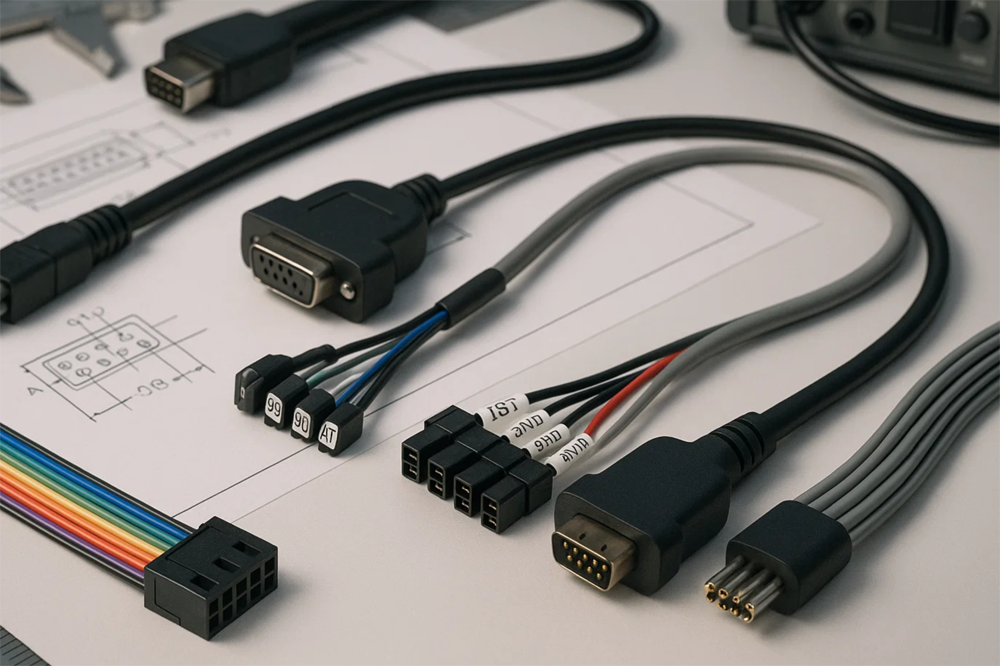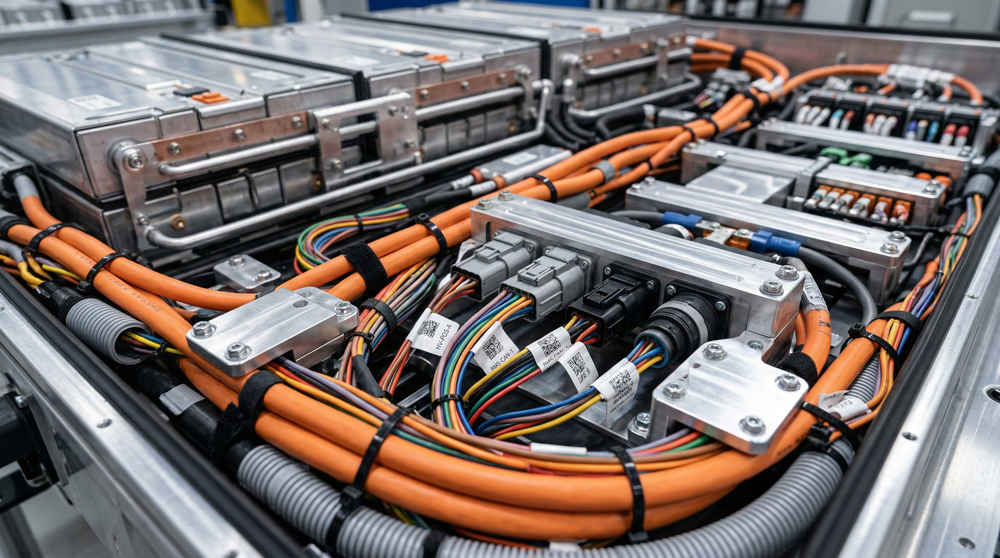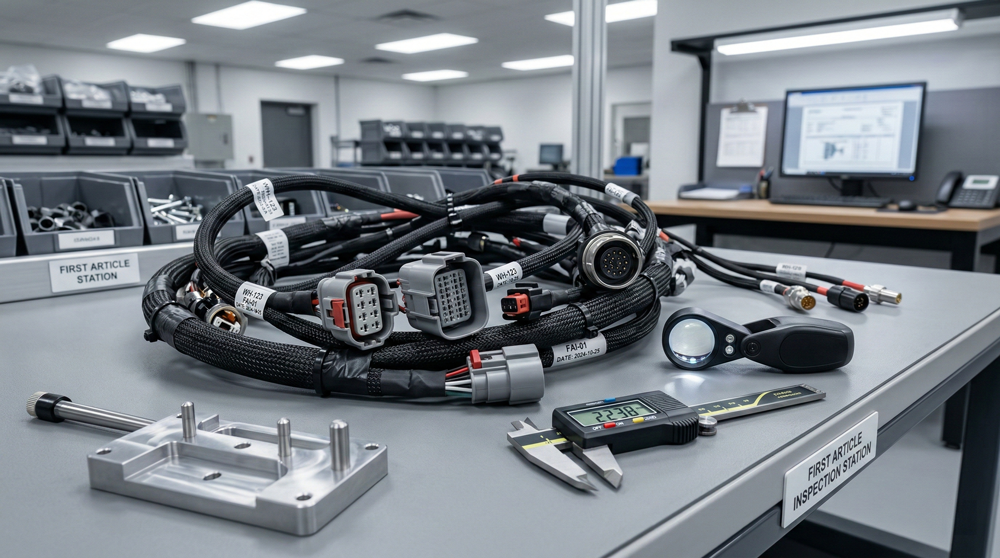
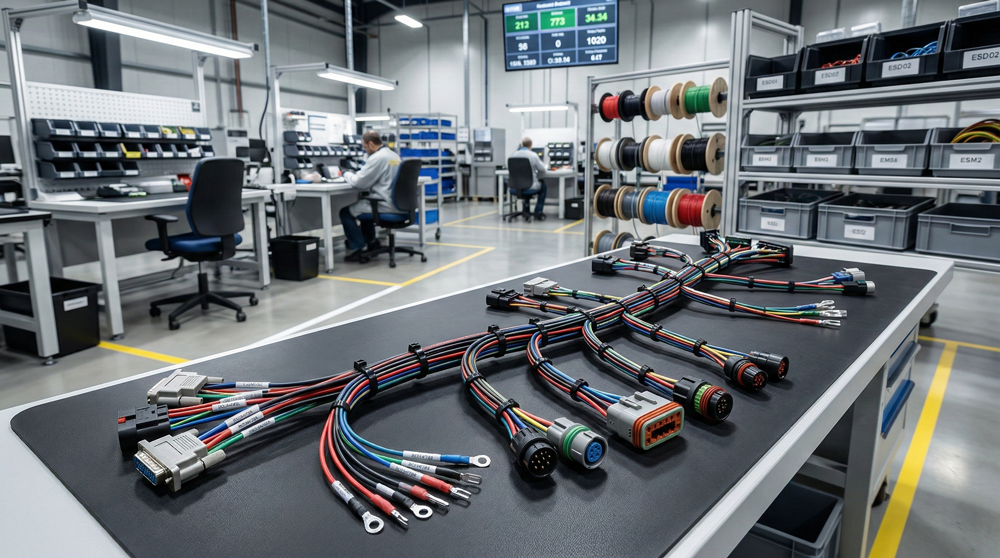
Wire harness BOM control is one of the most important stability mechanisms in any OEM or custom cable assembly project. Buyers often focus first on the visible drawing, the connector interface, or the sample quality in hand. Those things matter, but many expensive project problems do not begin at the visible layer. They begin in the BOM, where one unclear part description, one uncontrolled alternate, one poorly managed revision, or one missing approval rule quietly creates variation that surfaces later as a launch delay, a production hold, a sample mismatch, or a field-return argument.
That is why wire harness BOM control is not only a documentation function. It is a commercial control, a change-control tool, and a supplier-management discipline. A clean BOM structure reduces ambiguity during quoting, gives procurement better leverage with suppliers, supports first-article accuracy, keeps revision transitions cleaner, and lowers the probability that “equivalent” materials become hidden deviations. In practical B2B terms, BOM control reduces the cost of inconsistency.
For buyers, this becomes more important as projects become more custom, more regulated, more sealed, more multi-branch, or more dependent on specific connectors, terminal platings, wire constructions, labels, and protective materials. In those cases, the BOM is not just a shopping list. It becomes the link between design intent, sourcing reality, manufacturing execution, and traceable evidence.
This article explains how to think about BOM and part control in wire harness projects from a supplier-management and project-execution perspective. It shows what good BOM structure looks like, why part approval logic matters, how alternates should be controlled, and how BOM discipline supports smoother sampling, pilot builds, and production ramp. For the broader framework behind this series, connect this article to Wire Harness DFM and Engineering Support, where engineering support is positioned as a business value rather than a narrow technical service.
Table of Contents
ToggleWire harness BOM value
A BOM has value only when it helps the project move with less interpretation and less risk. In weak programs, the BOM exists but does not function as the real source of part-level truth. Some information sits in the drawing, some in old quotation emails, some in spreadsheets, some in purchasing notes, and some in the memory of one engineer or one account manager. That arrangement can survive early prototyping if the team is small and the project is moving informally. It becomes expensive the moment the project scales, changes, or shifts between departments.
A strong wire harness BOM reduces that fragility. It gives engineering a stable way to define material intent. It gives procurement a cleaner basis for quotation and supplier comparison. It gives manufacturing a clearer reference for what is fixed, what is approved, and what must never be substituted without review. It gives quality and traceability systems a stronger link between the shipped assembly and the parts that actually went into it.
The commercial value is not theoretical. A controlled BOM lowers the risk of unapproved material changes, supplier misunderstanding, wrong connector or terminal combinations, mismatched labels, seal-fit problems, inconsistent sleeving, and later field failures that are technically hard to diagnose because the actual build state is unclear. That is why strong BOM control belongs in project planning from the start, not as a cleanup task after samples have already been built.
Wire harness part control
Part control is the execution side of BOM discipline. The BOM may list the parts, but part control determines how those parts are approved, substituted, revised, and linked to production. In custom harness programs, part control is where many hidden problems originate. The reason is simple: a harness can still “look right” even when the wrong part was used. A similar connector housing may mate, an alternate terminal may crimp, a different wire jacket may pass continuity, and a different seal may fit just well enough to survive initial checks. The damage appears later, often after cost and credibility have already been lost.
Good part control therefore depends on more than part listing. It requires clear decisions about which parts are fully fixed, which parts are supplier-sourced but buyer-approved, which parts may have pre-approved alternates, and which parts are never to be changed without formal authorization. Those rules should be visible in the project documentation and stable enough that procurement, engineering, and manufacturing all operate from the same logic.
This is where part control becomes a business issue rather than just an engineering issue. If one team thinks a part is fixed and another thinks it is open to equivalent sourcing, the project is unstable even before production begins.
Cable assembly BOM structure
A cable assembly BOM structure should help the project scale. That means it should organize the harness in a way that supports quotation, production, traceability, and revision control without creating unnecessary complexity. A weak BOM often mixes high-risk and low-risk items without hierarchy. A stronger BOM distinguishes between critical interfaces and supporting materials, between buyer-controlled parts and supplier-managed parts, and between assembly-level identity and subcomponent-level control.
In practical terms, a strong structure often starts with the finished harness assembly as the top item, then defines the connector systems, wire items, terminals, seals, labels, protective materials, and any special accessories or hardware in a consistent part logic. The exact structure may vary by ERP or internal document format, but the principle stays the same: the BOM should make it obvious what belongs to the product, what approval logic applies to each item, and what change would trigger review.
This clarity matters because the BOM often becomes the operational truth inside the supplier’s system. If the BOM structure is weak, the internal purchasing and production teams may create their own assumptions to compensate. Once that happens, the buyer no longer controls the project through one stable material definition.
Wire harness BOM review
A wire harness BOM review should ask more than whether all the lines are filled in. It should examine whether the BOM actually protects the project from ambiguity. Reviewers should ask whether every critical part is uniquely and clearly defined, whether the part descriptions are enough to prevent misinterpretation, whether the relationship between drawing notes and BOM lines is stable, and whether the supplier can act on the BOM without needing side-channel explanation.
A good BOM review also checks for structural weaknesses. Are connectors defined without matching terminals? Are sealed connectors listed without corresponding seal logic? Are labels referenced without version logic? Are protection materials included but not linked to installation location or coverage notes? Are customer-supplied and supplier-supplied parts clearly separated? Is there any part in the build that everyone assumes exists but that is not actually controlled in the BOM?
Those questions are commercially valuable because incomplete BOM review often causes delayed clarification loops during RFQ, sample approval, or pilot release. The cost of a stronger review is small compared with the cost of finding missing or unclear parts after materials are already ordered or after a sample is already built.
Wire harness connector BOM
Connector control deserves special attention because connectors often sit at the center of fit, function, sealing, and sourcing complexity. A good connector BOM definition should make clear which housing is approved, which keying or coding variant applies, whether any accessories are required, and how that connector relates to terminal and seal selection. If those relationships are fragmented across documents, then the project is more dependent on interpretation than buyers usually realize.
The reason this matters is that connector systems rarely behave as isolated parts. Housing choice influences terminal compatibility, seal compression, insertion method, validation logic, and sometimes packaging and handling sensitivity. If the connector BOM line is incomplete or too generic, that incomplete definition propagates into several different manufacturing and quality risks at once.
That is why the best supplier partners do not treat connector lines as just another BOM entry. They treat them as a control point in manufacturability review. If the housing is defined but the terminal family is assumed, or if a cavity plug or back shell is missing from the BOM, the supplier should identify that early. This is not “extra engineering.” It is project stabilization.
Wire harness terminal control
Terminal control is one of the most important areas where BOM discipline affects reliability. A terminal is not merely a small metal part. It is the interface between the conductor, the connector system, the crimp process, and often the sealing system. Small differences in terminal geometry, plating, material, or supplier source can change crimp behavior, insertion retention, corrosion performance, and field durability.
For that reason, terminal lines should never be handled casually in a wire harness BOM. The project should clearly define whether the terminal is fixed, whether alternates are allowed, and what evidence would be required before any terminal change is accepted. If the supplier is expected to select the terminal within a connector family, then that selection logic must be visible and reviewable. Otherwise the buyer carries technical risk without realizing it.
Terminal control also connects directly to inspection and failure analysis. If a field problem appears later, it is much easier to isolate the issue when the exact terminal family, revision, and lot logic were controlled from the start.
Wire harness wire control
Wire control is often more complicated than it appears. Gauge alone is not enough. In many harness programs, the actual commercial risk lives in wire construction, insulation material, outer diameter, flexibility, color coding, shielding, and compatibility with terminals and seals. A BOM that defines only partial wire attributes may still let the supplier source a part that is technically similar enough to pass early checks, but not stable enough to support the long-term application.
This is particularly important in sealed programs, high-flex programs, and automotive or industrial environments. A different wire OD can disturb seal performance. A different strand construction can alter crimp and fatigue performance. A different insulation can change strip behavior, bend stiffness, and environmental durability. In those situations, wire BOM discipline is directly linked to warranty cost.
A good BOM review should therefore test whether each wire line actually captures the characteristics that matter to the product. If not, the supplier may unintentionally optimize for purchasing convenience rather than application reliability.
Wire harness alternate parts
Alternates are one of the areas where BOM control often becomes politically sensitive. Procurement wants flexibility. Engineering wants stability. Suppliers want continuity during shortages. All three goals are reasonable. The problem begins when alternates are not governed clearly. In that situation, everyone assumes their own logic is acceptable, and the project becomes vulnerable to hidden divergence.
A strong BOM system does not reject alternates automatically. It classifies them. Some parts may be no-alternate items because they are too critical or too tightly tied to validated performance. Some may allow specific pre-approved alternates. Some may allow supplier proposals, but only after buyer review and revalidation if necessary. The value is not in saying yes or no to alternates. The value is in preventing unstructured substitution.
This is especially important when supply pressure rises. Under time pressure, informal alternates are often rationalized as “close enough.” That is exactly when a strong BOM and part-control system earns its value. It gives the project a rule set that protects both delivery and reliability.
Wire harness approved parts
Approved parts should be treated as a controlled state, not just as a BOM entry that has existed for a while. In stronger organizations, part approval means the item has a defined relationship to the drawing, the validation baseline, the supplier’s production system, and the buyer’s change-control rules. Once approved, the part should not drift without visible and documented decision-making.
That matters commercially because “approved” is one of the most overloaded words in supplier communication. Buyers may think approval means fully frozen. Suppliers may think approval means currently accepted but still open to equivalent sourcing unless told otherwise. Engineering may think approval means technically validated but not commercially constrained. Unless those meanings are aligned, the project is still unstable.
The safest approach is to make approval status explicit in the project logic. If a part is approved but open to no changes, that should be clear. If a part is approved with controlled alternates, that should be clear. If a part is still under review or approved only for prototype stage, that should also be clear. That clarity reduces later conflict and speeds decision-making.
Wire harness BOM and revision control
BOM control and revision control should be treated as one integrated system. A revision change that does not clearly update the BOM state creates one of the most common and expensive project problems: the visible drawing changes, but the part-control reality does not change at the same speed. At that point, teams start working against different definitions of the product.
A good wire harness BOM process therefore ensures that every meaningful revision change has a corresponding BOM state and that the first lot after the change is traceable to that updated material definition. If the drawing is revised but the BOM remains functionally mixed, the project may still look organized while actually carrying significant risk of version blending.
This is where many launch problems begin. The buyer believes the project is on Rev C, but the supplier’s internal purchasing or production logic is still holding some Rev B assumptions. Pilot builds may appear acceptable while hidden material inconsistency grows beneath the surface. That is why BOM review should always include revision alignment, not just material completeness.
Wire harness BOM and drawing alignment
The BOM and the drawing should reinforce each other, not compete with each other. In weaker projects, they often drift into different roles without anyone fully defining the boundary. The drawing may imply one connector system, the BOM may list another, and engineering emails may clarify something else again. The supplier is then left to determine which document should dominate.
Strong projects avoid that by defining the relationship clearly. The drawing should communicate what needs visual and geometric clarity, while the BOM should communicate material identity and control logic. If a connector, wire, seal, label, or protective material matters to the product, the two systems should not contradict each other. During a review, any contradiction should be treated as a real project risk, not as a minor document cleanup issue.
This matters commercially because contradictory documents destroy supplier accountability. If the buyer and supplier are both working from documents that do not align, it becomes very hard to manage performance fairly or efficiently.
Wire harness BOM and procurement
Procurement benefits from BOM discipline more than many teams realize. A clean BOM improves RFQ accuracy, makes supplier assumptions more visible, supports more meaningful cost comparison, and helps buyers distinguish between real price differences and differences caused by missing or inconsistent scope.
When the BOM is weak, quotes are often not truly comparable. One supplier may include full part logic. Another may assume terminal families. Another may leave labels out of scope. Another may treat sealing parts as customer-supplied. Those quote differences often look commercial when they are actually documentation differences.
That is why procurement should be part of BOM review, especially for custom and OEM harness projects. Procurement does not need to make all the technical decisions, but it should understand enough of the BOM control logic to know where pricing risk and sourcing risk are hiding. That improves commercial leverage and reduces late-stage cost surprises.
Wire harness supplier support
Suppliers who are strong at BOM and part control usually reveal that strength early. They ask clearer questions. They identify missing material definitions faster. They point out where connector, terminal, or seal logic is incomplete. They highlight where alternates need a rule set rather than a casual note. They understand that BOM errors are not just paperwork defects; they are future production and warranty risks.
This kind of supplier support is valuable because it reduces the buyer’s coordination burden. Instead of relying on the buyer to discover every missing part definition, the supplier acts as a control partner. That is exactly the kind of engineering support that turns a supplier from a passive executor into a more strategic manufacturing partner.
It also gives the buyer a better signal during supplier selection. Strong BOM thinking is often an early indicator of stronger launch discipline later. Suppliers who are casual about BOM control are often casual about revision boundaries, change control, and evidence logic as well.
Wire harness BOM and pilot build
Pilot builds are one of the clearest moments where BOM quality is tested. At prototype stage, informal fixes and verbal clarification can still hide some weaknesses. At pilot stage, the project begins to depend on repeatable part control. Material shortages, alternate requests, revised labels, and first-article evidence all begin to interact. If the BOM is not stable enough by then, pilot outcomes become noisy and difficult to interpret.
A strong BOM process helps pilot builds produce useful learning. The team can distinguish between design risk, process risk, and material-control risk because the part baseline is more stable. A weak BOM process blurs those issues together. The supplier may not know whether a problem came from build execution or from a quiet material mismatch. The buyer then loses the main purpose of pilot, which is to generate confidence before broader release.
That is why BOM discipline should be reviewed before pilot, not after. A pilot build should test the process, not discover that the project still lacks stable part logic.
Wire harness BOM and launch
During launch, BOM discipline becomes even more valuable because the cost of confusion rises sharply. More volume means more material exposure, more packing and shipping activity, more customer handling, and more downstream consequence if the wrong part logic enters the system. At that stage, weak BOM control stops being an engineering inconvenience and becomes a business risk.
A stable launch requires that the supplier can say exactly what parts are approved, what parts changed from earlier stages, which lots reflect the current approved state, and how the evidence package connects to those facts. Buyers who invest in BOM control before launch usually save much more than they spend, because they reduce the likelihood of broad containment, mixed inventory, and repeated supplier clarification.
Conclusion
Wire harness BOM control is one of the quiet systems that determines whether a project stays stable as it scales. It supports cleaner quotation, more accurate drawing interpretation, better part approval, tighter revision control, more reliable pilot builds, and stronger launch confidence. Without it, even good engineering intent can drift into expensive variation. With it, buyers gain a much stronger basis for supplier accountability and long-term supply reliability.
That is why BOM and part control deserve more attention than they often receive. They are not back-office details. They are one of the strongest practical ways to reduce ambiguity, prevent hidden deviations, and keep custom harness projects moving with less friction and less commercial risk.
FAQ
Why is wire harness BOM control so important?
Because many project problems start with unclear material definition, uncontrolled alternates, or weak revision linkage. BOM control reduces that ambiguity before it becomes a build or field issue.
What is the difference between BOM control and drawing control?
Drawing control communicates design intent visually and dimensionally. BOM control manages material identity, approval logic, and how the actual product is sourced and built.
Should suppliers be allowed to propose alternate parts?
Yes, but only within a controlled rule set. Alternates should be classified, reviewed, and approved according to the risk they create for fit, function, reliability, and validation.
Why do connector and terminal lines need extra attention?
Because they influence manufacturability, sealing, inspection, validation, and long-term reliability. Small part differences can create large downstream effects.
When should BOM review happen?
As early as possible and again before pilot and launch. BOM issues are cheapest to fix before materials are ordered and before validation baselines are set.
CTA
If your harness project is moving from design to sourcing or from sample to pilot, a stronger BOM review can prevent a lot of avoidable confusion later. Clarifying part approval, alternates, connector logic, seal compatibility, and revision alignment early usually saves time across engineering, procurement, and production.
Contact, review Tests & Inspections, explore Custom Cable Assemblies, or see Why Choose Us.