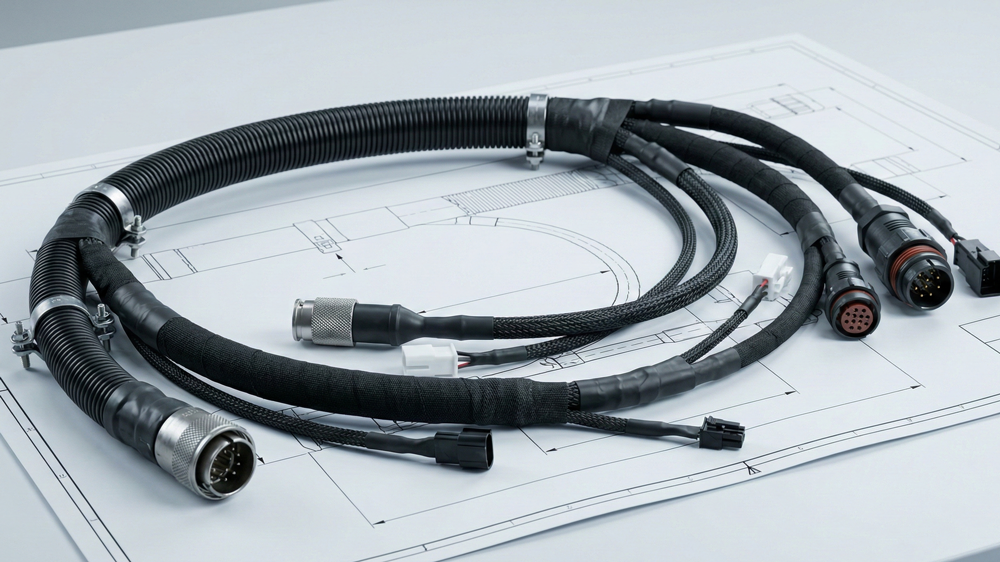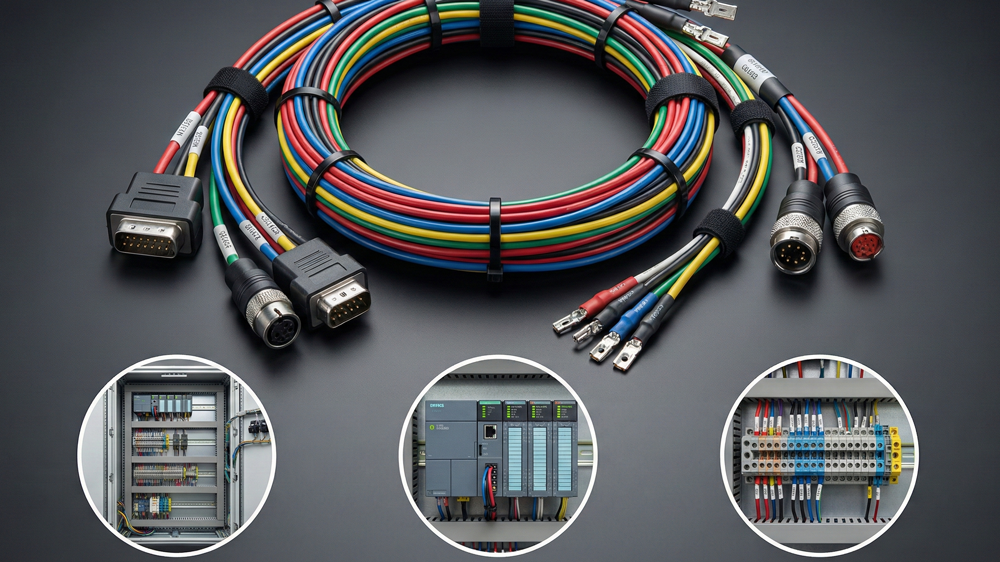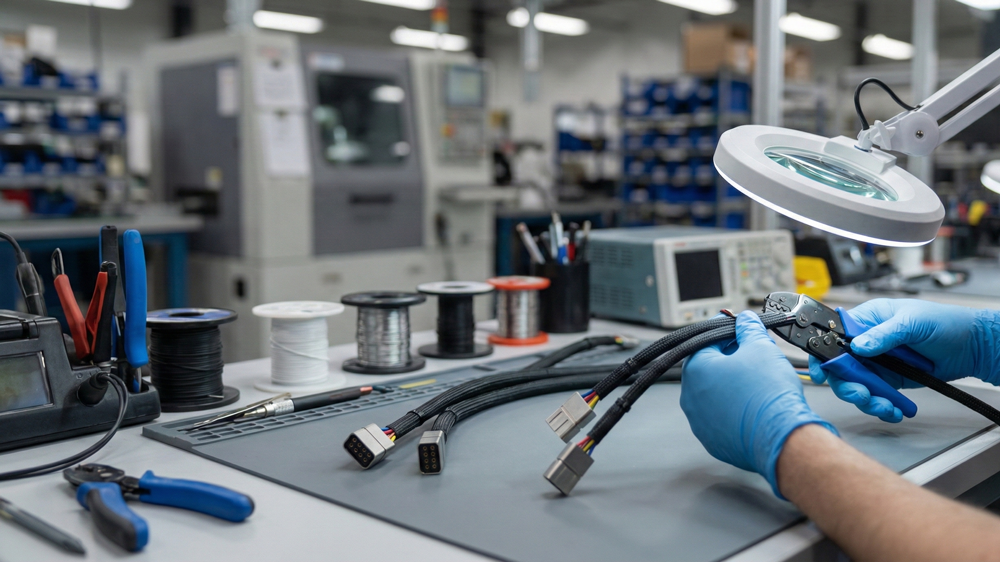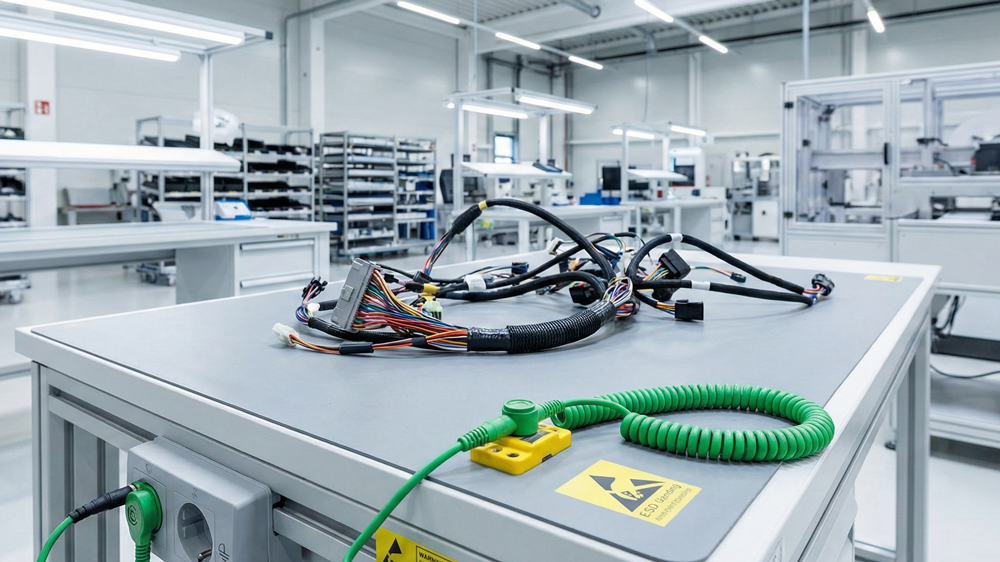
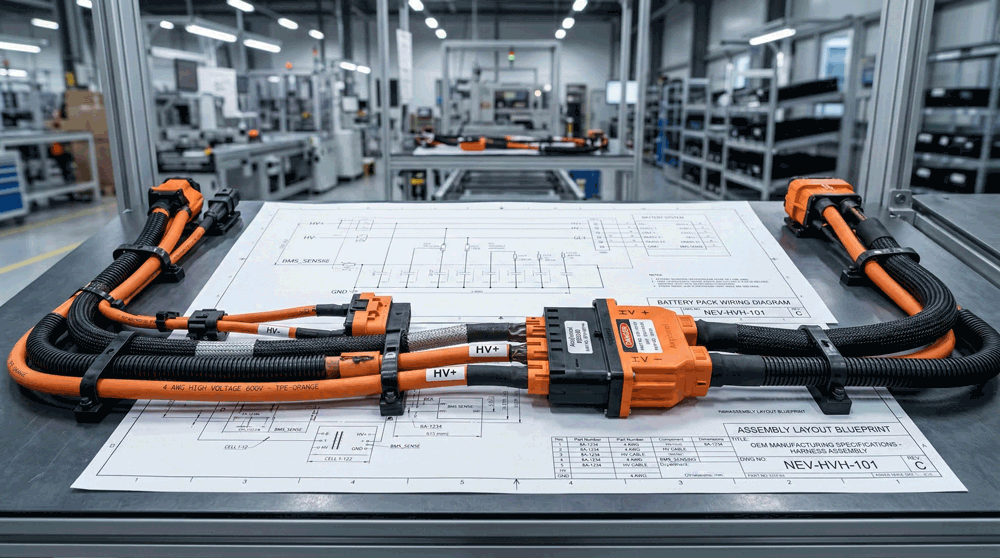
Molded cable assemblies are the right choice when the OEM project needs stronger strain relief, cleaner sealing, better handling durability, or a more integrated finished appearance than a standard connector-and-boot structure can provide. Molded cable assemblies are not automatically better for every program, but in the right application they can reduce field failures, improve usability, and make the finished product feel more controlled and more professional.
For OEM buyers, the key is knowing when molding adds real value and when it only adds cost, tooling burden, and sourcing complexity. The best decision comes from matching the molding approach to the real application, the production volume, the service model, and the long-term supply plan.
Table of Contents
ToggleWhy Molding Matters
In many cable assembly projects, the weak point is not the middle of the cable. It is the transition area where the cable exits the connector or where a user repeatedly handles the assembly. That is where bending, pulling, twisting, moisture entry, abrasion, and cosmetic wear tend to concentrate. Overmolding is often used to strengthen exactly that area.
This is why molded cable assemblies matter in OEM design. A good molding structure can improve strain relief, protect the cable exit, reduce ingress risk, improve grip, and create a cleaner external finish. In the right product, those benefits support both reliability and market presentation. In the wrong product, however, molding can become unnecessary complexity.
Start with the Use Case
The first question is not whether molded cable assemblies look better. The first question is whether the application actually needs what molding provides.
A portable outdoor device, a handheld medical product, a user-facing consumer accessory, a rugged industrial cable, or a repeatedly handled service connection may benefit strongly from molding. A static internal cable inside a protected enclosure may not. If the cable is rarely touched, well supported, and not exposed to environment or handling stress, a conventional assembly may be fully sufficient.
That is why buyers should start with a simple review. Will the cable be moved often? Will users plug and unplug it regularly? Is the connector area exposed to pull, twist, vibration, splash, or dirt? Does the product need a cleaner visible finish? Does the cable exit area need stronger support than heat shrink or a standard boot can provide? Once those answers are clear, the molding decision becomes much easier.
Improve Strain Relief
One of the strongest reasons to use molded cable assemblies is improved strain relief. In many cable failures, stress concentrates where the cable leaves the connector. Repeated bending or pull force at that point can eventually damage conductors, weaken contacts, or create intermittent faults.
A well-designed molded section helps spread that stress more gradually. Instead of a sharp transition from rigid connector body to flexible cable, the molding creates a more controlled mechanical path. That can be especially useful in handheld devices, outdoor products, automotive-related accessories, robotics tooling, and industrial assemblies where cable handling is part of normal use.
For OEM buyers, this is often the first real business case for molding. If field handling or repeated motion is likely to attack the connector exit, molding may reduce service issues enough to justify the added tooling and part complexity.
Support Sealing
Molded cable assemblies are also often used when the project needs better environmental protection around the transition area. Molding does not automatically solve every sealing challenge, but it can support a stronger barrier than a simpler transition structure when the design is done correctly.
This is especially relevant in outdoor equipment, portable devices, vehicle-related accessories, or industrial products exposed to splash, dust, washdown, or repeated handling in less controlled environments. In these applications, the connector-to-cable transition is often where moisture and contamination risk begin. A molded structure can help protect that area more effectively than tape, heat shrink, or a looser boot arrangement.
That said, buyers should still be careful. Molding only adds sealing value when the full interface design supports it. If the mating side, connector structure, or cable fit is weak, molding alone will not create a truly sealed system. It should be treated as part of the protection strategy, not the entire strategy.
Improve the Finish
Another common reason to use molded cable assemblies is appearance. In many OEM products, especially user-facing ones, the finished look of the cable assembly matters more than buyers first assume.
A molded transition usually looks more integrated than a build that relies only on visible heat shrink, exposed clamp points, or layered protection materials. That can be useful in medical devices, branded electronics, portable instruments, retail accessories, and any application where the cable is visible to the end user. A cleaner finish can improve the customer’s perception of the whole product, not just the cable.
For B2B buyers, this is not only a cosmetic point. Appearance often overlaps with product positioning, service impression, and perceived quality. If the finished product needs to feel more deliberate and more polished, molding may support that goal.
Match the Volume
Molding decisions should always be reviewed against expected production volume. This is one of the most practical commercial filters in the whole decision.
A molded cable assembly usually needs tooling investment. That cost may make excellent sense in a stable repeat-volume program, especially when the part will run for a long time and the molding adds real mechanical or visual value. In low-volume or uncertain-demand projects, however, the tooling burden may outweigh the benefit unless the application risk is high enough to justify it.
This is why OEM buyers should ask two volume questions. First, what is the expected annual volume once the project stabilizes? Second, how confident is the business that this volume will actually happen? A molded solution that looks efficient at 50,000 pieces may be hard to justify at 500. In low-volume cases, a well-designed non-molded assembly may provide a better commercial balance.
Check the Route
Cable route is another important part of the molding decision. A molded transition often becomes stiffer and larger than a simpler cable exit. In some products that is exactly what the design needs. In others, it creates packaging and bend problems.
If the cable leaves the connector and immediately enters a tight bend, a large molded section may not fit well. If the cable needs to pass through a compact housing opening, a molded body may create more assembly difficulty. If the route is open and exposed, by contrast, the molded form may improve protection and handling.
That is why buyers should always review the real product geometry before deciding. Molding is not only a mechanical strengthening feature. It is also a shape decision. The molded form has to support the actual route, not only the abstract connector area.
Think About Service
Serviceability should also be part of the decision. Molded cable assemblies can improve durability, but they can also make certain kinds of rework, inspection, or local repair less practical. Once the molded body is formed, the transition area is usually less accessible.
In many OEM products that is completely acceptable because the goal is not repair of the transition point, but long-term durability and clean finished performance. In some service-heavy projects, however, buyers should ask whether the assembly is expected to be replaced as a full part or whether local modification might ever be needed. If full replacement is the normal service model, molding is often easier to justify. If the assembly is frequently customized, revised, or reworked in small batches, a simpler non-molded structure may stay more flexible operationally.
The right answer depends on the product’s real service logic, not only on engineering preference.
Review the Tooling Risk
Tooling is one of the biggest reasons buyers hesitate on molded cable assemblies, and that hesitation is often reasonable. A molded solution adds development time, tooling cost, and often more control around revision changes.
That does not mean tooling is a problem by itself. It means tooling should be part of the sourcing decision from the beginning. The buyer should know whether the molding form is stable enough to justify a tool, whether the product is likely to change soon, whether the cable and connector combination is already well locked, and whether the supplier can support the molded design consistently once the tool is built.
Tooling risk becomes especially important in early-stage products. If the design is still changing around connector choice, cable type, exit direction, or housing geometry, then locking the assembly too early into a molded form may create expensive rework later. In those cases, many OEM teams first validate the product with a non-molded or lightly protected sample strategy, then move to molding once the design is more stable.
Compare with Simpler Options
A good molding decision usually comes from comparing molding against practical alternatives rather than evaluating it in isolation. In some cases, a boot, heat shrink, potting, clamp, or improved strain-relief method may already solve the real problem at lower cost and with more flexibility.
The buyer should therefore ask what exact problem molding is meant to solve. Is it mechanical strain? Is it sealing? Is it visual finish? Is it grip and handling? Is it all of these together? Once that is clear, it becomes easier to compare molded cable assemblies against non-molded designs with better discipline.
This is important because some projects use molding mainly because it looks premium, while others avoid it mainly because tooling feels expensive. Both reactions can be too simple. The stronger approach is to compare real lifecycle value against real alternatives.
Check the Supplier
Not every cable assembly factory is equally good at molded products. That means the supplier’s actual molding capability should be part of the selection decision, not something assumed after the commercial path is already set.
A strong supplier should be able to discuss molding not only as a process, but as part of the product’s mechanical and commercial logic. They should be able to comment on strain relief, route fit, cable-connector match, likely tooling implications, and whether molding is really adding value to the application. If the supplier can only quote the mold as an extra step without discussing the use case, the project may need closer review before moving forward.
This is one reason this article sits in the same series as How to Choose the Right Connector for Cable Assemblies, How OEM Buyers Select Cable Types for Different Applications, and How to Balance Connector Cost and Reliability. Molded cable assemblies are not just a factory process choice. They are a connector, cable, application, and supply-chain decision combined.
Use Samples First
In many OEM projects, the best way to decide on molding is to use samples and application review before locking full production tooling. A physical sample often reveals whether the assembly really needs a molded body or whether a simpler solution already performs well enough.
Sample review helps answer practical questions. Does the cable exit show too much strain without molding? Does the visible finish matter more than expected? Is the route compatible with a molded body? Does the application actually expose the transition enough to justify the added protection? Does the assembly still feel serviceable? These are much easier to judge once the cable is handled physically.
For buyers, this is often the safest path. Use early builds to confirm the need, then commit to molding when the value is clear and the design baseline is stable enough to support tooling.
Common Mistakes
One common mistake is choosing molded cable assemblies too early, before the connector, cable, and route are stable enough to justify tooling. Another is refusing molding only because of tooling cost, even when the application clearly needs stronger strain relief, sealing, or handling durability.
A third mistake is treating molding as purely cosmetic. In many applications, it is a mechanical and environmental decision first. A fourth is assuming that molding automatically solves sealing or durability problems without checking the rest of the connector and cable system. A fifth is ignoring the service model. A molded design can be excellent for full-part replacement and poor for projects that still depend on local rework flexibility.
The strongest decisions avoid all of these shortcuts and evaluate molding against the real product need.
A Practical Review Framework
A simple review framework can make the decision much easier.
| Review area | Key question |
|---|---|
| Use case | Is the cable handled, moved, exposed, or visible enough to justify molding |
| Strain relief | Does the connector exit need stronger support |
| Sealing | Does the transition area need added environmental protection |
| Finish | Does the product benefit from a cleaner integrated appearance |
| Volume | Is production volume high and stable enough to support tooling |
| Route | Will the molded body fit the real path and bend conditions |
| Service | Is the assembly replaced as a full part, not reworked locally |
| Tooling | Is the design stable enough to justify a mold |
| Supplier fit | Can the supplier support molding with real product understanding |
| Sample proof | Do physical builds show that molding adds real value |
This kind of framework keeps the decision practical and tied to the actual OEM program.
Conclusion
When to use molded cable assemblies should be decided by real product needs, not by appearance alone and not by cost fear alone. For OEM buyers, molded cable assemblies make the most sense when the application benefits from stronger strain relief, better transition protection, cleaner sealing support, improved handling durability, or a more integrated visible finish, and when the production volume and design stability are strong enough to support tooling.
When teams make this decision well, they do not just choose a different build method. They improve how the finished cable assembly performs in real use, how the product is perceived, and how the sourcing strategy supports the product over time.
FAQ
When are molded cable assemblies usually the best choice?
They are often the best choice when the project needs stronger strain relief, better transition protection, cleaner finish, or more durable handling performance.
Are molded cable assemblies always better than non-molded ones?
No. They add value in the right application, but they also add tooling cost, design rigidity, and often more package size at the transition area.
Do molded cable assemblies help with sealing?
They can help support sealing at the cable transition, but only when the full connector, cable, and interface design also support the sealing strategy.
Why is production volume important in the molding decision?
Because molded assemblies usually require tooling, and the commercial return on that tooling depends heavily on whether the program volume is high and stable enough.
Should buyers validate molding with samples first?
Yes, in many projects. Early samples often help confirm whether molding solves a real problem before full tooling is committed.
CTA
If you are deciding whether to use molded cable assemblies in a new OEM project, the best first step is to review the real strain points, handling conditions, route geometry, and expected volume before committing to tooling or rejecting molding too early.
You can send your drawings, route photos, connector and cable details, annual demand, and sourcing questions through Contact. Our team can help review whether molding adds real value to your cable assembly before the design is frozen.