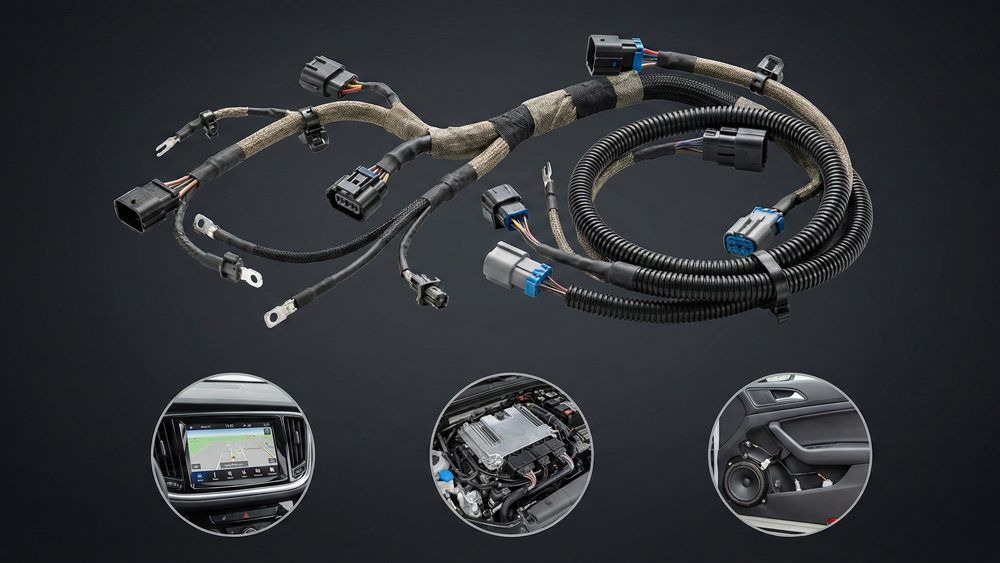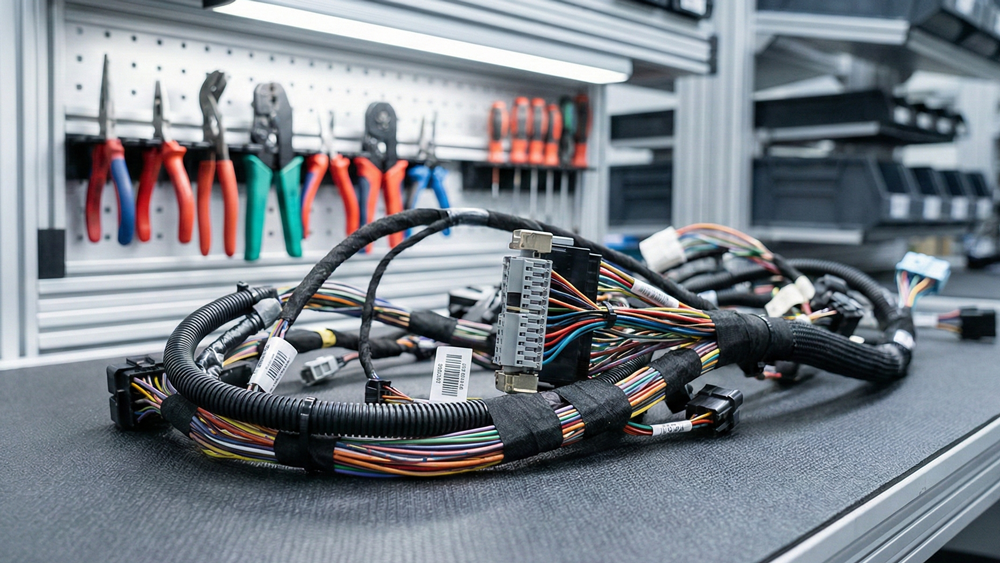
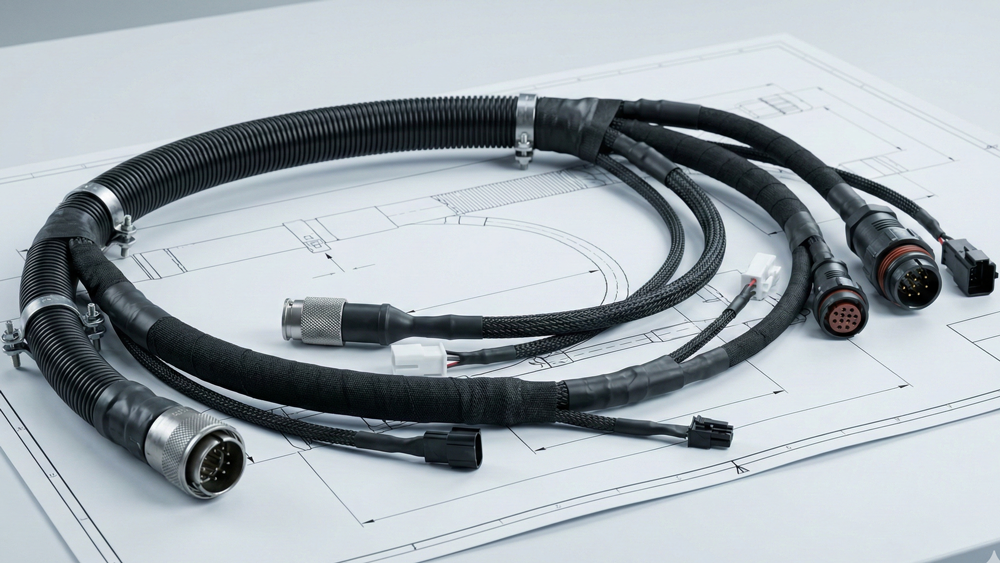
Waterproof cable assemblies are often treated as a connector selection problem, but real field reliability depends on a much larger design package. A cable assembly can use a connector labeled “waterproof” and still fail in service because the weak point is actually the cable exit, sealing interface, overmold geometry, installation strain, or test criteria.
This waterproof cable assemblies design guide for OEM buyers explains how to evaluate waterproof cable assemblies from a system perspective. It is written for engineering, sourcing, and product teams that need a practical way to define requirements, compare suppliers, and reduce rework during sampling and production.
If your project needs a custom build, you can align this guide with your Custom Cable Assemblies sourcing process and Overmolding Services planning early.
Table of Contents
ToggleWhy Waterproof Cable Assembly Design Is a System-Level Decision
In many OEM projects, “waterproof” is written as a short note in the RFQ, but the actual risk is spread across multiple design details. Waterproof performance depends on how the connector seals, how the cable jacket interacts with the seal, how the cable exits the assembly, how strain is managed, and how the assembly is tested after production.
This is why waterproof cable assembly design should be treated as a system-level decision, not a single component decision. A strong connector cannot compensate for weak sealing at the cable transition, poor overmold design, or inconsistent assembly process control.
For OEM buyers, the most reliable approach is to define waterproof requirements together with application environment, cable construction, sealing method, and validation criteria.
Waterproof Cable Assemblies and Real Application Environments
The first design question is not “Do we need IP67 or IP68?” The first question is: what does the real environment look like?
Waterproof cable assemblies used in industrial equipment, outdoor devices, robotics, or sensors may face very different conditions, including intermittent splashing, washdown exposure, temporary immersion, long-term moisture, dirt ingress, oil contamination, temperature cycling, vibration, and cable movement during operation.
A design that passes a basic ingress test in a controlled setup may still fail in the field if the real environment includes bending, tensile load, repeated mating cycles, or contamination at the sealing interface. This is why environment mapping should come before connector selection.
If your product is used in automation equipment, your Industrial & Robotics application context can help frame the waterproof and durability discussion with suppliers.
IP Ratings for Waterproof Cable Assemblies
IP ratings are important, but they are frequently misunderstood in sourcing discussions. An IP rating describes performance under defined test conditions. It does not automatically guarantee field reliability across all installation conditions and usage patterns.
For OEM buyers, IP ratings should be treated as part of the specification, not the entire specification. The same IP target can be achieved with different connector and sealing structures, and those structures can behave very differently under vibration, repeated flexing, or temperature change.
In practice, teams should define:
- the target IP rating,
- where the sealing boundary is located,
- whether the rating applies only to the connector interface or to the complete cable assembly,
- whether the assembly is tested mated, unmated, or both (if relevant to the product).
We will break down rating differences in the companion article IP67 vs IP68 for Waterproof Cable Assemblies.
Waterproof Connector Selection for Cable Assemblies
Waterproof connector selection is a major part of the design, but it should be evaluated together with the cable assembly structure. A connector that is excellent in one product may be a poor fit in another if the mating frequency, installation access, cable diameter, or serviceability needs are different.
When evaluating a waterproof connector for cable assemblies, OEM teams should review not only the rating claim, but also the sealing geometry, locking method, tolerance sensitivity, material compatibility, and assembly repeatability. In many projects, the connector decision directly affects production yield and long-term field reliability.
Connector selection should also be coordinated with the intended cable jacket material, cable OD range, and sealing hardware. If these are mismatched, the seal can become unstable even when all individual parts are “correct” on paper.
We will go deeper in Waterproof Connector Selection for Cable Assemblies.
Cable Jacket and Material Compatibility for Waterproof Sealing
A waterproof seal is only as reliable as the surfaces and materials it seals against. OEM teams sometimes focus on connector ratings and overlook cable jacket material compatibility, but this can become the root cause of leakage, seal creep, or long-term reliability issues.
Cable jacket hardness, surface finish, dimensional tolerance, and chemical exposure can all affect sealing consistency. If the cable OD is not controlled tightly enough for the sealing structure, the assembly may pass some samples and fail later in production. If the jacket material reacts poorly to oil, cleaning chemicals, UV exposure, or heat, the seal can degrade over time.
This is one reason custom waterproof cable assembly projects should define cable material and dimensional assumptions early in the RFQ, instead of leaving them open for supplier substitution.
For buyer-side process alignment, your Strong Technical Support and Quality Guarantee pages can help establish expectations before sample approval.
Overmolding and Sealing Methods for Waterproof Cable Assemblies
In many products, waterproof performance depends on more than the connector interface. The cable exit and transition area are common failure points, especially when the assembly experiences vibration, pull force, bending, or repeated handling.
This is where overmolding and sealing methods matter. Depending on the design, waterproof cable assemblies may use overmolding, gaskets, O-rings, seal boots, potting, heat-shrink sealing, or multi-layer sealing combinations. The right method depends on the target environment, assembly geometry, cost target, and service requirements.
A method that is low-cost and fast to assemble may be acceptable for light-duty exposure, while harsher environments often require stronger mechanical protection and tighter process control. For OEM teams, the key is to choose sealing methods that are not only effective in testing, but also repeatable in production.
We will compare methods in Overmolding and Sealing Methods for Waterproof Cable Assemblies. If your product relies on molded transitions, also review Overmolding Services early in the design phase.
Strain Relief and Cable Exit Design in Waterproof Cable Assemblies
Many waterproof cable assembly leaks start as mechanical problems. If the cable exit area is bent too sharply, pulled repeatedly, or unsupported during installation, seal performance can degrade even when the initial build passed validation.
That is why strain relief and cable exit design should be included in the waterproof design review. The goal is not only to seal the assembly at day one, but to maintain seal integrity after installation, movement, and service conditions.
OEM buyers should ask how the design handles:
- bend radius near the seal,
- pull force during installation,
- vibration or motion cycles,
- cable routing constraints,
- repeated mating/unmating (if applicable).
This is also where supplier process capability matters. A supplier with strong Assembly Capabilities can usually explain how strain relief design and sealing consistency are controlled during production.
Waterproof Cable Assembly Testing and Validation for OEM Buyers
Testing is where waterproof requirements become real. A cable assembly that “looks sealed” is not the same as a cable assembly that has been validated under application-relevant conditions.
For OEM buyers, waterproof cable assembly validation should include more than a single ingress claim. The test plan should reflect the product environment, sealing boundary, cable movement conditions, and acceptance criteria used for sample approval and production inspection.
A practical validation approach may include ingress testing, visual inspection, mechanical checks, and application-level stress conditions depending on the product. The right mix depends on risk level, product use, and compliance needs.
For supplier qualification and production consistency, align the test plan with your Tests & Inspections and Quality Guarantee requirements. We will expand this topic in Waterproof Cable Testing Guide for OEM Buyers.
Common Waterproof Cable Assembly Design Mistakes
A common mistake is specifying only an IP rating and assuming the supplier will infer the rest. Another is choosing a waterproof connector before defining the real environment, cable movement, or service access constraints.
Some OEM teams also validate sealing only in a static bench setup while the actual product sees vibration, bending, or repeated handling. In those cases, the assembly may pass early tests but fail in field use because the weakest point was not tested under realistic conditions.
Another costly mistake is allowing uncontrolled substitutions in cable jacket material, sealing hardware, or overmold geometry after sample approval. Small changes in these areas can change waterproof performance significantly.
The safest approach is to define the sealing concept, material assumptions, and validation method clearly in the RFQ and drawing package.
OEM RFQ Checklist for Waterproof Cable Assemblies
OEM buyers can reduce risk dramatically by writing a clearer RFQ for waterproof cable assemblies. Do not stop at “waterproof cable assembly” and an IP number. Include the design intent and validation assumptions.
A practical RFQ should define:
- target IP rating and test condition intent,
- sealing boundary (connector only vs complete assembly),
- connector type or approved alternatives,
- cable jacket material and OD range assumptions,
- sealing / overmolding method expectations,
- strain relief and cable exit constraints,
- environmental exposure (water, dust, oil, chemicals, UV, temperature),
- mating cycle expectations (if relevant),
- validation and inspection requirements,
- any known field risks or failure history.
If your team already has samples or drawings, adding photos of the sealing transition area can improve supplier quote quality and reduce misinterpretation.
How OEM Buyers Compare Waterproof Cable Assembly Suppliers
Supplier comparison should go beyond price and IP claims. Two suppliers may quote similar materials but deliver different field reliability because their tooling, process controls, sealing methods, and inspection standards are different.
When comparing suppliers, OEM teams should evaluate:
- experience with similar waterproof applications,
- process control for sealing and overmolding,
- dimensional control at seal interfaces,
- test documentation quality,
- sample consistency across multiple builds,
- ability to support design iteration before release.
Your Custom Cable Assemblies, Assembly Capabilities, and Tests & Inspections pages are useful internal references when aligning engineering and sourcing criteria.
Conclusion
Waterproof cable assemblies are not defined by connector labels alone. Reliable field performance comes from a complete design package that includes environment mapping, connector selection, cable material compatibility, sealing method, strain relief, and validation planning.
For OEM buyers, the best results come from specifying waterproof requirements as a system, not as a single rating. When design intent and test criteria are clear, supplier comparison improves, sample approval becomes faster, and production risk goes down.
FAQ
Is a waterproof connector enough to make a cable assembly waterproof
Not always. The connector is only one part of the sealing path. The cable exit, overmold or sealing method, cable jacket compatibility, and assembly process quality can all affect waterproof performance.
What should OEM buyers define besides IP67 or IP68
In addition to the IP target, define the sealing boundary, connector assumptions, cable OD and jacket material, sealing method, environmental exposure, mechanical stress conditions, and validation requirements.
Why can a cable assembly pass an IP test but still fail in the field
Because field conditions may include vibration, bending, pull force, contamination, temperature cycling, or repeated handling that were not represented in the original test setup. Waterproof reliability depends on both sealing and mechanical design.
Is overmolding always required for waterproof cable assemblies
No. Some products can meet requirements with connector seals and simpler sealing structures. However, overmolding is often used to improve sealing stability, strain relief, and durability in tougher environments.
What should be included in a waterproof cable assembly RFQ
At minimum, include the IP target, sealing boundary, connector and cable assumptions, sealing method expectations, environmental conditions, mechanical constraints, and testing/inspection criteria.
CTA
Need Help Defining a Waterproof Cable Assembly for an OEM Project
If your team is preparing an RFQ or evaluating samples for a waterproof cable assembly, we can help review the design before production release.
We can support:
- waterproof connector and cable matching review,
- sealing and overmolding method review,
- strain relief and cable exit risk review,
- OEM validation and inspection planning,
- sample optimization before mass production.
If you already have drawings, connector part numbers, or sample photos, contact us through our Contact page. You can also review our Custom Cable Assemblies, Overmolding Services, and Tests & Inspections pages before starting the discussion.