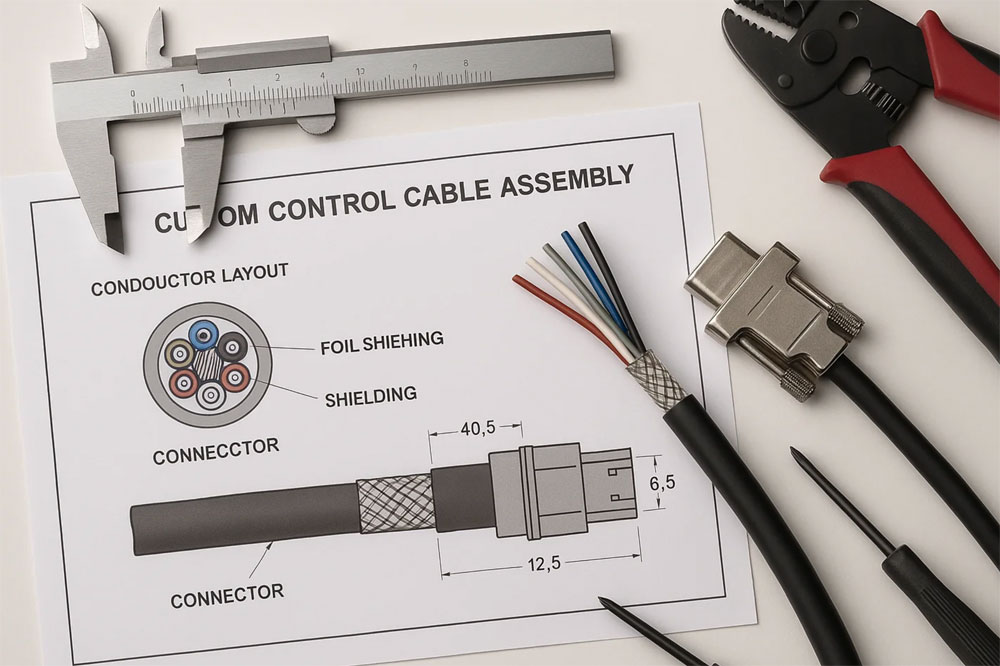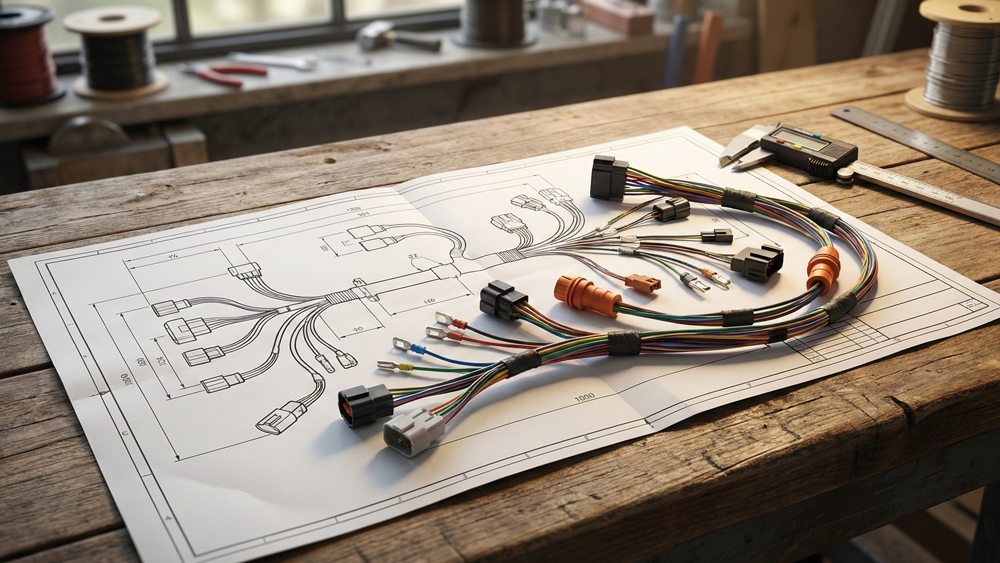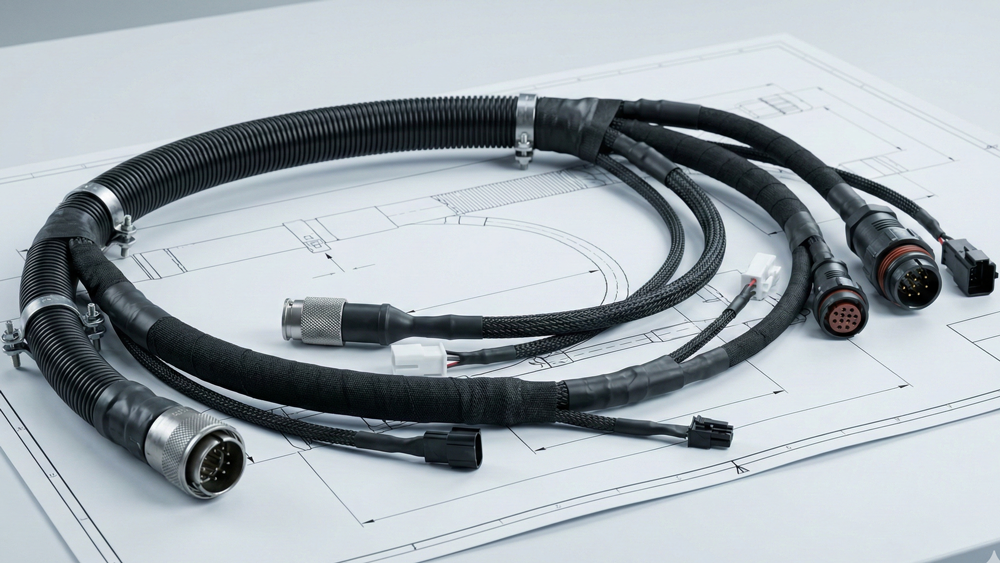

This total cost guide for custom cable assemblies helps procurement and engineering teams make sourcing decisions that reduce total cost of ownership (TCO), not just unit price. In cable assemblies, a low quote can be expensive if it creates engineering churn, rework, delayed launches, or field failures. The real cost shows up later—in schedule slips, emergency freight, line stops, warranty claims, and the internal time spent managing supplier ambiguity.
A buyer’s job is to convert a cable assembly quote into a predictable supply outcome: the right product, delivered on time, with evidence that reduces risk. This article lays out the cost structure behind custom cable assemblies and the levers you can use to reduce total cost without sacrificing reliability.
Table of Contents
ToggleWhy unit price is a misleading decision metric
Unit price is a snapshot. Total cost is a system. Two suppliers can quote the same harness with a 10–20% unit-price difference, yet the higher-priced supplier may deliver a lower total program cost if they reduce RFQ cycles, prevent revision drift, shorten ramp, and minimize rework.
Total cost in cable assemblies typically includes:
the quoted unit price, non-recurring engineering (NRE) costs, tooling and setup costs, test and validation costs, quality management overhead, freight and packaging costs, inventory carrying cost, and the cost of failures (scrap, rework, downtime, returns, and warranty).
If you measure only unit price, you will systematically select suppliers who are optimized for quoting, not for stable delivery.
To align scope early and reduce ambiguity that drives downstream cost, anchor your RFQ language to build categories like Cable Assemblies and Custom Cable Assemblies.
Total cost model for wiring harness sourcing
A useful TCO model separates cost into three layers: build cost, program cost, and risk cost.
Build cost includes materials, labor, test time, scrap rate, and packaging. Program cost includes engineering support, documentation, change control management, pilot builds, and ongoing supplier management. Risk cost includes the expected value of delays and failures.
Procurement teams can control build cost partially, but they can control program cost and risk cost heavily through how they define requirements, how they qualify suppliers, and how they enforce evidence and change discipline.
If you just completed a supplier qualification cycle, the strongest upstream cost-reduction lever is actually qualification discipline. A supplier who is audit-ready and change-controlled reduces the hidden costs that dominate TCO. If needed, connect this TCO thinking to your qualification framework using Supplier Qualification Guide for Cable Assemblies.
The main cost drivers in custom cable assemblies
Cost drivers are not mysterious; they are predictable. What matters is whether suppliers disclose them clearly and whether buyers control them intentionally.
Material complexity is one of the biggest drivers. Connector families, terminal types, seal requirements, wire construction, shielding, and overmold materials can dominate cost. Supplier access to authorized components and their ability to manage alternates responsibly affects both price and risk.
Labor and process time matter because cable assembly labor is still highly influenced by manual operations: cutting, stripping, crimping, insertion, labeling, bundling, and packaging. Designs that reduce touch labor—without reducing reliability—are often the fastest route to total cost reduction.
Test and verification time is a real cost. The question is whether it reduces risk enough to lower total cost. For high-liability products, disciplined verification often reduces cost by preventing failures rather than increasing cost.
Yield and rework rate is the hidden multiplier. A small increase in scrap or rework can destroy the savings of a slightly lower unit price. When buyers evaluate suppliers, they should ask not only “what is the price,” but “what evidence proves stable yield and stable processes.”
The next article in this series, Cost Drivers Guide for Cable Assemblies, breaks these drivers into practical levers and what to ask suppliers to confirm.
Lead time as a cost variable
Lead time is not just schedule. Lead time is cost because long lead times increase inventory, reduce flexibility, and create premium freight and expediting when plans change.
In cable assemblies, lead time is driven by component availability, tooling readiness, setup capacity, test capacity, and documentation completeness. A buyer can reduce lead time variance significantly by reducing ambiguity and enforcing evidence discipline.
When suppliers support quick-turn programs, the buyer should verify that speed does not come from cutting verification steps. The goal is fast and controlled, not fast and fragile.
To turn lead time into a planned variable rather than a surprise, use the companion Lead Time Planning Guide for Cable Assemblies. It is designed to help buyers translate schedules into realistic sourcing plans.
NRE, tooling, and “setup economics”
Some suppliers hide real costs in NRE; others hide it in unit price. Either way, buyers need to understand the setup economics.
Custom cable assemblies often require: applicator setup, crimp tooling, insertion tools, test fixtures, labeling setup, and in some cases overmold tooling. Even when tooling is minimal, setup time is real, and suppliers will price it somewhere.
The right question is not “do we pay NRE,” but “how does NRE reduce unit cost and reduce risk over time.” For example, investing in a stable test fixture can reduce false failures and reduce rework. Investing in documented setup verification reduces drift and reduces warranty exposure.
If your design includes overmolding, align requirements early with Overmolding Services because mold design and material choice can affect both lead time and validation cost.
Quality evidence reduces cost when it is standardized
Quality can look like overhead, but audit-ready evidence often reduces total cost by shrinking failure loops.
When a shipment arrives with a clear evidence pack, incoming acceptance is faster, disputes are shorter, and containment is cheaper if an issue is found. Without evidence, buyers either slow down acceptance or accept risk blindly. Both outcomes cost money.
If you want suppliers to deliver quality evidence consistently, define it as a deliverable. A standardized approach is described in Quality Evidence Pack Guide. Evidence discipline also increases supplier accountability because performance becomes measurable.
If your program is sensitive to termination reliability, your evidence discipline should connect to stable termination validation methods, including Pull Force Test Guide for Cable Assemblies and Contact Resistance Testing Guide.
Change control prevents silent cost escalation
Uncontrolled change creates hidden costs: mixed revisions, unexpected substitutions, and late-stage revalidation. Those costs show up as schedule slips, rework, and internal firefighting.
A buyer-friendly cost model treats change control as a cost control system. When ECO discipline is clear, the program becomes more predictable, and the total cost drops—even if unit price is slightly higher.
To standardize change control requirements in your supplier agreements, use Cable Assembly Change Control and ECO Guide.
MOQ and forecast strategy as a pricing lever
Minimum order quantities (MOQ) and forecast alignment influence both price and lead time. If you force suppliers to buy components in small, frequent lots, you pay for it through higher unit cost and longer lead times. If you lock forecasts with reasonable flexibility, suppliers can plan materials, optimize labor, and reduce premium freight.
The goal is not to lock yourself into rigid commitments. The goal is to reduce chaos. Chaos is expensive, and it is paid for either in unit price or in late delivery.
The next supporting article MOQ and Forecast Strategy Guide for Cable Assemblies will provide practical playbooks for balancing flexibility with cost control.
Packaging and logistics are not afterthoughts
Packaging and logistics costs are often treated as “shipping department” details, but they are a real part of TCO. Poor packaging creates transit damage, bent terminals, contamination, and return loops. Poor logistics planning creates expediting and premium freight.
Packaging should be specified in a way that protects the product and reduces handling risk. Logistics should be planned around your launch schedule and inventory model. When these are defined early, total cost drops.
For a structured approach, use Packaging and Logistics Cost Guide for Cable Assemblies.
Practical questions to ask suppliers to estimate true total cost
Procurement teams can uncover hidden cost risk by asking a few high-leverage questions:
What assumptions are embedded in the quote, and where do those assumptions appear in the traveler and evidence pack? What is the supplier’s typical yield and rework rate on similar builds, and what controls keep it stable? What verification steps are included in the quote, and what method details are recorded? What change types require approval, and what revalidation triggers exist? What is the lead time model, and what are the long poles? What packaging method prevents transit damage, and what failures have been seen before?
These questions shift the conversation from “price negotiation” to “risk and predictability,” which is where real TCO advantage is created.
Conclusion
Total cost in custom cable assemblies is the combination of build cost, program cost, and risk cost. The supplier that wins on TCO is rarely the supplier with the lowest unit price. It is the supplier who reduces ambiguity, delivers audit-ready evidence, controls change, and stabilizes lead time—so your program runs with less firefighting and fewer surprises.
If you want a partner that sells predictability, not promises, connect your sourcing approach to disciplined execution and clear evidence deliverables. That’s how you reduce total cost and build long-term supplier leverage.
FAQ
Why does a low unit price often lead to a higher total cost?
Because hidden costs—rework, delays, premium freight, engineering time, and warranty exposure—can exceed the savings from the quoted unit price.
What is the biggest controllable lever to reduce total cost?
Reducing ambiguity and enforcing evidence. Clear RFQ inputs, audit-ready records, and change control prevent expensive failure loops.
How should buyers treat NRE and tooling costs?
As investments that can reduce unit cost and reduce risk over time. Ask how tooling and fixtures improve process stability and evidence quality.
How do lead time and total cost interact?
Long lead times increase inventory cost and expediting risk. Lead time variance often creates premium freight and launch delays.
What should procurement request with each shipment to lower total cost?
An evidence pack tied to traceability and method-defined test records, so acceptance and containment are faster and disputes are shorter.
CTA
If you want to reduce total cost on your harness program, share your connector families, annual volumes, target lead times, and risk constraints. We can recommend a sourcing plan that balances price, lead time, evidence requirements, and change control for OEM/ODM production.
- Discuss your program: Contact
- Why buyers select us: Why Choose Us
- Verification scope reference: Tests & Inspections
- Explore scope: Cable Assemblies and Custom Cable Assemblies