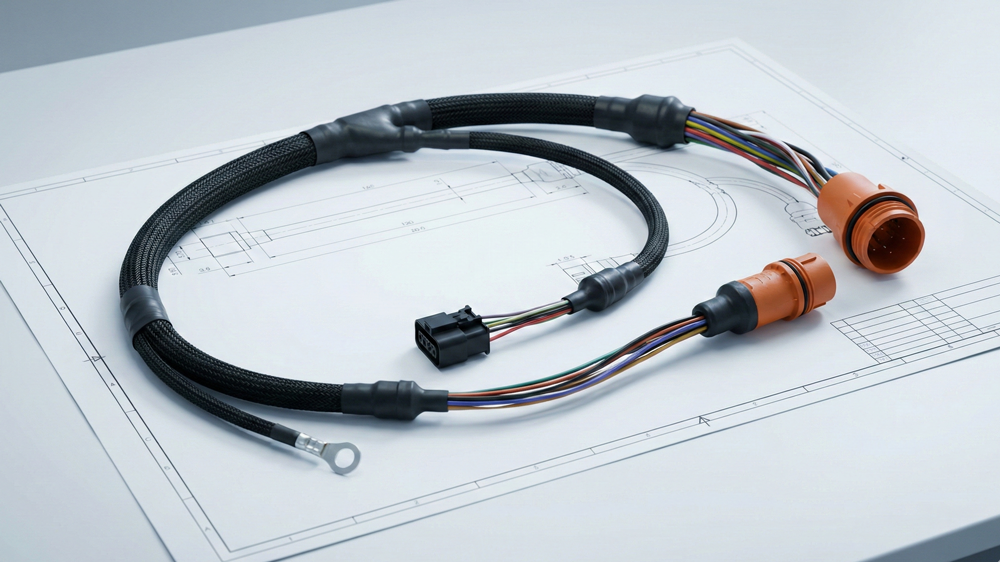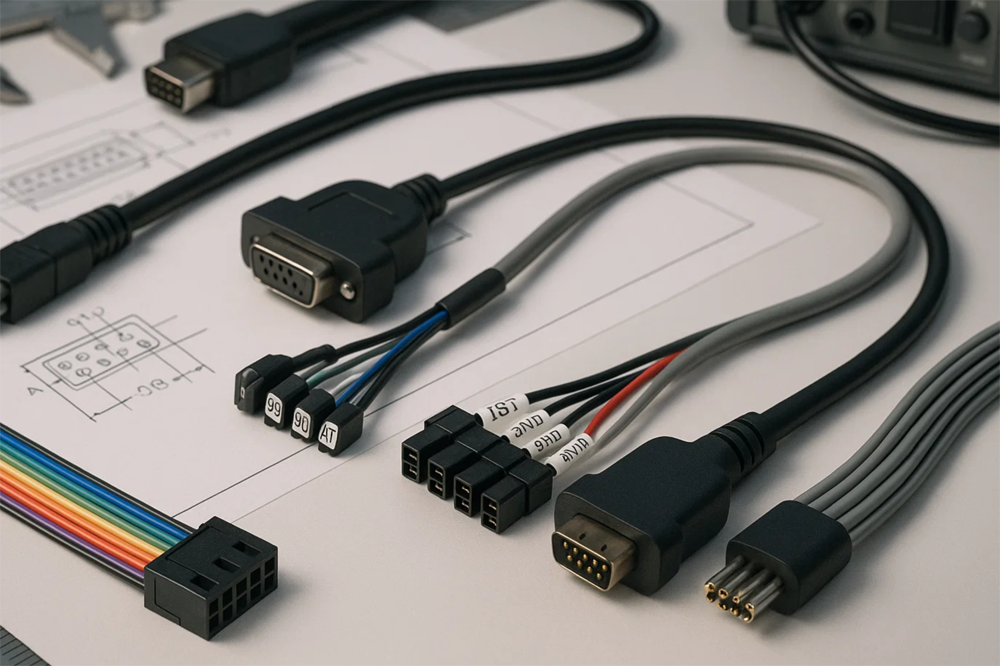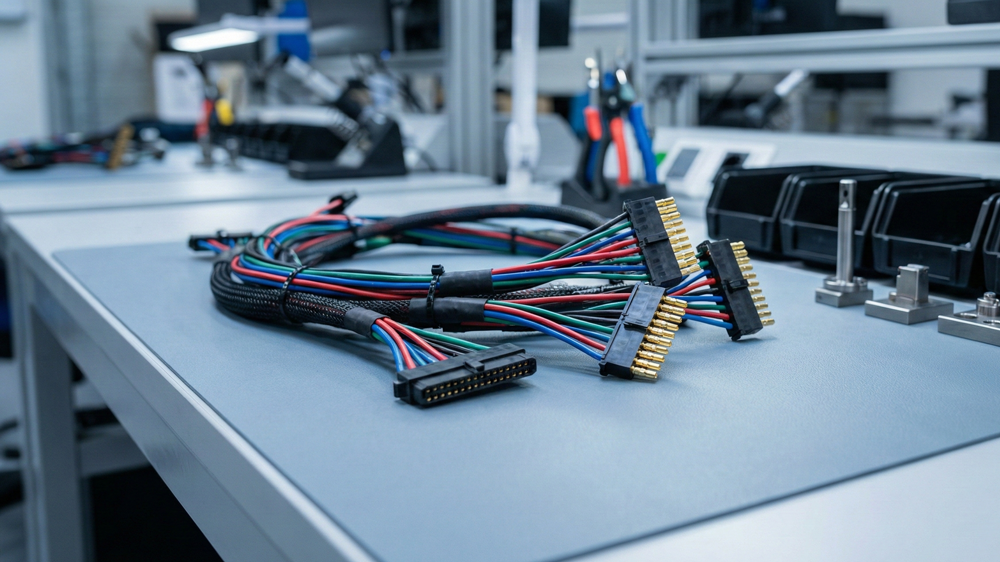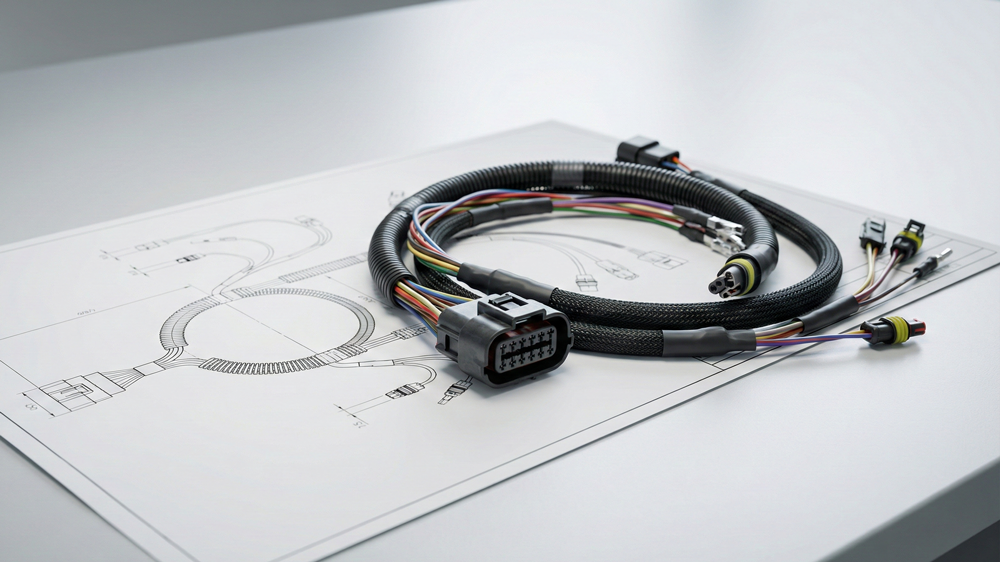
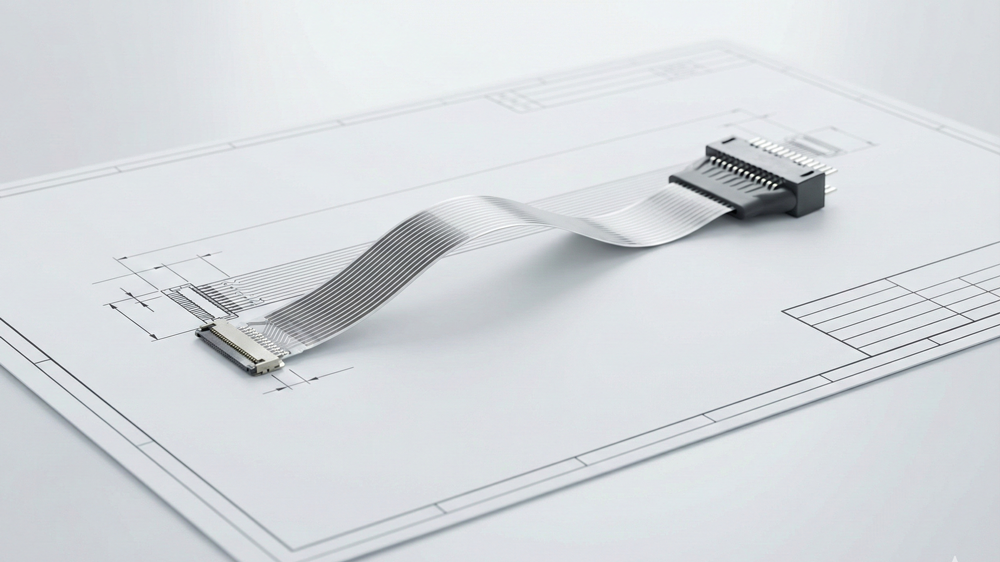
Strain relief design for high flex cable assemblies is one of the most important and most overlooked factors in dynamic cable reliability. In many OEM projects, the cable itself is selected carefully, the connector interface is correct, and the assembly passes initial functional checks. But after repeated movement, failures begin near the connector end, overmold edge, or clamp point. The cable may appear to be the problem, yet the root cause is often poor strain relief design and uncontrolled stress transition.
This happens because dynamic cable assemblies do not fail only from bending in the middle of the cable run. They often fail at stiffness transitions where the flexible cable body meets a much stiffer termination region. If motion is forced into that small transition area, conductor fatigue, shield damage, insulation cracking, or intermittent electrical faults can develop much earlier than expected.
For OEM buyers, strain relief should not be treated as a cosmetic feature or an optional add-on. It is a structural design function that directly affects bend radius control, flex life, routing stability, and repeatability in production.
This article explains how OEM buyers can evaluate strain relief design for high flex cable assemblies from a system perspective. It is written for engineering, sourcing, and quality teams that need practical design-review and validation rules before approving samples and releasing production.
For the broader framework, pair this article with our High Flex Cable Assemblies Design Guide for OEM Buyers, Drag Chain Cable Selection for Cable Assemblies, and Bend Radius and Flex Life for Cable Assemblies. For project support, your Custom Cable Assemblies and Strong Technical Support pages are useful internal entry points.
Table of Contents
ToggleWhy Strain Relief Fails in High Flex Cable Assemblies
A common misconception is that strain relief only needs to prevent pull-out. In static applications, that may be enough. In high flex applications, strain relief must do much more: it must control how the cable bends, where the cable bends, and how stress is distributed over repeated motion cycles.
Many failures happen because the strain relief is too short, too stiff, poorly positioned, or not aligned with the actual bend direction. In those cases, the assembly may look robust in a visual inspection, but it creates a sharp mechanical transition. Repeated motion then concentrates stress at one narrow location near the connector or overmold edge.
For OEM buyers, this is why a “strong-looking” overmold is not automatically a good strain relief solution. If the geometry forces the cable to bend immediately at the edge of a rigid section, flex life can be worse than a simpler but better-shaped design.
Strain Relief as Stress Path Design
The most useful way to think about strain relief is not as a part, but as a stress path design. Its job is to shape the transition from the flexible cable body to the rigid connector region so that bending and movement occur in a controlled zone.
In dynamic applications, the cable will always bend somewhere. If the design does not intentionally define the bend zone, the system will define it for you, usually at the weakest or stiffest transition. That is where early failures begin.
A good strain relief design helps:
- move bending away from the termination interface
- spread stress over a longer transition length
- guide the cable toward the intended bend direction
- reduce local kinking and sharp radius formation
- improve repeatability of installed routing behavior
For OEM teams, this concept is important because it shifts the design review from “Does it have strain relief?” to “Where is the bending intended to occur, and is that zone controlled?”
Cable Body to Connector Transition Is the Critical Zone
In most high flex cable assemblies, the highest risk area is the transition between the cable body and the connector termination region. This is where stiffness changes abruptly, and abrupt stiffness changes create stress concentration under repeated motion.
The transition may include:
- exposed cable jacket section
- termination support structure
- overmold or boot
- connector rear exit
- clamp or fixture near the connector
- immediate routing change after the connector
If any of these elements force a short or sharp bend, the cable assembly may fail even when the cable itself is appropriate for high flex use. Conductors can fatigue, shields can break or loosen, and intermittent signal issues can appear before a visible external defect is obvious.
For OEM buyers, the key design review question is: Does the transition create a controlled gradual bend, or a forced sharp bend at one point?
Strain Relief and Bend Radius Control
Strain relief design and bend radius are tightly linked. A strain relief may appear protective, but if it shortens the available free bend length or creates a rigid edge, it can actually reduce the effective bend radius in the most critical area.
This is a common failure pattern in high flex projects:
- the selected cable has acceptable bend capability
- the routing path looks acceptable in CAD
- the strain relief or overmold adds local stiffness
- the first bend occurs too close to the rigid edge
- the effective bend radius becomes much smaller than intended
OEM teams should evaluate bend radius at the actual first moving bend zone, not only in the cable run. In many cases, the strain relief design determines the real bend radius more than the cable specification does.
For deeper context, see Bend Radius and Flex Life for Cable Assemblies.
Strain Relief Direction Must Match Motion Direction
A strain relief can be well made but still poorly matched to the application if its stiffness and geometry do not align with the real motion direction.
High flex cable assemblies do not all move the same way. Some bend in a single plane. Others bend in alternating directions. Some see drag chain motion. Others see vibration plus occasional handling. If the strain relief geometry was designed for one motion pattern but the machine applies another, stress may still concentrate near the termination.
For OEM buyers, this means strain relief review should include:
- dominant bend direction
- whether movement is one-plane or multi-plane
- whether torsion is present
- clamp location and movement constraints
- actual routing path during operation and service
A design that performs well in a lab fixture may fail in field use if the real bend direction changes due to installation geometry.
Overmold Is Not Always Better
Many teams assume overmolding automatically improves strain relief. Overmolding can be very effective, but only when the geometry, material stiffness, and transition shape are designed for the application. A thick or overly stiff overmold can create a harder stress concentration instead of protecting the cable.
For OEM buyers, overmold review should focus on function, not appearance. A clean-looking overmold with sharp stiffness transition may perform worse than a simpler boot or properly positioned clamp system that creates a longer, smoother bend transition.
Key design questions include:
- Does the overmold extend the transition gradually?
- Is the stiffness appropriate for the cable and motion profile?
- Where does the first bend occur under real motion?
- Does the overmold shape force a specific bend direction?
- Can production repeat the geometry consistently?
Overmold quality is also a process issue. Even good designs can become unreliable if material fill, geometry, or placement varies across batches.
Boot, Clamp, and Fixture Roles in Strain Relief
Strain relief design is often distributed across multiple features, not only one molded part. In many high flex assemblies, the effective strain relief system includes the connector rear structure, any boot or sleeve, the clamp location, and nearby fixture geometry.
A boot may guide bending. A clamp may prevent motion transfer into the termination. A fixture may define the routing path and protect the minimum bend region. If these elements are designed separately, they can accidentally work against each other.
For OEM buyers, this is why strain relief should be reviewed at the installed assembly level. A good boot cannot compensate for a clamp placed too close to the connector. A strong clamp cannot compensate for a routing path that forces immediate reverse bending.
The right question is not “Which strain relief part is used?” but “How do all nearby elements control stress and motion together?”
Strain Relief in Drag Chain Cable Assemblies
Drag chain cable assemblies need special strain relief attention because the most visible motion happens inside the chain, but many failures occur near the fixed and moving ends where the cable exits the chain.
At those end transitions, the cable leaves a controlled bend environment and enters a less controlled routing space. If the strain relief and clamp positions are not designed carefully, the assembly can develop sharp bending near the connector or near the chain exit point.
OEM teams should review:
- free length between chain exit and first clamp
- free length between connector and clamp
- whether the cable is forced to bend immediately after termination
- alignment between chain motion and connector exit direction
- whether torsion is introduced outside the chain
This is one reason drag chain projects fail even when a drag chain-rated cable was selected correctly. The cable in the chain is not always the weak point. The end-transition strain relief often is.
For drag chain system context, see Drag Chain Cable Selection for Cable Assemblies.
Strain Relief for Mixed Power and Signal Assemblies
In cable assemblies carrying both power and sensitive signals, strain relief design can affect electrical performance as well as mechanical life. Repeated stress near the termination region may degrade shielding continuity, grounding stability, or signal integrity before a hard mechanical failure appears.
This is especially relevant for:
- encoder and feedback lines
- communication circuits
- sensor cables in noisy environments
- mixed power and control bundles
OEM buyers should not define strain relief success only as “no pull-out” or “no visible damage.” In dynamic high flex applications, a strain relief design can be mechanically strong but electrically unstable under motion if shielding or internal conductor stress is not controlled.
For production acceptance planning, link strain relief validation with your Tests & Inspections process and Quality Guarantee criteria.
Installation and Service Behavior Can Defeat a Good Strain Relief Design
A well-designed strain relief can still fail in the field if installation and service routing are not controlled. Technicians may rotate the connector during installation, force the cable into a tighter path, or place the first clamp differently from the intended design. Each of these changes can shift the bend zone back into the termination transition.
For OEM buyers, strain relief design review should include real assembly and service behavior:
- How is the cable installed?
- Can the connector be rotated during assembly?
- Is the first clamp location fixed or variable?
- Can technicians reroute the cable below the intended bend radius?
- Does maintenance require repeated handling near the connector end?
If the system allows wide variation in routing, the strain relief design should be more tolerant, or the machine should include features that constrain installation behavior.
Common Strain Relief Failure Modes in High Flex Assemblies
Strain relief-related failures do not always look the same. Some are obvious. Others appear as intermittent electrical faults long before visible damage becomes clear.
Common failure modes include:
- conductor fatigue near termination
- shield breakage or unstable shield termination
- jacket cracking at overmold edge
- local kinking near rigid transition
- intermittent opens during motion
- signal noise or communication instability under movement
- connector rear interface damage from repeated stress transfer
For OEM teams, identifying the likely failure mode matters because it affects how validation should be designed. A test that only checks final continuity may miss intermittent failures that occur during motion and matter most in field use.
How OEM Buyers Should Review Strain Relief Designs
A practical OEM strain relief review should be based on the installed motion system, not only the cable drawing or connector datasheet. Review the assembly where it actually moves.
Useful review questions include:
- Where is the intended bend zone?
- Is the bend zone outside the termination transition?
- What is the effective bend radius at the first moving bend?
- Does the strain relief geometry match the motion direction?
- Where are the first clamp and fixture points?
- Can installation variation shift the bend zone?
- Are signal and shielding requirements affected by movement?
- Can the design be repeated consistently in production?
This review should be done early, ideally before sample approval, and then confirmed again during prototype installation in the actual machine.
Strain Relief Validation for OEM Buyers
Strain relief validation should be tied to the real failure risk. In many projects, teams validate the cable but not the transition zone behavior. That is a gap, because strain relief performance is often the deciding factor in flex life.
A practical validation plan may include:
- representative installed geometry or fixture
- controlled bend zone at the connector transition
- motion cycle profile matching actual use
- functional monitoring during motion for signal-sensitive assemblies
- staged inspection checkpoints
- post-test inspection of overmold edge, jacket, and termination area
- repeatability checks across multiple samples
For many high flex applications, observing where the cable actually bends during testing is just as important as the final cycle count. If the bend zone migrates into the termination transition, the design risk remains high even if the sample initially survives.
For the broader validation framework, see High Flex Cable Testing Guide for OEM Buyers.
OEM RFQ Checklist for Strain Relief Design
If strain relief design matters to project reliability, it should be written clearly into the RFQ. Many problems begin because the RFQ defines connectors and cable specs but leaves transition control and strain relief behavior undefined.
A practical RFQ should define:
- motion type and dominant bend direction
- dynamic-use application and duty cycle
- critical connector-end routing constraints
- minimum free length before first bend if known
- clamp and fixture constraints near the connector
- bend radius requirements at installed condition
- environmental exposure conditions
- shielding or signal stability requirements
- validation expectations for the transition zone
- sample quantity and repeatability expectations
- change-control requirements for overmold, boot, and strain relief materials
Photos, routing sketches, and machine motion clips can significantly improve supplier understanding of the transition-zone risk.
For custom projects, use your Custom Cable Assemblies and Strong Technical Support channels to align these details early.
Common OEM Mistakes in Strain Relief Design Decisions
Several mistakes repeatedly reduce high flex cable assembly life.
One common mistake is approving a strain relief based on appearance. A thick overmold may look durable but create a poor stress transition.
Another mistake is reviewing strain relief only as pull-out protection and ignoring bend-zone control. In high flex applications, pull strength alone does not predict flex life.
A third mistake is evaluating the cable in a free bend test while ignoring the installed clamp and connector geometry. The real stress path is defined by the system, not only by the cable.
Another frequent error is allowing material or geometry changes after validation without retesting the transition zone. Small changes in overmold stiffness or length can shift the bend zone and change failure behavior.
Finally, some teams validate only one sample under ideal routing and assume production and field installation will match that condition. In reality, strain relief performance is highly sensitive to variation.
How OEM Buyers Compare Suppliers on Strain Relief Capability
Supplier comparison should go beyond whether the supplier can “add overmold” or “provide strain relief.” The real question is whether the supplier can design and control transition behavior for dynamic use.
Useful comparison points include:
- understanding of motion direction and bend-zone control
- ability to review connector transition geometry
- strain relief design options matched to application
- process repeatability for overmold or boot placement
- validation method relevance to actual use
- ability to monitor functional stability during motion
- documentation and change-control discipline
- root-cause support if transition failures occur
A supplier that asks where the cable is intended to bend is usually more capable for high flex work than one that only confirms connector and cable part numbers.
Conclusion
Strain relief design for high flex cable assemblies is a core reliability decision, not a cosmetic detail. For OEM buyers, good results depend on controlling the stress path at the cable-to-connector transition, matching strain relief geometry to real motion direction, and validating the transition zone under representative use conditions.
The best outcomes come when engineering, sourcing, and quality teams review strain relief as part of the full installed motion system. That approach improves supplier comparison, reduces premature flex-life failures, and makes field reliability much more predictable.
FAQ
Is strain relief only for pull-out protection
No. In high flex cable assemblies, strain relief also controls bend location, stress distribution, and transition behavior under repeated motion.
Why do high flex cables often fail near the connector even with overmold
Because overmold can create a rigid transition if the geometry or stiffness is wrong. The first bend may then occur at a sharp edge, causing early fatigue.
Can a good cable still fail because of poor strain relief design
Yes. Many dynamic failures happen at the transition zone, not in the cable body, even when the cable itself is suitable for high flex use.
What should OEM buyers validate for strain relief
Validate the connector transition zone under representative motion, including bend behavior, functional stability, and repeatability across samples.
Do clamp location and routing affect strain relief performance
Yes. Clamp position, routing direction, and installation variation can shift the bend zone and significantly change flex life.
CTA
Need Help Reviewing Strain Relief Design for an OEM High Flex Cable Assembly
If your team is developing a high flex cable assembly for drag chain, automation, or repeated bend use, we can help review the connector transition zone, strain relief geometry, and bend-zone control before sample approval.
We can support:
- connector transition risk review
- strain relief and bend-zone design assessment
- clamp and routing interaction review
- validation planning for transition-zone reliability
- supplier comparison from a dynamic strain relief perspective
If you already have drawings, connector specs, routing photos, or sample failure details, contact us through our Contact page. You can also review our High Flex Cable Assemblies Design Guide for OEM Buyers, Bend Radius and Flex Life for Cable Assemblies, and Tests & Inspections pages before starting the discussion.