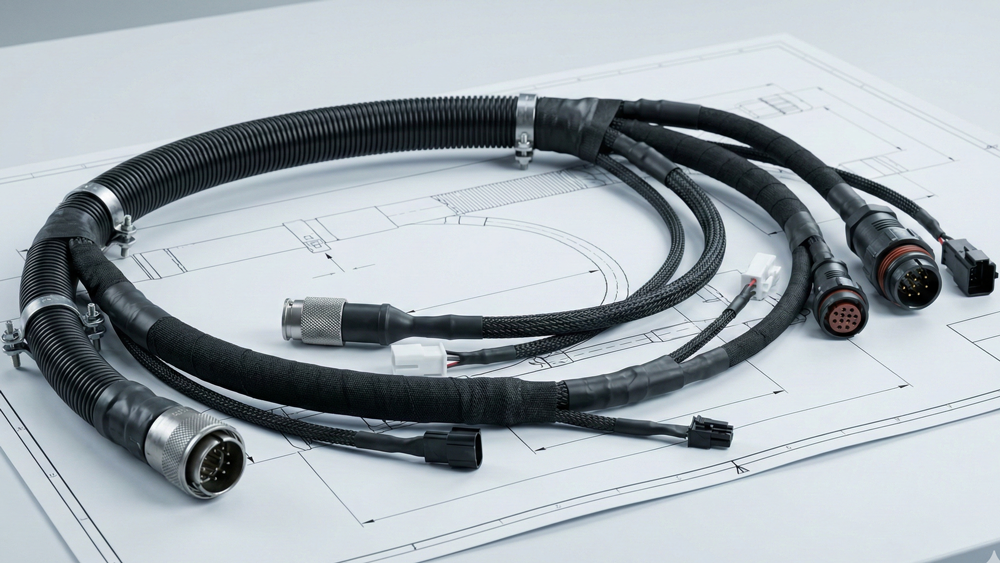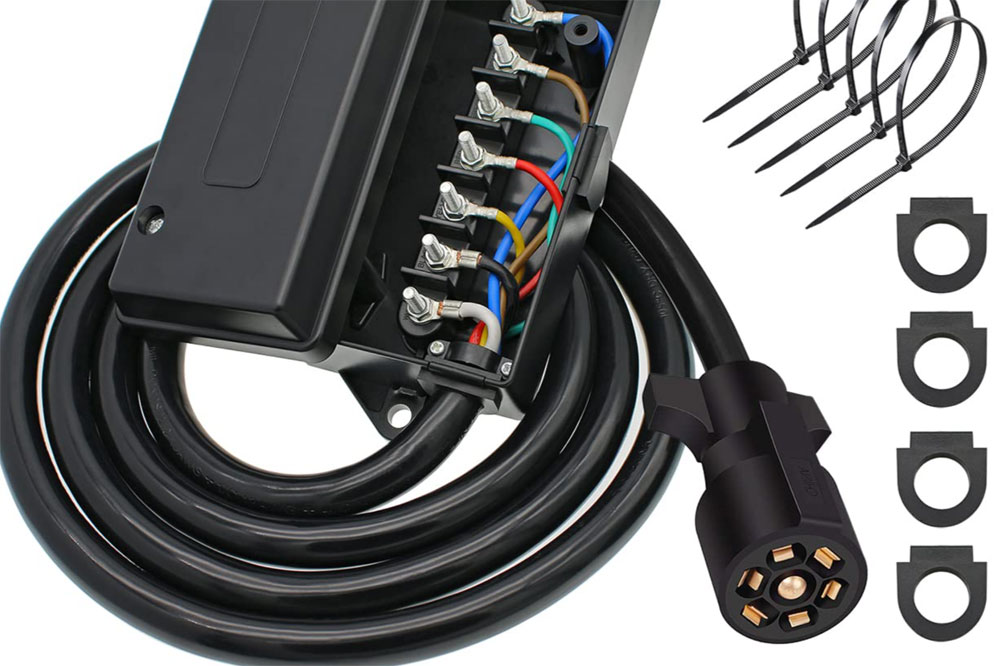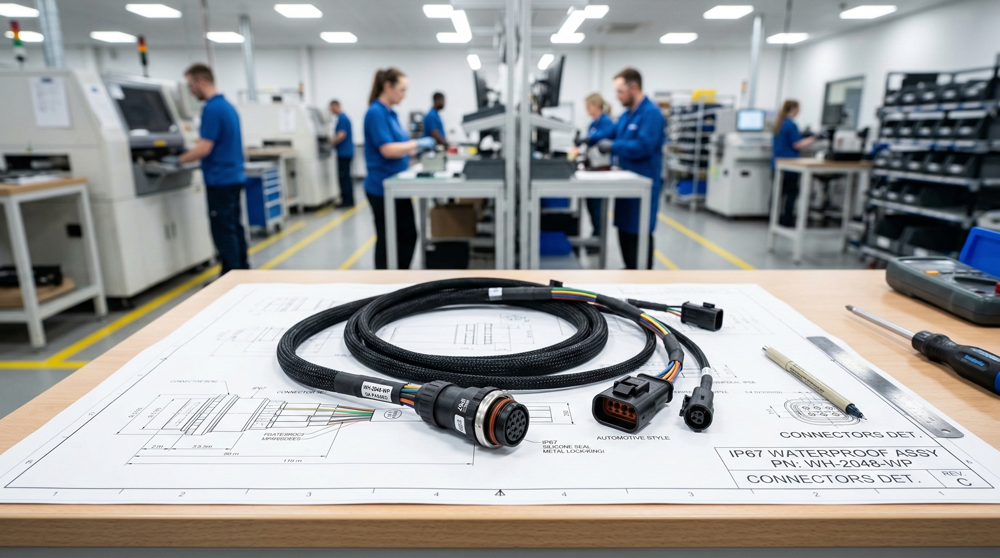
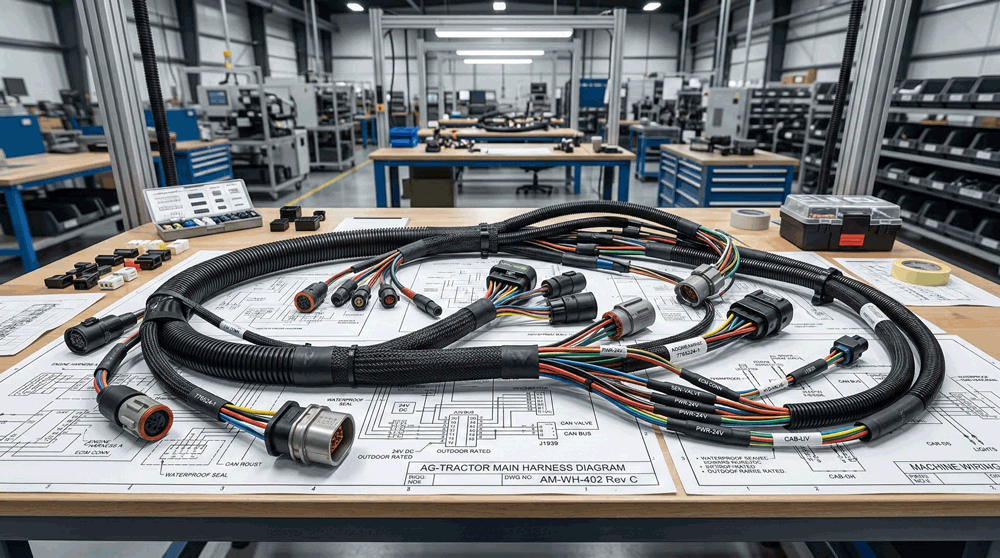
Shielded vs unshielded cable assemblies is a decision OEM buyers should make based on the real electrical and mechanical environment, not on habit or general caution. Shielded vs unshielded cable assemblies affects signal stability, routing flexibility, connector choice, assembly cost, grounding strategy, and long-term field reliability.
For OEM teams, the right choice is not always the more complex one. A shielded design can solve real noise problems, but it can also add cost, stiffness, termination complexity, and sourcing pressure when the application does not truly need it. An unshielded design can be efficient and reliable, but only when the signal path, route, and environment actually support that decision.
Table of Contents
ToggleWhy It Matters
In many cable assembly projects, shielding is treated like insurance. If the buyer is not fully sure, the project may default to shielded cable because that feels safer. In some cases, that is reasonable. In many others, it creates unnecessary cost and complexity without solving a real problem.
This matters because shielding is not just a material choice. It changes the whole assembly. It affects cable size, flexibility, bend behavior, connector termination, grounding logic, label space, packaging, and production repeatability. That means the shielding decision should be made with the same discipline as connector selection or cable type selection.
For OEM buyers, the stronger question is not “Should we add shielding just in case?” The better question is “What exactly is the electrical environment, and what level of protection does this application truly require?”
Start with the Signal
The first step is to understand what the cable assembly is carrying. Some assemblies carry simple low-risk power. Some carry mixed power and signal. Some carry data, control, feedback, video, or sensing lines that are much more sensitive to electrical noise. The correct shielding decision depends heavily on that distinction.
If the assembly carries low-level signals, high-speed data, feedback circuits, imaging signals, or other noise-sensitive functions, shielding deserves much closer review. If the assembly mainly carries basic power in a relatively quiet environment, unshielded construction may be completely acceptable. If the assembly carries both power and sensitive signal paths together, the decision becomes more application-specific and often requires more careful routing and grounding review.
This is why signal type should come first. A cable assembly cannot be selected intelligently if the buyer only knows the connector and length but not what the assembly is actually doing electrically.
Check the Environment
Shielding decisions should also follow the real environment. A cable that works well in a clean, quiet indoor system may behave very differently near motors, drives, switching devices, power electronics, long cable runs, or dense equipment layouts.
In industrial automation, robotics, machine vision, and some vehicle-related systems, the noise environment can be much more aggressive. In these cases, shielded cable assemblies are often justified because the risk of unstable signals, false triggers, or communication issues is real. In simple internal equipment wiring, the same shielding may not provide enough value to justify the added cost and complexity.
This is why OEM buyers should look at where the cable runs, what it runs beside, how long the run is, and how noisy the surrounding system is. Shielding is much easier to justify when the environment itself clearly creates electrical risk.
Know What Shielding Does
A lot of confusion in OEM sourcing comes from using the word “shielded” too loosely. Shielding is not a magic upgrade that automatically fixes all electrical problems. It is one tool for managing noise, and it works best when the rest of the design supports it.
In practical terms, shielding helps reduce unwanted electrical interference from the environment and may also help control emissions from the cable itself. But its real value depends on the cable construction, how the shield is terminated, how grounding is handled, what connectors are used, and how the cable is routed in the product. A shielded cable with weak termination or poor grounding logic may still perform poorly.
That is why buyers should not think of shielding as a yes-or-no material feature only. It is part of a broader interconnect strategy. If the system does not support that strategy properly, the shield may add cost without adding much real protection.
Know What It Costs
Shielding affects cost more than many buyers initially expect. The obvious cost is the cable itself, but shielding also affects termination time, connector choice, assembly labor, inspection difficulty, and sometimes packaging and routing behavior.
A shielded cable assembly is often thicker, stiffer, and more demanding to terminate cleanly than an unshielded one. Depending on the design, the shield may need to be connected properly at one or both ends, managed through backshells or shield terminations, and protected from inconsistent workmanship. All of that increases assembly complexity.
This does not mean shielded cable assemblies should be avoided. It means the buyer should use them where they solve a real problem. In OEM sourcing, unnecessary shielding often creates lifetime cost without matching value. Necessary shielding, on the other hand, is usually much cheaper than field instability and troubleshooting later.
Check the Route
Cable route is one of the strongest clues in the shielding decision. A cable that travels a short distance in a quiet enclosure is very different from a cable that passes near drives, motors, power devices, switching systems, or high-density electronics.
If the route places the cable close to known noise sources, shielding becomes more important. If the route is longer, more exposed, or physically close to other critical circuits, the value of shielding often increases. If the route is simple, short, and separated from electrical noise, the assembly may not need shielding at all.
This is why routing review should happen before the shielding decision is frozen. Buyers should not wait until the sample stage to discover that the cable path itself created a noise problem. A good route review often makes the shielding decision much clearer early.
Match the Connector
Connector selection and shielding choice must be reviewed together. A shielded cable assembly usually needs a connector strategy that supports the shielding concept properly. If the connector, backshell, or termination method does not handle the shield well, the electrical benefit may be weaker than expected.
This is particularly important in compact designs where the cable, connector exit, and grounding arrangement are all competing for space. A shielded cable may be the right electrical choice but still create mechanical or manufacturing difficulty if the connector system is not suitable. Likewise, an unshielded cable may simplify the connector design and routing significantly when the application does not truly need shielding.
That is why the previous article, How OEM Buyers Select Cable Types for Different Applications, and the earlier connector article should be read together with this one. Shielding is not only a cable decision. It is a full assembly decision.
Think About Flex
Shielding can also change how a cable behaves mechanically. In many projects, especially robotics, moving equipment, compact devices, or service-handled assemblies, that difference matters more than expected.
A shielded cable is often less flexible than an unshielded one. It may resist bending more, occupy more space, and create more stress at the connector transition if the route is tight. In static installations that may be acceptable. In moving systems it may create new problems if the cable path was designed around a more flexible construction.
That is why OEM buyers should ask whether the application values shielding more than flexibility, or whether the route can support both. In some cases, the answer is yes and shielded cable assemblies are the right choice. In others, a simpler unshielded construction is more practical because the application is mechanically sensitive but electrically quiet.
Review the Grounding
Shielding only works well when the grounding logic is clear. This is one of the most important practical differences between shielded and unshielded cable assemblies.
With an unshielded assembly, the grounding discussion may be much simpler because the cable itself does not require shield termination. With a shielded assembly, the buyer should understand how the shield is connected, how that connection fits the system design, and how the supplier is expected to terminate the shield consistently. If the project does not define that clearly, the cable may be called shielded while the real performance remains inconsistent.
This does not mean every article or RFQ has to explain grounding in full electrical detail. But the buyer should at least know whether the system actually supports the shielded design being requested. Otherwise the project may end up paying for complexity without getting the full benefit.
Use a Simple Comparison
A simple side-by-side view often helps buyers make the right call.
| Option | Best fit | Main strengths | Main trade-offs |
|---|---|---|---|
| Shielded cable assemblies | Noisy environments, sensitive signals, longer or exposed runs | Better noise control, stronger signal protection | Higher cost, more complexity, less flexibility |
| Unshielded cable assemblies | Quiet environments, simple power or low-risk signal runs | Lower cost, easier routing, simpler assembly | Less protection from electrical noise |
This kind of comparison is useful because it keeps the discussion practical. The goal is not to prove that one option is always better. The goal is to match the right option to the real product.
Watch Common Mistakes
One common mistake is defaulting to shielded cable assemblies without confirming that the application really has a noise problem worth solving. Another is choosing unshielded cable assemblies mainly for cost without reviewing the route and electrical environment carefully enough. A third is asking for shielding without clearly defining how the connector and grounding strategy will support it.
Another frequent mistake is separating the electrical decision from the mechanical one. A shielded assembly may solve one issue while creating routing or flex problems somewhere else. An unshielded assembly may simplify the build but create unstable performance if the environment is more aggressive than expected. The best decisions usually come from reviewing both sides together.
Use Samples Well
The sample stage is one of the best places to confirm whether shielding is really needed. If the buyer is uncertain, a well-planned sample review can reveal a lot.
A useful sample review asks whether the selected cable behaves correctly in the real route, whether the connector transition still looks stable, whether the assembly still fits the package cleanly, and whether the system performance supports the intended application. If the shielded version solves a real issue cleanly, that is valuable. If the unshielded version performs well without creating instability, that may support a simpler commercial decision.
This is why samples should be treated as physical proof, not just theoretical confirmation. The shielding decision becomes much stronger once the buyer sees how the actual assembly behaves in the real product.
Conclusion
Shielded vs unshielded cable assemblies should be decided by signal type, noise environment, cable route, connector match, flex needs, grounding logic, and total lifecycle value. For OEM buyers, shielding is not automatically better and unshielded is not automatically cheaper in the long run. The right choice is the one that matches the actual product and avoids both electrical instability and unnecessary assembly complexity.
When teams make this decision well, they improve more than the cable itself. They improve RFQ quality, sample confidence, pilot stability, production control, and long-term sourcing logic. In OEM cable assembly projects, that is exactly what a good selection decision should do.
FAQ
When should buyers choose shielded cable assemblies?
Shielded cable assemblies are often the better choice when the application involves sensitive signals, noisy electrical environments, longer exposed runs, or routing near motors, drives, and other interference sources.
When are unshielded cable assemblies enough?
Unshielded cable assemblies are often suitable for simpler power or low-risk signal applications in quieter environments where the cable route is short and well controlled.
Does shielding always improve performance?
No. Shielding helps when the system and environment need it, but it also adds cost, stiffness, and termination complexity. If the application does not benefit from it, the added complexity may not create enough value.
Why does connector choice matter in shielded cable assemblies?
Because the connector and termination method have to support the shielding strategy properly. If they do not, the cable may be shielded on paper but weaker in real performance.
Can sample builds help decide between shielded and unshielded?
Yes. Samples are often one of the best ways to confirm whether shielding improves the real product enough to justify the added cost and assembly complexity.
CTA
If you are deciding between shielded and unshielded cable assemblies, the best first step is to review the real signal path, route, environment, and connector strategy before choosing based only on habit or cost.
You can send your drawings, cable spec, route photos, application notes, and sourcing questions through Contact. Our team can help review the shielding logic and support a more practical OEM selection decision before the design is frozen.