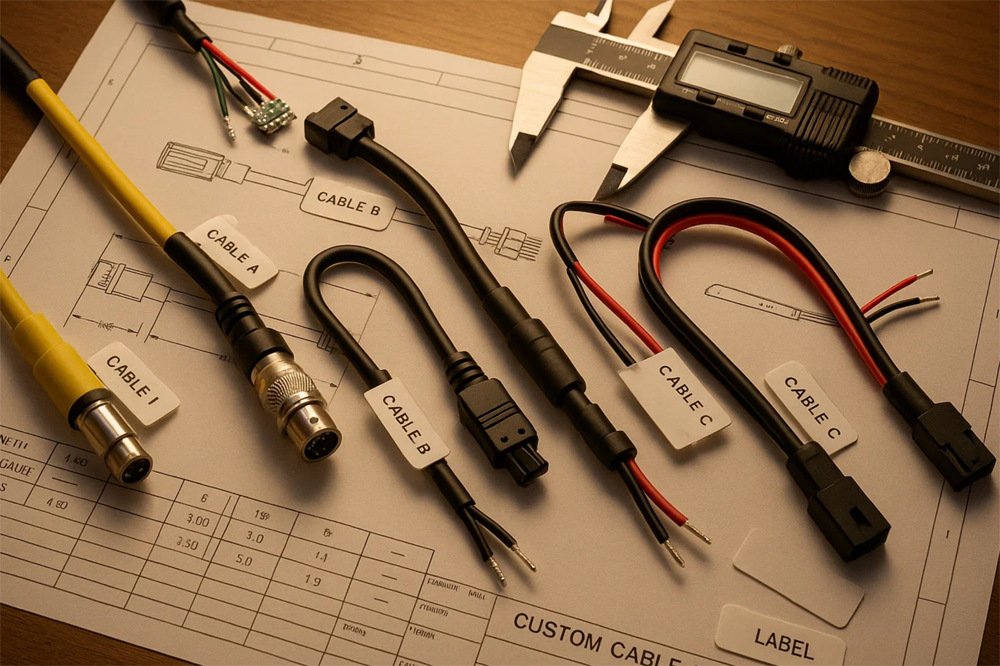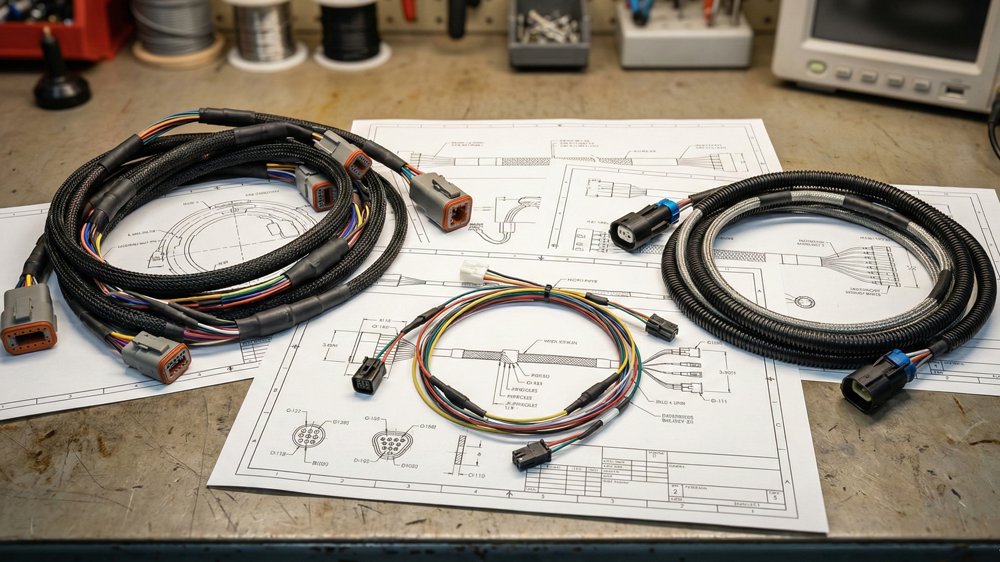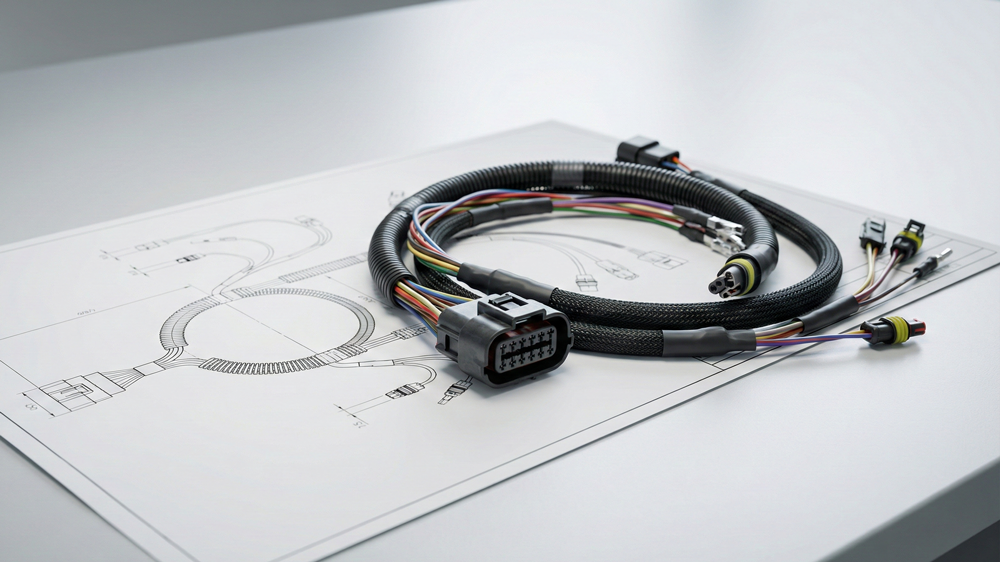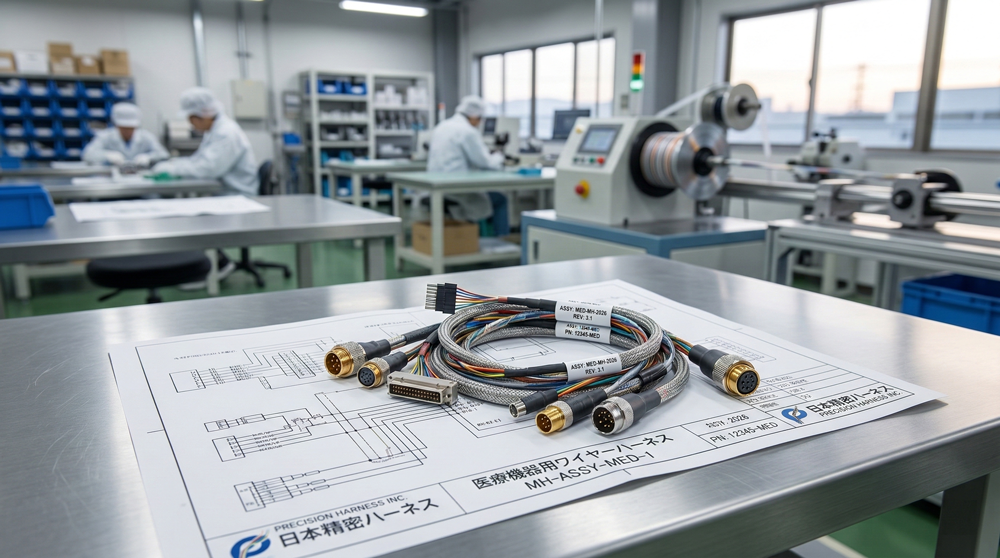
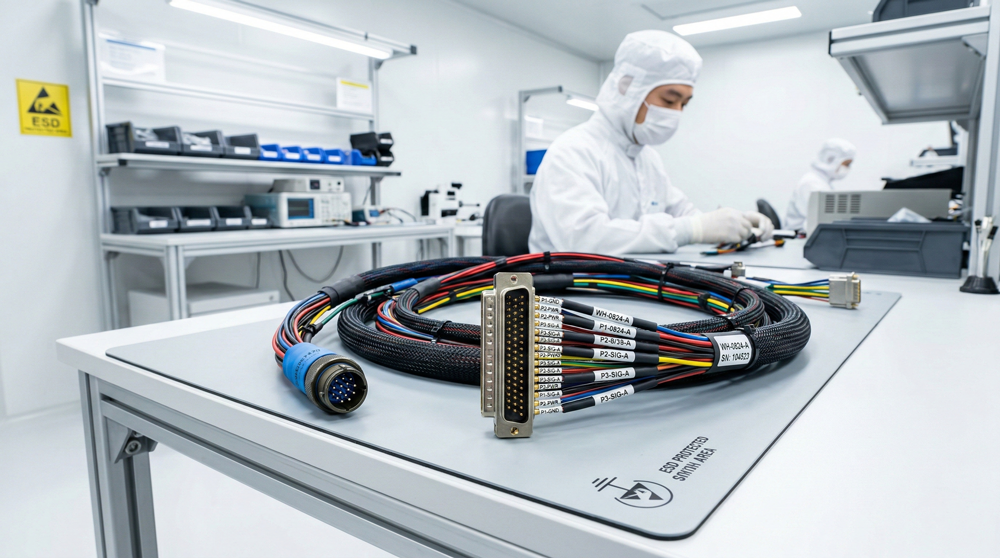
This prototype to production guide for cable assemblies helps engineering, procurement, and program teams move from early samples to stable production without the usual cost and schedule traps. In wiring harness programs, the biggest ramp failures come from two causes: prototype assumptions that never get formalized, and changes that happen faster than documentation and validation can keep up.
A prototype build is not proof of production readiness. Production readiness is the ability to produce repeatable lots to a controlled revision, with stable lead times, evidence packs, and change control. This guide lays out the stages, gates, and controls that reduce rework, prevent revision drift, and protect your total cost of ownership (TCO).
If you want the TCO context behind these gates, start with Total Cost Guide for Custom Cable Assemblies. If you want the timeline planning structure, connect this to Cable Assembly Lead Time Planning Guide.
Table of Contents
ToggleCable assembly prototype goals versus production goals
In cable assemblies, prototypes are built to learn. Production is built to repeat. When buyers treat a “working prototype” as readiness proof, they often lock in hidden risks that appear later as yield loss, late ECOs, and schedule slips.
Prototype goals are typically: verify fit, verify pinout, confirm basic electrical function, validate routing and packaging constraints, and uncover missing documentation. Production goals are: stable material sourcing, stable process windows, controlled revisions, defined tests, and predictable lead times.
A practical ramp plan makes those differences explicit and sets different expectations for each stage.
Wiring harness requirements freeze for prototype builds
Ramp problems start with unclear requirements. A requirements freeze does not mean “no changes.” It means: a defined baseline revision exists, and any change after that baseline follows a controlled workflow.
For harness builds, a requirements freeze should lock: connector part numbers, terminal part numbers, cavity mapping, wire gauge and construction, shield termination rules, length reference points and tolerances, labeling rules, packaging rules, and required tests.
If your RFQ package is incomplete, the “freeze” is imaginary because suppliers must still make assumptions. Use Cable Assembly RFQ Checklist to ensure the minimum inputs exist before you treat a prototype as meaningful.
Cable assembly DFM feedback before pilot builds
Design for Manufacturability, abbreviated as DFM, is where you reduce cost without reducing reliability. The highest ROI DFM actions in harness programs usually target touch labor, insertion difficulty, seal compatibility, and inspection complexity.
During the prototype stage, require suppliers to provide DFM feedback in a structured way. Examples include: wire OD compatibility with seals, terminal selection risk, strain relief risk, shielding termination practicality, and packaging/handling risks.
Good DFM reduces rework later. Bad DFM becomes a long tail of “small fixes” that create ECO churn.
If you are selecting suppliers, this is where engineering support becomes visible. Suppliers who behave like partners can demonstrate technical collaboration under pages like Why Choose Us and prove verification discipline under Tests & Inspections.
First article inspection for cable assembly prototypes
First article inspection, often abbreviated as FAI, is not optional if you want repeatability. A first article process turns a prototype build into a controlled baseline by capturing objective evidence: what was built, how it was measured, and what criteria defined acceptance.
For cable assemblies, first article inspection should confirm: revision, cavity mapping, length measurement method, termination quality evidence for critical connections, label content and placement, and test method coverage.
The key business benefit is speed later. When first article evidence is captured early, later changes are easier to compare, and disputes are shorter. To standardize what “evidence” looks like, use Quality Evidence Pack Guide.
Harness prototype validation tests and evidence records
Prototype validation should be proportional to risk. For low-risk harnesses, validation may be continuity and shorts plus fit confirmation. For higher-risk programs, you may include pull force audits, contact resistance trend checks, or environmental screening.
The buyer objective is not to run every test early. It is to run the tests that reduce the most downstream risk per unit time and to record them in a way that becomes a reusable baseline.
For termination-heavy programs, standardized methods reduce supplier argument later. If relevant, connect termination validation to:
Cable assembly pilot build plan for wiring harness ramp
A pilot build is the bridge between prototypes and production. It answers one core question: can the supplier execute repeatably at a realistic pace with realistic staffing and realistic test coverage?
A buyer-friendly pilot plan defines: pilot quantity, lot definition, required evidence pack contents, sampling plan for critical checks, rework rules, and acceptance criteria. It also defines what changes are allowed during the pilot and how those changes are recorded.
Without a defined pilot plan, suppliers often treat the pilot as “more prototypes,” which hides throughput and yield issues until production.
Wiring harness process controls for production readiness
Production readiness is about process control discipline, not about optimism.
At minimum, suppliers should demonstrate: setup verification methods, controlled measurement methods for critical characteristics, defined in-process check frequency, defined out-of-control reaction rules, and traceability linking materials to lots and evidence.
Buyers can verify this through an audit flow using Cable Assembly Audit Checklist. If suppliers cannot show real records from recent builds, the program is not ready to ramp.
Cable assembly change control during production ramp
Ramp is when change happens fastest. That is why ramp is also when quality drifts if change control is weak.
During ramp, define an Engineering Change Order workflow and enforce it. ECOs should specify the change, the reason, the risk, the validation required, the cut-in plan, and the revision traceability rules. A “quick tweak” without ECO discipline becomes revision mixing, which destroys containment and increases warranty cost.
Use Cable Assembly Change Control and ECO Guide to standardize approval matrices and re-validation triggers.
Wiring harness supplier PPAP-like readiness without overhead
Some industries require Production Part Approval Process, commonly abbreviated as PPAP. Many harness programs do not require formal PPAP, but buyers still benefit from a PPAP-like structure: defined requirements, defined evidence, defined validation, and defined sign-off.
A practical PPAP-like approach for cable assemblies includes: controlled drawing revision, first article evidence, test method definition, material traceability, and a defined control plan. The purpose is not paperwork. The purpose is stable repeatability.
When suppliers can provide these deliverables quickly, the buyer gets faster ramp with less risk.
Production ramp checklist for cable assemblies
A production ramp checklist prevents “we assumed” failures. Before releasing to full production, confirm that the supplier can execute each of these reliably:
- Cable assembly BOM and approved components are locked
- Wiring harness drawing revision is controlled and distributed
- Cable assembly length method and tolerance are confirmed
- Termination quality controls are defined and recorded
- Test coverage and fixtures are defined and recorded
- Labels and traceability identifiers are controlled
- Packaging method is approved and repeatable
- Evidence packs will ship with each lot
- ECO workflow and cut-in controls are active
This checklist turns ramp into a managed process rather than a scramble.
Cable assembly packaging and shipping readiness for ramp
Packaging failures often show up at ramp because shipment volume increases and handling changes. When packaging is not standardized, transit damage spikes and becomes a silent TCO driver.
During ramp, ensure packaging requirements are documented and approved, and that packaging is included in evidence packs when needed. For a cost-focused approach, connect to Packaging and Logistics Cost Guide for Cable Assemblies.
Conclusion
A successful cable assembly ramp is built on controlled baselines, disciplined evidence, and change control. Prototypes prove concept, but only structured gates—requirements freeze, first article inspection, risk-based validation, pilot builds, and ECO discipline—prove production readiness.
If you want predictable lead times and predictable cost, treat prototype-to-production as a managed system. The buyer who controls evidence and change control reduces rework, reduces schedule variance, and reduces warranty exposure.
FAQ
What is the biggest mistake in wiring harness ramp programs?
Treating a working prototype as production readiness. Without process controls, evidence packs, and change control, production drift is almost guaranteed.
When should we run a cable assembly pilot build?
After requirements are frozen and first article evidence exists, but before full production release. The pilot proves throughput and yield under realistic conditions.
How do we reduce ECO chaos during ramp?
Define an ECO workflow, approval matrix, re-validation triggers, and a cut-in plan. Enforce it even under schedule pressure.
What should be in a first article inspection for cable assemblies?
Revision confirmation, cavity mapping, length method, termination evidence for critical connections, label placement, and method-defined test records.
How does evidence reduce total cost?
Evidence packs speed acceptance, shorten disputes, and shrink containment scope when issues occur. That reduces engineering overhead and downtime risk.
CTA
If you want a ramp plan that reduces cost and protects schedule, share your connector families, target volumes, and launch timeline. We can propose a staged prototype-to-production plan with evidence gates, pilot build rules, and ECO discipline suited for OEM/ODM cable assemblies.
- Discuss your program: Contact
- Explore scope: Custom Cable Assemblies
- Verification discipline reference: Tests & Inspections
- Why buyers select us: Why Choose Us