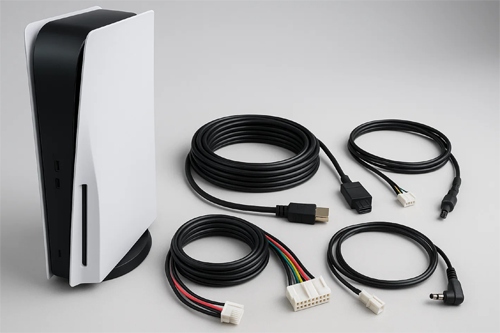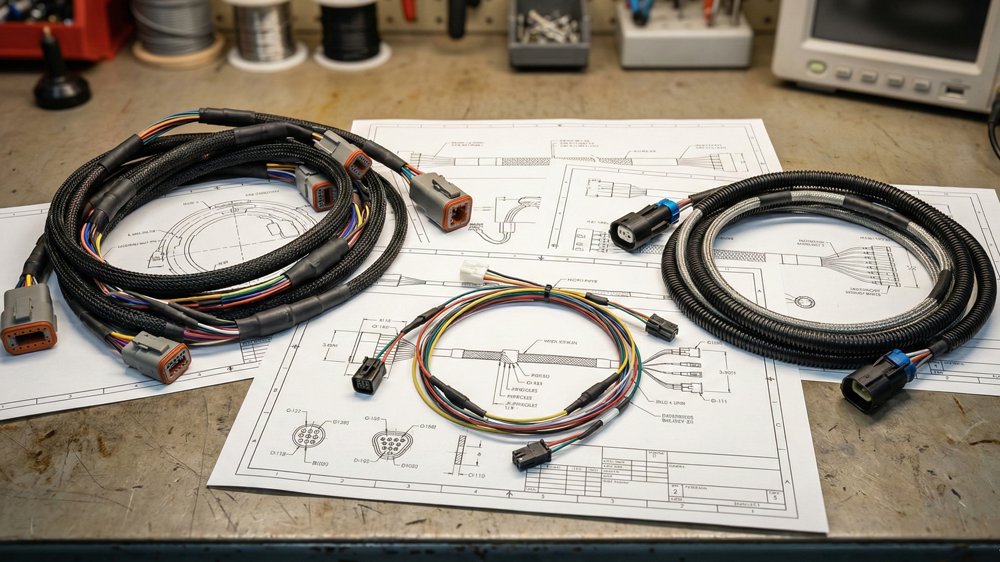
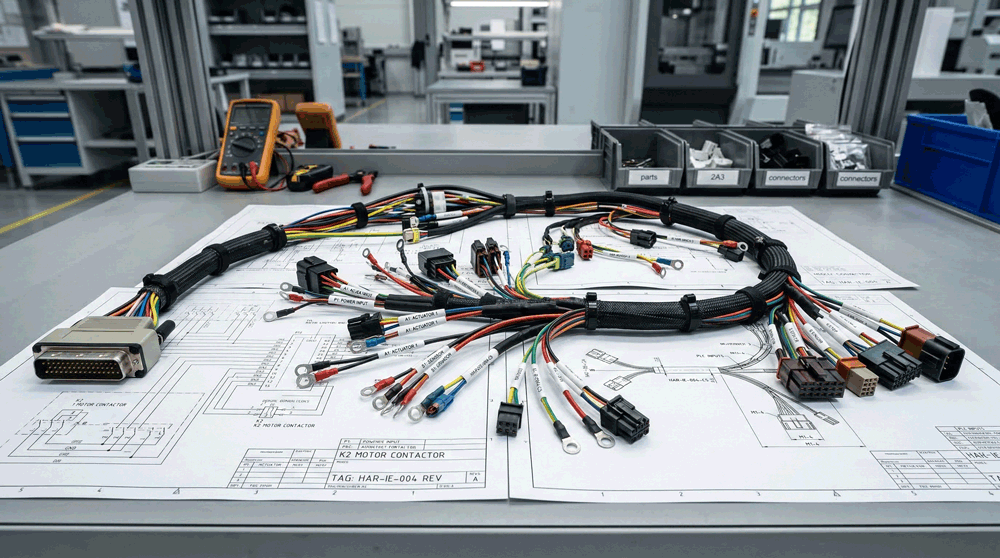
An OEM connector and cable selection guide should help buyers make better engineering and sourcing decisions before cost, lead time, and field risk become harder to control. In real cable assembly programs, connector and cable choices affect far more than electrical continuity. They influence routing, durability, signal quality, sealing, serviceability, manufacturability, and long-term supply stability.
For OEM buyers, that means connector and cable selection should not be treated as a simple catalog exercise. The right combination supports cleaner RFQs, more reliable samples, smoother pilot runs, and more stable production. The wrong combination can still “work” in early builds while quietly creating later problems in vibration, movement, labeling, packaging, service, or supply continuity.
Table of Contents
ToggleWhy Selection Matters
In many OEM projects, connector and cable decisions are made too late or too casually. The team may focus first on pin count, nominal voltage, or a familiar supplier part number, then try to solve routing, durability, shielding, or service issues afterward. That sequence often creates avoidable cost because the assembly is already being built around assumptions that do not fully match the application.
This is especially common in custom cable assemblies because the connector and the cable are often reviewed separately when they should be reviewed together. A good connector on the wrong cable is still a weak solution. A suitable cable with a poor locking interface is also a weak solution. The full assembly has to be judged as one working system.
That is why OEM teams should think of connector and cable selection as an early control point. When this step is done well, later work in RFQ, sample approval, pilot review, and incoming inspection becomes easier and more reliable.
Start with the Application
The first step is not choosing a connector series or cable part number. The first step is defining the real application. A static cabinet jumper, a robotics cable, an outdoor equipment harness, a medical device interconnect, and an automotive auxiliary cable may all carry similar circuits, yet the actual selection logic is completely different.
A useful application review should answer a few practical questions. Will the assembly remain static or move repeatedly? Will it see vibration, moisture, UV, chemicals, or repeated mating? Is it routed in a tight space? Does it carry sensitive signals, power, or mixed functions? Does the product need easy field replacement? Does the cable sit in a visible area where label placement and cosmetic finish matter? Once these questions are answered, the connector and cable discussion becomes much more accurate.
This is also where your broader content system helps. A buyer who already thinks in application terms through pages like Choosing OEM Cable Assemblies for Different Applications usually writes better RFQs and makes fewer weak sourcing assumptions later.
Choose the Connector First or the Cable First
In practice, buyers often ask whether the connector should drive the cable choice or the cable should drive the connector choice. The answer depends on the project, but in most OEM programs the interface requirement usually sets the first boundary, while the application sets the final solution.
If the mating connector is already fixed by the customer’s device, PCB, sensor, actuator, or module, then the interface is not fully open. The cable and the rest of the assembly must be selected around that constraint. But if the project is still open at system level, then it is often smarter to evaluate connector and cable together based on routing, environment, assembly method, and future service needs rather than locking one too early.
The real risk comes when one side is chosen without fully considering the other. A compact connector may create routing stress if the selected cable is too stiff. A rugged cable may be appropriate for the environment but not fit the connector’s seal range or bend path well. A low-cost connector may look acceptable until serviceability, lock strength, or assembly access becomes a problem. That is why the better question is not which comes first in theory, but whether both choices still make sense when viewed together.
Match the Environment
Environmental fit is one of the most important parts of connector and cable selection. Many OEM sourcing problems begin because the assembly was selected for nominal function but not for real exposure.
In an indoor static device, the key concerns may be size, routing, and assembly speed. In industrial equipment, vibration, oil mist, and abrasion may matter more. In robotics, flex life and strain relief become more important. In outdoor products, sealing, UV resistance, and corrosion control rise quickly in importance. In medical devices, cleaning, handling, signal quality, and compact routing may become the critical drivers. In automotive-related systems, temperature cycling, vibration, and package space often dominate the decision.
The table below shows how environment changes the selection logic.
| Application type | Connector priorities | Cable priorities |
|---|---|---|
| Static indoor equipment | Size, assembly ease, stable fit | Routing ease, manageable stiffness, clean labeling |
| Industrial equipment | Locking, durability, service access | Abrasion resistance, oil tolerance, stable routing |
| Robotics and motion systems | Retention, compact exit direction | Flex life, strain control, movement stability |
| Outdoor equipment | Sealing, corrosion resistance | UV resistance, moisture tolerance, rugged jacket |
| Medical devices | Compact form, usability, stable signal interface | Flexibility, signal quality, clean routing |
| Automotive auxiliary systems | Retention, package efficiency | Vibration tolerance, temperature stability, fit in constrained routes |
A short environmental discussion during selection usually prevents a much longer troubleshooting discussion later.
Select the Connector
Connector selection should go beyond pin count and mating compatibility. In OEM programs, the connector also determines retention strength, keying clarity, service access, packaging space, and how much real abuse the interface can tolerate over time.
A good connector choice starts with the actual use pattern. Is the connection made once during manufacturing and rarely touched again, or is it unplugged regularly during service? Is the connector mounted in a tight housing where release access is difficult? Does it need sealing? Is it close to vibration, movement, or contamination? Is the locking feature strong enough for the application, or is the design relying too heavily on careful handling? These are the kinds of questions that separate a workable choice from a robust one.
Connector exit direction also deserves more attention than it often gets. Straight exits, angled exits, and compact exit geometries can change routing stress dramatically, especially in small devices, automation systems, and vehicle-related assemblies. A connector that looks correct in the schematic can still create a weak assembly if the exit direction forces a sharp bend or awkward clamp point immediately after the interface.
For OEM buyers, a better connector is not always the highest-spec connector. It is the connector that matches the real application, the real route, and the real service behavior.
Select the Cable
Cable selection deserves the same level of discipline. In many sourcing projects, the cable is treated as a simple conductor carrier once the connector is decided. That approach often leads to preventable field issues.
A strong cable choice should reflect the actual demands of the product. Does the assembly need flexibility, abrasion resistance, shielding, low-temperature stability, compact routing, repeated bending, or chemical tolerance? Is the cable primarily for power, signal, data, or a mixed application? Will it sit still for years inside a cabinet, or move every cycle in a robotic mechanism? These conditions change what “good cable” really means.
Cable construction affects much more than electrical capacity. It affects bend behavior, strain relief performance, shielding effectiveness, assembly handling, packaging, and long-term durability. A cable that is electrically acceptable may still be too stiff, too fragile, too bulky, or too unstable for the route. In OEM products, this mismatch often becomes visible only after the product moves from prototype into real assembly or field use.
That is why cable selection should always be reviewed against the product’s physical reality, not only against the circuit requirement.
Balance Cost and Risk
One of the most important sourcing skills is balancing connector cost and cable cost against total project risk. In early discussions, the cheapest visible option often looks attractive, especially when the buyer is under quotation pressure. But low initial cost can still create a weak commercial outcome if the selected connector or cable increases service problems, assembly time, field failures, or supply instability.
A low-cost connector may save money per unit but create more line-side difficulty, weaker retention, or poorer service access. A lower-cost cable may look fine in the quote but create routing stress, early wear, shielding weakness, or inconsistent handling in production. In many cases, the problem is not that the cheaper part is unusable. The problem is that it narrows the process window and increases the buyer’s dependence on perfect assembly behavior.
This is why the better sourcing question is not simply “What is the lowest price?” but “What is the lowest-risk option that still meets the project’s commercial target?” Good factories usually respond more intelligently when buyers ask that question, because it invites engineering judgment rather than pushing the project toward hidden weakness.
Review Serviceability
Connector and cable selection should also reflect how the product will be serviced later. This is one of the most overlooked parts of OEM design and sourcing, especially in projects where early development focuses heavily on fit and unit price.
A serviceable assembly usually needs more than basic functionality. The connector should be reachable. The locking feature should be understandable. The cable should not fight the technician during removal or reinstallation. Labels should help identification rather than create ambiguity. The route should not force the service team to dismantle unnecessary surrounding parts. In some products, these points are minor. In others, they directly affect service cost and customer downtime.
This is especially relevant in industrial equipment, outdoor systems, medical devices, and automotive-related products, where field conditions are not ideal and maintenance time matters. A connector and cable combination that is slightly more expensive at sourcing stage may still be the better business decision if it supports faster service and fewer errors later.
Check Supply Stability
A technically suitable connector and cable combination is still risky if the supply path behind it is weak. This is why OEM buyers should review sourcing stability as part of selection, not only after the design is already committed.
Supply stability includes practical questions such as whether the connector family is broadly available, whether the cable type has stable sourcing channels, whether approved alternates are possible, and whether future revisions or second-source plans will become difficult because the selected parts are too narrow or too dependent on one path. Some projects are right to choose tightly controlled parts. Others benefit from a more resilient component strategy.
This is particularly important when the product is expected to scale or stay active for years. A connector or cable choice that works in prototype quantities may become much harder to manage under production demand or during market shortages. Buyers do not need to eliminate every supply risk in advance, but they should at least understand whether the chosen solution is stable enough for the intended business model.
That is one reason pages like OEM Cable Assembly RFQ and Supplier Selection Guide and What Makes a Cable Assembly Supplier Reliable connect naturally to this series. Selection and supply reliability are closely linked.
Use DFM Early
Design for Manufacturability (DFM) matters in connector and cable selection because many assembly problems are easier to solve before the design is frozen than after samples have already been built.
A factory that sees the real application can often help identify a better connector orientation, a more workable cable type, an easier label position, or a more stable strain-relief approach before the project moves further. That does not mean every supplier suggestion should be accepted. It means the buyer should create room for technical review before the final selection hardens into the release baseline.
This is particularly useful when the design is compact, routing-sensitive, or volume-sensitive. A connector that seems fine in concept may create too much manual difficulty during build. A cable that seems easy to source may create unnecessary routing variation. A more careful selection early can reduce production noise later without changing the product concept at all.
Use Samples to Confirm Selection
Connector and cable selection should never be treated as fully closed until samples confirm the logic physically. This is where theory meets real handling.
A sample review should ask whether the selected connector and cable combination behaves the way the buyer expected in the real product. Does the cable route naturally? Does the connector sit correctly? Is the exit direction still appropriate? Does the strain-relief transition look stable? Does the assembly feel serviceable? Are the labels still visible? Does the supplier appear comfortable building the chosen combination consistently?
This is why sample review is so valuable in OEM programs. It helps the buyer see whether the selected parts create a practical assembly, not just a technically acceptable one. If the answer is no, the sample stage is still early enough to correct the decision at relatively low cost.
Watch Common Mistakes
Several common mistakes repeat in connector and cable selection. One is choosing the connector mainly by familiarity without fully reviewing lock strength, service access, or exit geometry. Another is choosing the cable mainly by nominal electrical spec while overlooking routing, flex, shielding, or environment. A third is treating connector and cable as separate purchasing decisions rather than one system decision.
Another frequent mistake is assuming that if a design works in one application, it should work in another with only minor changes. That logic often breaks down when motion, moisture, packaging, or service conditions change. A further mistake is selecting parts that are technically attractive but commercially narrow, making later sourcing or second-source plans harder than necessary.
The final mistake is delaying this decision too long. Once labels, drawings, pilot builds, and supplier quotations are built around a weak connector or cable choice, correction becomes more expensive.
A Practical Review Framework
A simple review framework can help buyers make better selection decisions before the project is locked.
| Review area | Key question |
|---|---|
| Application | Where does the assembly live and how will it be used |
| Environment | What movement, moisture, heat, vibration, or chemical exposure matters |
| Connector | Is the interface secure, serviceable, and suitable for the route |
| Cable | Does the construction match the real duty and installation need |
| Cost | Is the selected option commercially efficient without hidden lifecycle risk |
| Service | Can the assembly be identified, handled, and replaced practically |
| Supply | Are the connector and cable stable enough for the business model |
| DFM | Has the factory reviewed the selection for manufacturability and consistency |
| Sample proof | Does the actual build confirm that the selected combination works well |
This kind of framework is useful because it keeps the decision practical. It prevents the project from becoming overfocused on one variable, such as connector price or cable availability, while ignoring the rest of the assembly logic.
Conclusion
OEM Connector and Cable Selection Guide should be understood as a practical sourcing and engineering decision framework, not a simple parts-choice exercise. For OEM buyers, the strongest decisions begin with the real application, match the environment honestly, review connector and cable together, balance cost against lifecycle risk, consider serviceability and supply stability, use DFM early, and confirm the selection through real samples.
When teams do this well, later work in RFQ, sample approval, pilot, incoming inspection, and production release becomes much smoother. In custom cable assemblies, that often means fewer corrections, cleaner sourcing decisions, and a more stable path from concept to repeat supply.
FAQ
Should OEM buyers choose the connector first or the cable first?
Usually the interface requirement sets the first boundary, but the final decision should review connector and cable together as one assembly system.
Why is connector exit direction important?
Because exit direction affects routing stress, packaging space, strain relief, and service access. A correct connector can still create a weak assembly if the cable leaves in the wrong direction.
What is the biggest mistake in cable selection?
A common mistake is choosing cable only by nominal electrical specification while ignoring movement, routing, shielding, environment, and service behavior.
Do service needs really affect connector and cable choice?
Yes. If the assembly must be identified, unplugged, replaced, or handled in the field, serviceability becomes part of the total selection decision.
How can buyers reduce risk during selection?
The best way is to define the real application clearly, invite DFM feedback early, and use sample builds to confirm the connector and cable combination before final release.
CTA
If you are selecting connectors and cable types for a new OEM assembly, the best first step is to review the actual application, routing path, service needs, and supply model before locking the parts only by catalog fit or piece price.
You can send your drawings, BOM, application notes, route photos, and sourcing questions through Contact. Our team can help review the selection logic and support a more practical OEM sourcing decision before the design is frozen.