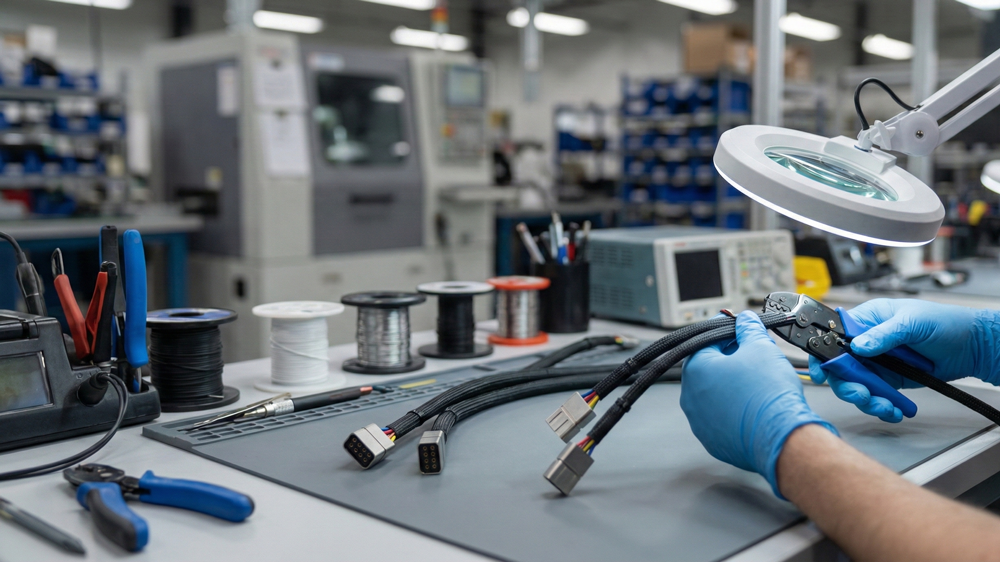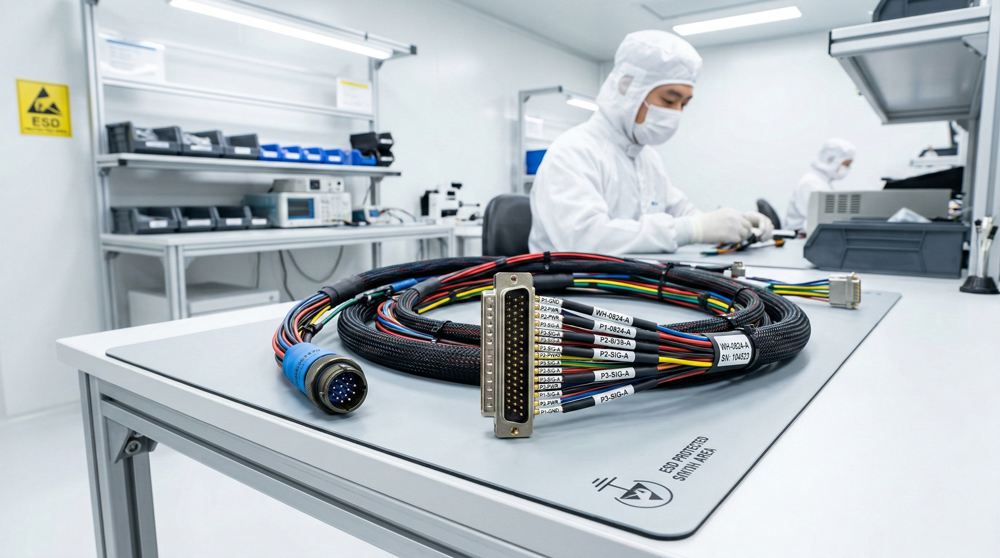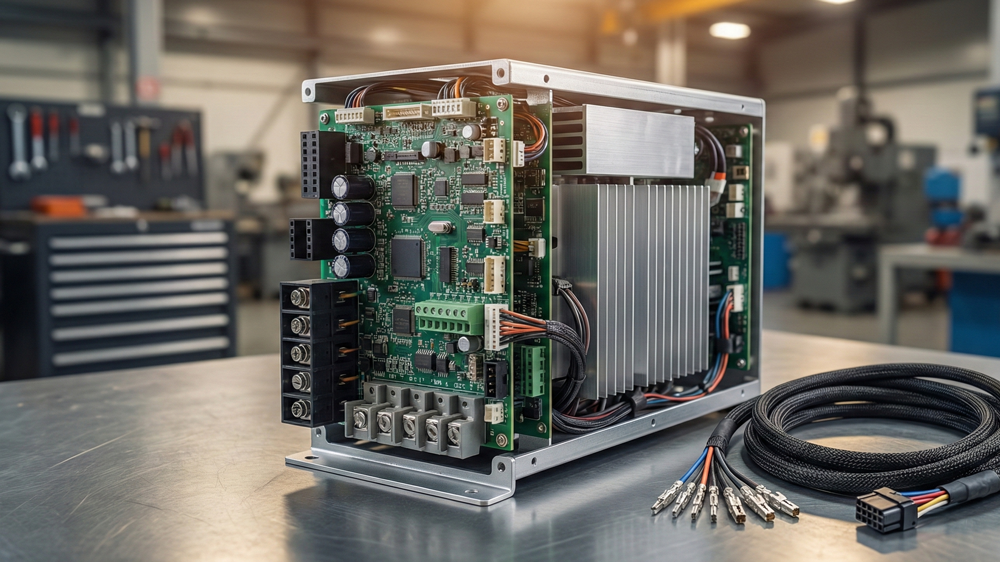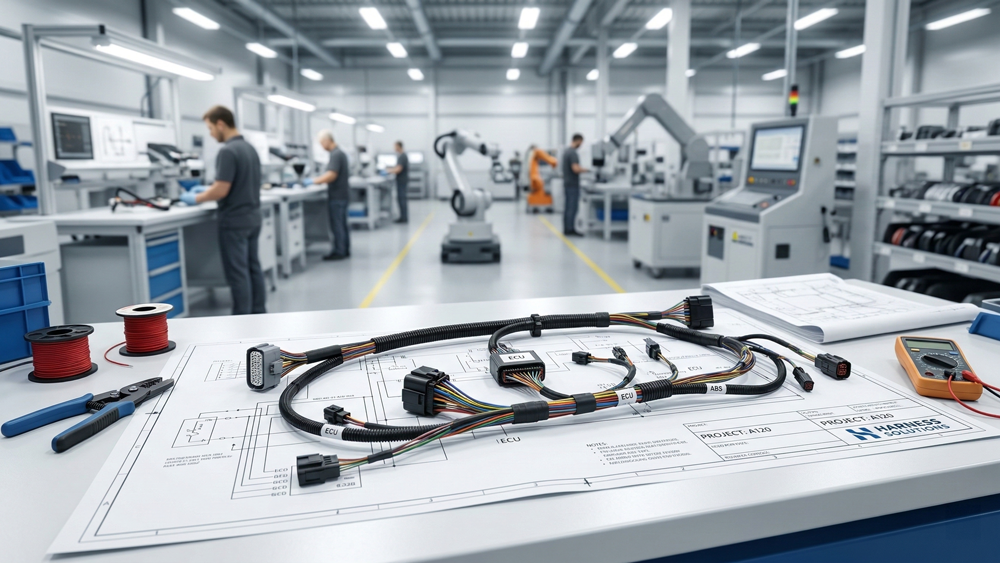
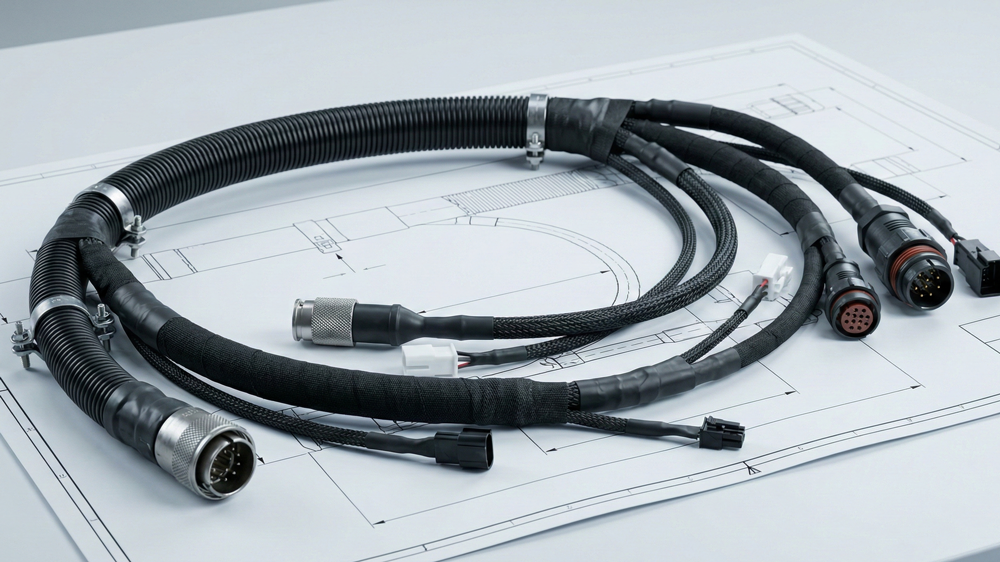
Environmental protection design is one of the most underestimated parts of cable assembly development. Many OEM teams define conductor size, connector type, and electrical performance early, but treat sealing and environmental protection as a late-stage detail. That usually works until the first field failures appear: moisture ingress, corrosion at contacts, jacket cracking, intermittent faults after washdown, or performance drift in dusty or chemical environments. At that point, the project often discovers that the original design matched the electrical requirement but not the real operating environment.
This environmental protection design guide for cable assemblies is written for OEM buyers, engineers, and quality teams who need a practical way to define sealing and protection requirements before sample approval and production release. The goal is not only to “make it waterproof,” but to build a cable assembly environmental protection design that matches the actual environment, expected service life, and manufacturing repeatability.
If your project also includes repeated motion, drag chain routing, or flex-life risk, this topic connects naturally with our High Flex Cable Assemblies Design Guide for OEM Buyers and Strain Relief Design for High Flex Cable Assemblies. In many OEM applications, environmental protection and dynamic reliability must be designed together rather than separately.
Table of Contents
ToggleCable Assembly Environmental Protection Design Starts with the Real Environment
A strong cable assembly environmental protection design always starts with the real exposure profile, not with a target IP number. In many RFQs, the first sealing requirement is written as “IP67” or “waterproof,” but that alone does not tell the supplier what the cable assembly will experience in service. A cable used outdoors on a sensor mast, a cable inside an industrial enclosure, and a cable near coolant splash in automation equipment may all ask for “waterproof” performance, yet the actual risks are completely different.
For OEM teams, the most useful first step is to describe the real environment in plain engineering terms. This includes whether the assembly sees temporary immersion, rain, washdown, condensation, dust loading, oil mist, coolant splash, UV exposure, salt atmosphere, vibration, or repeated connector mating in wet conditions. Once these conditions are defined, sealing design choices become much more rational. Without that context, it is easy to over-design one area and miss the real failure mode elsewhere.
How to Define Environmental Exposure for Harsh Environment Cable Assemblies
How to design sealed cable assemblies for harsh environments depends on identifying which stress dominates over time. In some applications, direct water ingress is the primary risk. In others, the bigger issue is chemical attack on jacket or seal materials, thermal cycling that pumps moisture through interfaces, or dust contamination that damages seals during repeated mating.
This is why harsh environment cable assemblies should be specified by exposure conditions, not only by protection labels. When the exposure profile is clear, suppliers can recommend better combinations of connector sealing, overmold geometry, jacket materials, and test methods.
IP Rating Guide for Cable Assemblies and What IP Ratings Do Not Cover
An IP rating guide for cable assemblies is essential because IP language is widely used and widely misunderstood. IP ratings are useful, but they do not automatically guarantee long-term field reliability. They describe protection performance under defined test conditions, which may or may not represent your actual operating environment.
For OEM buyers, the main value of IP ratings is that they create a baseline reference for enclosure-style ingress protection. However, cable assemblies are not only “enclosures.” They include connectors, cable exits, overmolds, strain relief transitions, and interfaces that can behave very differently in real use compared with a lab IP test condition.
Cable Assembly IP Rating Guide for OEM Buyers
A practical cable assembly IP rating guide for OEM buyers should answer a simple question: “What does this IP requirement mean in our application, and what does it not mean?” For example, a project may require immersion resistance but also face oil exposure, pressure spray, or repeated handling. In that case, IP language is only one part of the requirement.
That is why OEM cable assembly sealing requirements should combine IP targets with actual use-case descriptions. This reduces ambiguity during RFQ review and improves test relevance later.
IP Rating Is Not the Same as Long-Term Sealing Reliability
A cable assembly can pass an ingress test and still fail later due to material aging, seal compression set, connector wear, improper overmold adhesion, or capillary paths near strands and interfaces. In real service, time-dependent degradation often matters as much as initial sealing performance.
For this reason, environmental protection design should not stop at “IP pass.” It should also address durability, mating cycles, movement, thermal exposure, and manufacturing consistency.
Cable Assembly Sealing Design at Connector and Overmold
Cable assembly sealing design at connector and overmold is where most real-world failures are prevented—or created. In many projects, sealing risk is concentrated at transitions: connector interfaces, cable exits, overmold boundaries, backshell entries, and branch points. These are exactly the places where geometry changes, stiffness changes, and manufacturing variation can open leakage paths.
A good sealing design does not depend on one feature alone. It usually comes from multiple layers of protection working together, such as connector interface seals, correct compression geometry, overmold support, proper cable-jacket compatibility, and controlled assembly process parameters. When teams rely on a single feature to do all the sealing work, reliability becomes fragile.
Connector Sealing Design for Cable Assemblies in Wet and Dusty Environments
Connector sealing design for cable assemblies should be evaluated under realistic mating and installation conditions. A connector may be well-sealed in catalog form, but sealing performance in the finished assembly also depends on cable diameter tolerance, rear sealing geometry, installation torque, strain path, and how the connector is mounted in the final product.
This is especially important in wet and dusty environments where contamination can damage sealing surfaces over time. OEM teams should define not only the connector series but also the assembly conditions that influence the seal in real use.
Overmold Sealing Design for Cable Assembly Cable Exit and Transition Zones
Overmold sealing design often looks simple in drawings and becomes complex in production. The cable exit area must balance sealing, strain relief, and manufacturability. If the overmold is too stiff or the transition length is too short, the design may create a stress concentration that later cracks or opens a leakage path. If the fit or material compatibility is weak, adhesion issues may appear after thermal cycling or chemical exposure.
For many waterproof cable assemblies, the overmold and the connector rear seal must be treated as one integrated sealing system. Designing them separately is a common source of field leakage.
Sealing Materials for Cable Assemblies in Harsh Environments
Sealing materials for cable assemblies in harsh environments should be selected as a system, not as isolated parts. Teams sometimes choose a good connector seal material but overlook the jacket material, overmold compound, potting chemistry, or adhesive compatibility. The result is a design where one material survives but another degrades first and breaks the sealing path.
Material selection should reflect real exposure conditions over time. Temperature range, UV exposure, oils, coolants, cleaning agents, humidity, and mechanical stress can all change material behavior. A material that performs well in short-term testing may still harden, swell, crack, or lose sealing force in long service conditions.
Material Compatibility in Cable Assembly Sealing Design
Material compatibility is one of the most important and most overlooked parts of cable assembly sealing design. Seals, overmolds, potting compounds, cable jackets, and connector housings interact at interfaces. If these interfaces are not compatible, leakage may appear even when each individual material looks acceptable on its own.
For OEM projects, asking about compatibility early is often more valuable than asking only for a single “waterproof material.” A robust sealing design depends on interface behavior, not just datasheet claims.
Sealing Materials for Cable Assemblies in Outdoor and Industrial Applications
Outdoor and industrial applications often combine multiple stresses, such as UV plus moisture, or coolant splash plus thermal cycling. That combination is what drives many failures. Sealing materials for cable assemblies in harsh environments should therefore be evaluated for combined exposure risk, especially in projects with long service-life expectations.
This is also where supplier technical support matters. A good manufacturing partner should be able to discuss material trade-offs in the context of your environment rather than offering one default sealing solution for every project. You can align these early discussions through our Strong Technical Support and Custom Cable Assemblies pages.
Environmental Protection Design and Movement Must Be Reviewed Together
Environmental protection design can fail even when sealing features look correct on paper if the cable assembly moves in service. Repeated bending, vibration, torsion, or pull force can gradually disturb sealing interfaces, especially at cable exits and transition zones. This is why environmental protection and strain relief should be reviewed together for any assembly that is not completely static.
In practical OEM work, movement-driven seal failures are often misdiagnosed as “bad waterproofing” when the real root cause is mechanical stress concentration. If the strain path is not controlled, the seal may be forced to carry motion loads it was never designed to handle.
Cable Assembly Sealing Design at Connector and Overmold in Dynamic Applications
In dynamic applications, cable assembly sealing design at connector and overmold should be validated under motion conditions that resemble real use. A static sealing test alone may not reveal the actual failure mode if the assembly bends repeatedly near the transition.
This is one reason why environmental protection design should be linked with Bend Radius and Flex Life for Cable Assemblies and High Flex Cable Testing Guide for OEM Buyers when the project includes movement.
Condensation, Pressure Change, and Hidden Moisture Paths in Cable Assemblies
Many cable assembly sealing failures are not caused by direct external water ingress. They come from condensation, pressure changes, or hidden moisture paths that were not considered during design. In assemblies used across temperature swings, internal moisture can condense and create corrosion or signal instability even when no obvious leak is visible from the outside.
Capillary paths along strands, interfaces near overmolds, and micro-gaps in transition regions can also transport moisture slowly over time. These failure modes are easy to miss in short tests and difficult to troubleshoot in field returns.
For OEM buyers, the lesson is simple: if the application includes thermal cycling or condensation risk, the environmental requirement should say so explicitly. Otherwise, the supplier may validate only splash or immersion resistance and miss the real reliability threat.
Waterproof Cable Assembly Testing Guide for OEM Buyers and Validation Planning
A waterproof cable assembly testing guide for OEM buyers should define validation as a staged plan, not a single test event. The exact test combination depends on the application, but the principle is the same: test methods should reflect real exposure risk, likely failure locations, and manufacturing variation.
In many projects, the first test verifies concept feasibility, while later tests support sample approval and production release. When OEM teams separate screening from qualification and define acceptance criteria early, test results become much more useful for decision-making.
Cable Assembly Environmental Protection Testing and Manufacturing Consistency
Cable assembly environmental protection testing should also consider manufacturing consistency. A design that passes once in a lab may still fail in production if sealing performance is highly sensitive to process variation, such as molding parameters, assembly torque, cure conditions, or cable diameter tolerance.
That is why validation planning should include both design suitability and process repeatability. This aligns naturally with Tests & Inspections and Quality Guarantee requirements for OEM supply projects.
Waterproof Cable Assembly Testing Guide for OEM Buyers and Failure Analysis
When a sample fails sealing validation, the project should already know how failure evidence will be captured and reviewed. Without a clear failure-analysis process, teams often repeat tests without learning what changed.
A better approach is to document failure location, exposure condition, sample version, process condition, and design revision before retesting. This turns validation into a learning loop instead of a pass/fail argument.
OEM RFQ Checklist for Cable Assembly Environmental Protection
OEM RFQ checklist for cable assembly environmental protection is one of the most effective tools for preventing misunderstanding. Many sealing problems begin before sampling because the RFQ uses broad terms like “waterproof” or “outdoor use” without defining the actual environment, life expectation, or validation criteria.
A stronger RFQ describes the application environment, exposure type, protection target, connector mating conditions, movement conditions, material concerns, and acceptance logic. It also clarifies whether the project needs only sample validation or includes process consistency expectations for production release.
Short routing photos, connector installation sketches, and simple use-case notes often improve supplier understanding more than long generic requirement lists. In environmental protection work, context is usually more valuable than a single label.
Common Mistakes in Cable Assembly Environmental Protection Design
Common mistakes in cable assembly environmental protection design usually come from narrowing the problem too early. Teams may focus only on IP rating and ignore material aging, or focus only on connector sealing and ignore cable-exit strain. Some projects validate static sealing but forget dynamic motion. Others choose materials by datasheet alone without checking interface compatibility.
Another frequent mistake is treating sealing and manufacturing as separate issues. In real production, environmental protection performance depends heavily on assembly control. A good design with unstable process control can still produce unreliable waterproof cable assemblies.
The most reliable projects are the ones that treat environmental protection as a system problem: environment definition, sealing architecture, materials, movement, testing, and process repeatability all reviewed together.
Conclusion: Environmental Protection Design Guide for Cable Assemblies Must Be Application-Driven
The best environmental protection design guide for cable assemblies is not a checklist built around one keyword like “waterproof” or one label like “IP67.” It is an application-driven design and validation method that starts with the real environment and follows the full sealing path through connector interfaces, overmold transitions, materials, movement, and testing.
When OEM engineering, sourcing, and quality teams align early on environmental exposure, sealing strategy, and validation expectations, cable assembly environmental protection design becomes much more predictable. That leads to fewer field failures, clearer supplier communication, and more confident production release decisions.
FAQ
Is an IP rating enough to define cable assembly environmental protection requirements
Usually not. IP ratings are useful baseline references, but OEM projects often need additional requirements for chemicals, UV, thermal cycling, movement, or mating conditions.
Where do cable assembly sealing failures most often happen
Many failures happen at transition zones, such as connector exits, overmold boundaries, cable-entry seals, backshell entries, and branch points rather than in the cable jacket mid-span.
Why should sealing design and strain relief be reviewed together
Because movement loads can damage sealing interfaces over time. If the strain path is not controlled, the seal may carry bending or pull loads and fail early.
How should OEM buyers define environmental protection requirements in an RFQ
Describe the real environment, exposure type, movement condition, target protection level, and validation expectations instead of using only broad terms like “waterproof.”
Do waterproof cable assemblies also need process repeatability checks
Yes. A design can pass in one sample and still fail in production if sealing performance is sensitive to molding, torque, curing, or dimensional variation.
CTA
Need Help Defining Cable Assembly Sealing and Environmental Protection for an OEM Project
If your project involves outdoor use, industrial washdown, dust exposure, coolant splash, or harsh environment routing, we can help you build a more practical cable assembly environmental protection design before sample approval and production release.
We can support environment-risk mapping, sealing architecture review, connector and overmold transition assessment, material selection discussion, and validation planning for waterproof cable assemblies.
If you already have drawings, connector part numbers, routing photos, environment notes, or test reports, contact us through our Contact page. You can also review our Custom Cable Assemblies, Tests & Inspections, Quality Guarantee, and Assembly Capabilities pages before starting the discussion.