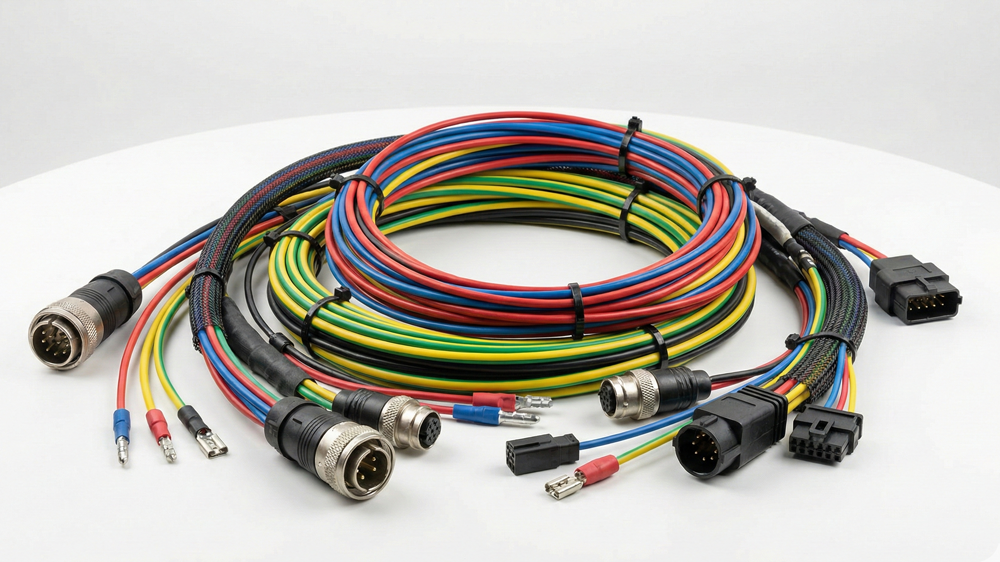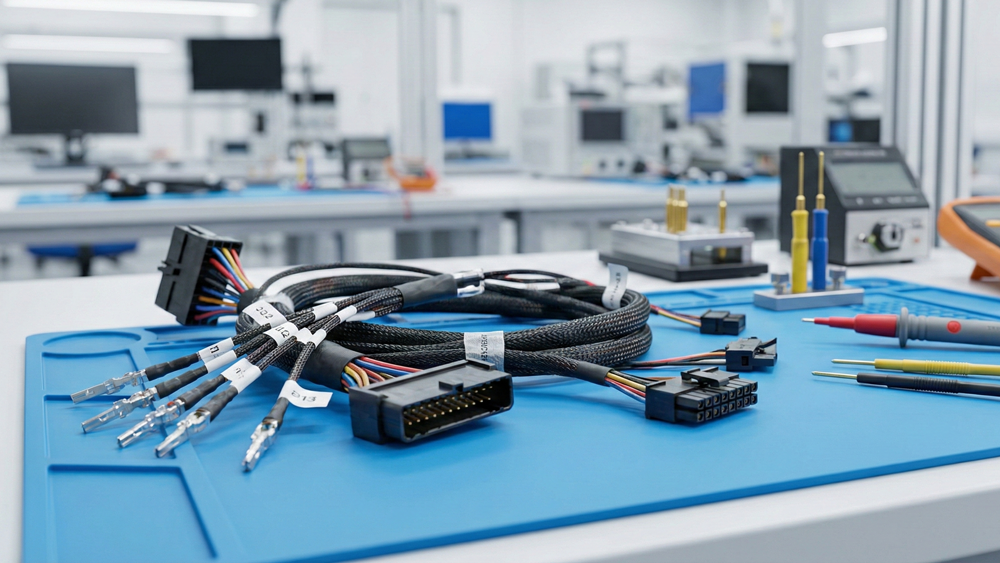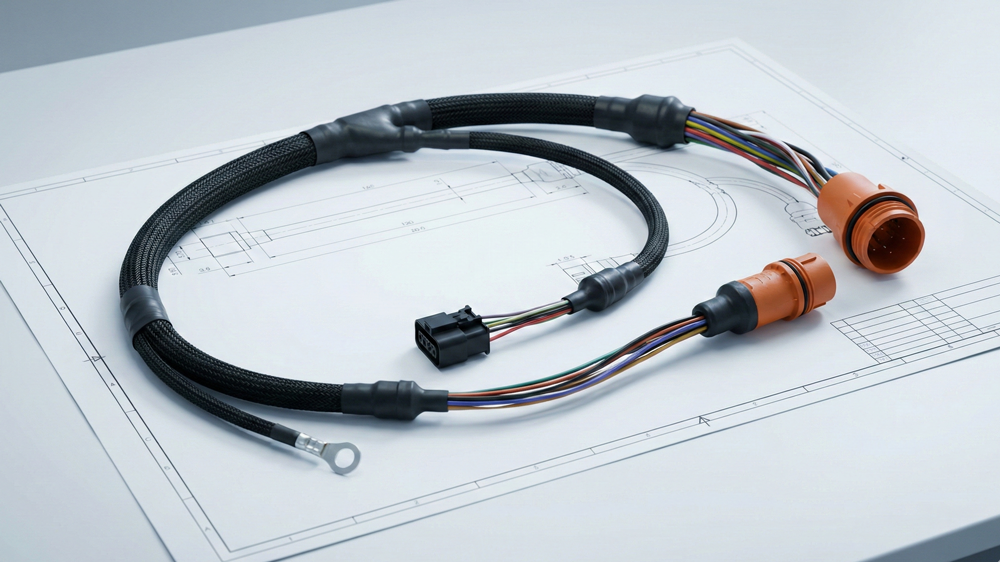

This MOQ and forecast strategy guide for cable assemblies helps procurement and program teams reduce the hidden costs that come from volatility: expediting, premium freight, shortages, and excess inventory. In wiring harness sourcing, MOQ is not just a supplier demand. MOQ is a pricing signal and a planning constraint that reflects component lead times, supplier setup economics, and the risk the supplier is carrying on your behalf.
A good MOQ and forecast strategy is not about locking yourself into rigid commitments. It is about creating enough predictability that suppliers can plan materials, stabilize labor, and deliver on time—while you retain the flexibility your business actually needs.
For the broader TCO model behind this, see Total Cost Guide for Custom Cable Assemblies. This supporting article focuses on how MOQ, forecasting, and procurement structures change total program cost.
Table of Contents
ToggleWhy MOQ drives total cost in cable assembly sourcing
MOQ affects cost through four mechanisms: unit price, lead time, inventory, and quality risk.
When MOQs are too small relative to supplier economics, suppliers price in setup overhead, material fragmentation, and schedule disruption. When MOQs are too large relative to real demand, buyers overstock, increase carrying cost, and risk obsolescence when designs change.
MOQ also affects lead time. Small, frequent POs often increase expedite probability because suppliers wait for firm orders before allocating components. Large, predictable releases reduce expedite probability but require demand discipline.
The buyer objective is to choose an order structure that minimizes both shortage risk and excess risk.
Wiring harness MOQ is often driven by components, not labor
In many harness programs, the true MOQ is not the assembly MOQ. It is the component MOQ and lead time constraints of connectors, terminals, seals, and specialty wire.
A supplier may be willing to assemble 10 harnesses, but if the connector MOQ is 500 and lead time is eight weeks, the buyer is indirectly buying a planning problem.
This is why MOQ conversations must include component sourcing strategy. If the supplier is responsible for materials, confirm how they allocate components and whether alternates are allowed. If alternates are allowed, they must be controlled through approval and re-validation triggers. Use Cable Assembly Change Control and ECO Guide to prevent MOQ-driven substitutions from becoming quality drift.
Cable assembly forecast planning is a lead time lever
Forecasting is not only about inventory. It is a lead time lever because it determines whether suppliers can allocate materials early, plan capacity, and avoid last-minute procurement.
A forecast does not need to be perfect. It needs to be structured. A practical approach is to provide a rolling forecast with a defined “frozen window” and a defined “flex window.”
Frozen window means the buyer commits to quantities within that period. Flex window means quantities can move within a defined range. Outside that period, the forecast is directional and used for planning only.
This structure reduces expediting and lowers unit price pressure because suppliers can plan.
If you want the schedule planning structure behind this, connect to Cable Assembly Lead Time Planning Guide.
MOQ versus lead time tradeoffs buyers should model
MOQ is often negotiated as a number. Buyers should instead negotiate it as a tradeoff between price and lead time stability.
A common supplier pattern is: lower MOQ equals higher unit price and less reliable lead time; higher MOQ equals better price and more reliable lead time. The buyer must decide where the curve is acceptable.
The best way to do this is to request tiered pricing tied to release sizes and to ask suppliers to provide lead time expectations per tier. Then choose a tier that matches program volatility.
To keep the decision practical, focus on two or three tiers rather than many. The goal is to minimize decision complexity while gaining leverage.
Wiring harness safety stock strategy
Safety stock is not free. But it can be cheaper than expediting and line stops.
A buyer-friendly approach is to define which items deserve safety stock: long lead time connectors, hard-to-source terminals, special seals, and high-mix wire types that create procurement bottlenecks. Then define who owns safety stock: supplier-owned, buyer-owned, or consigned.
Supplier-owned safety stock can reduce lead time risk but may increase unit price because the supplier carries inventory cost. Buyer-owned safety stock can reduce unit price but requires buyer warehousing and obsolescence management. Consignment can balance both if accounting and process are aligned.
Whatever model you choose, define traceability and revision control rules so old revision inventory doesn’t leak into new builds.
Blanket PO strategy for cable assemblies
Blanket POs are one of the most effective tools for reducing expediting and reducing supplier risk pricing—when structured correctly.
A blanket PO typically establishes: total commitment volume, validity period, release schedule, pricing tiers, and the change rules for releases. The buyer benefits by securing price and capacity. The supplier benefits by securing planning predictability.
The biggest mistake is using blanket POs without a change framework. If you allow unlimited changes, you lose the predictability you intended to buy. If you allow zero changes, you create internal friction and force buyers to overcommit.
A practical model is to combine a blanket PO with a frozen/flex forecast window and to define change fees only when changes violate the agreed flexibility rules.
Demand flexibility rules that reduce disputes
Forecasts fail when flexibility is undefined. Suppliers will treat changes as disruptions; buyers will treat changes as normal business. Disputes follow.
Define flexibility in measurable terms. Examples include: within the frozen window, changes allowed only within plus/minus a defined percentage, or changes allowed only with a defined notice period. In the flex window, larger changes are allowed but may trigger lead time changes or pricing changes.
The purpose is not to penalize buyers. It is to make the tradeoff explicit: more flexibility costs more and increases lead time risk; more commitment reduces cost and stabilizes lead time.
MOQ strategy for prototype, pilot, and production harness builds
MOQ strategy should evolve across stages.
Prototype builds should prioritize speed and learning. MOQ is often higher per-unit because setup and procurement are inefficient at low quantities. Buyers should accept this and focus on reducing rework loops through clear RFQ inputs and evidence gates.
Pilot builds should prioritize repeatability evidence. MOQ should be aligned with a defined pilot plan and should include documentation and evidence pack deliverables so production readiness can be assessed.
Production builds should prioritize stability and cost. This is where blanket POs, forecast windows, and safety stock strategies create the biggest value.
For stage gating and evidence discipline, connect this to Prototype to Production Guide for Cable Assemblies.
MOQ-driven quality risks and how to prevent them
MOQ pressure can create quality risk in predictable ways. Suppliers may propose alternates to reduce procurement constraints. Suppliers may batch builds to reduce setups, which can change lead time behavior. Suppliers may substitute packaging or labels to meet schedule pressure.
The buyer defense is not to reject all alternates. The defense is to control alternates through approval and evidence. Require that alternates are proposed formally, validated appropriately, and traceable to lots.
This is why evidence packs and change control reduce total cost: they prevent “cost savings” from becoming “warranty costs.” Use Quality Evidence Pack Guide to standardize proof and use Cable Assembly Change Control and ECO Guide to standardize approval rules.
Practical questions buyers should ask suppliers
To make MOQ and forecast strategy actionable, ask suppliers questions that reveal real constraints:
What components drive MOQ and lead time? What is the supplier’s procurement plan if demand shifts? What safety stock options exist and what are the carrying cost impacts? How does pricing change by release size? What changes are acceptable within the frozen window? What alternates are allowed and what approval process governs them? How is old revision inventory prevented from mixing into new releases?
Suppliers who can answer these precisely are usually the suppliers who deliver stable lead times and stable pricing.
A practical cable assembly MOQ and forecast framework
Use this simple framework to align internal stakeholders and suppliers:
Define your demand pattern, including base demand, peaks, and volatility. Define the planning horizon that matters for component lead times. Define a frozen window where releases are firm. Define a flex window where changes are allowed within a defined range. Define safety stock policy for long-lead components. Define pricing tiers tied to release quantities. Define change control rules for alternates and revisions.
This framework is simple enough to execute and powerful enough to reduce expediting frequency.
Conclusion
MOQ and forecast strategy is one of the most underused levers in wiring harness sourcing. When structured well, it reduces unit price pressure, stabilizes lead time, reduces premium freight, and lowers warranty risk by preventing MOQ-driven substitutions and revision mixing.
If you want lower total cost, don’t negotiate MOQ as a number. Negotiate MOQ as a system: components, planning windows, release rules, and change control backed by evidence.
FAQ
Why do suppliers push high MOQs for cable assemblies?
Often because component MOQs and lead times are the real constraint, and because setups and procurement fragmentation create real costs at small release sizes.
What is the best forecast structure for harness programs?
A rolling forecast with a frozen window and a flex window. It creates predictability for suppliers and flexibility for buyers.
Should we use blanket POs for cable assemblies?
Often yes for production programs. Blanket POs reduce expediting and stabilize pricing when paired with clear release and flexibility rules.
How do we avoid MOQ-driven substitutions?
Define an approval matrix and re-validation triggers, require evidence packs for changes, and enforce controlled change workflows.
How does MOQ strategy reduce total cost?
It reduces premium freight, reduces line-stop risk, stabilizes supplier planning, and prevents excess inventory when combined with clear flexibility rules.
CTA
If you want an MOQ and forecast plan that reduces expediting and stabilizes supply, share your annual volume, demand volatility, connector families, and launch timeline. We can propose a rolling forecast structure, release tiers, and safety stock options that fit your TCO goals.
- Discuss your program: Contact
- Explore scope: Custom Cable Assemblies
- Lead time planning reference: Cable Assembly Lead Time Planning Guide
- Change control discipline: Cable Assembly Change Control and ECO Guide