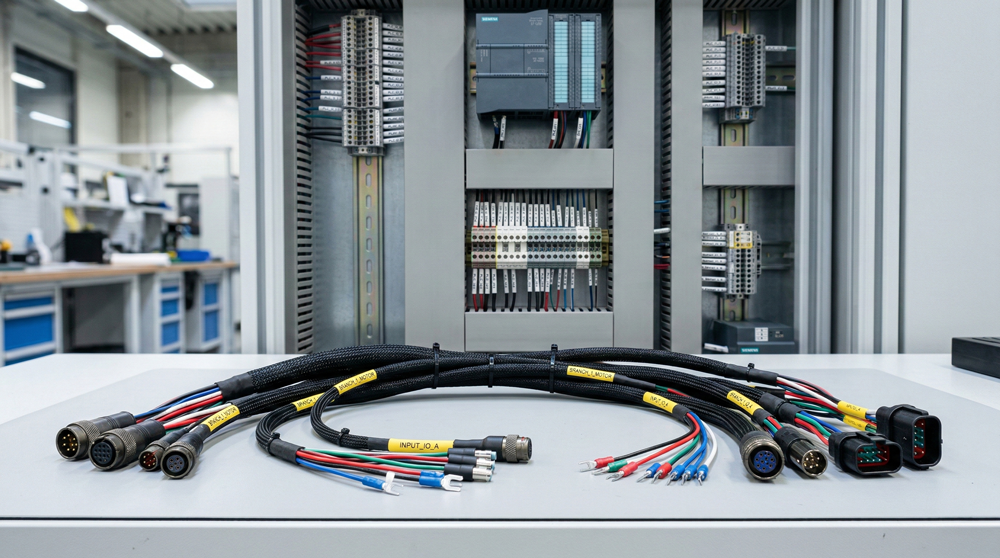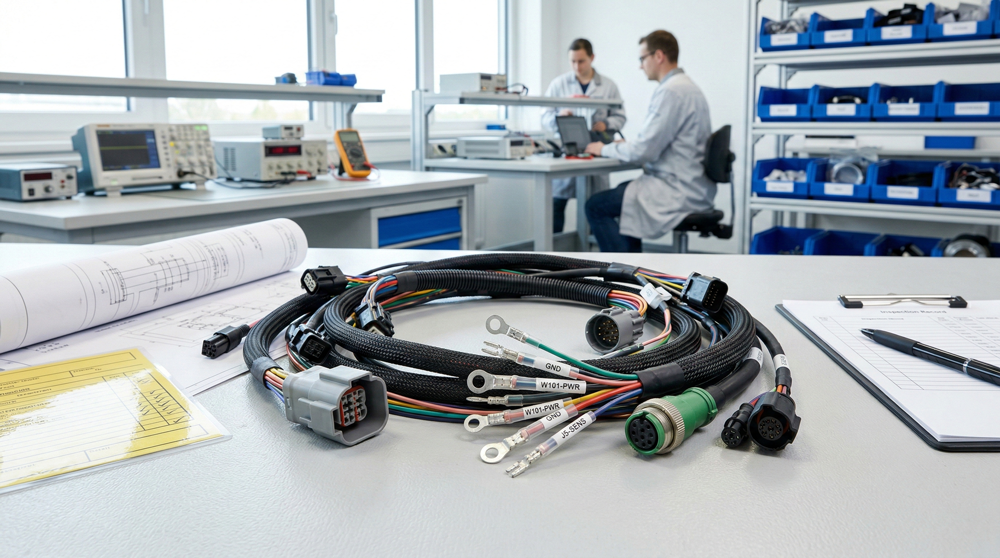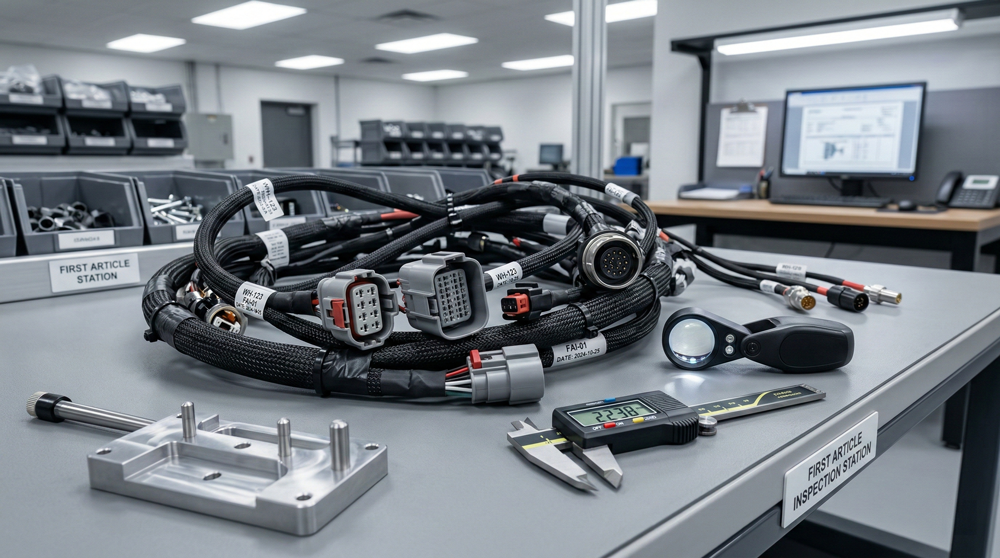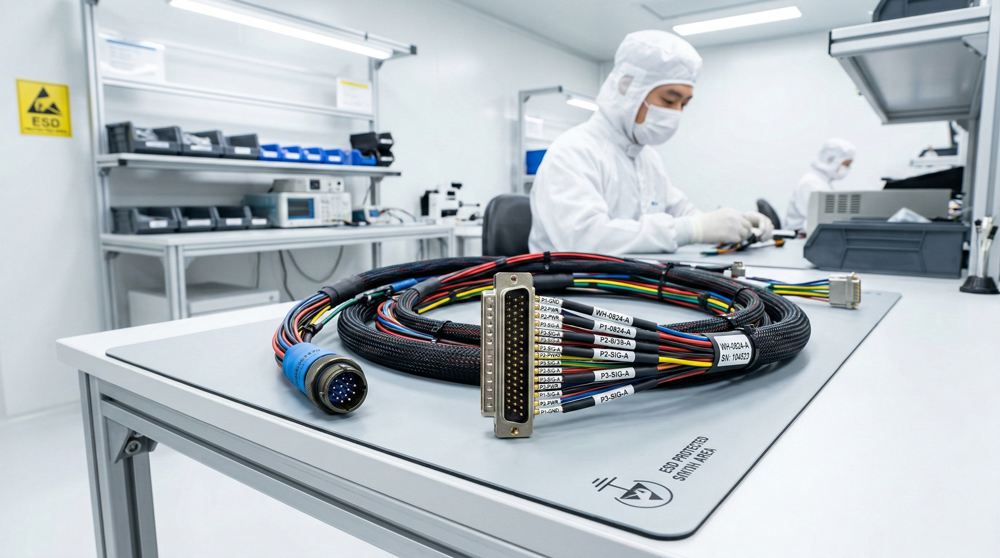
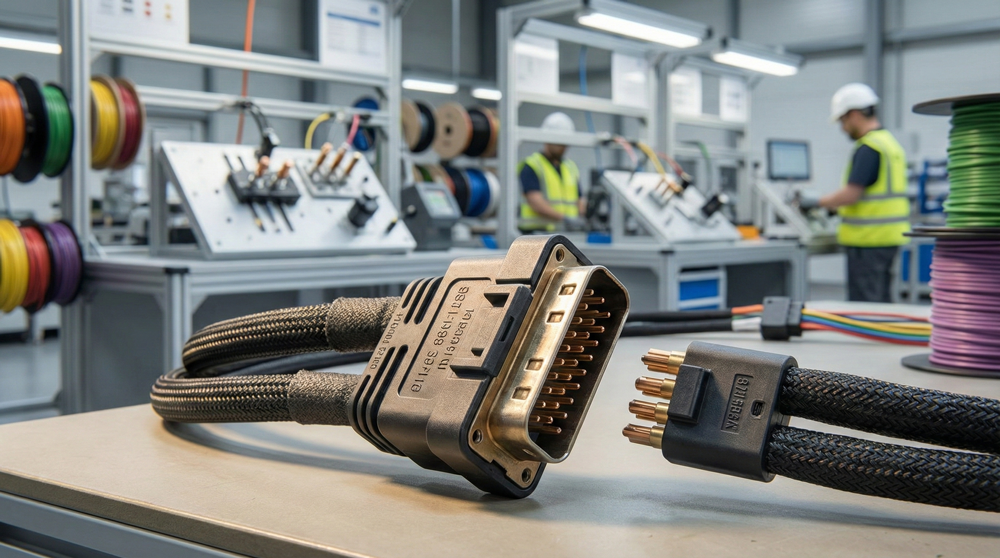
Mating cycle capability is one of the most underestimated topics in connector selection for cable assemblies. Many OEM teams select connectors based on pin count, current rating, and package fit, then assume mating durability will be “good enough” unless the application is obviously high-cycle. In real projects, that assumption often fails because the connector experiences far more mating events than expected across production, testing, installation, service, and troubleshooting.
A practical mating cycle guide for cable assemblies should help OEM buyers and engineers evaluate connector durability based on real use patterns, not only catalog labels. The goal is not to find the highest mating cycle rating in a datasheet. The goal is to choose a connector system that maintains stable contact performance and acceptable service behavior throughout the cable assembly’s actual life.
This article is part of the P9 connector selection series and works with Connector Selection Guide for Cable Assemblies, Connector Current Rating for Cable Assemblies, and Connector Plating Guide for Cable Assemblies.
Table of Contents
ToggleMating Cycles and Real Service Use
Mating cycles for cable assemblies should always be estimated from real service use, not from a simplified assumption such as “one installation and one replacement.” In many OEM projects, the connector is mated and unmated multiple times before the product even reaches the end user. Production assembly, functional testing, inspection, rework, installation verification, and field diagnostics can all add cycle count.
This is why connector mating cycle life should be treated as a total-life exposure question. A connector that looks sufficient for the planned maintenance schedule may still be under-rated once all additional handling events are included.
Mating Cycles and Total Life Exposure
Total life exposure should include every meaningful mating event across the product lifecycle. Even when each stage adds only a few cycles, the total can become significant in serviceable or high-value equipment. OEM teams that estimate cycle demand too low often discover the issue later as contact instability or premature wear.
A stronger review starts by mapping the full lifecycle rather than focusing only on field maintenance.
Mating Cycles and Service Assumptions
Service assumptions should also be realistic. Some products are expected to be “rarely serviced,” but field troubleshooting, upgrades, and replacement operations can increase connector handling beyond the original plan. If the mating-cycle assumption is too optimistic, connector durability margin may disappear sooner than expected.
For OEM buyers, documenting service assumptions early improves connector recommendations and reduces later redesign risk.
Connector Mating Cycle Life and Contact Wear
Connector mating cycle life is closely tied to contact wear in cable assemblies. Each mating event produces mechanical interaction at the contact interface, and repeated mating changes the surface condition over time. As wear accumulates, contact behavior can shift, especially if the connector is used frequently, handled roughly, or exposed to contamination.
This does not mean every cable assembly needs a high-cycle connector. It means connector mating cycle life should be matched to the real duty profile, including maintenance style and operator behavior.
Contact Wear and Performance Stability
Contact wear can affect performance stability before a connector is considered “failed” in obvious mechanical terms. In some applications, the connector still mates physically but shows rising resistance, intermittent behavior, or reduced margin under vibration and motion. This is especially important in signal-sensitive systems and serviceable equipment.
A practical mating cycle review should therefore focus on stable performance across life, not only whether the connector can still be inserted and removed.
Contact Wear and Handling Conditions
Handling conditions influence wear rate. Mating alignment, access constraints, operator force, and cleanliness can all change how quickly contacts wear in the field. A connector that performs well in controlled lab cycling may age differently in a cramped installation with repeated maintenance handling.
This is why mating cycle planning should reflect real service conditions rather than ideal test behavior only.
Mating Cycles and Maintenance Frequency
Maintenance frequency is one of the biggest drivers of connector mating cycle demand in cable assemblies. Many teams estimate cycle life based on scheduled maintenance only, but actual connector use often includes unscheduled service, troubleshooting, diagnostics, inspection, and training activities. These extra events may double or triple the real cycle exposure over time.
For OEM projects, maintenance frequency should be reviewed in both planned and unplanned scenarios. If the product is field-serviceable, connector durability should support realistic service behavior, not only ideal maintenance plans.
Maintenance Frequency and Field Service
Field service often adds more mating cycles than expected because technicians may reconnect components multiple times during diagnosis. In products with modular replacement or distributed service teams, connector handling can vary widely between operators and service locations.
OEM teams should consider this variability when reviewing connector mating cycle life. A narrow durability margin may be acceptable in a closed system but risky in a widely serviced product.
Maintenance Frequency and Production Testing
Production testing also contributes to cycle count and is frequently ignored in early connector selection. Assembly verification, continuity testing, functional checks, and repair loops may all require repeated connection and disconnection. In some projects, these pre-field cycles consume a meaningful portion of the connector’s practical durability margin.
This is one reason mating cycle review should include manufacturing and test workflows, not just field use.
Mating Cycles and Connector Plating
Mating cycles and connector plating should be evaluated together in cable assembly projects. Contact surface behavior over repeated mating is influenced by the plating system, and plating selection should reflect expected cycle exposure. A plating choice that is cost-effective in low-cycle applications may become a reliability risk in maintenance-heavy products.
This is why connector mating cycle life should not be discussed as an isolated catalog rating. It should be coordinated with plating strategy, contact-system behavior, and service environment.
Mating Cycles and Plating Wear Risk
Plating wear risk increases when connectors are frequently mated, handled in less controlled conditions, or exposed to contamination. If cycle demand is underestimated, the connector may reach a wear-related performance limit earlier than expected. The issue may first appear as unstable contact behavior rather than obvious visible damage.
OEM teams can reduce this risk by linking mating-cycle assumptions directly to plating selection and validation planning.
Mating Cycles and Long Service Life
Long service life products often need more careful coordination between cycle expectations and plating decisions. Even if annual maintenance frequency looks low, multi-year operation can still create meaningful cumulative mating exposure. A connector selected for short-term cost may not provide stable long-term behavior in these cases.
This connects directly with Connector Plating Guide for Cable Assemblies.
Mating Cycles and Connector Locking Behavior
Mating cycle reliability in cable assemblies is also influenced by connector locking behavior. Locking systems affect how consistently connectors are fully mated, how much force is applied during operation, and how easy it is to disconnect in limited-access spaces. A locking system that is too difficult to operate can increase handling stress and poor mating behavior, while an overly loose system may increase incomplete mating or accidental disconnect risk.
For OEM buyers, this means mating cycle performance is not only about contact durability. It is also about how the connector is used repeatedly in the real product.
Mating Cycles and Service Ergonomics
Service ergonomics matter because difficult access or awkward release methods can cause technicians to twist cables, apply excess force, or remate repeatedly. These behaviors increase wear and can reduce the practical life of the connector system even if the catalog mating cycle rating appears sufficient.
A connector with better service ergonomics may provide better real-life mating-cycle performance even at similar nominal ratings.
Mating Cycles and Incomplete Mating Risk
Repeated service in tight spaces can also increase incomplete mating risk. Connectors that are hard to align or provide weak feedback may be remated multiple times during installation and diagnostics. This increases cycle exposure and may create intermittent field issues if the connector is not fully seated.
Mating-cycle planning should therefore include connector usability, not only durability numbers.
Mating Cycle Validation for OEM Buyers
Mating cycle validation for cable assemblies should confirm stable connector behavior under realistic use conditions. The goal is not only to prove that a connector survives a certain number of lab cycles, but to determine whether contact performance, retention behavior, and service usability remain acceptable across the expected lifecycle.
Validation becomes especially important when the product is field-serviceable, mission-critical, maintenance-heavy, or sensitive to contact stability. In these applications, mating cycle assumptions should be tested as part of connector-system validation, not treated as paperwork.
Mating Cycle Validation and Sample Condition
Sample condition matters in mating cycle validation. New samples may not represent connectors after production handling, contamination exposure, or field-style operation. If the application includes vibration, environmental stress, or repeated maintenance handling, validation should reflect those conditions in a staged and practical way.
The goal is not to over-test every project, but to test the assumptions that drive connector risk.
Mating Cycle Validation and Repeatability
Repeatability is a core part of mating-cycle confidence. One connector sample performing well in a controlled test does not guarantee production consistency if assembly variation, operator handling, or supplier variation affects real behavior. OEM teams should review whether mating-cycle performance remains stable across samples and conditions before release.
This aligns with the reliability approach in Tests & Inspections and Quality Guarantee.
OEM RFQ for Mating Cycle Review
An OEM RFQ for mating cycle review should describe how the connector will be used throughout the cable assembly lifecycle. A stronger RFQ includes expected maintenance frequency, serviceability requirements, production and test handling cycles, installation access constraints, operator conditions, target service life, and whether the application is signal-sensitive or power-focused.
If the exact cycle count is uncertain, OEM teams should still provide a realistic range and explain the service context. This helps suppliers recommend connectors with a suitable durability margin and identify tradeoffs in plating, locking systems, and connector family choices.
Short notes about field service workflow and installation access often improve mating-cycle recommendations more than generic requirement text.
Common Mating Cycle Mistakes
Common mating cycle mistakes in cable assembly connector selection usually come from underestimating lifecycle handling. One mistake is counting only scheduled maintenance and ignoring production testing, rework, diagnostics, and field troubleshooting. Another is assuming a connector’s catalog mating cycle rating automatically guarantees stable contact performance in the real use condition.
A third mistake is evaluating mating cycles without considering plating, locking behavior, and service ergonomics. A fourth is skipping validation in applications where connector access and handling vary widely. Projects that avoid these mistakes usually define total-life cycle exposure early and treat mating-cycle durability as part of system reliability, not only connector specification.
Conclusion for Mating Cycle Guide
The best mating cycle guide for cable assemblies is not a simple checklist of cycle numbers. It is a practical decision framework that links total lifecycle handling, contact wear, maintenance frequency, plating behavior, locking ergonomics, and validation to the real cable assembly use case.
When OEM engineering, sourcing, and quality teams evaluate mating cycles this way, connector selection becomes more reliable, service performance becomes more predictable, and field failures related to connector wear and handling become much easier to prevent.
FAQ
Is connector mating cycle rating in a catalog enough for cable assembly selection
No. Catalog cycle ratings are a starting point, but real suitability depends on total lifecycle handling, service behavior, plating, locking ergonomics, and environment.
Why do OEM teams underestimate mating cycles in cable assemblies
Because they often count only planned maintenance and ignore production testing, rework, diagnostics, and field troubleshooting cycles.
Do mating cycles affect contact performance before obvious connector failure
Yes. Contact wear can change resistance stability and reliability before the connector shows obvious mechanical failure.
Should mating cycle review include production and test handling
Yes. Production assembly, functional testing, inspection, and repair loops can add significant cycle exposure before field use even starts.
What should be included in an RFQ for mating cycle review
Include maintenance frequency, service access, production/test cycles, handling conditions, expected life, and any sensitivity to signal stability or field downtime.
CTA
Need Help Reviewing Mating Cycles for Cable Assemblies
If your OEM project uses serviceable cable assemblies, modular field replacement, or connectors that will see repeated maintenance and testing, we can help you review mating cycles for cable assemblies before sample approval and production release.
We can support lifecycle handling analysis, connector durability tradeoff review, mating-cycle and plating coordination, service ergonomics assessment, and validation planning so your connector selection matches real service behavior.
If you already have connector candidates, maintenance assumptions, production test flow, field service notes, or reliability concerns, contact us through our Contact page. You can also review our Strong Technical Support, Tests & Inspections, Quality Guarantee, and Custom Cable Assemblies pages before starting the discussion.