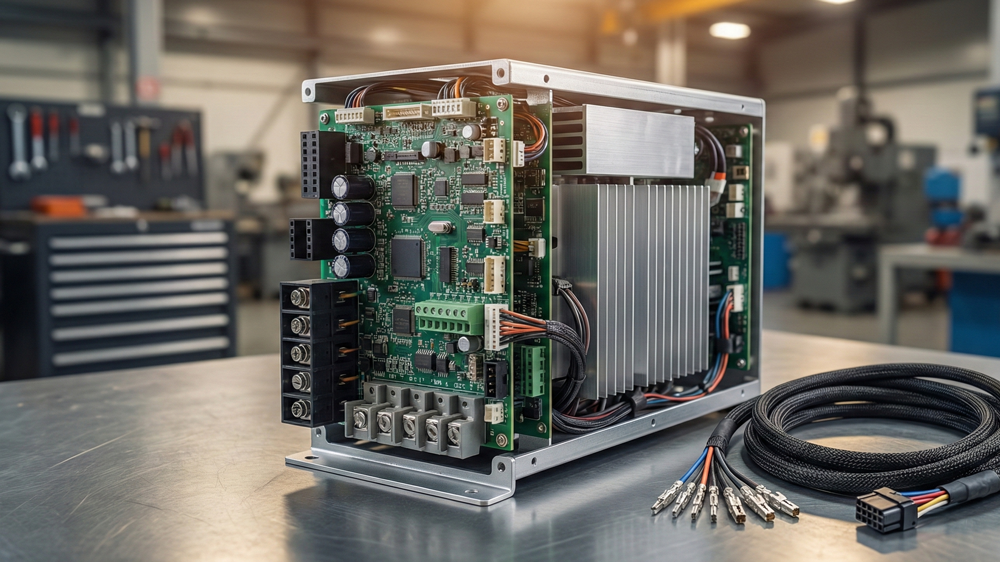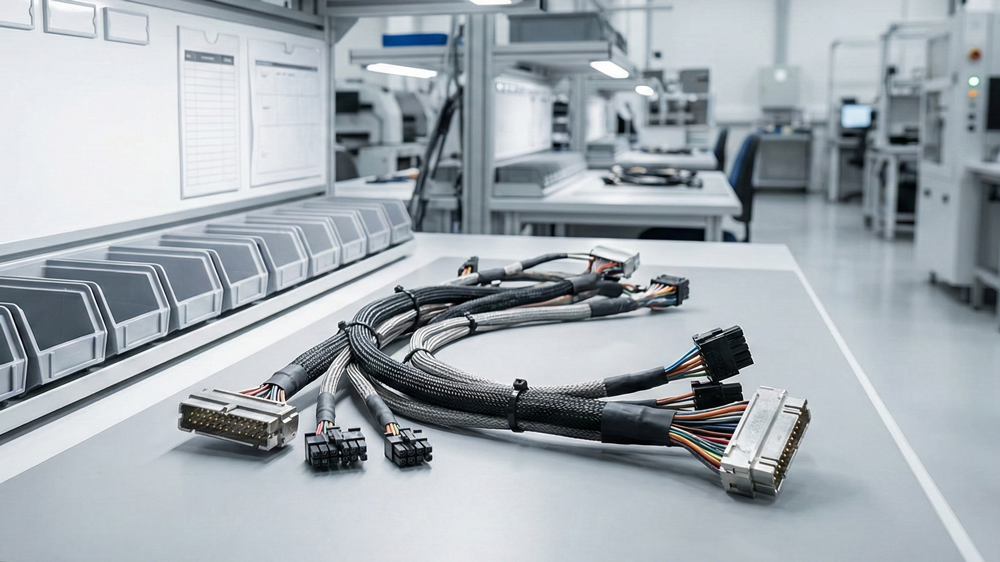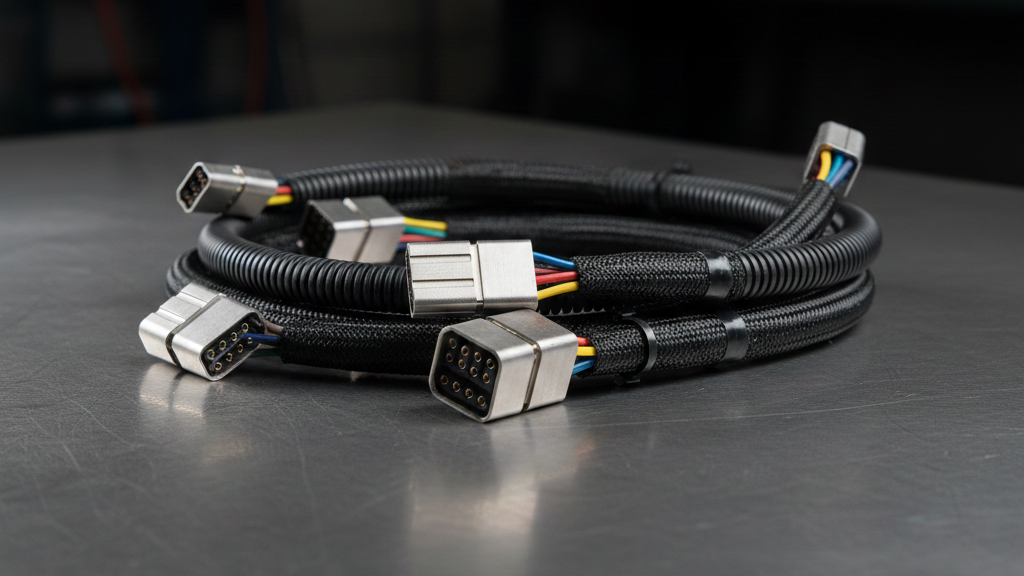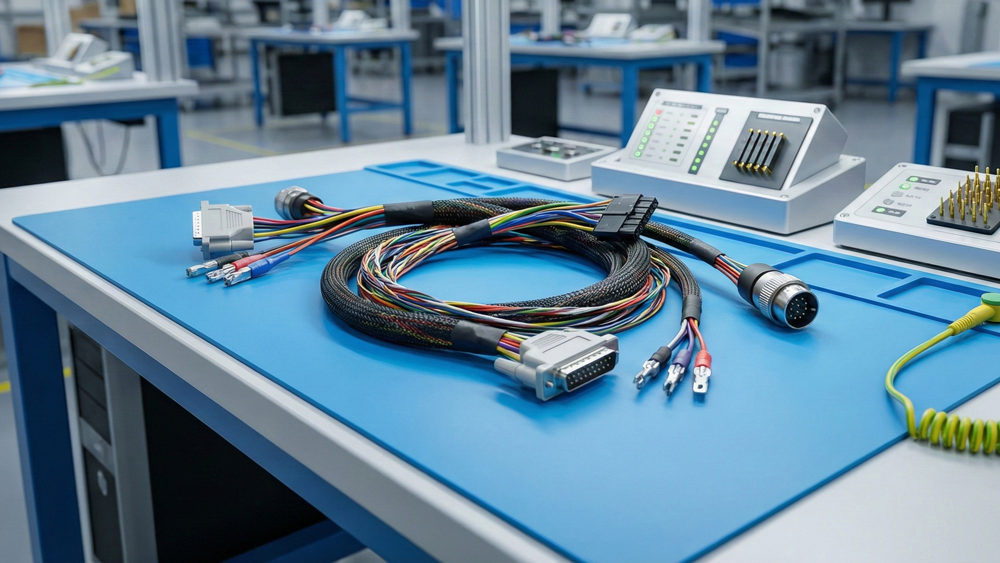
If you’re sourcing wiring for a product, these three terms get used interchangeably in meetings, emails, and RFQs: wire harness, cable harness, and cable assembly. The problem is not vocabulary. The problem is that the wrong label often produces the wrong quote, the wrong testing assumptions, and the wrong supplier shortlist. That’s how you end up with a “cheap quote” that later becomes expensive, or a “fast prototype” that can’t be reproduced reliably in production.
This guide clarifies the differences in a practical, B2B sourcing way. You’ll learn how each build type is defined by structure and function, what documentation manufacturers need to quote accurately, what testing is typically expected, and how to choose the right approach based on your environment, installation constraints, and risk profile. If you already have drawings and want a quick evaluation, you can submit through Custom Wiring Harness (harness-focused) or Custom Cable Assemblies (cable-focused). If you’re still deciding what you need, start here and you’ll avoid a lot of back-and-forth later.
Table of Contents
ToggleThe shortest answer
A wire harness is usually a routed, bundled, often multi-branch assembly built to fit a specific product layout, with terminations and protective materials designed for installation and durability. A cable assembly is usually a cable-based interconnect (often shielded) with connectors on one or both ends, typically treated as a signal/power transmission component with defined performance and testing. A cable harness sits in the middle as a term people use when the build has harness-like routing and protection but is largely cable-based in structure.
If you’re unsure, a simple rule works surprisingly well: when the hardest part of the build is routing + branching + physical fit, it behaves like a harness. When the hardest part is electrical performance (shielding, impedance, noise, data integrity) or molded ends, it behaves like a cable assembly.
Why these definitions matter for RFQ speed, cost accuracy, and supplier selection
Manufacturers quote based on assumptions. The label you use influences those assumptions. If you call something a “wire harness” but it’s actually a shielded multi-conductor cable with strict signal requirements, a harness-focused quote may miss critical test steps or materials. If you call something a “cable assembly” but it’s really a multi-branch harness with tight routing constraints, a cable-focused quote can underestimate labor, fixtures, and dimensional control.
This is also why these terms map to different supplier strengths. Some suppliers excel in harness routing, kitting, and variant control. Others excel in cable processing, shielding management, overmolding, and signal integrity handling. Your sourcing job becomes easier when you can describe your requirement in a way that aligns with how it will actually be built and tested.
If you want to see how these programs are managed from a manufacturing standpoint, the capability overview at Assembly Capabilities and the quality framework at Tests & Inspections help you benchmark what a mature supplier typically controls.
Clear definitions (in manufacturing terms, not marketing terms)
Wire harness (wiring harness)
A wire harness is primarily a layout-driven assembly. It is built to match the physical geometry of a product: where the wires run, where branches split, how it’s secured, and how it’s installed. A harness often contains multiple wire types and gauges, multiple connectors, and physical features like branching, breakouts, strain relief, sleeves, tapes, clips, grommets, and labels. The defining characteristic is that the assembly is designed to route through a product consistently and survive the environment mechanically.
On your site, the umbrella category Wiring Harness captures this concept. If your harness is more specific—control systems, instrumentation, or AV/signal routing—then categories like Control Wire Harness and Signal & AV Wire Harness give buyers a more precise mental model of what is being built.
Cable assembly
A cable assembly is primarily a performance-driven interconnect. It often begins with a single cable (or a defined multi-core cable), then adds terminations and sometimes molded ends, shielding terminations, ferrites, strain relief boots, or overmolded features. The defining characteristic is that the cable itself is a defined transmission medium and the assembly is judged heavily by electrical behavior: continuity, shielding effectiveness, insulation resistance, or sometimes impedance and signal integrity, depending on application.
This is why cable assembly programs naturally belong under Cable Assemblies and often branch into specializations like Shielded Cable Assemblies or Molded Cable Assemblies. The cable is the “core,” and the assembly process is about terminating it correctly and preserving its performance.
Cable harness
“Cable harness” is less a strict manufacturing category and more a practical term used by buyers when the build looks like a harness in installation context but uses cable elements extensively. For example, you might have a product where one trunk is a multi-core cable, then branches break out into individual wires near the endpoints. People call that a cable harness because it behaves like a harness in routing and mounting, but behaves like a cable assembly in the trunk and performance requirements.
The right way to treat “cable harness” in sourcing is to describe both aspects: the cable trunk requirements (shielding, jacket, flexing) and the harness branch requirements (breakout definitions, protection, labels, routing constraints). If you do that, the name matters less because the build definition becomes unambiguous.
The key differences that affect manufacturing, quoting, and reliability
1) The dominant risk: routing errors vs electrical performance errors
In wire harness programs, failures often originate from routing mistakes and termination mistakes that are mechanical in nature: incorrect branch lengths, missing strain relief, wrong breakout points, poor abrasion protection, or incorrect connector insertion. Electrical mistakes happen too (wrong pinouts), but the physical nature of the build tends to dominate risk because the harness must fit and be installable.
In cable assembly programs, the dominant risk is often electrical performance and termination integrity: shielding continuity, correct drain wire handling, correct termination, correct overmolding or booting, and correct testing definitions. Physical fit still matters, but the cable assembly’s role is often to transmit signals or power reliably through a defined cable medium.
This difference matters because the quality controls are different. Harness programs rely heavily on fixtures, boards, and in-process dimensional checks. Cable programs rely heavily on controlled stripping methods, shielding termination methods, and electrical tests that match the cable type. If you want to see how process maturity is communicated, pages like Quality Guarantee and Tests & Inspections support the E-E-A-T “show me the system” expectation buyers have.
2) Documentation: harness drawings vs cable build specs
For harnesses, manufacturers typically need a harness layout drawing with branch lengths, breakout positions, connector callouts, and routing notes. A circuit list or pinout table is essential to prevent “looks right but wired wrong” errors.
For cable assemblies, manufacturers need the cable specification (type, shielding, jacket), connector/termination spec, and often strip-length details, shielding termination method, and sometimes overmolding requirements. Cable assembly RFQs often benefit from a simple build spec sheet that says exactly how the ends are prepared and what test is required.
If your team is struggling to quote quickly, it usually means the documentation style doesn’t match the product type. The fastest fix is to align the RFQ pack format to the build type. That’s exactly why the RFQ checklist approach (your S1 article) exists: it reduces ambiguity and makes both harness and cable suppliers quote faster.
3) Cost structure: labor complexity vs cable + termination complexity
Harness cost tends to scale with labor complexity: number of branches, number of terminations, protection steps, labeling requirements, and how tightly controlled the geometry must be. That’s why harness manufacturers care about harness boards, kitting, and work instructions; those reduce variability and labor cost.
Cable assembly cost tends to scale with cable cost (especially if specialized), connector cost, shielding termination complexity, overmolding/tooling, and testing requirements. A cable assembly might have fewer “pieces” than a complex harness but still cost more because the cable itself is expensive and the termination must preserve performance.
This difference is also why “unit price comparisons” are misleading unless the RFQ definition is stable. A harness quote that assumes minimal labeling and basic continuity test is not comparable to a harness quote that includes traceability labels and documented testing. The same logic holds for cables. A cable assembly quoted without shielding continuity requirements is not comparable to one that includes stricter requirements.
A practical comparison table (for buyers and for AI summaries)
| Attribute | Wire Harness | Cable Harness | Cable Assembly |
|---|---|---|---|
| Primary driver | Physical routing & install fit | Hybrid: routing + cable trunk | Electrical performance & end terminations |
| Typical structure | Multiple wires, branches, breakouts | Cable trunk + harness breakouts | One/more cables with connectors |
| Common add-ons | Sleeves, tape, clips, grommets, labels | Mix of harness protection + cable features | Shielding, boots, overmold, ferrites |
| Common quoting inputs | Harness drawing + BOM + pinout + test | Both: harness drawing + cable spec + pinout | Cable spec + end prep spec + test |
| Common risk | Dimensional/routing errors; wrong pinout | Mixed assumptions; mis-scoped build | Shield termination errors; wrong test assumptions |
| Typical process control | Harness boards, in-process dimension checks | Both: board + cable handling | Controlled stripping, shield termination, electrical tests |
| Best “entry page” | Wiring Harness | Describe both elements clearly | Cable Assemblies |
The table is not meant to replace engineering detail. It’s meant to prevent the first category mistake that often wastes days: calling a cable assembly a harness (or vice versa) and then being surprised when the quote changes.
Real-world examples (to help you classify your own project)
Consider a robotics or industrial machine where a harness must route around moving parts, pass through tight frames, and connect multiple subsystems. The hardest part is often ensuring branch lengths and breakout points match installation and ensuring protection prevents abrasion and vibration failures. That’s a wire harness profile. It belongs under Wiring Harness, and depending on the project, Control Wire Harness can be an even better buyer-facing framing because it highlights control circuits and reliable routing.
Now consider a device that connects sensors via a shielded cable to a controller, where EMI noise matters and the cable performance is a key part of system reliability. The build might be one cable with two connectors, but shielding termination quality matters as much as the connector pins. That’s a cable assembly profile, especially if you’re dealing with Shielded Cable Assemblies.
Finally, consider an EV or battery system where you have a thick power cable trunk and then breakouts to multiple ring terminals or connectors. Buyers sometimes call this a cable harness because the trunk is “cable,” but the ends behave like harness branches. The correct RFQ must specify both: cable trunk type and length, plus branch breakout geometry, protection, and the termination definitions. It may also need environmental definitions and stricter traceability, especially if your application sits in EV & Battery or similar high-accountability environments.
These examples show why the term isn’t the main issue. The build definition is.
The decision framework: how to choose the right category in 5 minutes
A buyer-friendly way to choose between wire harness, cable harness, and cable assembly is to answer three questions in order. You don’t need engineering jargon; you need clarity about what will dominate build complexity and risk.
Start with the physical question. Does your interconnect need to route in a defined geometry with multiple branches, breakouts, and mounting points, where installation fit is critical? If yes, you’re in harness territory, even if some segments use multi-core cable. A harness supplier will likely quote more accurately because they’ll naturally think about branch definitions, routing, and protection.
Then ask the performance question. Is shielding, noise immunity, or cable electrical performance a dominant requirement, where termination method affects system behavior? If yes, you’re in cable assembly territory, even if the assembly has minor routing features. A cable assembly supplier will naturally ask the right questions about cable spec and shielding termination and will define tests accordingly.
Finally ask the hybrid question. Do you have a cable trunk that then breaks out into harness-like branches that must fit physically? If yes, you likely have a cable harness. In this case, your RFQ must explicitly include both the cable trunk spec and the harness branch layout spec, because a supplier who assumes only one side will quote inaccurately.
If you want to avoid delays, treat the hybrid case as two scopes that meet: cable spec + harness layout. When you present it that way, suppliers will ask fewer questions and your quote will converge faster.
What to send in the RFQ (based on the category)
Here’s where category choices become operational. Buyers often ask, “What do you need from me to quote?” and the correct answer changes by category.
For a wire harness, quoting is fastest when you provide a harness layout drawing, a BOM listing wires and components, a pinout/circuit list, and your test definition. This is exactly the content structure supported by a harness intake process such as Custom Wiring Harness. If you also want a checklist format that prevents missing details, your RFQ checklist article (S1) acts as the “buyer’s pre-flight check” before they submit.
For a cable assembly, quoting is fastest when you provide the cable type/specification, connector part numbers, end preparation requirements (strip lengths, shielding termination method, boot/overmold requirements), and your test definition. For molded or strain-relief-intensive programs, it’s also important to align on tooling/NRE early. That’s why manufacturing options such as Overmolding Services belong naturally in the conversation when a “cable” has molded ends.
For a cable harness, provide both sets of information. You’ll get the best results when your RFQ pack includes a cable trunk spec plus a harness layout drawing showing branch definitions and installation constraints. This prevents the most common hybrid failure: a supplier quotes as if it’s only a cable assembly (missing harness labor and fixture assumptions) or only a harness (missing cable performance assumptions).
How testing expectations differ (and why “100% test” isn’t a complete requirement)
Buyers often write “100% test required” in RFQs. It’s an understandable phrase, but it’s incomplete. The real question is: 100% of what, using what test method, and with what acceptance criteria?
In harness programs, continuity and short testing are common baselines, and in many cases that’s sufficient. The larger reliability risks often come from mechanical factors—crimp quality stability, strain relief, abrasion protection—which are addressed by process control rather than end-of-line testing alone. This is why process descriptions like those in your S2 article (wire harness assembly process + QC points) matter for E-E-A-T: they show the buyer you understand that quality is built into the process.
In cable assemblies, testing often needs to reflect the cable’s role. For shielded cable assemblies, you may care about shielding termination continuity or related performance expectations. For higher voltage applications, hipot and insulation resistance might be required. For specific data cables, additional constraints may exist depending on the application. The important point is that “tested” must be defined in a way that matches the cable type.
If your goal is to communicate testing credibility on the website, the supporting page Tests & Inspections is a useful internal reference because it grounds test discussions in a visible quality system rather than an abstract promise.
Where buyers get tripped up (and how to prevent it)
The most common sourcing failure is category mismatch. A buyer requests a “wire harness quote,” but the build is a shielded cable assembly with strict end-prep requirements. The supplier quotes as a simple harness, then later revises when engineering realizes the scope. The reverse happens too: a buyer requests a “cable assembly quote,” but the build is a multi-branch routed harness with tight geometry. The supplier quotes based on cable processing and underestimates harness labor and dimensional control.
The second failure is documentation mismatch. The buyer sends photos and a partial BOM, but no pinout definition. The supplier can build something that looks correct but may be electrically wrong. Or the buyer sends a cable spec but not the end preparation definition, so the supplier must guess strip lengths and shielding termination approach.
The third failure is test ambiguity. The buyer requests 100% test but doesn’t define whether that means continuity only, hipot, insulation resistance, or something else. The quote either excludes required testing (risk) or includes conservative testing (cost).
All three failures are preventable with one mindset shift: don’t think “what do I call this part?” Think “what must be controlled to build it correctly?”
When to choose which solution (cost, speed, and risk tradeoffs)
If you prioritize fast iteration and you have frequent revisions, harness programs can benefit from a supplier who can handle layout changes quickly and maintain revision control. That often pairs well with a quick-turn pathway like Quick Turn Available, especially when you need prototypes rapidly.
If you prioritize stable electrical performance and your cable type is central to system behavior, cable assembly is the right framing. It puts the cable spec and termination method at the center of the RFQ, which is where it belongs.
If you have a hybrid need, cable harness framing is honest and effective. It tells suppliers to treat the build as both cable and harness. The quote will be more accurate, and the production plan will be clearer.
Across all categories, credibility is improved when the buyer can verify manufacturing scope. That’s why a technical article like this should naturally connect to proof pages such as Assembly Capabilities, Quality Guarantee, and even trust references like Certificates for buyers who need compliance comfort before sharing drawings.
FAQ (for B2B sourcing teams)
Is “cable harness” a real category or just a phrase people use?
It’s both. It’s often used informally, but it describes a real hybrid build where a cable trunk and harness-like branches coexist. The key is to specify both sides of the build clearly.
If my assembly has only two connectors, is it automatically a cable assembly?
Not necessarily. If the build includes routing constraints, mounting features, labels, protective coverage, or multiple breakouts that matter for installation, it can still behave like a harness. The defining feature is the dominant complexity and risk.
Why does the same part get quoted differently by different suppliers?
Often because suppliers are pricing different assumptions: component series, labor complexity, fixture needs, protection steps, labeling/traceability, and test definition. Category mismatch amplifies these differences.
Do wire harnesses always require harness boards?
Not always. Simple builds may not need them. But for multi-branch harnesses where dimensional control and routing repeatability matter, boards/fixtures are one of the most effective controls.
What’s the best way to start if I’m not sure which category my project fits?
Describe the use case and constraints, then share the documentation you have: layout, BOM, cable spec, pinout, and test requirements. You can submit via Contact first if you prefer a quick classification before sending a full RFQ.
Next step (CTA)
If you want the fastest and most accurate quote, choose the intake path that matches your build and send a structured RFQ pack. For routed, branched assemblies, start with Custom Wiring Harness. For cable-based interconnects (especially shielded or molded), start with Custom Cable Assemblies. If you want to benchmark what a mature build and test workflow looks like before sharing drawings, review Assembly Capabilities and Tests & Inspections, then reach out.