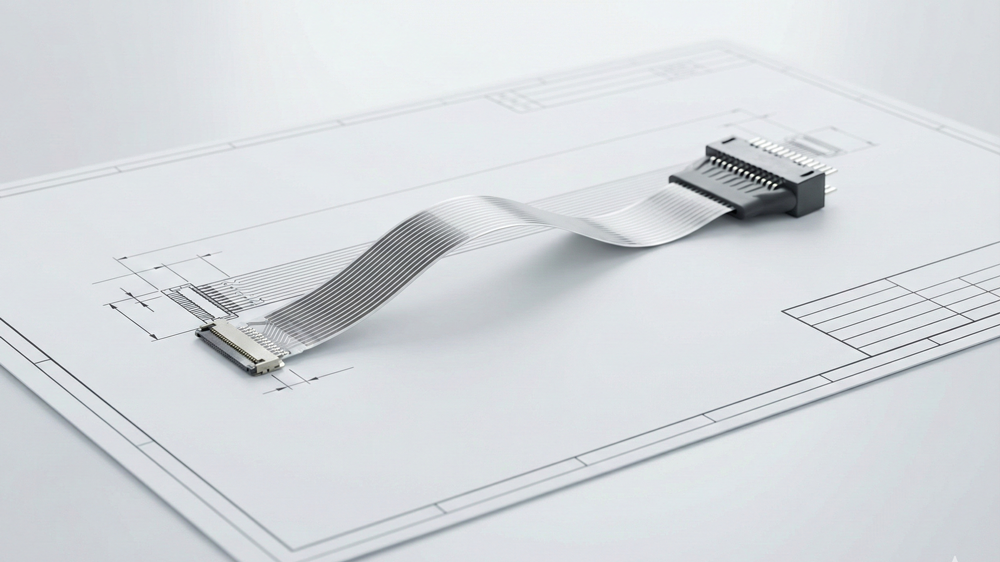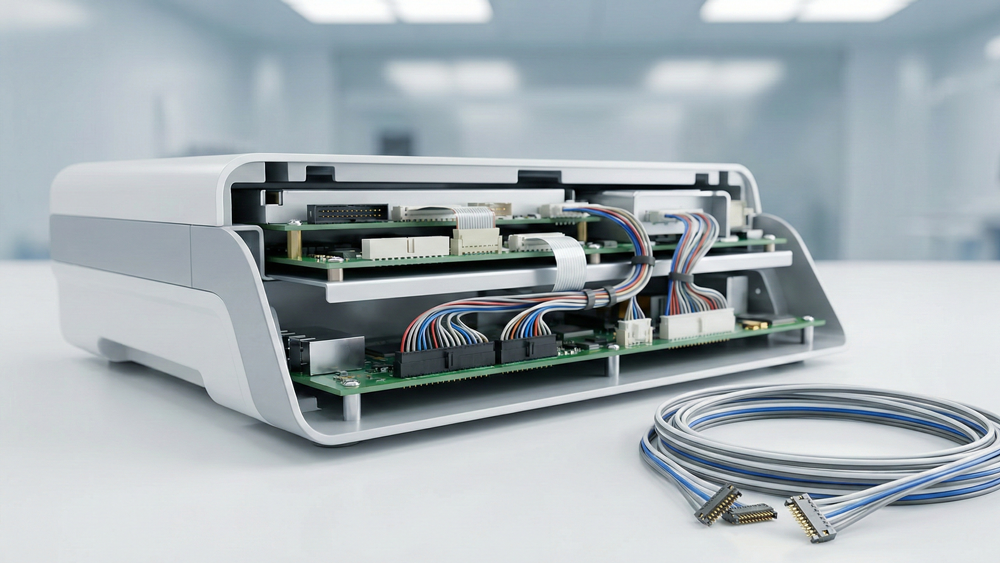
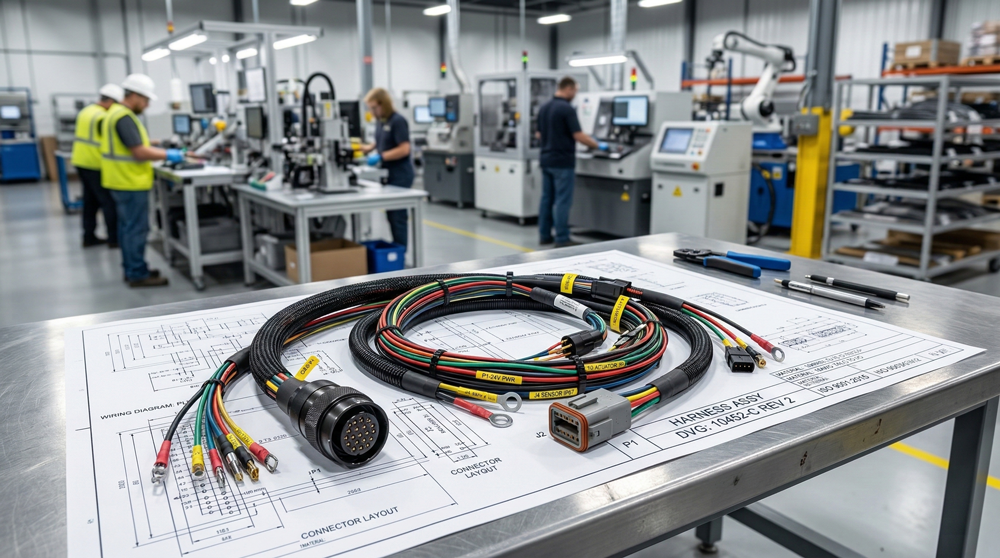
How to evaluate a cable assembly factory for OEM projects is not a question buyers should leave until after sampling begins. In most sourcing programs, the factory evaluation already starts during the first RFQ response, because that is where the supplier begins to show how it communicates, how it reads the project, and how much control it is likely to bring into production later.
For OEM buyers, factory evaluation is not just about confirming that a manufacturer exists and can assemble cables. It is about deciding whether that factory can support the full project lifecycle with enough discipline to reduce risk. The right factory helps the buyer move from RFQ to quotation, sample, pilot, and volume supply with fewer surprises. The wrong one may still look acceptable at first, but later create problems in documentation, materials, repeatability, lead time, and change control.
Table of Contents
ToggleWhy Evaluation Matters
Many buyers think factory evaluation begins with an audit checklist or a visit report. In practice, it starts much earlier. A factory begins revealing itself through how it handles the RFQ, how it asks technical questions, how it structures the quotation, and how clearly it defines what is fixed and what is still open. Those early signals often predict later behavior surprisingly well.
This matters because cable assemblies are rarely isolated purchases in OEM programs. They sit inside larger products, larger schedules, and larger customer commitments. A small supplier mistake may not create much unit-cost loss, but it can still delay assembly, complicate service, or create confusion across engineering, quality, and procurement. That is why factory evaluation should not be reduced to “Can they make this part?” The better question is “Can they support this project professionally from first quote to repeat supply?”
A strong evaluation process helps the buyer answer that question earlier, while switching suppliers is still easy.
Start with the Project Fit
The first step in evaluating a cable assembly factory is to ask whether the factory actually fits the project. This is more useful than starting with generic claims such as “professional manufacturer” or “many years of experience.” A factory may be capable in general and still not be a strong fit for the specific OEM job in front of you.
Project fit usually begins with the application. Is the project mainly static industrial wiring, or does it involve robotics, outdoor exposure, medical equipment, or automotive auxiliary systems? Is the program low-volume and engineering-heavy, or stable monthly repeat business? Does it need higher routing precision, better cosmetic control, stronger documentation, or more service-oriented labeling? Different factories handle these requirements differently.
This is why the best evaluations are contextual. A supplier that is ideal for high-mix industrial cable assemblies may not be equally strong in compact medical-device interconnects. A factory that handles straightforward build-to-print work well may be weaker when the project needs more engineering review and DFM input. Fit should therefore be judged against the real OEM requirement, not against a broad capability statement alone.
Review the RFQ Response
One of the most revealing parts of factory evaluation is the RFQ response. Before samples, audits, or purchase orders, the quotation stage already shows how the supplier thinks.
A strong factory usually responds in a structured way. It asks meaningful technical questions. It notices where drawings, application context, or material expectations may still be unclear. It distinguishes between fixed requirements and reviewable items. It explains quantity assumptions, lead-time basis, and open commercial points in a way that helps the buyer compare options intelligently.
A weaker factory often does the opposite. It may quote quickly without clarifying much, rely on broad assurances instead of precise understanding, or send back numbers that look attractive but do not show what was actually included. In some cases, a very fast quote with no technical questions on a complex project is not a strength. It may be a sign that the supplier has not yet really understood the work.
This is one reason How to Prepare a Better RFQ for Custom Cable Assemblies and How OEM Buyers Compare Cable Assembly Quotations are directly relevant to factory evaluation. A better RFQ reveals the factory more clearly.
Check the Communication
Communication is one of the strongest and earliest indicators of whether a cable assembly factory is suitable for an OEM project. Good communication is not just about reply speed. It is about whether the factory helps the buyer move the project forward with clarity.
That usually means the factory can separate what is known from what is not yet known. It means they ask questions that improve scope definition rather than restarting the project from zero. It means they can explain risks, open points, and practical options without becoming vague or defensive. It also means they do not disappear when the discussion becomes more technical or more detailed.
For OEM buyers, this matters because poor communication is rarely limited to the quotation stage. It often continues into sample correction, lead-time updates, label clarification, packaging changes, and revision handling. A factory that communicates casually early tends to create more friction later. A factory that communicates clearly early usually remains easier to work with when the project becomes more demanding.
Communication quality is therefore not a soft factor. It is a sourcing-control factor.
Test the Technical Depth
A cable assembly factory does not need to redesign every project to be valuable, but it should show enough technical depth to understand what it is building and what risks may sit in the current design. This is especially important in OEM programs where routing, movement, environment, serviceability, or documentation can materially affect the success of the assembly.
Technical depth appears in the questions the factory asks. Do they ask about motion, vibration, environment, signal sensitivity, routing space, strain relief, labels, and packaging? Do they notice where the drawing may leave too much open to interpretation? Can they explain what details would matter more in a robotics application than in a static cabinet build? Can they distinguish between prototype handling and repeat-production handling?
This does not mean the factory must act like a design consultancy on every job. It means the factory should show enough engineering judgment to support the OEM project responsibly. A supplier that only repeats back visible BOM items may still build something. A supplier that understands the technical context is more likely to build the right thing repeatedly.
In B2B cable assembly sourcing, technical depth is often what turns a simple manufacturer into a useful project partner.
Confirm the Manufacturing Fit
Manufacturing fit is another core part of factory evaluation. Even a technically aware supplier may still be the wrong factory if its actual production model does not match the project.
Some factories are strongest in high-mix, lower-volume custom work where engineering communication is frequent and product variety is high. Others are more effective in stable repeat production with tighter routinization. Some can handle detailed labels, multiple branches, protection parts, and packaging variation well. Others are better suited to simpler assemblies with fewer options. Some are comfortable supporting both prototypes and production. Others perform well only in one stage.
This is why OEM buyers should evaluate the factory against the actual business pattern. Will the project require small early builds followed by larger production? Will there be engineering changes during the first months? Are service-part orders likely later? Will the assembly require consistent packaging or traceability? A factory that fits those realities is more valuable than one that simply has large general capacity.
The practical question is not “Can this factory make cable assemblies?” It is “Can this factory make this project work reliably?”
Inspect Document Control
Document control is often underestimated during factory evaluation, yet it is one of the clearest indicators of whether a supplier can support OEM work cleanly. In many projects, later problems come less from pure assembly failure and more from weak control over revisions, labels, part references, packaging instructions, or approved material changes.
A strong factory usually shows document discipline in small but important ways. It uses the correct revision reference. It can show which files the quote was based on. It makes open assumptions visible rather than hiding them inside a price. It handles labels and part numbers consistently. It keeps samples and production references aligned to the same baseline. It does not quietly move between drawing versions because the differences “look small.”
This matters because OEM buyers do not only need products. They need controlled products. The more complex or longer-life the program, the more important this becomes. A factory with weak document control may still ship acceptable parts for a while, but it becomes harder to trust during engineering changes, second-source planning, service-part support, or customer-specific documentation requests.
That is why document control should be treated as part of factory capability, not as a back-office detail.
Look at Sample Discipline
If the RFQ shows how the factory thinks, the sample shows how the factory executes. That is why sample discipline is one of the strongest practical tools for evaluating a cable assembly factory for OEM projects.
A strong factory usually treats the sample as the first controlled expression of the project, not merely as a handmade showpiece. It confirms the build basis, follows the drawing carefully, identifies any assumptions clearly, and makes it easier for the buyer to understand what was actually built. Labels, protection details, routing behavior, and packaging are handled in a way that supports review, not just shipment.
A weaker factory often shows itself here. The sample may look generally acceptable, but open questions remain unclear. Material substitutions may be hidden. Label logic may drift. Some details may look like one-time handcraft rather than repeatable production behavior. That does not automatically make the supplier unusable, but it does tell the buyer that the factory may need much closer supervision later.
This is why Sample Approval Before Volume Cable Assembly Orders belongs naturally inside factory evaluation. A disciplined sample process is often the best proof that a factory can support more than just a quotation.
Assess Quality Behavior
Quality behavior is broader than whether the factory says it performs testing. Almost every supplier will say it checks the product. The more useful question is how quality control appears in the way the factory works.
A strong factory usually shows quality discipline through consistency. It shows in how carefully it handles open points before building. It shows in how it manages labels, route details, protection parts, and final presentation. It shows in whether the sample matches the approved basis closely. It also shows in how the supplier reacts when a problem or correction is raised. A factory that responds clearly and closes details responsibly is generally more useful than one that simply says “no problem” without enough structure.
For OEM buyers, it is helpful to look for evidence of practical quality thinking rather than relying only on broad statements. Does the factory appear to understand the quality needs of the specific application? Does it recognize where workmanship consistency matters more? Does it separate prototype flexibility from production discipline? These are good signs that quality is part of the factory’s operating behavior, not just a sales phrase.
Evaluate Planning Discipline
Planning discipline is another key part of factory evaluation because OEM buyers eventually depend on the factory not only to build correctly, but also to deliver predictably. A supplier can make a good sample and still become difficult once order timing, material lead times, or forecast changes become more real.
Reliable planning usually shows itself in the way the factory talks about lead time. Strong suppliers explain what the timing depends on. They distinguish sample lead time from repeat-order lead time. They identify long-lead materials honestly. They do not treat every order as if the same promise can be made regardless of quantity, configuration, or revision status. In other words, they sound believable.
A weaker factory often sounds either too vague or too optimistic. Short promises may look attractive in quotation, but if the material logic is unclear or the communication is thin, the buyer may later discover that the schedule was never robust. This is why buyers should not evaluate planning only by speed. They should evaluate how understandable and trustworthy the factory’s planning logic appears.
In many OEM projects, predictability is more commercially valuable than a fast but unstable promise.
Judge Problem Response
One of the most revealing parts of factory evaluation is how the supplier handles difficulty. Problems are inevitable in real projects. Drawings are revised. Materials tighten. Labels are corrected. Samples reveal interpretation gaps. Deliveries move. The critical question is how the factory responds when the project becomes inconvenient.
A strong factory usually becomes clearer, not less clear, under pressure. It explains the issue directly. It identifies what is being checked. It gives the buyer enough information to make the next decision. It does not disappear, answer vaguely, or shift the burden of reconstruction back to the buyer. This kind of response saves time and protects trust.
A weak factory often shows the opposite pattern. Responses become slower. Responsibility becomes vague. Corrective action becomes hard to pin down. Small issues require too many messages to understand. In custom cable assemblies, where many issues are physically small but operationally important, this can quickly become very expensive.
That is why buyers should judge factories not only by whether things go smoothly, but by how the supplier behaves when they do not.
Consider Factory Transparency
Transparency is an underrated but important part of evaluating a cable assembly factory. This does not mean the buyer needs access to every internal detail. It means the supplier’s way of working should be understandable enough that the buyer can trust the relationship.
A transparent factory usually makes key assumptions visible. It explains what is included in the quotation, what is still open, what materials may carry risk, and what support model the project is actually receiving. It does not create artificial confidence by hiding uncertainty. This kind of transparency helps the buyer make better decisions because risks remain visible while they can still be managed.
Transparency also affects long-term sourcing flexibility. When suppliers are clear about how they work, it becomes easier to scale the project, manage revisions, prepare service parts, or even evaluate second-source options later. A factory that hides too much behind broad assurances may still feel easy at first, but it often becomes harder to manage once the project grows.
For OEM buyers, transparency is closely linked to reliability.
Use a Factory Checklist
A practical checklist helps make factory evaluation more consistent. Without one, buyers often give too much weight to a single strong impression, such as a fast reply, a friendly sales contact, or a low quoted price.
| Evaluation area | What buyers should confirm |
|---|---|
| Project fit | Factory is suited to the application, volume model, and support level |
| RFQ response | Quote is structured, assumptions are visible, open points are identified |
| Communication | Clear, timely, technically useful, and consistent across stages |
| Technical depth | Supplier understands application risk, manufacturability, and detail control |
| Manufacturing fit | Factory can support the real mix of prototype, pilot, and production needs |
| Document control | Revisions, labels, packaging, and references are handled clearly |
| Sample discipline | First builds reflect control, transparency, and repeatability potential |
| Quality behavior | Supplier shows practical quality thinking, not just generic claims |
| Planning | Lead times and material logic are understandable and believable |
| Problem response | Factory responds clearly and constructively when issues appear |
| Transparency | Scope, risk, and support model are visible enough to trust |
A checklist like this keeps the evaluation practical. It also helps procurement, engineering, and quality teams align their judgment instead of each focusing on only one part of the supplier picture.
Avoid Common Mistakes
One common mistake is equating factory size with factory fit. A bigger manufacturer may still be the wrong partner for a complex, mixed, or engineering-heavy OEM project. Another mistake is focusing too heavily on price before checking whether the factory actually quoted the same scope as others. A third is treating a good-looking sample as proof of long-term production readiness without reviewing how the sample was built and documented.
Another frequent mistake is evaluating the factory too late. By the time the buyer reaches pilot or first production order, switching becomes more difficult. That is why the strongest evaluations begin during RFQ and become deeper through sample and early order behavior. Waiting for a formal audit mindset can delay useful judgment.
The last mistake is judging a factory only by what it says about itself. Good evaluation is based more on how the factory behaves than on how the factory presents itself.
Make the Decision
A good factory decision usually combines several signals into one clear judgment. Does the supplier understand the project? Does it quote the real scope? Does it communicate in a way that saves time? Does it show technical discipline and document control? Does the sample suggest repeatability? Does the planning sound credible? Does the supplier respond well when questions become more difficult?
In some cases, the best factory will also be the lowest-cost factory. In other cases, a slightly higher-priced supplier may be the stronger OEM choice because it reduces downstream risk, sample iteration, and schedule uncertainty. The purpose of factory evaluation is not to justify a more expensive decision by default. It is to make the real trade-offs visible before the business becomes dependent on the wrong factory.
For OEM buyers, that is where factory evaluation creates real commercial value.
Conclusion
How to evaluate a cable assembly factory for OEM projects should never be reduced to a quick audit impression or a price comparison alone. The strongest evaluation looks at project fit, RFQ response, communication quality, technical depth, manufacturing fit, document control, sample discipline, quality behavior, planning logic, and problem response as one connected picture.
When buyers use that broader view, factory selection becomes more reliable because the decision reflects how the supplier is likely to support the project over time, not just how the supplier looks in the first meeting. In custom cable assembly sourcing, that is often the difference between a factory that simply ships parts and a factory that genuinely supports OEM success.
FAQ
What is the first thing buyers should check when evaluating a cable assembly factory?
The first thing is whether the factory fits the actual project. Application type, volume model, engineering complexity, and support expectations matter more than general marketing claims.
Is a factory audit enough to evaluate a cable assembly supplier?
No. An audit can be useful, but buyers should also judge RFQ quality, communication, sample behavior, document control, and problem response under real project conditions.
Why is sample discipline so important in factory evaluation?
Because the sample shows how the factory executes, not just how it presents itself. It reveals whether the supplier can translate the RFQ into a controlled physical build.
Should buyers evaluate lead time promises during factory selection?
Yes. Buyers should not only compare speed, but also how credible and well-explained the lead-time logic is. Predictable timing is often more valuable than optimistic timing.
What makes one cable assembly factory better for OEM projects than another?
Usually it is the combination of fit, communication, technical depth, document control, repeatability, and practical support across quotation, sample, and production.
CTA
If you are trying to evaluate a cable assembly factory for an OEM project, the best first step is to review how the supplier handled the RFQ, how clearly it communicates, and whether the sample and documents reflect the level of control your program really needs.
You can send your RFQ package, quotations, sample photos, drawings, and supplier questions through Contact. Our team can help review factory fit and support a more practical OEM supplier decision before volume release.