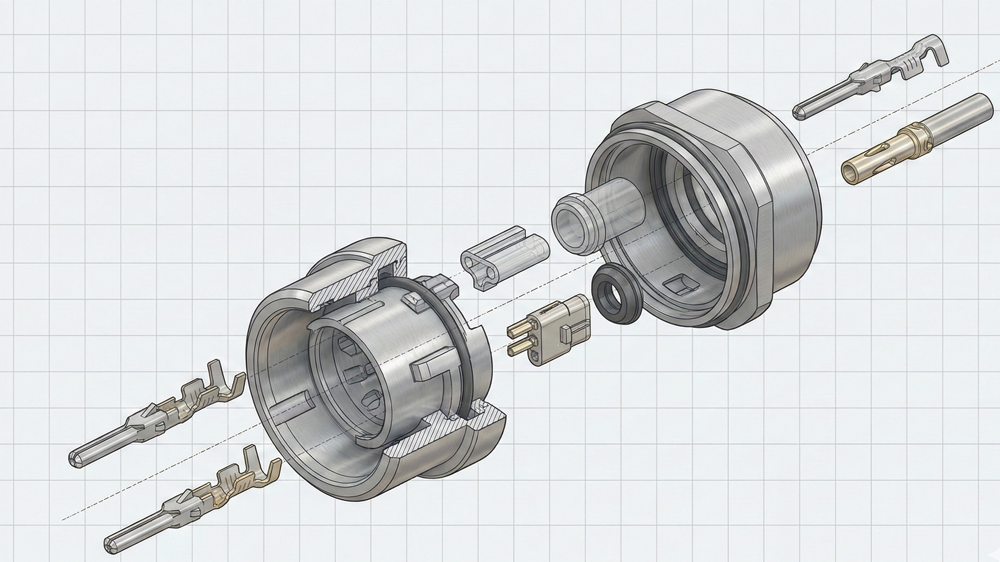
Connector selection is one of the most important decisions in cable assembly design, yet many OEM projects still treat it as a late-stage parts choice. In reality, connector selection affects electrical performance, mechanical durability, environmental protection, assembly process stability, testing strategy, and long-term service reliability. If the connector is selected too early without application context, or too late after other design choices are fixed, the project often pays for it through rework, sample delays, or field failures.
This connector selection guide for cable assemblies is written for OEM buyers, engineers, and quality teams who need a practical way to evaluate connector options before sample approval and production release. The goal is not just to choose a connector that “fits,” but to choose one that supports the real use case, the assembly process, and the reliability target.
This article starts the P9 connector selection series and connects naturally with earlier topics such as Environmental Protection Design Guide for Cable Assemblies, Cable Assembly Sealing Design at Connector and Overmold, and Waterproof Cable Assembly Testing Guide for OEM Buyers.
Table of Contents
ToggleConnector Selection and Application Conditions
A connector selection guide for cable assemblies only works when the application conditions are defined first. Many sourcing discussions begin with connector series names or catalog images, but the better starting point is the actual use condition. A connector that performs well in a protected indoor cabinet may fail in an outdoor, vibration-heavy, or maintenance-intensive system even if it meets basic pin-count and current requirements.
For OEM teams, connector selection should start with a short application profile that describes installation environment, mating frequency, service access, vibration level, handling conditions, sealing expectations, and service life target. This immediately narrows the connector field and prevents the project from comparing options that are not truly comparable.
Application Conditions and Connector Risk
Connector risk is often created by mismatch, not by poor connector quality. A connector may be well-made and widely used, but still be the wrong choice for your cable assembly if the locking system is too weak for vibration, the mating cycle rating is too low for maintenance use, or the sealing design does not match the installation environment.
This is why connector selection should be framed as an application-fit decision rather than a brand-only or cost-only decision.
Application Conditions and Service Life
Service life expectations change connector decisions more than many teams expect. A short-life prototype system, a consumer device, and an industrial machine with multi-year field exposure may all use cable assemblies, but they should not be evaluated using the same connector priorities. Contact durability, locking stability, plating strategy, and environmental performance matter much more when long service life is required.
For OEM buyers, clarifying service life early improves both connector recommendations and RFQ quality.
Connector Current Rating for Cable Assemblies
Connector current rating for cable assemblies is one of the most common selection filters, but it is also one of the most commonly misused catalog parameters. Teams often compare connector current ratings as fixed values without considering real operating conditions, wire size, temperature rise, duty cycle, bundling, and installation environment. The result is either over-design with unnecessary cost or under-design with heat and reliability risk.
In cable assembly projects, connector current rating should be reviewed as part of the full current path, not as an isolated connector value. The connector contact system, wire gauge, termination quality, and ambient condition all influence real performance.
Connector Current Rating and Real Load
A connector current rating in a catalog may be based on test assumptions that differ from the OEM application. If the actual assembly runs continuous load, elevated temperature, or tight packaging with limited airflow, the usable margin may be smaller than expected. If the duty is intermittent and the thermal environment is mild, the project may have more flexibility.
The key point is that connector current rating should be interpreted in context, not copied directly into the design without review.
Connector Current Rating and Wire Gauge
Connector current rating also interacts with wire gauge and termination design. A connector system that supports a certain current level on paper may require a specific wire size range and termination quality to achieve stable performance. If the wire gauge is changed later for routing or cost reasons, connector suitability should be reviewed again.
This topic will be expanded in the cluster article Connector Current Rating for Cable Assemblies.
Connector Mechanical Fit for Cable Assemblies
Connector mechanical fit is just as important as electrical fit in cable assembly selection. A connector can meet pin count and current requirements and still create field problems if the mating geometry, cable exit direction, package envelope, or handling ergonomics are poor. Mechanical mismatch often appears late, especially during installation, maintenance, or field service.
OEM teams should review mechanical fit in the actual product context, including mating access, cable routing, bend space, strain transfer, and operator handling. A connector that is easy to use on a bench may be difficult to mate inside a crowded assembly.
Connector Mechanical Fit and Cable Routing
Cable routing near the connector has a direct effect on reliability. If the cable exits into a tight bend, the connector rear area and cable transition may experience repeated stress. This can affect strain relief performance, sealing interfaces, and long-term contact stability in some applications.
That is why connector selection should be reviewed together with routing geometry and cable exit constraints, not only with mating interface dimensions.
Connector Mechanical Fit and Service Access
Service access is another common blind spot. If the application requires periodic unplugging, inspection, or replacement, connector size, release method, and mating ergonomics become critical. A connector that is technically compatible may still create service errors or field downtime if it is hard to operate in the installed space.
A practical connector selection review should always include service use, not just initial assembly.
Mating Cycle Guide for Cable Assemblies
Mating cycle capability is one of the most overlooked reliability topics in cable assembly sourcing. Many OEM projects choose connectors based on fit and current but fail to match the connector to real mating frequency. This can lead to contact wear, retention degradation, rising contact resistance, or unreliable field performance long before the rest of the cable assembly reaches end of life.
For OEM buyers, the key question is not simply “What is the mating cycle rating?” but “How many mating events will this connector see across assembly, testing, service, and field maintenance?” The answer often exceeds the number assumed at the beginning of the project.
Mating Cycle and Maintenance Use
If the cable assembly is part of a serviceable product, connector mating cycles should include production assembly cycles, factory testing cycles, maintenance cycles, and any troubleshooting reconnection events. A connector selected only for initial assembly may not be suitable for long-term service use.
This is especially important in equipment with regular maintenance schedules or field module replacement.
Mating Cycle and Contact Reliability
Mating cycle life is not only about how many times a connector can be inserted and removed. It also affects contact force stability, plating wear, and resistance performance over time. In signal-sensitive or low-level-current applications, small changes in contact quality can create outsized reliability issues.
This topic will be expanded in Mating Cycle Guide for Cable Assemblies.
Connector Locking Systems for Cable Assemblies
Connector locking systems for cable assemblies directly affect vibration reliability, installation speed, service ergonomics, and mis-mating risk. In many projects, lock style is treated as a preference, but it should be treated as a design decision. A locking system that works well in one application can become a failure source in another if vibration, access, or handling conditions are different.
Common locking approaches can all be valid, but the right choice depends on the use case. OEM teams should evaluate lock security, operator behavior, release accessibility, and field conditions rather than choosing only by habit or appearance.
Connector Locking Systems and Vibration
In vibration-prone applications, connector locking performance becomes a primary reliability factor. Retention force, lock engagement quality, and tolerance behavior all matter. A connector that mates correctly in static conditions may still become unstable in service if the locking system does not maintain retention under vibration and handling.
This is why locking system review should be part of reliability planning, not just mechanical packaging.
Connector Locking Systems and Service Speed
In serviceable products, lock style also affects maintenance time and field error rate. A highly secure lock may slow service if access is limited. A fast-release lock may increase accidental release or incomplete mating risk if feedback is weak. The best connector locking systems balance retention security with realistic service operation.
This topic will be expanded in Connector Locking Systems for Cable Assemblies.
Connector Plating Guide for Cable Assemblies
Connector plating is often discussed only as a material specification line item, but in cable assembly reliability it influences contact performance, wear behavior, corrosion resistance, and cost. Connector plating decisions should reflect the electrical duty, mating cycle expectations, environment, and service life target. There is no single plating choice that is “best” for every cable assembly.
OEM teams should avoid treating plating as a cosmetic or procurement-only detail. In many projects, plating mismatch appears later as contact instability, corrosion issues, or unnecessary cost escalation.
Connector Plating and Contact Performance
Connector plating affects contact resistance behavior, wear characteristics, and long-term stability under repeated mating. In some applications, plating choice is closely tied to mating cycle demands and signal reliability. If the connector is expected to be unplugged and reconnected frequently, plating strategy becomes a major design consideration rather than a minor option.
Connector Plating and Corrosion Risk
Environment also matters. Humidity, contamination, and field exposure conditions can affect contact surfaces and long-term reliability. Connector plating should therefore be reviewed alongside environmental exposure, sealing strategy, and maintenance expectations, not only with nominal electrical specs.
This topic will be expanded in Connector Plating Guide for Cable Assemblies.
Connector Selection and Environmental Requirements
Connector selection for cable assemblies should include environmental requirements early, especially in projects with moisture, dust, washdown, temperature variation, or outdoor exposure. Teams sometimes select a connector for electrical and mechanical fit first and only later check sealing or environmental capability. This often causes redesign because connector rear sealing, cable exit sealing, and packaging constraints are already fixed.
A better process is to review environmental requirements in parallel with connector fit. If the application includes sealing or harsh environment risk, connector choice should be coordinated with cable OD range, backshell or overmold strategy, and validation planning.
Connector Selection and Sealing Requirements
Sealing requirements are not solved by connector catalog claims alone. Finished cable assembly performance depends on the connector interface, rear entry fit, cable exit geometry, and assembly process control. A connector can be suitable at the product level but still underperform in the finished cable assembly if the sealing path is not designed correctly.
This is why connector selection should connect directly with Cable Assembly Sealing Design at Connector and Overmold and IP Rating Guide for Cable Assemblies.
Connector Selection and Harsh Environments
In harsh environments, connector selection should also consider materials, plating, seal interfaces, and maintenance realities. A connector that is technically compatible in lab conditions may not be a stable long-term choice in oil mist, coolant splash, UV exposure, vibration, or repeated field handling.
Environmental fit should be reviewed as part of total connector suitability, not as a late checklist item.
Connector Selection and Manufacturing Fit
Connector selection in OEM cable assembly projects should also be reviewed for manufacturing fit. A connector may look ideal in engineering review and still create production risk if crimp tooling is difficult, termination process control is sensitive, assembly steps are inefficient, or inspection access is poor. Manufacturing fit affects cost, lead time, repeatability, and quality stability.
For OEM buyers, this means connector selection should include both design suitability and process suitability. A connector that slightly improves theoretical performance but significantly reduces production stability may not be the best overall choice.
Connector Selection and Assembly Process
Connector design influences assembly method, termination consistency, and handling efficiency. Contact size, wire entry geometry, retention design, and housing structure all affect how stable the build process will be in production. If a connector requires unusually narrow process windows, the project may face higher defect risk or slower scaling.
This is where supplier process experience becomes highly valuable.
Connector Selection and Test Access
Test access is another practical factor. Some connector choices make continuity testing, inspection, or fixture design easier, while others complicate production verification. In OEM supply projects, connector selection that supports efficient testing can improve both quality control and delivery reliability.
This aligns with Tests & Inspections and Assembly Capabilities.
OEM RFQ for Connector Selection
An OEM RFQ for connector selection should describe the application, not just request “a connector recommendation.” A stronger RFQ includes electrical load, wire gauge range, mating frequency, vibration conditions, environment, sealing target, service access constraints, cable routing near the connector, and expected life. It should also state what is fixed and what is flexible, such as connector family preference, lock style preference, or cost target.
This helps suppliers recommend connectors that match the real cable assembly use case instead of offering generic catalog options. It also improves quote comparability because the selection assumptions are clearer.
Short installation photos, routing sketches, and service notes often improve connector proposals more than long generic requirement text.
Common Connector Selection Mistakes
Common connector selection mistakes usually come from simplifying the decision too early. One mistake is choosing connectors mainly by pin count and current rating while ignoring mating cycle, locking system, and service use. Another is selecting connectors from past projects by habit even when the new application has different vibration, sealing, or maintenance conditions.
A third mistake is treating plating and locking style as minor options instead of reliability variables. A fourth is delaying connector selection review until cable routing and packaging are already fixed. Projects that avoid these mistakes usually define application conditions early and evaluate electrical fit, mechanical fit, environmental fit, and manufacturing fit together.
Conclusion for Connector Selection Guide
The best connector selection guide for cable assemblies is not a connector catalog comparison. It is a practical selection framework that links application conditions, electrical load, mechanical fit, mating cycles, locking systems, plating strategy, environmental exposure, and manufacturing fit to OEM release decisions.
When engineering, sourcing, and quality teams evaluate connector selection this way, supplier communication becomes clearer, sampling cycles become shorter, and long-term cable assembly reliability becomes much easier to control.
FAQ
How should OEM buyers start connector selection for cable assemblies
Start with the application profile, including environment, electrical load, mating frequency, service access, vibration, sealing needs, and service life. Connector series selection should come after this.
Is connector current rating enough to choose a connector
No. Current rating is important, but connector selection also needs wire gauge fit, thermal conditions, mechanical fit, locking system, mating cycles, and environmental requirements.
Why do connector locking systems matter in cable assemblies
Locking systems affect vibration retention, accidental release risk, installation speed, and service ergonomics. The wrong lock style can create field reliability and maintenance problems.
Does connector plating affect cable assembly reliability
Yes. Connector plating affects contact wear, corrosion behavior, mating-cycle durability, and long-term contact stability. It should be selected based on use conditions, not only cost.
What should be included in an RFQ for connector selection
Include load, wire gauge, environment, mating cycles, vibration, service access, sealing target, routing constraints, expected life, and any connector family or cost preferences.
CTA
Need Help with Connector Selection for Cable Assemblies
If your OEM project is still comparing connector options, or if you are seeing issues with locking, mating life, sealing, or field reliability, we can help you build a more practical connector selection framework before sample approval and production release.
We can support application-fit review, connector tradeoff analysis, cable routing and connector interface review, locking system selection, plating discussion, and validation planning based on your real use conditions.
If you already have drawings, cable specs, electrical load data, connector candidates, routing photos, or test notes, contact us through our Contact page. You can also review our Custom Cable Assemblies, Strong Technical Support, Tests & Inspections, and Quality Guarantee pages before starting the discussion.