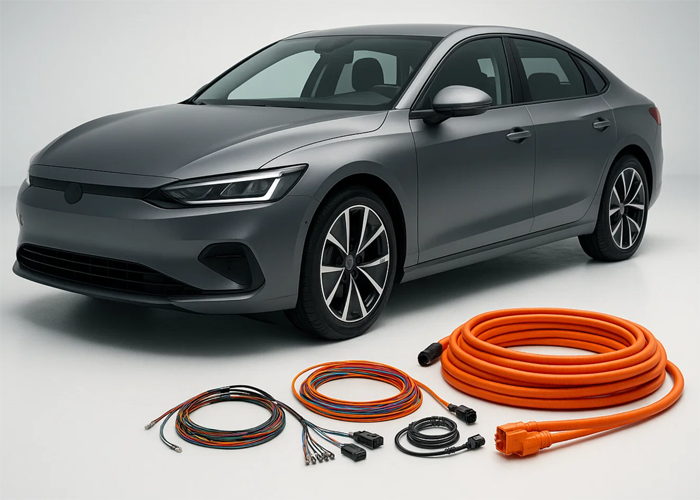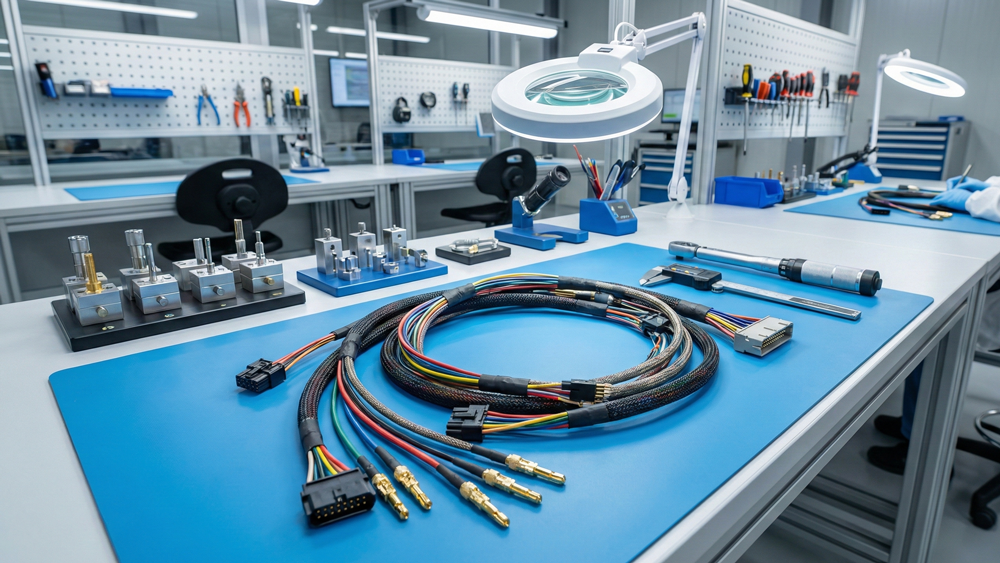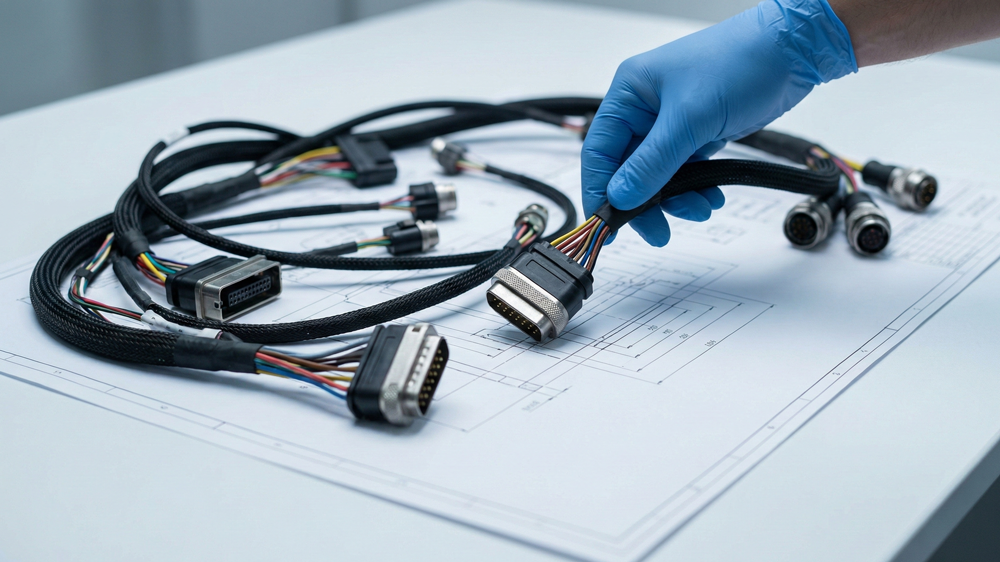
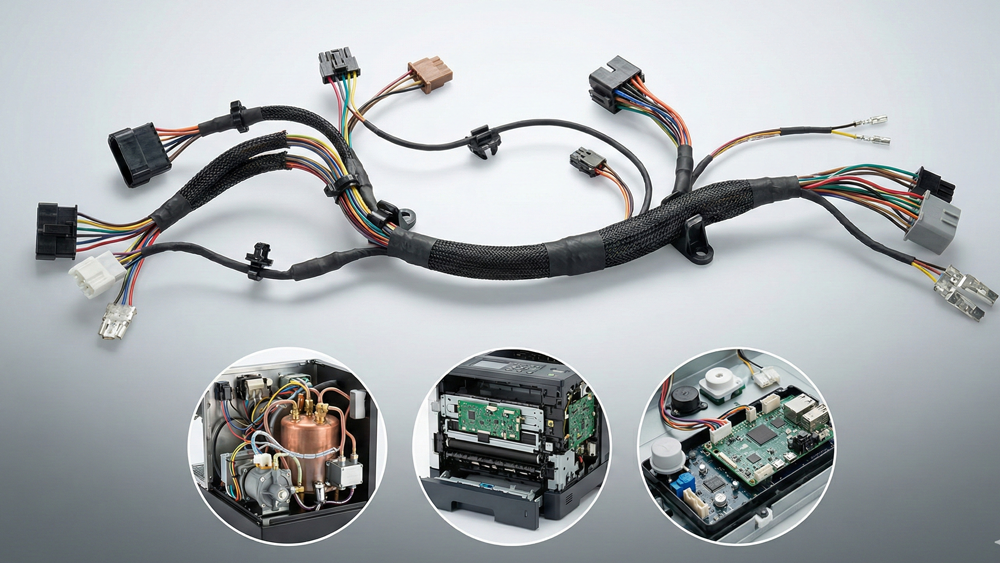
A cable assembly RFQ template for cost comparison is one of the simplest ways to reduce sourcing cost without negotiating price. Most quote spreads come from RFQ ambiguity, not from supplier margin differences. When suppliers interpret scope differently, you get apples-to-oranges pricing: one supplier includes full testing and documentation, another assumes basic continuity only; one assumes tight tolerances, another assumes flexible lengths; one prices conservative yield risk, another assumes ideal build conditions.
This article provides a practical RFQ template that OEM buyers can use to normalize cable assembly quotes. The goal is to make suppliers quote the same build, the same test scope, and the same acceptance rules so you can compare cost fairly and reduce rework risk later. This article closes the P10 cost optimization series and works with Cable Assembly Cost Optimization Guide for OEM Buyers, Cable Assembly Cost Drivers, and Cable Assembly DFM Guide.
Table of Contents
ToggleRFQ Template and Quote Normalization
Quote normalization is the core purpose of an RFQ template. A good RFQ makes assumptions explicit and removes interpretation. Normalized quotes reduce hidden cost because they reduce downstream change orders, rework, and supplier disputes.
For OEM teams, the best RFQ is not the longest document. It is the clearest document. Clear RFQs create lower risk, and lower risk becomes lower cost.
RFQ Template Sections
A practical cable assembly RFQ template should include five sections: project context, build scope, quality and test requirements, packaging and documentation, and commercial terms. If any section is missing, suppliers will fill the gap with their own assumptions.
This template is written to be copied into your RFQ email or purchasing system and adapted for your program.
Cable Assembly RFQ Project Context
Project context helps suppliers make correct assumptions and propose cost-reduction alternatives. Without context, suppliers quote conservatively or quote narrowly. A short project context description often improves quote accuracy more than long generic requirements.
Project Context Fields
Include these context fields in the RFQ:
- Application summary and installation environment
- Target service life and reliability expectation
- Expected annual volume and volume phases
- Serviceability and maintenance behavior
- Any regulatory or customer compliance requirements
Even brief values are better than leaving the section blank.
Cable Assembly RFQ Build Scope
Build scope is where most quote differences start. OEM RFQs often include a drawing but omit build rules that affect labor time and yield. A strong scope section defines what is fixed and what is flexible.
Drawing Package Fields
Include these drawing package fields:
- Assembly drawing with revision and date
- Connector part numbers and approved alternates
- Cable type, wire gauge range, and jacket requirements
- Lengths, branch geometry, and tolerance rules
- Shielding requirements and termination method
- Overmold, backshell, strain relief, or potting requirements
- Labeling locations if required
If you do not have a complete drawing yet, provide a preliminary spec sheet and state what is still open.
Fixed vs Flexible Scope Fields
Define these fixed vs flexible fields:
- Fixed connector families vs recommended options
- Fixed wire gauge vs supplier recommendation range
- Fixed cable jacket material vs acceptable equivalents
- Fixed test scope vs proposed staging options
- Fixed packaging rules vs supplier packaging proposal
This prevents suppliers from guessing what you will accept and increases the chance they propose meaningful cost improvements.
Cable Assembly RFQ Quality and Test Requirements
Quality and test requirements must be written explicitly for fair cost comparison. If test scope is vague, quotes are not comparable. Testing is also a cost driver, so unclear testing creates unnecessary price buffers.
A practical RFQ defines both test type and acceptance rules. It also distinguishes between prototype screening tests and production release tests when appropriate.
Test Requirement Fields
Include these test requirement fields:
- Continuity test requirements and test method
- Insulation resistance and hipot requirements if needed
- Shield continuity requirements if applicable
- Functional test requirements if required
- Test frequency per unit vs per batch
- Test records required and data format
If you are unsure, ask the supplier to recommend a test plan, but require them to list assumptions clearly so quotes remain comparable.
Acceptance Criteria Fields
Include these acceptance criteria fields:
- Visual inspection criteria and workmanship standard
- Pull force test requirements if relevant
- Crimp quality requirements if relevant
- Connector insertion and seating criteria
- Any sealing verification requirements
- Definition of nonconformance and rework rules
Acceptance clarity reduces later disputes and reduces hidden quality cost.
Cable Assembly RFQ Packaging and Documentation
Packaging and documentation requirements can drive cost and lead time. OEM buyers often underestimate packaging labor, kitting complexity, and documentation effort. A good RFQ either defines these requirements clearly or asks the supplier to quote packaging options explicitly.
Packaging Fields
Include these packaging fields:
- Individual bag vs bulk packaging preference
- Kitting or sequencing requirements
- Damage protection requirements
- Label format and placement on packaging
- Storage conditions and shelf-life notes if relevant
Packaging rules are often easy to simplify, and simplification is often a real cost reduction.
Documentation Fields
Include these documentation fields:
- Certificate of conformance requirements
- Test report requirements
- Process change notification expectations
- Material traceability requirements if needed
- First article inspection expectations if used
Documentation should be appropriate to risk. Excess documentation can increase cost without improving reliability if it is not tied to real control points.
Cable Assembly RFQ Commercial Terms
Commercial terms should support quote comparison and cost stability. Many RFQs request a unit price but do not request a breakdown of one-time cost, tooling cost, test fixture cost, and lead time assumptions. Without that breakdown, unit price comparisons are misleading.
Quote Format Fields
Include these quote format fields:
- Unit price by volume tier
- One-time NRE and setup cost
- Tooling cost and ownership terms
- Test fixture cost if applicable
- Lead time for sample and production
- Payment terms and shipping terms
This format makes cost drivers visible and makes negotiations more rational.
Change Control Fields
Change control affects cost stability. Include these fields:
- Approved alternates policy
- ECO process expectation
- Requalification triggers for changes
- Supplier substitution rules
Without change control, cost is unstable because the build changes without shared understanding.
Cable Assembly Quote Comparison Checklist
A cable assembly quote comparison checklist helps you verify that quotes are truly normalized. Even with a strong RFQ, suppliers may still interpret assumptions differently. A checklist catches these differences early.
Use this checklist when reviewing quotes:
- Same drawing revision and same scope
- Same connector part numbers or stated alternates
- Same cable spec and wire gauge assumptions
- Same length tolerance assumptions
- Same shielding termination assumption
- Same test scope and frequency
- Same packaging and labeling assumptions
- Same lead time and volume tier structure
- Same tooling and NRE handling
If any item differs, the quotes are not comparable until the difference is clarified.
Common RFQ Mistakes That Increase Cable Assembly Cost
Common RFQ mistakes usually create cost through ambiguity. One mistake is sending a drawing without build rules or test scope. Another is specifying unrealistic tolerances, which forces suppliers to price scrap and rework risk. A third mistake is leaving packaging and documentation open, which triggers conservative pricing buffers.
A fourth mistake is requesting “lowest price” without defining acceptance criteria and change control. That approach often produces a low quote but high total cost because risk is pushed into production instability.
A better approach is to use a normalized RFQ template so cost reduction comes from clarity and DFM improvement rather than from cutting corners.
Conclusion for Cable Assembly RFQ Template
A cable assembly RFQ template for cost comparison reduces sourcing cost by making supplier quotes comparable. When scope, test, packaging, documentation, and commercial terms are defined clearly, quote spreads shrink and supplier selection becomes more objective. That clarity also reduces downstream cost by preventing misunderstandings, rework, and change-order friction.
For OEM buyers, the best RFQ is the one that makes risk visible. Once risk is visible, you can reduce it—and reducing risk is one of the most reliable ways to reduce total cable assembly cost.
FAQ
Why is an RFQ template important for cable assembly cost comparison
Because quote spread usually comes from different assumptions. A template forces suppliers to quote the same scope and test conditions.
What is quote normalization in cable assembly sourcing
Quote normalization means aligning scope, assumptions, test requirements, packaging, and terms so different supplier quotes become comparable.
What should be included in a cable assembly RFQ
At minimum: drawing revision, materials and connectors, tolerances, test scope, acceptance criteria, packaging, documentation, lead time, and cost breakdown.
Should OEM buyers request cost breakdowns in RFQs
Yes. One-time cost, tooling, fixture cost, and lead time assumptions affect total cost and should not be hidden inside unit price.
What is the biggest RFQ mistake that increases cost
Ambiguity. Vague scope and test requirements force suppliers to price risk conservatively or create rework later.
CTA
Need a Cable Assembly RFQ Template for Your Program
If your team is comparing harness quotes and wants faster, fairer cost comparison with fewer surprises, we can help you turn your drawings and requirements into a normalized RFQ package.
We can support scope definition, test and acceptance alignment, quote normalization, and cost-driver review so your sourcing decision is based on comparable assumptions.
Start through our Contact page. You can also review Strong Technical Support, Custom Cable Assemblies, Tests & Inspections, and Quality Guarantee.