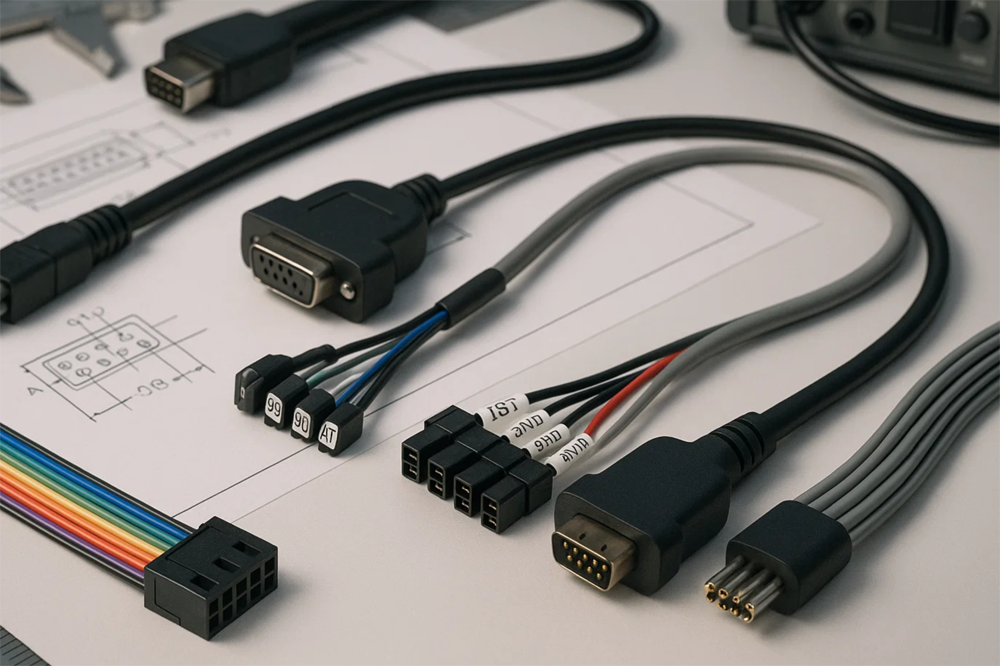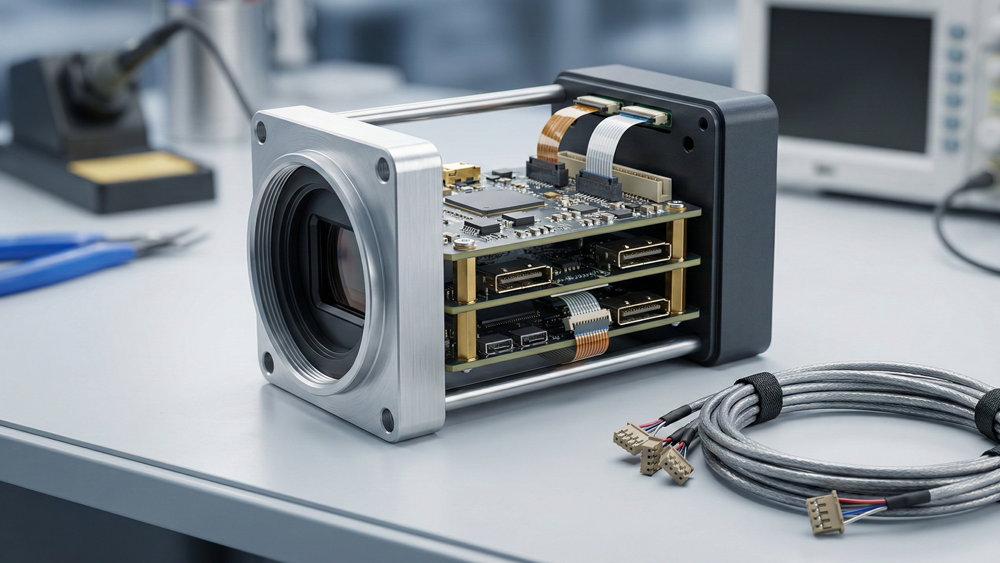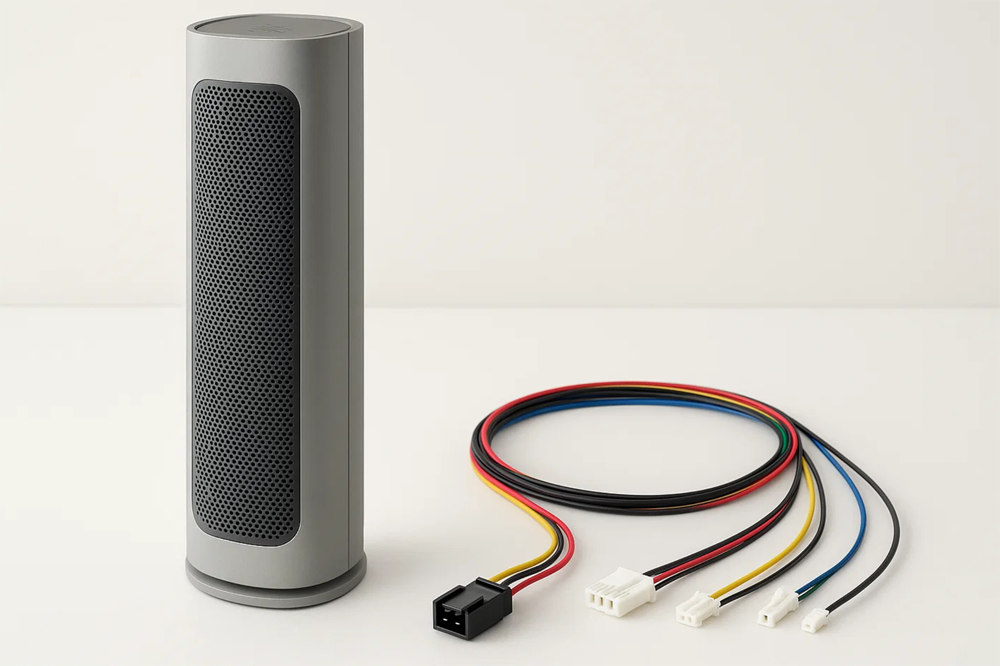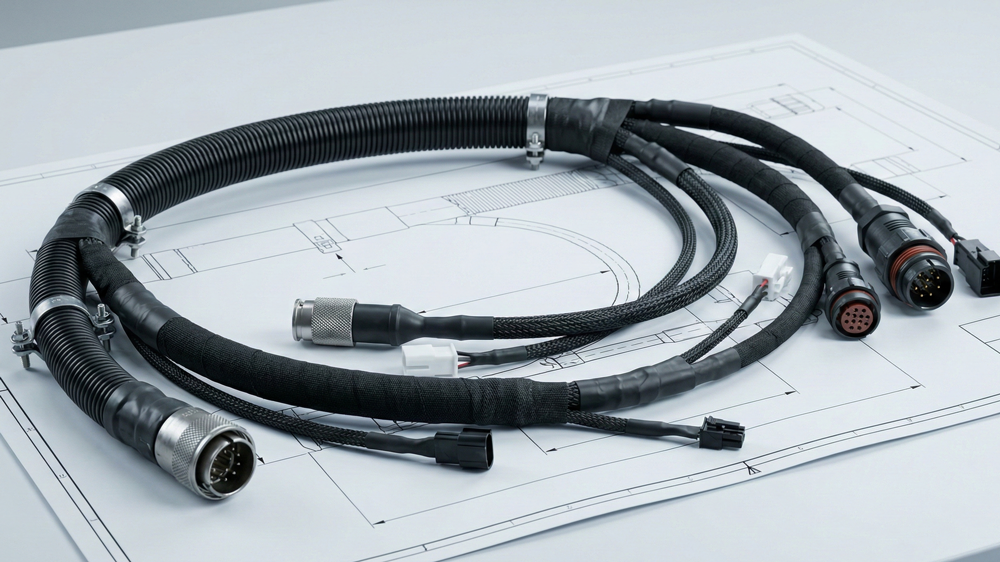
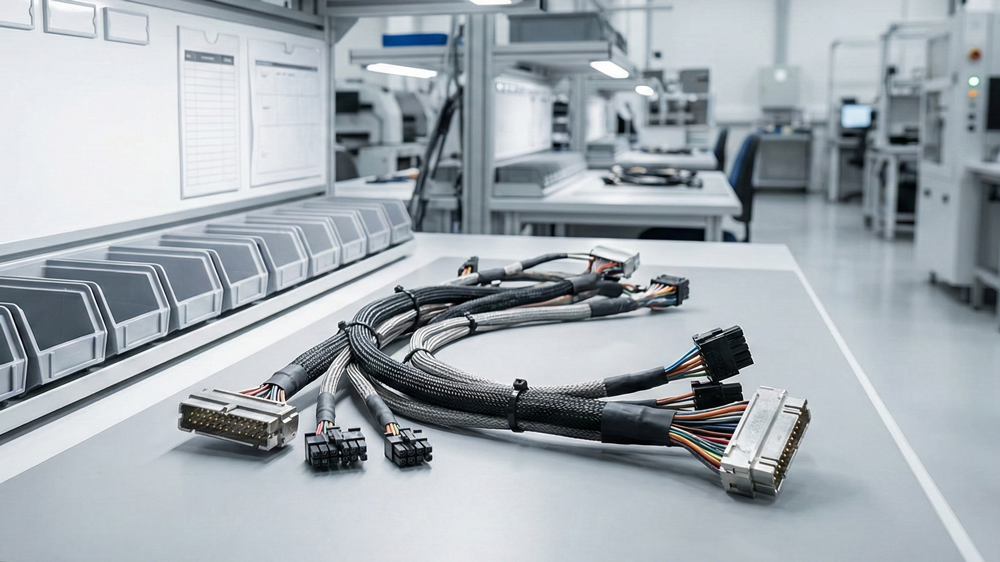
Cable assembly cost drivers are often misunderstood because many quotes show only a unit price and a short material list. In reality, cable assembly cost is driven by both the bill of materials and the manufacturing difficulty required to build the harness consistently. Two designs can have similar material spend and still have very different unit cost because labor time, yield loss, testing, and setup behavior are different.
This article explains cable assembly cost drivers in practical OEM terms. The goal is to help buyers and engineers understand what actually creates cost, why quotes vary, and where cost optimization is real versus where it becomes quality risk. This article supports the P10 series and works with Cable Assembly Cost Optimization Guide for OEM Buyers.
Table of Contents
ToggleCable Assembly Material Cost Drivers
Material cost drivers are the most visible part of a cable assembly quote, but they are not always the most influential. Cable, connectors, terminals, backshells, overmold materials, shielding materials, and protective components establish the baseline cost. However, material choices often change process time, defect risk, and testing needs, which can become larger cost drivers than the material delta itself.
For OEM buyers, the key is to treat material cost and process cost as linked. A cheaper connector can create higher labor cost. A cheaper cable may increase scrap risk if stripping is inconsistent. Material cost is real, but it is rarely the full story.
Cable and Connector Cost Drivers
Cable cost varies with conductor count, gauge, insulation type, shielding structure, and jacket requirements. Connector cost varies with series, contact system, plating, sealing features, and locking design. These choices matter not only because of unit price, but because they influence termination difficulty and assembly time.
In many OEM programs, the most expensive connector is not always the wrong choice if it reduces labor time, reduces test complexity, or reduces field service cost.
Protective Component Cost Drivers
Protective components such as braid, sleeving, heat shrink, grommets, strain relief parts, and seals can add material cost but also reduce field failure risk. The cost driver is not only the component price, but also the installation time and whether installation is repeatable.
A design that uses multiple protective layers without clear assembly intent often becomes expensive because it adds manual steps and creates rework risk.
Cable Assembly Labor Cost Drivers
Labor cost drivers are often the biggest controllable cost factor in cable assemblies. Labor is driven by how many steps a technician must repeat on every unit and how sensitive those steps are to variation. The more manual operations you add, the more cost and defect opportunity you create.
OEM cost optimization is usually most effective when it reduces labor steps rather than negotiating pennies off material.
Termination Count Labor Drivers
Termination count is a direct labor driver. Every strip, crimp, solder, insert, and dress step consumes time. More terminations also create more opportunities for misbuild and rework. Even if each termination takes only a small amount of time, the total becomes meaningful across volume.
Reducing termination count through design choices is often the most durable cost reduction available.
Build Complexity Labor Drivers
Build complexity includes branching, routing, twisting, shielding termination, overmold preparation, potting steps, and special handling requirements. Complexity increases labor time and also increases the chance that two technicians build the same harness slightly differently, which creates variability.
When cost is a priority, the goal is to simplify the build path without compromising the functional requirement.
Skill Level Labor Drivers
Some cable assemblies require higher skill operations such as fine-pitch soldering, complex shielding termination, or tight-tolerance routing. These operations increase labor cost because they are slower and because the pool of qualified labor may be smaller.
OEM buyers should recognize that “high-skill steps” are inherently cost drivers, and cost optimization should focus on whether those steps are truly required.
Cable Assembly Test Cost Drivers
Test cost drivers often hide in RFQ ambiguity. A supplier may quote basic continuity only, while another includes hipot, insulation resistance, shielding continuity, or functional test. If test scope is not clearly defined, quotes will vary, and cost optimization discussions will be confused.
Testing is also both a cost driver and a risk control mechanism. Reducing test cost by removing tests can shift cost into field failures, so test optimization should focus on test efficiency and staging rather than simply cutting scope.
Test Scope Cost Drivers
Test scope cost drivers include test type, test time, fixture needs, sampling strategy, documentation requirements, and whether the test is per-unit or per-batch. A harness that requires functional monitoring or multiple test stages has a different cost structure than a harness that requires only continuity.
OEM teams should write test scope clearly so suppliers quote comparable validation work.
Test Fixture Cost Drivers
Test fixtures can be a major cost driver, especially in low volume. A custom fixture may reduce per-unit test time but adds upfront cost. The right balance depends on expected volume, service-life risk, and production plan.
For OEM buyers, separating fixture cost from unit cost is essential for clean quote comparison.
Tooling and Setup Cost Drivers for Cable Assemblies
Tooling and setup cost drivers include crimp tooling, insertion tooling, overmold tooling, potting fixtures, and programming time for test equipment. Setup also includes the learning curve cost of building a new harness design: process tuning, work instruction creation, and yield stabilization.
These costs are most painful at low volume because they cannot be amortized easily. This is why MOQ strategy and DFM design choices are tightly connected to cost drivers.
Setup Time Cost Drivers
Setup time includes material kitting, job changeover, fixture setup, and operator training. Designs that require frequent part changes, many unique components, or complex documentation increase setup time and therefore cost.
Reducing setup time often produces more cost benefit than small component price reductions in low-to-mid volume programs.
Tooling Cost Drivers and Amortization
Tooling cost drivers become manageable when amortization is planned. If a program expects scaling, investing in tooling can reduce long-term unit cost. If volume remains uncertain, minimizing tooling dependence through simpler designs often produces a better total cost outcome.
For OEM buyers, the important point is to align tooling decisions with realistic volume expectations.
Yield Risk Cost Drivers
Yield risk is one of the largest hidden cost drivers in cable assemblies. Yield loss creates scrap, rework, schedule risk, and supplier friction. A design with tight tolerances, sensitive manual operations, or unstable materials may quote low initially but become expensive in production due to yield loss.
Cost optimization without yield thinking is unstable. A cost reduction that increases defect rate often increases total cost.
Variation and Yield Risk
Variation in cable OD, insulation strip quality, terminal fit, and insertion behavior can all increase yield risk. If the design depends on narrow variation windows without robust process controls, the defect rate rises.
OEM buyers should review which design features are sensitive to variation and ask suppliers about process controls and inspection plans.
Rework and Yield Risk
Rework is expensive because it consumes additional labor, disrupts flow, and can create secondary damage. Harnesses with high rework rates often show unstable cost and unstable delivery. Rework also makes quotes misleading because prototype samples may not reveal production rework behavior.
Reducing rework is one of the most reliable ways to reduce total cost.
Logistics and Packaging Cost Drivers
Logistics and packaging cost drivers can be significant in OEM programs, especially with strict labeling, kitting, and sequencing requirements. Packaging design affects labor time, damage risk, and warehouse handling. Shipping methods and lead time policies also affect cost, especially for urgent production schedules.
For cost optimization, packaging and logistics should be treated as part of the build system rather than as an afterthought.
Labeling Cost Drivers
Labeling cost drivers include label type, durability requirements, serial tracking, placement rules, and documentation. Complex labeling requirements increase labor time and often increase inspection requirements.
If labeling is needed for traceability, define it clearly and then simplify the rules as much as possible.
Packaging and Kitting Cost Drivers
Packaging and kitting requirements can add cost through custom materials, sorting labor, and quality checks. However, good kitting can reduce the OEM’s line handling time and reduce installation errors. This is a total cost tradeoff, not only a supplier cost item.
OEM buyers should compare packaging proposals based on total workflow impact, not only price.
Why Cable Assembly Quotes Vary
Cable assembly quotes vary because suppliers make different assumptions about build intent, test scope, yield risk, tooling, and documentation. If the RFQ does not define these items clearly, suppliers protect themselves in different ways, and pricing becomes hard to compare.
For OEM cost optimization, the fastest lever is often RFQ clarity. When everyone quotes the same assumptions, the quote spread narrows and decisions become more objective.
Conclusion for Cable Assembly Cost Drivers
Cable assembly cost drivers are created by both the BOM and the manufacturing system required to build the harness reliably. The biggest drivers are often labor time, test scope, tooling/setup behavior, yield risk, and packaging rules rather than raw material price alone. For OEM buyers, cost optimization becomes most effective when it targets repeatable step reduction, RFQ clarity, and yield stability.
Understanding cost drivers is the first step toward sustainable cost reduction. Once you know where cost is truly created, you can reduce it without damaging reliability.
FAQ
What are the biggest cable assembly cost drivers
In many OEM programs, labor time, test scope, yield risk, and setup/tooling costs drive total cost more than material price alone.
Why do cable assembly quotes vary between suppliers
Quotes vary because suppliers assume different test scope, documentation, tolerances, packaging, tooling, and yield risk. RFQ clarity reduces variability.
Is material cost the main driver in cable assemblies
Not always. Material is visible, but labor and process stability often dominate total cost, especially in complex harnesses.
How can OEM buyers reduce cable assembly labor cost drivers
Reduce termination count, simplify build steps, improve repeatability, and apply DFM changes that remove operations rather than speeding them up.
What is the biggest hidden cost driver in cable assemblies
Yield risk. Scrap and rework create unstable cost and delivery, and they often exceed savings from a lower unit price.
CTA
Need Help Identifying Cable Assembly Cost Drivers
If your OEM team is comparing harness quotes or trying to reduce unit cost without creating quality risk, we can help you identify the real cable assembly cost drivers and turn them into a practical cost optimization plan.
We can support quote normalization, process-step cost mapping, DFM recommendations, test-scope alignment, and repeatability planning so cost reduction is sustainable.
Start through our Contact page. You can also review Strong Technical Support, Custom Cable Assemblies, Tests & Inspections, and Quality Guarantee.