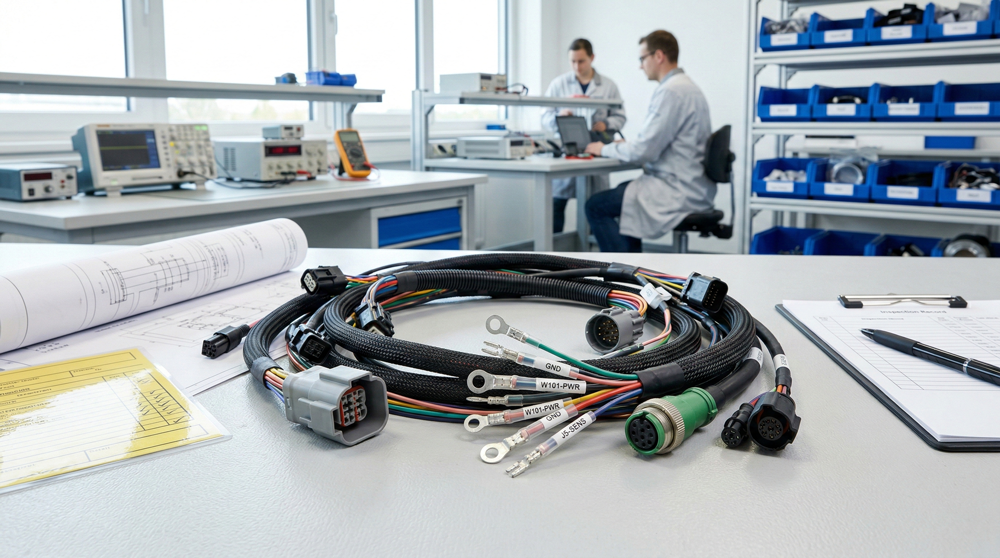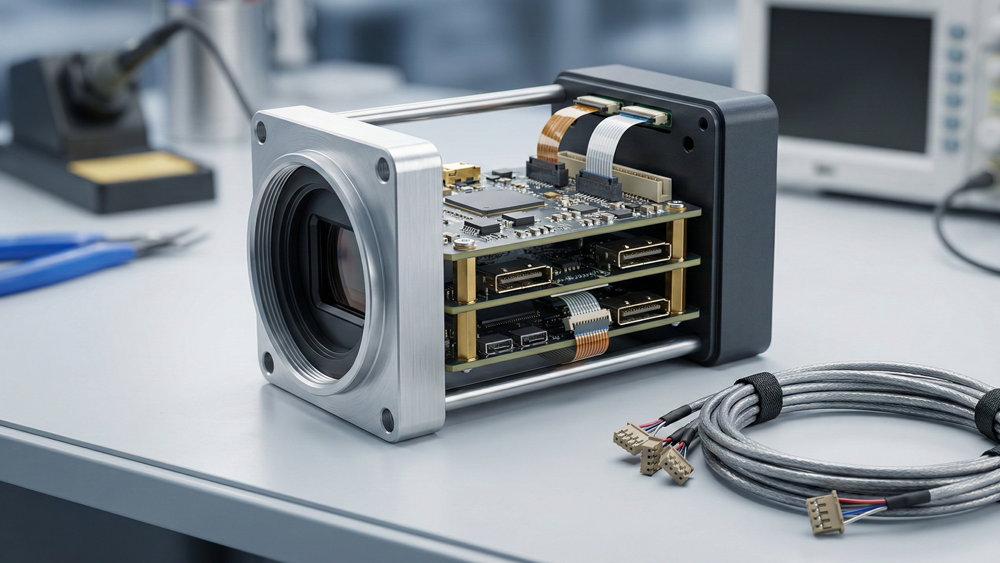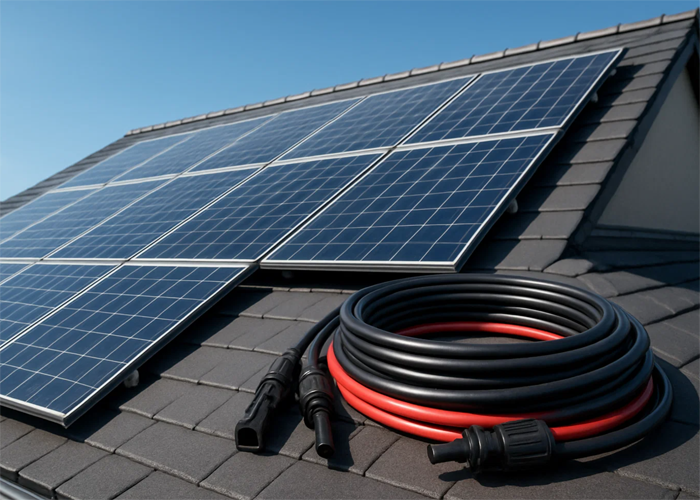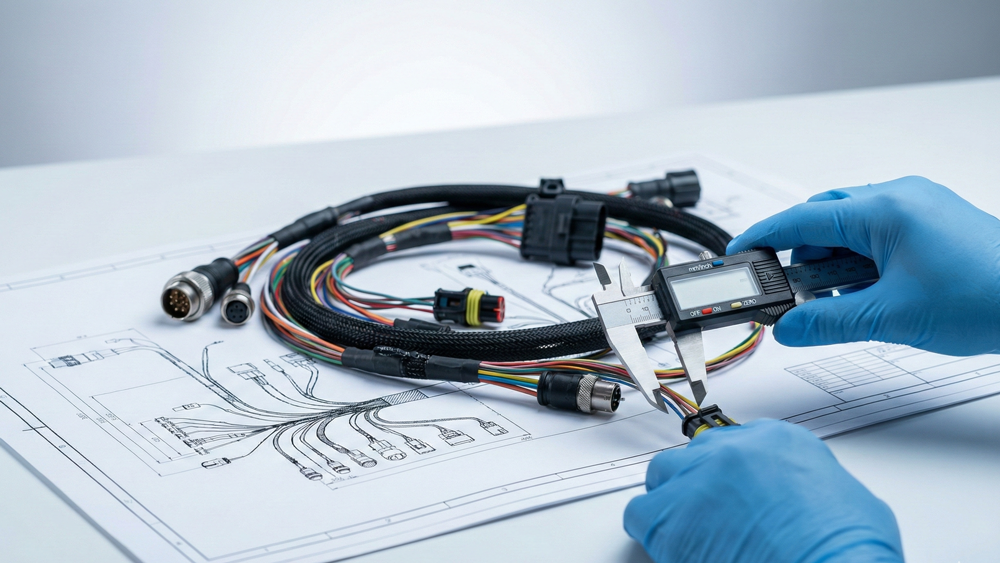
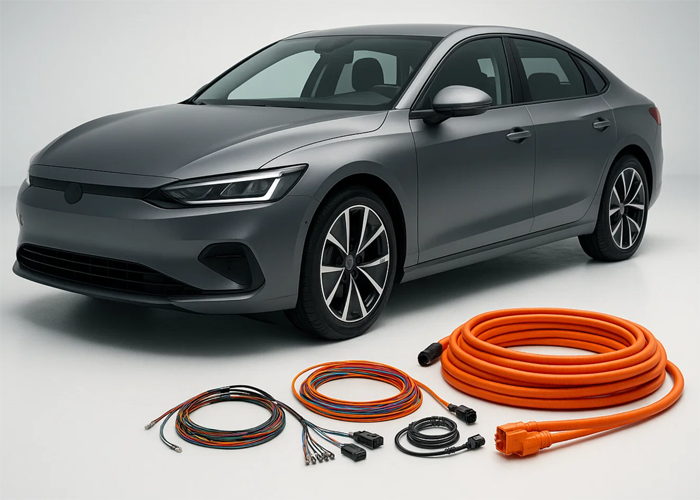
When procurement teams search for automotive wiring harness manufacturers, they’re not really shopping for “a vendor who can crimp wires.” They’re trying to select a supply partner who can carry real automotive risk: safety, traceability, long production cycles, change control, and zero-defect expectations under harsh conditions. In EV and mobility programs, that risk goes up—because high voltage insulation, EMI sensitivity, thermal management, and serviceability become part of the harness design problem.
This article is a practical qualification checklist for OEMs and Tier suppliers evaluating harness manufacturers for automotive, EV, and mobility platforms. It’s designed to help you avoid common sourcing traps: choosing a harness shop that can build prototypes but can’t scale; selecting a low-cost supplier with weak traceability; or awarding to a manufacturer that can pass a sample build but lacks process evidence for long-term reliability.
If you want to align on harness scope before you qualify suppliers, start with Wiring Harness. If you’re ready to request a quote with drawings and requirements, use Custom Wiring Harness. For EV-related context, EV & Battery is a helpful anchor when setting expectations around safety, documentation, and verification. For testing and inspection discipline, keep Tests & Inspections as your reference point—because automotive qualification is, at its core, proof of controlled manufacturing.
1) The automotive difference: why “wire harness” capability is not enough
A non-automotive harness supplier might produce a perfectly functional harness for industrial equipment, consumer devices, or one-off machinery. Automotive is different for two reasons.
First, automotive programs typically demand repeatability under time. You’re not buying 50 harnesses. You’re buying a stable process that can produce the same product month after month while parts, operators, and upstream suppliers change. That requires strong process control and change management.
Second, automotive programs demand evidence, not just outcome. A working sample does not prove production stability. OEMs and Tier suppliers often require documented validation of crimp quality, controlled tests, traceability, and disciplined quality systems. Even if the manufacturer’s “quality is good,” you still need the evidence chain to protect your program and meet customer requirements.
This is why a qualification checklist is more effective than comparing quotes. Quotes can hide assumptions. Qualification reveals capability.
2) Start with the risk map: what can fail in EV & mobility harnesses
Before you audit a supplier, define what “failure” looks like in your use case. EV and mobility harnesses face a range of failure modes that change what you must qualify.
A 12V body harness may be dominated by routing, sealing, vibration, and mis-installation risk. A high-voltage harness adds insulation integrity, creepage/clearance discipline, and safety labeling. A battery pack or BMS sense harness adds noise sensitivity, shielding practices, and connector integrity under thermal cycling. Charging and power electronics harnesses often sit in noisy environments where grounding strategy matters. Mobility platforms with frequent service cycles require connectors and strain relief that can survive repeated handling.
A serious harness manufacturer should ask you these questions early—because your risk map determines what process evidence matters most. If your supplier doesn’t ask, you can still proceed, but you should assume they’ll build to default assumptions rather than your real application environment.
If your internal stakeholders want context on why EV programs carry higher expectations, you can align the discussion using EV & Battery and the broader application map under Industries.
3) Qualification pillar #1: Quality systems and automotive documentation discipline
The fastest way to identify whether a supplier is “automotive-ready” is to assess how they talk about quality systems. Not in marketing terms, but in operational terms.
A credible automotive harness manufacturer should be comfortable discussing structured quality methods: corrective action processes, audit readiness, and how they prevent defects rather than “inspect them out.” Depending on your customer requirements, you may also require automotive-specific frameworks such as APQP/PPAP. If a supplier cannot discuss those frameworks at all, they may still be a good prototype supplier, but they are likely not a safe production supplier for automotive programs.
From a buyer-confidence standpoint, start by reviewing what quality evidence the supplier can present. If you’re using your website as a supplier-facing trust system, the most relevant internal pages to reference in qualification discussions include Quality Policy, Quality Guarantee, and Certificates. These don’t replace audits, but they anchor the conversation in operational proof rather than promises.
What you’re looking for is not a perfect set of acronyms. You’re looking for behaviors: controlled procedures, documented training, clear inspection criteria, and a consistent approach to nonconformances.
4) Qualification pillar #2: Engineering support and DFM capability (the hidden differentiator)
Automotive harnesses fail in production when the supplier builds exactly what the drawing says—but the drawing doesn’t fully define the product. That’s why engineering support matters.
A strong harness manufacturer does not merely “accept” a drawing pack. They review it for ambiguity and manufacturability risk. They ask clarifying questions. They propose DFM improvements when the design is likely to create assembly variation, sealing risk, or fatigue risk. They confirm assumptions in writing, so the quote and build definition are stable.
If you want a fast way to screen for DFM maturity, ask how the supplier handles incomplete information and how they document assumptions. A disciplined answer usually includes a structured question log, a revision history, and a method for aligning on spec changes. This is the practical meaning of Strong Technical Support.
Engineering support also matters more in EV and mobility because harness design is often constrained by packaging and serviceability. The supplier should understand harness board/fixture strategies, branch control, labeling practices, and how to maintain consistency across variants.
If you’re benchmarking “what a capable factory should be able to do,” use Assembly Capabilities as a high-level reference.
5) Qualification pillar #3: Process capability in the operations that actually drive defects
In automotive harness manufacturing, defects are created at repeatable operations: cutting, stripping, crimping, inserting, splicing, sealing, and applying protection. So the right question is not “can you build harnesses,” but “can you control the critical operations under variation.”
A robust supplier should be able to explain how they control crimp quality, how they verify strip length and conductor exposure, how they prevent wire strand damage, and how they ensure terminal insertion is correct. If splices are involved, they should be able to describe their splice methods and inspection criteria. If sealed connectors are involved, they should be able to explain how they handle seals, grommets, and secondary locks without damaging components.
The simplest way to test this is to ask what their “critical-to-quality” checkpoints are. A serious supplier will talk about controlled tooling and inspection rather than “experienced workers.” This is where process evidence matters more than storytelling.
For buyers evaluating multiple suppliers, Tests & Inspections is a useful internal anchor because it frames verification as a defined workflow rather than a vague guarantee.
6) EV-specific capability: high-voltage harness insulation integrity and safety controls
High-voltage harnesses raise qualification expectations because the failure consequences change. In EV platforms, HV harnesses may require strict handling of insulation, controlled verification of insulation resistance, and robust strain relief and protection. Even if your supplier is not building the entire HV system, they must respect HV design intent.
In supplier qualification, the key is alignment: define what your HV harness must withstand, and confirm the supplier can execute and verify it consistently. This includes insulation integrity tests (as applicable), controlled assembly steps that prevent nicks and damage, and the ability to maintain consistent protective features.
You should also pay attention to how the supplier treats marking and labeling for safety and service. In EV programs, labeling and traceability are not just logistics—they are safety and warranty controls.
If your program is EV-related, you can frame the expectation context through EV & Battery and keep quality evidence aligned via Quality Guarantee.
7) Qualification pillar #4: Testing strategy that matches automotive failure modes
Most buyers write “100% test” in RFQs. In automotive harnesses, that phrase is not enough. You want a test plan that matches the failure modes you actually care about.
Continuity and shorts testing is usually baseline. But depending on the application, you may also care about insulation integrity, pin mapping verification, and whether the harness can survive mechanical stress without becoming intermittent. Even if advanced life testing is performed elsewhere, the manufacturer’s test discipline must align with your acceptance criteria and produce stable results.
A mature manufacturer can explain what tests they run, how they run them, what fixtures are used, and how test results are recorded. They can also explain what happens when a unit fails and how the root cause is driven back into process control.
If you want to anchor buyer confidence in a clear internal reference, Tests & Inspections is the best link point, because it demonstrates that “test” is treated as a manufacturing output, not a promise.
8) Qualification pillar #5: Traceability, labeling, and variant control (where automotive programs often break)
Traceability is not glamorous, but it is one of the most expensive things to fix after production starts. Automotive harness programs often have variants by trim level, region, platform revision, or ECU configuration. If variant control is weak, you get systematic misbuilds, service confusion, and warranty cost.
A capable automotive harness manufacturer should be able to support at least lot-level traceability, and in many programs unit-level serialization. They should have a clear labeling strategy, and they should be able to package and kit harnesses in a way that reduces installation errors.
This is also where the manufacturer’s documentation discipline becomes visible. If they can’t explain how they separate variants physically and procedurally, the program is at risk even if the harness itself is electrically correct.
For buyer trust and evidence signals, quality system pages such as Quality Policy and Certificates are helpful references when you’re building an internal approval case.
9) Qualification pillar #6: Change management and revision control (the “long program” reality)
Automotive programs rarely freeze forever. There are ECOs, design updates, supplier part changes, and engineering improvements. A manufacturer who cannot manage change will create chaos: mixed revisions, uncontrolled substitutions, and production disruptions.
A mature supplier can explain their revision control process: how drawings are controlled, how work instructions are updated, how old inventory is quarantined, and how change approvals are recorded. They can also explain how they handle controlled deviations and how they prevent “silent changes” on the line.
This capability is strongly correlated with fewer late-stage surprises, because it prevents the most damaging failure mode: shipping the wrong revision while everyone believes they are shipping the right one.
If you need to communicate the operational seriousness of change control to stakeholders, Quality Guarantee is a useful internal credibility anchor.
10) Qualification pillar #7: Supply chain control, capacity planning, and run-at-rate readiness
A harness supplier is not only an assembler. They are a procurement and scheduling engine. Automotive programs depend on stable supply of terminals, housings, seals, wires, protection materials, and any specialty components. Your supplier must be able to maintain lead time discipline and manage risk.
Ask how they handle component availability and what their approach is to substitutions. Ask how they plan capacity and whether they can perform a run-at-rate demonstration if your program requires it. Ask how they respond to demand surges and how they protect quality when production pressure rises.
If you need rapid builds early (prototypes, pilot), confirm whether the supplier has a structured quick-turn pathway rather than “we’ll try.” Your internal reference link is Quick Turn Available.
The core idea is simple: if the supplier cannot explain how they protect schedule without sacrificing quality, they are not production-safe for automotive volumes.
11) A staged qualification approach that reduces risk and saves time
Many OEMs and Tier suppliers qualify harness manufacturers in stages. This approach is faster and safer than trying to do everything at once.
Start with a paper audit. Confirm basic quality system evidence, capability scope, and whether they can support your required documentation. This is where credibility pages like Factory at a Glance, Certificates, and Assembly Capabilities help establish baseline maturity.
Then move to a pilot build. Use a controlled build to evaluate workmanship, communication discipline, and whether the supplier asks the right questions. Pay attention to whether they treat ambiguity as a risk and resolve it early.
After that, evaluate verification outputs. Review test evidence, inspection consistency, labeling/traceability behavior, and packaging controls. If your program requires it, align on PPAP-style outputs and evidence. Even when your end customer does not require formal PPAP, the logic of “prove the process, not just the part” still applies.
Finally, if you plan high volume, perform run-at-rate and capacity validation. The goal is to see whether the supplier’s process remains stable under realistic production pressure.
12) What to include in an automotive harness RFQ (to get accurate quotes and avoid drift)
The biggest quote drift in automotive harness sourcing comes from missing definition. To get stable, comparable quotes, send a package that removes guessing.
At minimum, include drawing(s), BOM (including connector and terminal part numbers), a pinout/circuit list, branch definition and length tolerances, protection requirements (loom, tape, sleeve), labeling/traceability requirements, and test requirements. If the harness is sealed, include sealing requirements and environmental context. If it is EV-related, include HV context and insulation verification expectations where relevant.
If you want a structured intake path that reduces missing details and speeds up response, use Custom Wiring Harness. If the harness category is still unclear in your team, align first through Wiring Harness and then refine the RFQ.
CTA: qualify the manufacturer, then request the quote with confidence
If you’re sourcing for automotive, EV, or mobility platforms, your best defense against warranty cost and schedule risk is qualification discipline: confirm quality systems, process control, test definitions, traceability, and change management before you award production volume.
If you’re ready to quote, submit your RFQ through Custom Wiring Harness. If you want to discuss qualification expectations, documentation readiness, or whether your harness should be treated as a harness-led or cable-led build, reach out through Contact. If your internal stakeholders need trust signals, the most relevant evidence pages to share are Tests & Inspections, Quality Policy, and Certificates—because automotive sourcing is ultimately about proving controlled manufacturing.