How OEM buyers select cable types for different applications has a direct effect on product reliability, routing stability, serviceability, and long-term sourcing control. How OEM buyers select cable types for different applications should never be reduced to conductor count and voltage alone, because cable choice also affects flex life, shielding behavior, jacket durability, assembly handling, packaging, and field performance.
For OEM teams, the right cable type helps the finished cable assembly match the real use case. The wrong cable type may still pass early bench checks while quietly creating later problems in motion, vibration, sealing, signal quality, or installation. That is why cable selection should be treated as a practical engineering and sourcing decision, not just a line item in the BOM.
Table of Contents
ToggleStart with Use
The first step is to define how the cable will actually be used. A cable for a static control cabinet does not need the same construction as a cable for robotics, outdoor equipment, medical devices, or automotive auxiliary systems. If the use case is vague, the cable choice usually defaults to whatever is familiar or easy to source, which is often where avoidable problems begin.
A useful review starts with a few direct questions. Will the cable remain static or move repeatedly? Will it be bent, twisted, dragged, or exposed to vibration? Will it run near motors, drives, or noisy electronics? Is it exposed to moisture, UV, oil, chemicals, or cleaning agents? Will technicians handle it often during service? These questions shape what kind of cable is actually appropriate.
This is why cable type selection should begin before the RFQ is fully locked. Once the project is already priced around the wrong cable assumption, correction becomes slower and more expensive.
Match the Duty
Different applications create different duty profiles, and cable selection should follow that duty rather than only the electrical circuit. In many OEM projects, the cable looks like a passive material choice. In practice, it is often one of the main durability decisions in the whole assembly.
A static internal cable may prioritize compact size, manageable bend behavior, and stable routing. A cable in automation or robotics may need stronger flex performance. An outdoor cable may need better jacket durability and environmental resistance. A medical cable may need better flexibility, cleaner routing, and controlled handling behavior. A vehicle-related cable may need to handle vibration, packaging pressure, and temperature change.
The table below shows how duty changes cable priorities.
| Application | Main stress | Cable priority |
|---|---|---|
| Static equipment | Routing, heat, fit | Stable shape, manageable bend, compact size |
| Robotics and motion | Flex, torsion, movement | Flex life, movement stability, strain control |
| Outdoor equipment | UV, moisture, dirt | Jacket durability, weather resistance, sealing support |
| Medical devices | Handling, compact routing, signal care | Flexibility, clean routing, controlled feel |
| Automotive auxiliary | Vibration, heat, packaging | Stable construction, durable jacket, fit in tight space |
A cable that is good in one of these cases may be weak in another. That is why application fit matters more than generic “good quality” language.
Check Flex
Flex behavior is one of the biggest reasons cable performance changes across applications. In moving systems, a cable can look fine in a static sample and still fail much earlier than expected once real bending or motion starts.
OEM buyers should therefore ask whether the cable is expected to remain fixed, bend occasionally, or flex continuously. If the cable moves in drag chains, robotic arms, door systems, seat modules, portable equipment, or any repeated-motion environment, then flex performance becomes a core selection issue. In those cases, conductor structure, insulation choice, and jacket behavior all matter.
A common mistake is using a static-rated cable in a dynamic application because the circuit definition looks similar. Electrically it may still work. Mechanically it may not last. That is why flex requirement should be treated as a first-order decision, not a later correction.
Check the Jacket
Jacket choice affects much more than appearance. It influences abrasion resistance, flexibility, chemical tolerance, temperature behavior, and how the cable feels during routing and service. In many assemblies, jacket performance is what determines whether the cable ages gracefully or becomes a field problem.
For indoor static equipment, the jacket may mainly need to support routing and general durability. For industrial equipment, it may need to resist abrasion, oil mist, or handling. For outdoor products, UV and moisture become more important. For vehicle-related uses, vibration and thermal variation may matter more. In medical or portable devices, the jacket may also affect user handling and perceived quality.
This is why OEM buyers should not treat all jackets as interchangeable. Two cables with the same conductor count and nominal size may still behave very differently once installed. Jacket choice should follow the real environment, not only distributor convenience.
Check the Size
Cable size has a direct effect on routing, packaging, and strain relief. A cable that is too large can make the assembly stiff, hard to route, and harder to terminate cleanly. A cable that is too small may reduce mechanical confidence or create less margin for the environment and handling.
In compact products, oversize cables often cause the first practical problems. They may crowd the enclosure, create awkward bends, or force the connector transition into a stressed position. In larger systems, size may affect clamp choice, drag behavior, and service handling. That means cable size should be judged against the real product space, not only against electrical minimums.
This is especially important in custom cable assemblies where the route itself may be part of the product’s assembly logic. A cable that fits on paper but not naturally in the product is often the wrong cable.
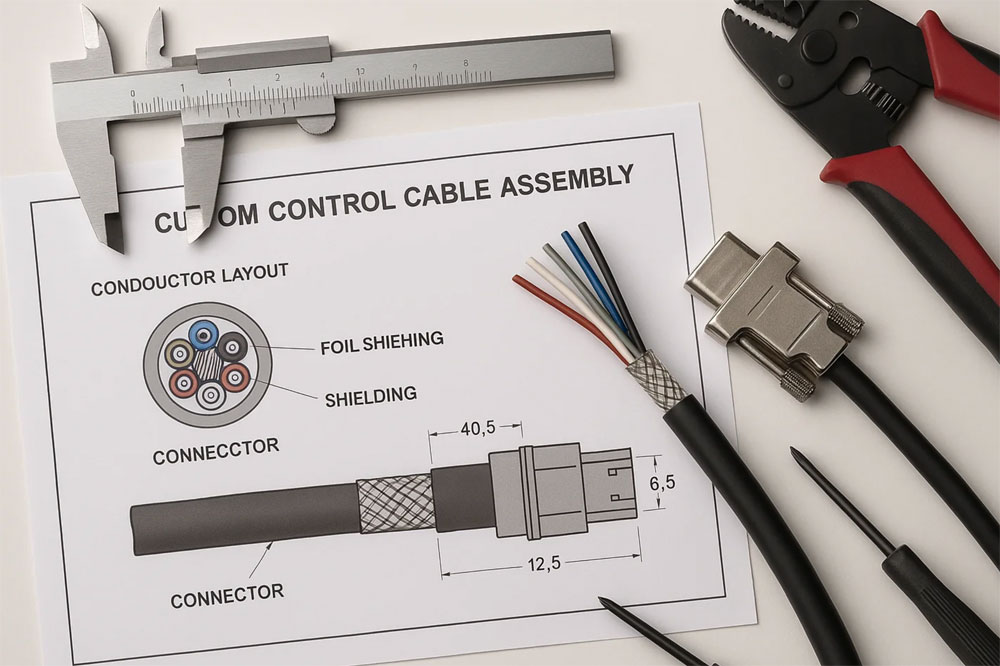
Check the Shield
Shielding should be selected according to the actual signal and noise environment, not by habit. Some projects genuinely need shielded cable. Others do not. Both overuse and underuse can create avoidable cost or risk.
If the cable runs near motors, drives, switching devices, communication lines, sensing systems, imaging electronics, or other noise-sensitive areas, shielding may be important. If the assembly carries low-level signals or data that must remain stable, shielding often deserves closer review. But if the application is simpler and noise exposure is low, an unshielded cable may be the better commercial choice.
The key point is that shielding is not a universal upgrade. It is part of the application fit. That is why this series later includes Shielded vs Unshielded Cable Assemblies. Buyers should choose shielding because the application needs it, not because it feels safer by default.
Check the Route
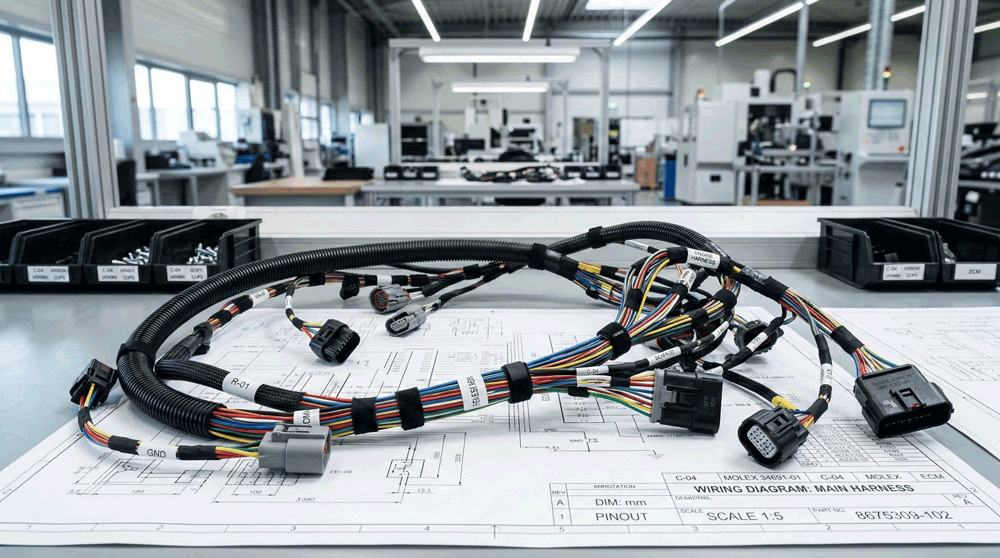
Cable type should always be reviewed against the actual route. A cable may be technically acceptable and still create assembly trouble if it is too stiff, too bulky, or too unstable for the way it must travel through the product.
The buyer should look at where the cable starts, where it turns, where it is supported, and whether it passes moving parts, brackets, electronics, heat sources, or service points. A better cable type often makes the route cleaner. A poor cable choice often forces the route to compensate. That usually creates stress at connectors, clamps, or breakouts later.
This is why route photos, assembly views, and physical handling feedback are so useful during cable selection. They show what the cable has to do in real space. A catalog description cannot fully replace that.
Match the Connector
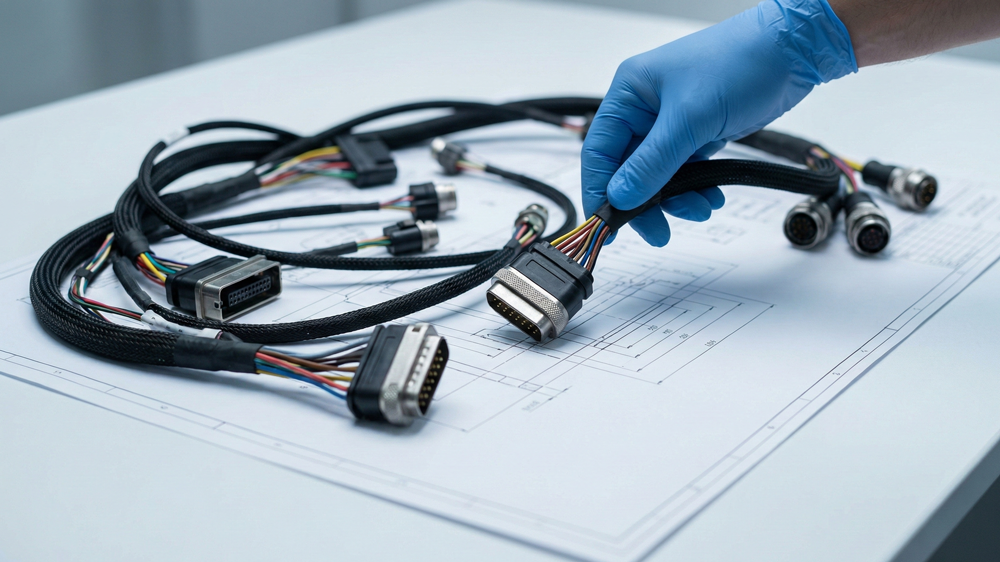
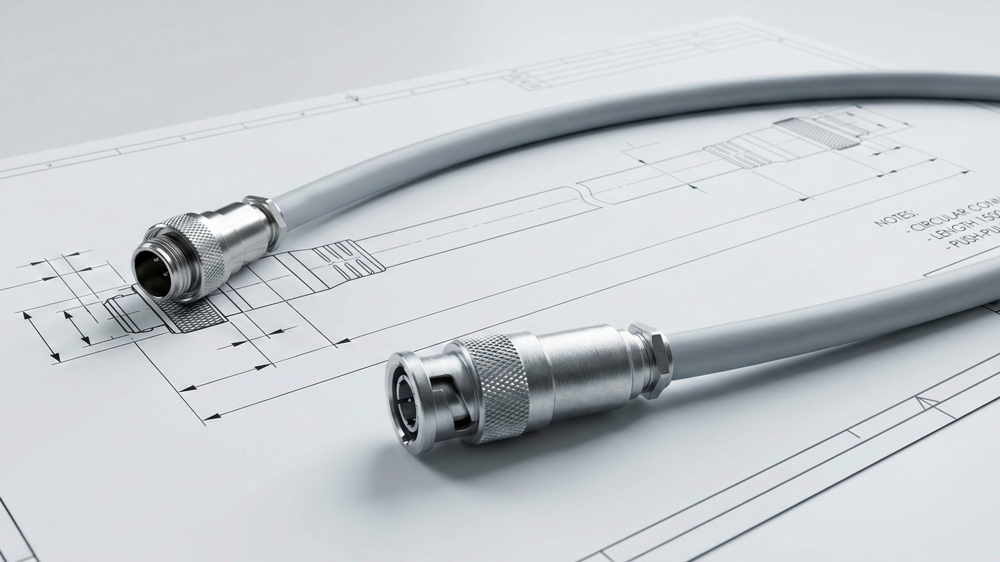
The cable and the connector must work as one system. A cable type that seems strong by itself may still be the wrong choice if it does not match the connector’s seal range, termination method, exit path, or strain-relief needs.
This is especially important when cable diameter, flexibility, shielding, or jacket behavior changes. A connector selected for one cable family may become a weaker fit when the cable changes, even if the electrical function stays the same. The result can be awkward sealing, difficult routing, or higher stress at the termination point.
That is why cable selection should always be reviewed together with connector selection. It also explains why the previous article, How to Choose the Right Connector for Cable Assemblies, sits naturally before this one. Connector choice and cable choice are not separate sourcing decisions. They are one assembly decision.
Think About Service
The right cable type should also support the way the product will be serviced. If a cable must be unplugged, replaced, coiled, moved, or identified during maintenance, then flexibility, feel, bend behavior, and label support become more important.
A cable that is too stiff may be harder to service in compact spaces. A cable with poor jacket behavior may age badly under repeated handling. A cable that tangles easily or resists natural routing may increase service time. In some OEM products, these issues become visible only after launch, when technicians and users begin interacting with the real assembly rather than the design concept.
That is why buyers should ask a simple question during selection: does this cable type support not only production build, but also real service behavior? In many B2B products, that question changes the commercial answer.
Review Supply Risk
A cable type can be technically suitable and still create unnecessary sourcing risk if availability, lead time, or alternate-control options are too weak. OEM buyers should therefore review cable choice from both an engineering and a supply perspective.
This does not mean every project should choose the most common cable available. It means the buyer should understand whether the selected cable is stable enough for the intended business model. If the product will scale, remain active for years, or require second-source planning later, then a very narrow cable choice may create pressure down the road. If the project is lower-volume and highly specialized, the trade-off may still make sense, but it should be intentional.
This is where broader sourcing content such as OEM Cable Assembly RFQ and Supplier Selection Guide becomes useful. Cable selection is part of supply strategy, not only part of electrical design.
Use Samples
The best cable decisions are confirmed physically. Once the selected cable is built into the real assembly, the buyer can finally judge whether the choice works in practice.
A good sample review should check whether the cable routes naturally, behaves well at the connector exit, supports labels correctly, feels appropriate for the application, and matches the project’s actual handling needs. In moving applications, the review should also ask whether the cable looks likely to survive repeated use. In compact assemblies, the review should check whether the cable is helping or hurting the packaging logic.
This is why sample review matters so much. A cable type that looked fine in the quote can still prove too stiff, too fragile, too large, or too awkward in the real build. It is better to learn that at sample stage than after the product is already moving into pilot or release.
Watch Common Mistakes
One common mistake is choosing cable mainly by conductor count and ignoring the real environment. Another is selecting a cable for electrical performance while overlooking route fit and strain behavior. A third is using a familiar cable from a previous project without checking whether the new application has the same movement, service, or exposure profile.
Another frequent mistake is deciding cable and connector separately. This often creates avoidable problems in sealing, routing, and transition stability. A final mistake is assuming the lowest-cost cable is the safest commercial choice. In many OEM programs, that only holds true if the lower-cost cable still supports the real duty of the product.
Use a Cable Review Framework
A simple review structure helps buyers make better cable decisions with fewer blind spots.
| Review area | Key question |
|---|---|
| Use case | How will the cable be used in the real product |
| Duty | Static, moving, flexing, outdoor, medical, vehicle, or mixed |
| Jacket | Does the jacket match the environment and handling needs |
| Size | Does the cable fit the route and package naturally |
| Shield | Does the application really need shielding |
| Route | Can the cable follow the real path without stress |
| Connector match | Does the cable fit the chosen connector and transition logic |
| Service | Will the cable behave well during maintenance and replacement |
| Supply | Is the cable stable enough for the sourcing model |
| Sample proof | Does the actual build confirm the choice |
This kind of framework keeps selection practical and prevents the project from becoming too narrow in how it defines “the right cable.”
Conclusion
How OEM buyers select cable types for different applications should be guided by the real use case, the real duty, and the real routing and service demands of the product. The strongest cable choices match the environment honestly, support the connector correctly, balance cost with lifecycle risk, and are confirmed through physical samples before the project is fully frozen.
When buyers do this well, later work in RFQ, sample approval, pilot, and production becomes much cleaner. In custom cable assemblies, that often means fewer corrections, more stable product behavior, and better long-term sourcing control.
FAQ
What is the first thing to check when selecting a cable type?
The first thing is the real use case. The cable should be selected according to movement, environment, routing, and handling, not only by electrical requirement.
Why does cable jacket matter so much?
Because the jacket affects flexibility, abrasion resistance, chemical tolerance, routing feel, and long-term durability in the finished assembly.
Should cable and connector be selected together?
Yes. Cable diameter, flexibility, shielding, and jacket behavior all affect whether the connector remains a good fit in the final assembly.
Is shielded cable always better?
No. Shielding should be selected according to actual signal and noise needs. Unnecessary shielding can add cost and complexity without real value.
Why should service be considered during cable selection?
Because cable behavior during maintenance, replacement, and handling affects lifecycle cost. A cable that is hard to route or handle in service may not be the best commercial choice.
CTA
If you are selecting a cable type for a new OEM assembly, the best first step is to review the real environment, route, connector, and service pattern before locking the BOM around a cable that only looks right on paper.
You can send your drawings, BOM, route photos, application notes, and sourcing questions through Contact. Our team can help review the cable choice and support a more practical OEM sourcing decision before the design is frozen.