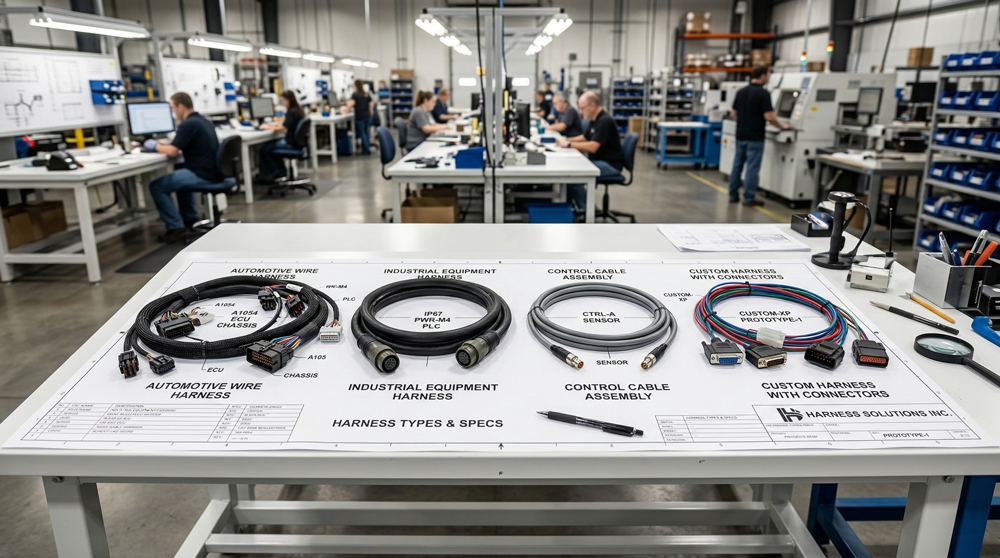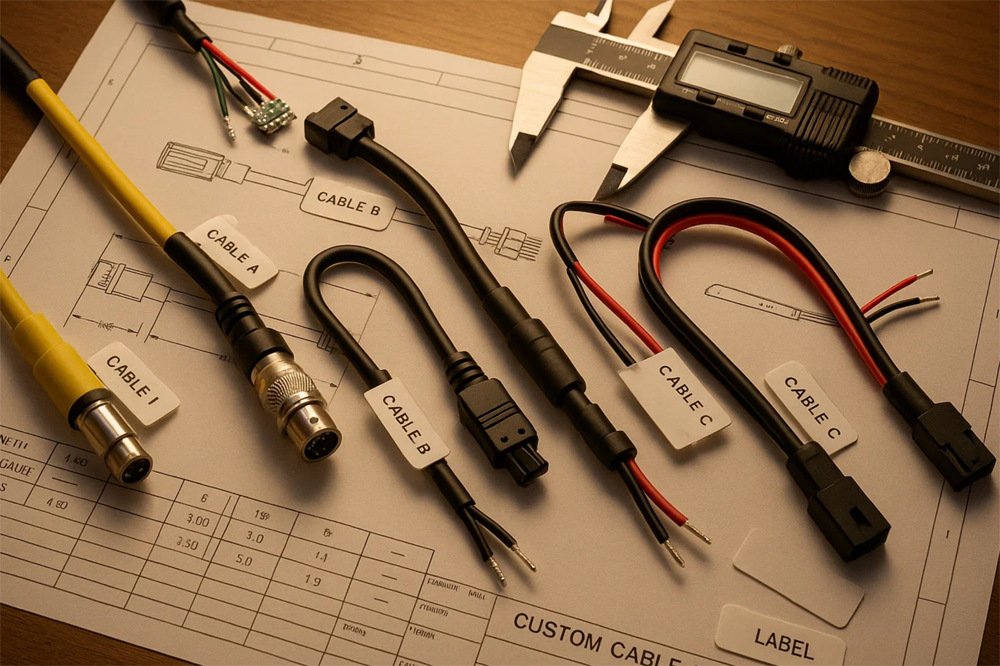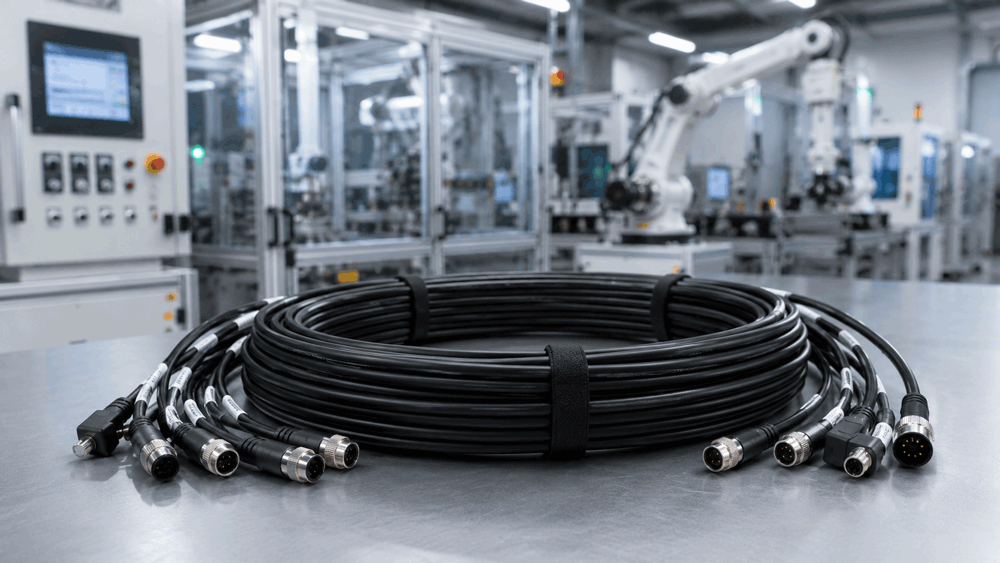
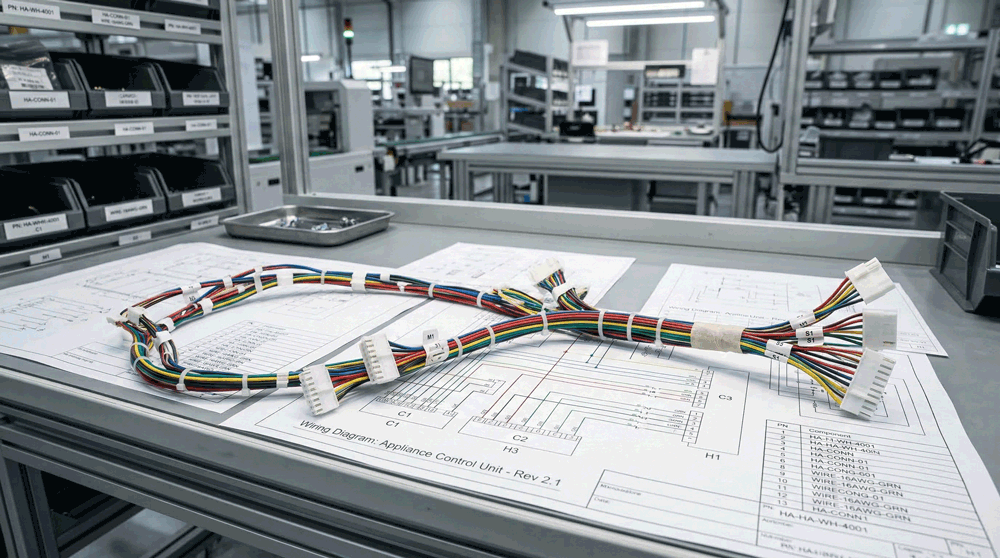
How to choose the right connector for cable assemblies is one of the most important decisions in OEM interconnect design, because the connector affects far more than mating compatibility. How to choose the right connector for cable assemblies influences routing, retention, serviceability, sealing, assembly speed, signal stability, cost, and long-term supplier control. A connector that looks acceptable in a quotation table can still become a weak point once the cable assembly moves into pilot, production, field handling, or service replacement.
For OEM buyers, that means connector selection should not be treated as a catalog shortcut or a price-first decision. The right connector helps the cable assembly fit the product, survive the real environment, and stay manageable across RFQ, sample approval, production release, and repeat supply. The wrong connector often creates hidden cost through awkward routing, unstable locking, unclear service access, repeated handling damage, or poor fit with the chosen cable.
Table of Contents
ToggleStart with the Use Case
The first step is not looking at part numbers. The first step is defining the real use case. A connector for a static control cabinet assembly should not be selected the same way as a connector for robotics, outdoor equipment, medical devices, or automotive auxiliary systems. Even when the circuit count is similar, the operating demands can be very different.
A useful starting point is to ask where the cable assembly will live, how often it will be connected and disconnected, whether it will move, whether it will be exposed to moisture, vibration, dust, cleaning, or service handling, and how much package space is available around the interface. These factors often matter more than buyers expect because they directly shape what “the right connector” really means.
This is why connector choice should be tied to the application before the RFQ is sent. When the use case is clear, the supplier can recommend a more appropriate connector family, exit direction, retention method, and sealing logic. When the use case is vague, the project usually defaults to a familiar connector rather than the best one.
Match the Environment
Connector choice should always reflect the real environment. A connector that works well in a protected indoor assembly may become unreliable in a moving machine, in an outdoor product, or in a service-heavy system.
In industrial equipment, the connector may need better lock security and resistance to vibration. In robotics or automation, the connector may need to tolerate repeated movement while keeping the cable exit under control. In outdoor equipment, sealing and corrosion resistance become much more important. In medical devices, compact size, usability, and stable signal connection may matter more. In automotive auxiliary systems, packaging limits, vibration, and temperature variation often shape the decision.
This is why buyers should avoid making connector decisions based only on nominal electrical fit. The connector is part of the mechanical and environmental design, not just the circuit definition. If the environment is misread, the cable assembly may still function in early testing but become unstable in real use.
Know the Mating Side
A connector is only useful in relation to what it mates with. That sounds obvious, but many sourcing issues begin because the buyer focuses on the cable side without fully defining the mating side.
The buyer should know whether the mating interface is already fixed by the customer’s product, PCB, sensor, motor, display, module, or enclosure. If that interface is already locked, then connector selection is partly constrained and the real question becomes which exact connector version, orientation, lock style, and cable exit path best supports the finished assembly. If the mating side is still open, then the project has more freedom, but that freedom should be used carefully rather than casually.
Mating-side clarity is especially important when similar connector families contain multiple variants that look alike but differ in keying, latch geometry, sealing style, or housing depth. In OEM projects, this kind of detail can decide whether the assembly feels stable and serviceable or awkward and risky. Buyers who define the mating side clearly usually avoid many of the most frustrating connector mistakes.
Check the Lock
Retention is one of the most underestimated connector decisions in cable assemblies. A connector may mate correctly and still be the wrong choice if the lock is too weak for the real application.
The buyer should think about whether the connection is static, exposed to vibration, likely to be handled during service, or installed where accidental pull or side load is possible. In these conditions, the locking method becomes part of product reliability. A connector with a weak latch may look fine in a bench sample and then loosen gradually in real operation. A connector that requires too much force to release may protect against accidental disconnect but make service unnecessarily difficult. A connector with unclear keying may increase installation error in production or field repair.
This is why lock style should be reviewed in practical terms rather than just by reading the connector datasheet headline. The best question is not only “Does it lock?” but “Does it lock strongly enough for the real use case without creating service or assembly problems?”
Check the Size
Connector size affects much more than aesthetics. It affects cable routing, enclosure clearance, strain relief, operator access, and the overall ease of assembly.
In compact products, an oversized connector can force tighter bends, reduce service access, or create unnecessary packaging pressure. In larger equipment, a connector that is too small may be harder to handle, less robust under vibration, or less stable in repeated use. Connector size also changes how the cable exits the interface, how much room is available for sleeves or boots, and whether the connector can be reached during production or service.
The right size is therefore not simply the smallest one that fits the circuit count. It is the size that fits the product space, the operator’s hand, the cable diameter, and the real installation route. That is why smart OEM teams judge connector size as a product decision, not only as a component specification.
Check the Exit
Cable exit direction is one of the easiest connector details to overlook and one of the fastest ways to create routing problems. A straight-exit connector, a right-angle connector, and a more compact rear-exit format may all meet the same electrical need, but they can behave very differently in the actual product.
If the cable must turn sharply immediately after the connector, a straight exit may create stress at the transition point. If the assembly runs in a tight housing, the wrong exit direction may make routing awkward or unstable. In moving systems, the exit direction can even affect fatigue risk because it changes how the cable enters the first bend.
This is why connector exit should be reviewed together with the real cable route. The buyer should look at where the cable goes after the interface, whether the bend is natural, whether service access remains practical, and whether the chosen exit direction reduces or increases strain. A connector that is technically correct but geometrically wrong is still the wrong connector.
Match the Cable
A connector should never be selected in isolation from the cable. The connector and the cable have to work as one assembly system.
The cable diameter, flexibility, shield construction, jacket behavior, and sealing range all influence whether the connector remains a good choice. A connector may fit the circuit requirement but be a poor match for the selected cable if the seal range is wrong, if the cable is too stiff for the exit path, or if the shielding termination becomes awkward. In some cases, a connector chosen early can force a weaker cable choice later. In others, a cable chosen early can make the original connector less practical.
For OEM buyers, this means connector review should include a direct question: does this connector still make sense when paired with the actual cable construction we plan to use in production? That question is especially useful in outdoor, flexing, compact, or signal-sensitive applications where the connector-cable interaction is more demanding.
Protect the Signal
In many cable assemblies, the connector is part of the signal-performance decision, not just the mechanical interface. This becomes more important in data, feedback, sensing, imaging, and other signal-sensitive applications.
A connector that is mechanically fine may still become the wrong choice if it does not support the required shielding approach, grounding behavior, contact stability, or pin integrity for the application. In systems where noise matters, the connector should be reviewed along with cable shielding, routing, and termination method. In compact electronics, connector density and pin arrangement can also affect how well the assembly supports clean signal behavior.
This does not mean every project needs a complex signal study. It means the buyer should not separate connector choice from signal quality where the application makes that relevant. In OEM work, the most expensive connector problems are often the ones that do not look mechanical at all. They show up later as unstable performance, intermittent signals, or hard-to-diagnose field issues.
Think About Service
A connector that works in production but creates service problems is often the wrong connector. This is why serviceability should be part of connector selection from the beginning.
The buyer should think about whether the connector will ever be unplugged after production, who will handle it, whether it is accessible in the finished product, and whether the locking feature can be understood and released without guesswork. If technicians need tools, unusual force, or excessive disassembly just to reach the interface, then service cost rises quickly. If similar connectors can be confused during repair, the risk of field error also rises.
This is especially relevant in industrial equipment, medical devices, outdoor systems, and automotive-related products where maintenance is part of the real business model. A slightly more thoughtful connector choice at the start often saves far more later in service time, replacement accuracy, and customer confidence.
Balance Cost
Connector cost matters, but it should be balanced against the real risks the connector carries into the project. A cheaper connector is not always the lower-cost choice once assembly time, routing, lock strength, serviceability, and lifecycle stability are considered.
Some connectors are expensive because they offer capabilities the project does not actually need. Others look economical because they meet the immediate spec while leaving very little margin for vibration, handling, or service. The buyer should therefore compare cost in context. Does the lower-cost option still support the required environment, lock strength, routing path, and cable match? Does the higher-cost option solve a real problem, or is it simply overbuilt for the job?
The best connector decisions usually come from this middle ground. The buyer avoids paying for features that add no value, but also avoids forcing the project into a weak interface that will cost more later through rework or field issues. In B2B cable assembly sourcing, that balance is usually more valuable than the lowest line-item price.
Review Supply Risk
A connector can be technically excellent and still be commercially risky if the supply path behind it is too narrow. This is why connector choice should also include a sourcing view.
The buyer should understand whether the connector family is broadly available, whether approved alternates exist if needed, whether lead-time behavior is stable enough for the project, and whether the connector choice will make future second-source planning difficult. In some OEM programs, a tightly controlled connector is the right decision. In others, a more flexible sourcing position is commercially safer.
This does not mean every design should chase the most common connector family. It means buyers should know the supply consequences of the connector they choose. A connector selected only for technical neatness may later create quoting delays, production pressure, or expensive redesign if availability changes. A connector selected with both engineering and supply in mind usually supports a healthier program.
Use Sample Proof
The best connector decisions are confirmed physically, not only logically. Once the connector and cable are paired in a real sample, the buyer can finally judge whether the selection works in the actual product.
A useful sample review asks practical questions. Does the connector route naturally? Is the exit direction still correct once the cable is installed? Does the lock feel right? Is service access reasonable? Does the connector create too much stiffness or package pressure? Do labels remain visible? Does the assembly feel stable during real handling? These are exactly the questions that are difficult to answer fully on paper.
This is why sample proof should be treated as part of connector selection, not only part of general sample approval. A connector that seemed fine in discussion may look weak once the cable is dressed in the real product. A connector that seemed oversized may turn out to be the better choice because it improves access and strain relief. Sample reality is often the best final filter.
Watch Common Mistakes
Several common mistakes repeat in connector selection. One is choosing a connector mostly because it was used on a previous project without checking whether the new environment is actually similar. Another is choosing based mainly on cost while assuming routing and service can be solved later. A third is ignoring exit direction until the sample stage. A fourth is selecting a connector that matches the mating side electrically but not the cable mechanically.
Another frequent mistake is underestimating lock behavior. A latch that seems good enough in the hand may be weak in vibration or awkward in service. A final mistake is forgetting that connectors are part of both the engineering system and the supply system. If the connector cannot support both, the project will eventually feel the weakness somewhere.
Use a Connector Review Framework
A simple framework can make connector choice more practical and less opinion-driven.
| Review area | Key question |
|---|---|
| Application | Where is the assembly used and how often is it handled |
| Environment | Will the connector face vibration, moisture, dust, heat, or movement |
| Mating side | Is the interface fixed and fully defined |
| Lock | Is the retention strong enough and still serviceable |
| Size | Does the connector fit the product space and cable package naturally |
| Exit | Does the cable leave the interface in the right direction |
| Cable match | Does the connector fit the real cable construction and seal range |
| Signal | Does the connector support the electrical performance needed |
| Service | Can the connector be accessed, identified, and released practically |
| Cost and supply | Does the connector balance lifecycle value with sourcing stability |
This kind of structure helps teams make connector decisions with fewer blind spots.
Conclusion
How to choose the right connector for cable assemblies should be treated as a system decision, not a simple part-number choice. For OEM buyers, the strongest connector decisions start with the real use case, match the environment honestly, respect the mating side, review lock strength and exit direction carefully, confirm cable compatibility, protect service and signal needs, balance cost intelligently, and use sample proof before the design is fully frozen.
When teams do this well, the cable assembly becomes easier to quote, easier to build, easier to service, and easier to control through pilot and production. In OEM sourcing, that is often the difference between a connector that only works and a connector that truly supports the product.
FAQ
What is the first thing to review when choosing a connector?
The first thing is the real use case. The connector should be selected according to the application, environment, and handling pattern, not only by pin count.
Why is connector exit direction important?
Because exit direction affects routing stress, packaging space, strain relief, and service access. A wrong exit can create mechanical weakness even when the connector itself is correct.
Should connector choice be reviewed together with the cable?
Yes. The connector and cable must work as one assembly system. Seal range, cable diameter, flexibility, and shielding all affect whether the connector remains a good choice.
How does serviceability affect connector selection?
If the connector must be unplugged, accessed, or replaced later, lock style, size, and accessibility become very important. A hard-to-service connector increases lifecycle cost.
Is the lowest-cost connector usually the best choice?
Not necessarily. A cheaper connector may create routing, locking, service, or supply problems that cost more later than the initial savings.
CTA
If you are choosing a connector for a new cable assembly, the best first step is to review the real application, cable construction, routing path, and service needs before locking the interface only by catalog fit or quotation price.
You can send your drawings, cable spec, route photos, mating reference, and sourcing questions through Contact. Our team can help review the connector choice and support a more practical OEM decision before the design is frozen.