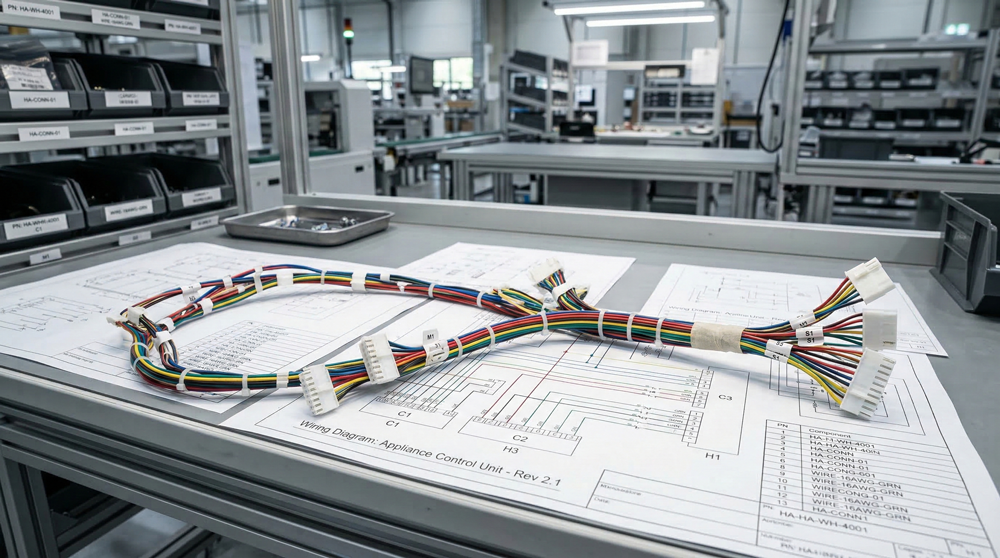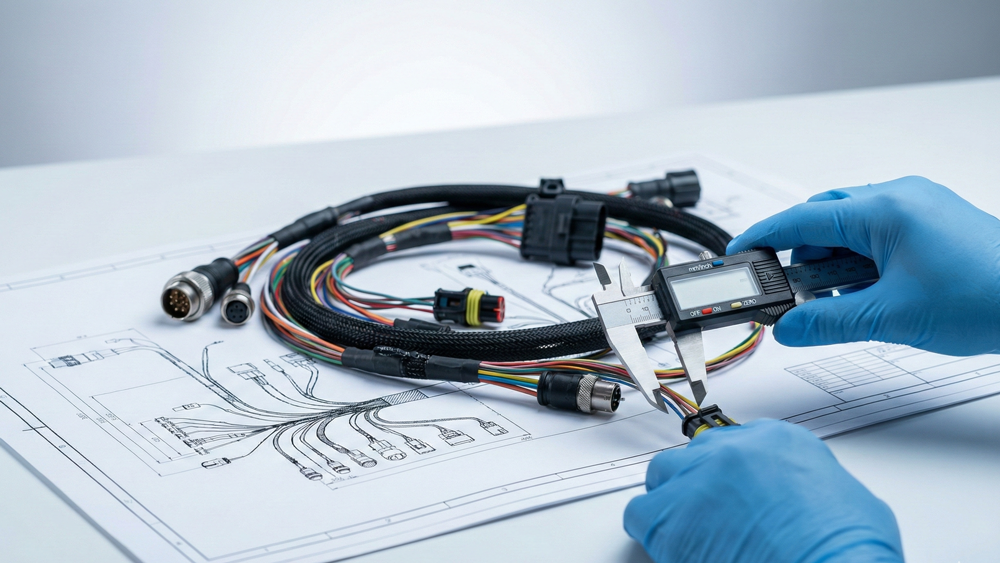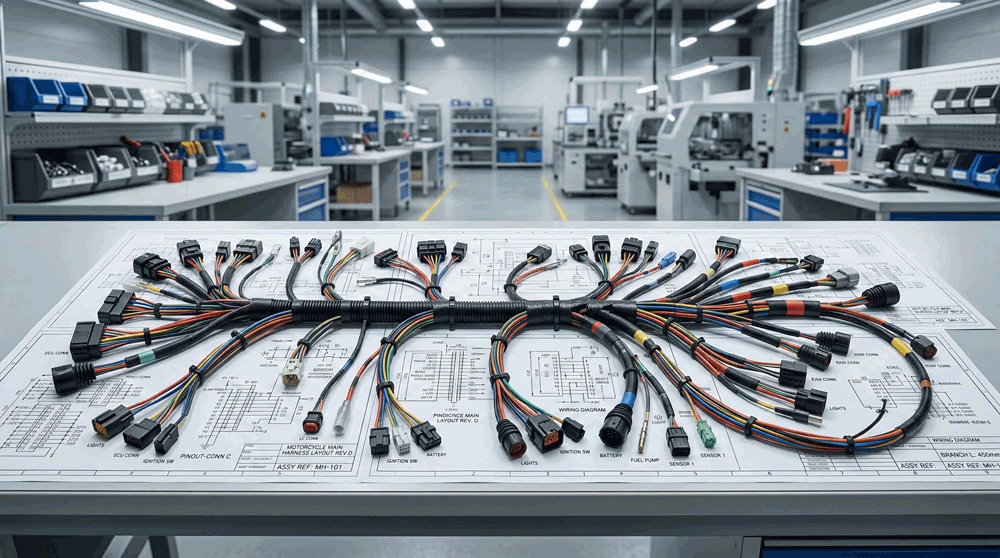
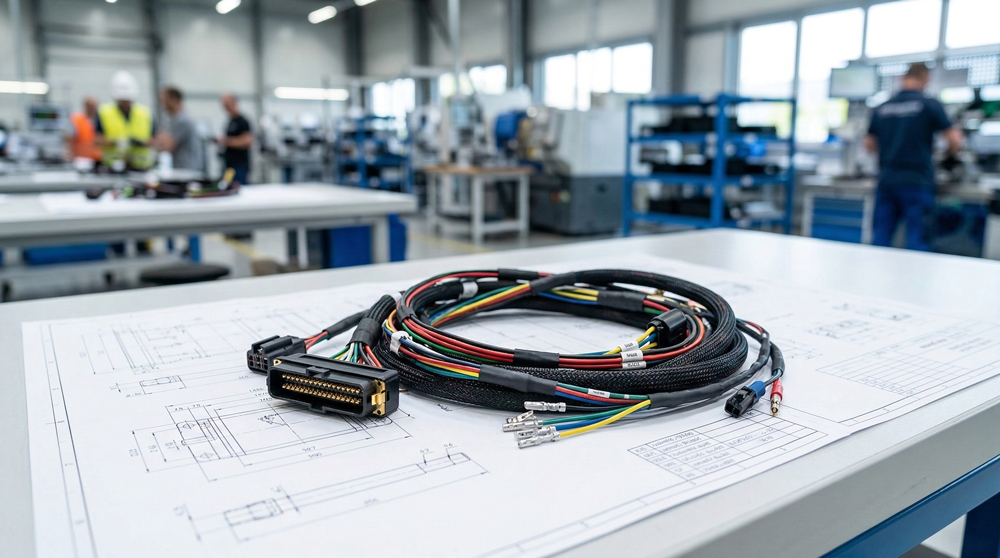
Sample approval before volume cable assembly orders is one of the most important control points in OEM sourcing. Sample approval before volume cable assembly orders is where buyers confirm not only that a custom cable assembly can be built, but that the supplier has understood the documents, the materials, the application, and the quality expectations well enough to support repeat production without avoidable surprises.
A good sample can shorten the path to pilot and production. A weak or poorly reviewed sample can create a false sense of confidence that becomes expensive later. That is why OEM buyers should treat sample approval as a controlled decision, not as a casual milestone between quotation and purchasing.
Table of Contents
ToggleWhy Sample Approval Matters
Many sourcing problems appear because the buyer moves too quickly from quotation to production intent. The supplier may have quoted the project competitively, answered questions reasonably well, and delivered a first sample on time. But none of those steps proves that the supplier is truly ready for repeat OEM supply.
Sample approval matters because it is the first point where the RFQ package, the supplier’s interpretation, the actual build, and the buyer’s expectations meet in physical form. It reveals whether the drawing was read correctly, whether the right materials were used, whether labels and protection parts were applied as intended, and whether the assembly actually reflects the use case it was quoted against.
For procurement, this stage reduces commercial risk. For engineering, it reduces interpretation risk. For quality teams, it reduces the chance that a visually acceptable but uncontrolled build moves into pilot. In OEM cable assembly programs, sample approval is often the cheapest place to catch a costly mistake.
Define the Approval Goal
Not every sample is being approved for the same purpose. That is why the first step should be to define exactly what the sample approval decision is meant to support.
Some samples are for design confirmation only. Others are for supplier comparison. Some are first-article samples before pilot. Others are transition samples from a second source or a new factory. In each case, the review standard should match the business purpose. A design-feasibility sample can be useful without being production-ready. A sample intended to support volume cable assembly orders should be reviewed more strictly because it influences real purchasing decisions.
This distinction matters because many teams use the word “approved” too broadly. A sample may be approved for electrical confirmation but not for packaging. It may be approved for engineering evaluation but not for production release. It may be acceptable with comments, but not yet ready for volume ordering. A disciplined team makes these boundaries visible instead of letting the word “approved” hide unfinished work.
Confirm the Sample Basis
Before the buyer reviews the physical sample, the team should confirm the basis on which the sample was built. This sounds simple, but it is one of the most overlooked steps.
A sample only has real approval value if the buyer knows which drawing revision, BOM logic, open assumptions, and application conditions were used. If the supplier built from an older file set, interpreted an unclear note differently, or substituted a material without explicit agreement, then the physical sample may still look acceptable while the approval basis remains weak.
That is why OEM buyers should confirm the sample baseline before judging appearance or performance. Which revision was used? Which connector and cable references were actually built? Were any alternates applied? Were there any open points closed informally by email? Was the sample built as a one-off engineering effort, or does it reflect the intended production method closely enough to be meaningful for future orders?
This is also why better RFQ discipline leads to better sample discipline. If the sourcing package was already clear, the sample review becomes more valuable because the buyer is evaluating the supplier’s execution, not just trying to reconstruct what happened.
Review the Build
The physical build review should go beyond basic appearance. A sample can look neat and still contain the wrong interpretation of the job.
At minimum, the buyer should review whether the sample matches the expected connectors, cable construction, branch layout, lengths, labels, protective materials, breakout positions, and overall routing logic. But a stronger review also asks whether the build feels consistent with the real application. Does the assembly route naturally? Does the strain-relief strategy make sense? Are support details appropriate for the environment? Does the assembly look like something that can be repeated reliably, or something that was carefully hand-built once to pass inspection?
This is where cross-functional review helps. Engineering may notice interpretation errors. Procurement may notice a mismatch against the quoted scope. Quality may notice workmanship or labeling issues. Operations may notice that the route or packaging will be harder to handle in production than it looked on paper. Sample approval becomes much stronger when those perspectives are combined.
Check the Materials
Material confirmation is one of the most important parts of sample approval before volume cable assembly orders because the sample often becomes the buyer’s first physical proof of what the supplier really intends to use.
This should include connectors, cable type, shielding approach where relevant, insulation or jacket assumptions, sleeves, boots, heat shrink, labels, packaging identifiers, and any protective or support parts that influence real performance. If the project is for a demanding application such as outdoor equipment, robotics, medical devices, or automotive auxiliary systems, this step becomes even more important because material differences can change the long-term behavior of the assembly significantly.
A useful question is whether the sample reflects the intended production material baseline or only a temporary approximation. If the supplier used one cable type for the first build but expects to switch later, the buyer should know that before approval. If the sample uses available components that are not the intended long-term sources, that should also be visible. Otherwise the buyer may approve a physical sample that does not actually represent the future production assembly.
Verify the Labels
Labels are easy to underestimate during sample approval, but in many OEM programs they are part of the product, not just a packaging detail. Labels influence production identification, warehouse handling, field service, traceability, and downstream customer experience.
That is why buyers should review label content, format, location, print clarity, adhesion, durability assumptions, and consistency with the released documentation. A label that is technically present but placed poorly, difficult to read, or inconsistent with the part-number logic can create real operational problems later. This is especially true for products with service requirements, mixed configurations, or installation environments where technicians rely on clear identification.
If the supplier has not yet finalized label format, that should be treated as an open point rather than quietly accepted. A lot of confusion in later production starts because the sample looked “good enough” and no one formally closed the label logic before ordering began.
Evaluate Workmanship
Sample approval should also test workmanship expectations, especially when the assembly includes routing-sensitive features, visible protection materials, shield terminations, breakouts, or other details that affect consistency. A sample may pass continuity and still reveal weak process control.
Buyers should therefore review whether the assembly shows repeatable workmanship or just careful one-time assembly effort. Are protective elements applied consistently? Are transitions clean? Does the cable exit the connector properly? Are breakouts controlled? Do tie points, labels, and sleeves look stable and deliberate? If the project is appearance-sensitive or service-sensitive, does the sample reflect the level of finish the OEM needs?
This is also where supplier maturity becomes visible. A reliable supplier usually treats the sample as the beginning of controlled production behavior. A weaker supplier may treat it as a handmade demonstration piece that is difficult to reproduce later. The difference matters greatly before volume orders are released.
Match the Application
A sample should not only be reviewed against the drawing. It should also be reviewed against the real application. This is one of the strongest ways to avoid approving a technically correct but commercially risky build.
For example, a cable assembly for robotics should be checked for movement logic, strain relief, and route behavior. An outdoor cable should be checked for protection, sealing assumptions, and support details. A medical device cable may need closer review of labeling, routing, handling, or cleanliness-related design choices. An automotive auxiliary cable may need closer attention to vibration points, packaging clearance, and connector retention.
The key point is that the sample should be judged against where it will actually live, not only against what it looks like on the bench. This is why application-specific sourcing content such as Cable Assemblies for Industrial Equipment, Cable Assemblies for Robotics and Automation, Outdoor Equipment Needs the Right Cable Assemblies, Medical Devices and Custom Cable Assemblies, and Cable Assemblies for Automotive Auxiliary Systems matters so much. A sample that ignores the use case is not truly approved.
Review the Records
Physical samples matter, but supporting records matter too. If the supplier is being considered for volume cable assembly orders, the buyer should begin reviewing how clearly the supplier records the build basis, materials, and approval status.
This does not mean every sample requires a heavy documentation package. But the buyer should still know what files were used, what open points existed, what was changed, and what the supplier considers the sample configuration to be. If the supplier cannot explain that clearly at sample stage, it becomes harder to trust later revisions, packaging consistency, or future traceability.
A simple but disciplined sample record often saves time later because it creates a clean bridge between sample approval and pilot release. It also reduces the risk that the next order is built against a different understanding than the one the sample represented.
Use Clear Approval Status
One of the most useful habits in sample approval is using clear status definitions instead of one broad approval label. This makes the commercial decision much stronger.
In practice, a sample often falls into one of several categories. It may be approved for engineering confirmation only. It may be approved with comments for a revised sample round. It may be approved for pilot, but not yet for unrestricted volume ordering. It may be rejected and require design clarification first. The more clearly these statuses are defined, the less room there is for downstream misunderstanding.
This is especially important when procurement is moving quickly and suppliers are eager to convert samples into orders. A supplier may hear “looks good” and interpret that as readiness for production. The buyer may mean only that the concept is acceptable pending minor corrections. Without clear status language, those two interpretations can create avoidable confusion.
A simple approval structure can help:
| Approval status | Meaning |
|---|---|
| Approved for engineering review | Design concept accepted, not yet ready for production release |
| Approved with comments | Generally acceptable, but listed corrections must be closed |
| Approved for pilot | Suitable for controlled pilot build, not unrestricted volume yet |
| Approved for volume release | Sample and open points support repeat production intent |
| Rejected | Key issues remain; further revision required before next step |
This kind of structure makes sample approval far more useful as a sourcing control tool.
Link Approval to the Next Step
Sample approval is only valuable when it leads clearly to the next business step. If the sample is accepted, what exactly happens next? Does the project move to pilot? Does the supplier revise the build and submit an updated sample? Does procurement request a refreshed quotation? Does the buyer freeze the BOM and issue the first low-volume order? These decisions should be visible at the point of approval.
This matters because many OEM teams approve a sample in principle but do not define how that approval changes the sourcing status. The result is ambiguity. Engineering thinks the sample is acceptable for function. Procurement thinks the factory is ready for production. Quality thinks more review is still needed. The supplier thinks the order can be released. That confusion is avoidable if approval and next-step logic are linked clearly.
In practical terms, every approved sample should close some questions and open the right next action. That is how the sample stage creates value instead of becoming just another shipping step.
Watch for Red Flags
There are several warning signs buyers should take seriously during sample approval before volume cable assembly orders. One is a sample that looks acceptable at first glance but does not match the documented material basis. Another is a supplier who cannot explain what revision or assumptions were used. Another is repeated reliance on informal clarification instead of controlled updates. Another is a neat-looking sample with obvious repeatability concerns, such as unstable labels, inconsistent breakout treatment, or route logic that looks hand-managed rather than production-ready.
A different kind of red flag is buyer-side pressure to approve too early. This often happens when timelines are tight and the sample is “close enough.” In some cases, moving forward may still be commercially reasonable, but only if the open points are documented clearly and the approval status reflects reality. Pretending a partly closed sample is ready for full production usually creates more delay later, not less.
Use Sample Approval to Judge the Supplier
Sample approval is not only about the part. It is also one of the best ways to judge the supplier. A good sample process shows how the factory interprets documents, handles questions, manages detail, and communicates under real project conditions.
A reliable supplier usually behaves in predictable ways at this stage. They raise open points before building, not after. They show what was actually used. They do not quietly substitute important materials. They make it easier for the buyer to review the sample, not harder. They also respond constructively when corrections are required. That behavior is often more useful than the sample alone because it predicts how the supplier is likely to behave once the orders become larger and the project becomes less forgiving.
This is why sample approval belongs naturally in a supplier selection series. It is both a product-control step and a supplier-evaluation step.
Conclusion
Sample approval before volume cable assembly orders should be treated as a controlled decision that confirms far more than whether the first build “looks okay.” It should confirm the technical basis, the material set, the labeling logic, the workmanship level, the application fit, and the supplier’s readiness to support the next stage of the project.
For OEM buyers, the strongest sample approvals are the ones that define the approval purpose clearly, confirm the build basis, review the real application, document the open points, and connect the result to the next sourcing step. When that happens, sample approval reduces risk before volume orders begin. When it is treated casually, it often shifts that risk downstream into pilot, production, and service.
FAQ
What does sample approval before volume cable assembly orders really mean?
It means the buyer is confirming that the sample is not only functionally acceptable, but also suitable as a basis for the next sourcing step, such as pilot or repeat production.
Is one good sample enough to approve a supplier for volume?
Not always. A good sample is important, but buyers should also review the build basis, material consistency, documentation clarity, and whether the assembly looks repeatable in production.
What should buyers check during cable assembly sample approval?
They should check the revision basis, materials, labels, workmanship, application fit, open assumptions, and whether the supplier can explain clearly what was actually built.
Should sample approval use more than one status?
Yes. Clear statuses such as approved with comments, approved for pilot, or approved for volume release usually reduce confusion and improve sourcing control.
Why is sample approval important for supplier selection?
Because the sample stage reveals how the supplier interprets documents, manages detail, communicates under pressure, and supports controlled execution before larger orders are released.
CTA
If you are reviewing samples before volume cable assembly orders, the most useful first step is to confirm whether the sample truly reflects the intended material baseline, revision status, and application requirements before treating it as production-ready.
You can send your sample photos, drawings, BOM, supplier comments, and sourcing questions through Contact. Our team can help review the sample basis and support a more practical OEM approval decision before volume release.