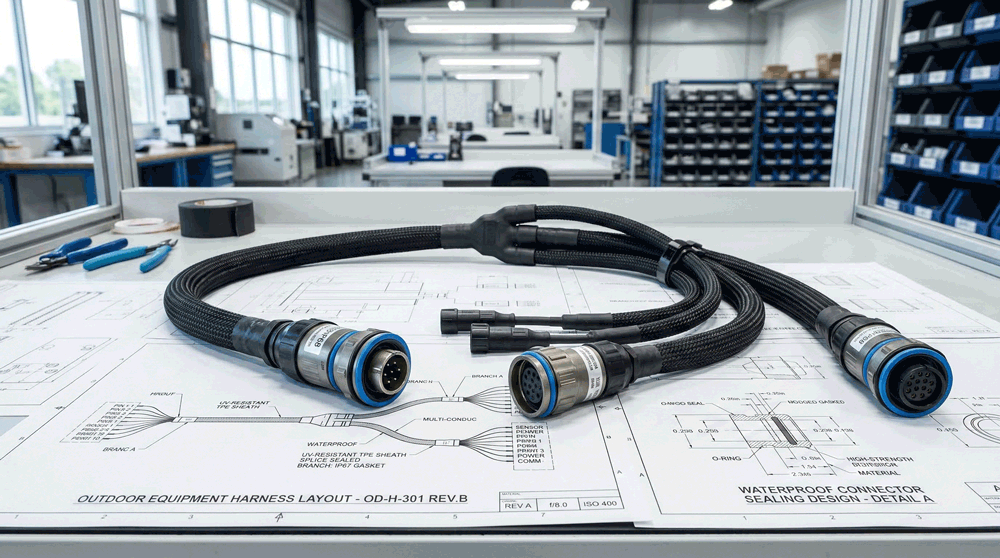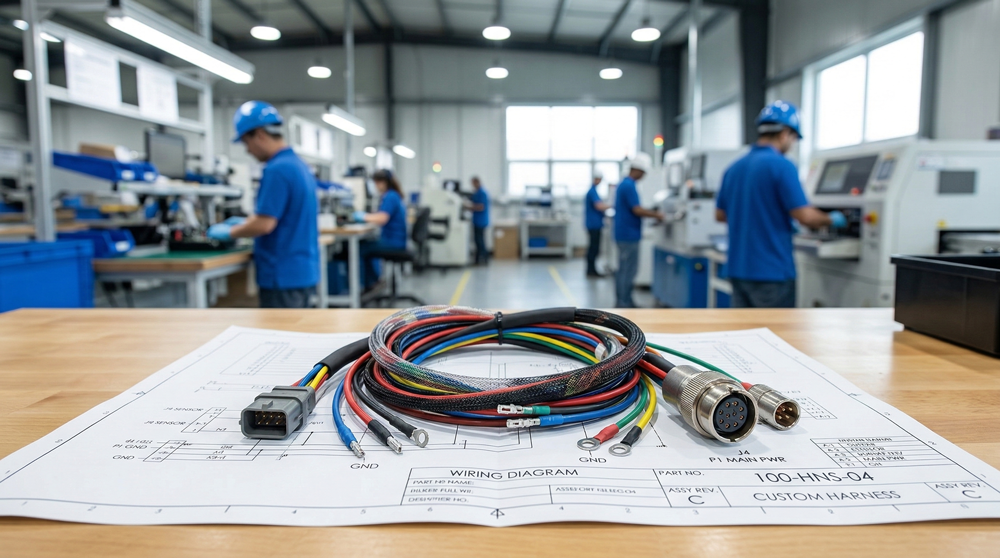
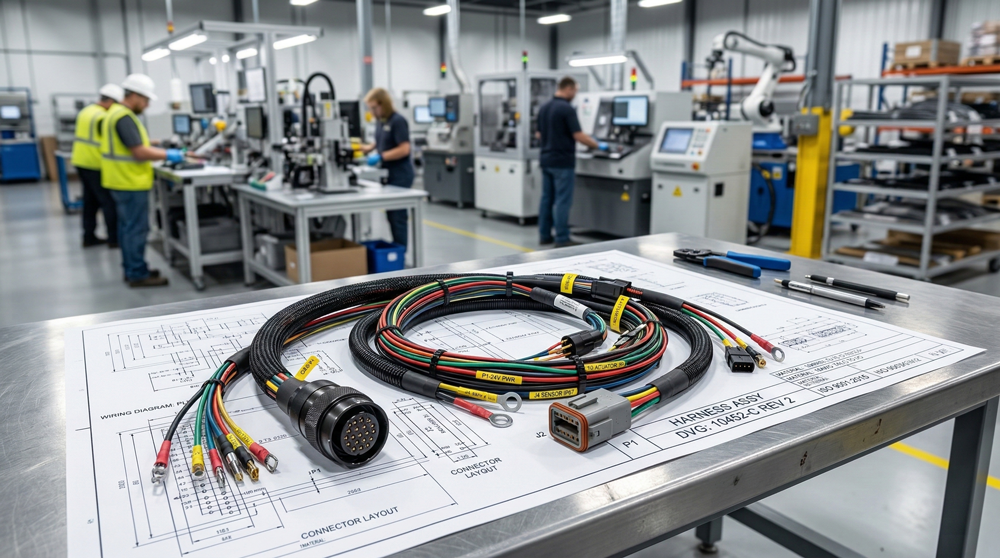
A better RFQ for custom cable assemblies does not start with a spreadsheet alone. It starts when the buyer decides to define the real project clearly enough that suppliers can quote the same job, not five different interpretations of it. In OEM sourcing, that difference matters. A vague RFQ often produces fast quotes but weak comparability. A stronger RFQ produces better engineering feedback, fewer hidden assumptions, and a smoother path into sampling, pilot, and repeat production.
Table of Contents
ToggleFor procurement teams, this is not just a documentation exercise. It is one of the most practical ways to reduce sourcing risk before money, time, and supplier attention are spent in the wrong direction. When the RFQ is better, quotation quality improves, supplier questions become more useful, and the buyer has a much stronger basis for choosing the right cable assembly manufacturer.
Why RFQ Quality Matters
Many OEM buyers assume that if they already know the connector type, cable length, and circuit definition, the RFQ is basically ready. In simple builds, that may sometimes be enough. But in custom cable assemblies, the quotation outcome depends on far more than visible part numbers. Routing difficulty, operating environment, service expectations, labeling rules, packaging requirements, documentation needs, and annual demand profile all influence how a supplier builds the cost structure and how accurately that quote reflects the real project.
That is why poor RFQs often look deceptively efficient. Suppliers respond quickly, the buyer sees several prices, and the sourcing process appears to be moving. But later, problems emerge. One supplier assumed standard packaging. Another assumed a different cable construction. One included labels and testing records. Another priced only the visible assembly. One supplier expected prototype quantities only. Another quoted annual OEM volume. At that point, the buyer is no longer comparing suppliers fairly. The buyer is comparing assumptions.
In B2B sourcing, this creates avoidable waste. Engineering has to clarify basics repeatedly. Procurement has to re-open the quote round. Suppliers lose confidence in the project definition. Sample timelines become longer. And when the first build arrives, the team may find that the supplier followed the RFQ honestly, but the RFQ itself never described the real need.
A strong RFQ prevents that. It reduces ambiguity before it becomes cost.
Start with the Use Case
The first step in preparing a better RFQ is to define what the assembly is actually for. This sounds simple, but many sourcing packages still focus too much on what the cable looks like and too little on how the cable will be used.
A custom cable assembly for industrial equipment, robotics, outdoor products, medical devices, or automotive auxiliary systems may all have similar visible features, yet the real sourcing requirements can be very different. Some assemblies will remain static in protected enclosures. Others will move repeatedly. Some must tolerate vibration, moisture, cleaning exposure, or service handling. Others may be signal-sensitive and need closer shielding review. Without application context, suppliers are forced to guess which of those factors matter.
This is why the RFQ should begin by describing the use case in plain business and engineering language. Where is the assembly installed? Is it internal or external? Static or moving? Exposed or protected? User-handled or only factory-installed? Low-volume prototype or repeat OEM production? A few clear sentences at the beginning of the RFQ often improve quote quality more than a much larger attachment list without context.
This is also where your content strategy supports your sourcing process. Articles like Choosing OEM Cable Assemblies for Different Applications and the related application-specific articles are helpful because they train buyers to think in terms of real use, not just visible specifications.
Define the RFQ Goal
Not every RFQ serves the same purpose, and suppliers need to know what kind of quoting event this is. A quotation request for early concept samples is very different from a quotation request for qualified volume supply. A second-source RFQ is different from a cost-down review. A supplier-transition RFQ is different from a clean-sheet new program.
That is why a better RFQ clearly states the goal. Is the buyer asking for a budgetary quotation to test feasibility? Is the request intended to select one supplier for prototype samples? Is the buyer comparing factories for a long-term OEM project? Is the team looking for engineering input on design improvement? Is the RFQ being used to validate current market pricing against an existing supplier? The answer changes how the supplier interprets the request.
If the goal is not clear, suppliers often respond according to their own internal default. One factory may quote aggressively for entry into the project. Another may quote conservatively because they assume full production accountability. Another may assume the design is still fluid and include more engineering buffer. These responses are not necessarily wrong. They are just based on different project assumptions. A good RFQ prevents that spread by telling suppliers what kind of commercial decision the quote is expected to support.
Set the Scope
A better RFQ also defines scope more clearly. In cable assembly sourcing, scope is one of the main reasons quotations appear comparable while actually describing different work.
Scope includes obvious things such as what part numbers are being quoted, what drawings apply, and what quantities matter. But it also includes less obvious items. Is the supplier expected to provide only the assembled product, or also engineering review? Are alternates allowed? Is label printing included? Are test records expected? Is special packaging required? Does the supplier need to support pilot builds, low-volume launches, or service-part orders later? Are tooling, fixtures, or custom packaging materials in scope?
These questions matter because suppliers will not always price them the same way when they are left unstated. One supplier may include more by default. Another may leave it out until later. That is how RFQs create hidden cost even before supplier selection is made.
A stronger RFQ therefore separates technical scope from commercial scope. Technical scope defines what must be built and how tightly it is controlled. Commercial scope defines what type of support, volume model, and documentation expectation the supplier is being asked to support. When both are clear, the buyer gets much more useful quotes.
Build the Technical Package
The technical package is the foundation of the RFQ. If it is incomplete, outdated, or internally inconsistent, the quotes will reflect that weakness whether the buyer sees it or not.
At minimum, the technical package for custom cable assemblies usually needs to include the current drawing or dimensional reference, connector definitions, circuit or pinout information, cable specification if known, length information, and the current revision status. But in most OEM projects, a quote becomes much better when the supplier also receives photos, route references, mating-part views, breakout details, label locations, and any special materials or protective features required by the application.
If some items are still open, that should be stated clearly rather than hidden. For example, if the cable type is still under review, if the label format is provisional, or if protective tubing may change after sample evaluation, that should be visible in the RFQ. Suppliers can work with open items if they are told which items are fixed and which are still being finalized. What creates trouble is silence. When nothing is said, each supplier fills the gap differently.
This is also why better document discipline improves quotation quality. A supplier can only quote what the package allows them to understand. If the released drawing, BOM logic, and notes are not ready for quotation, the sourcing team should expect more variation in the commercial results.
Add the Application Details
A strong RFQ tells the supplier not only what the assembly is, but where and how it will be used. This is especially important for custom cable assemblies because application details influence material recommendations, manufacturability, cost structure, and long-term reliability.
Application details may include whether the assembly is static or moving, the expected environment, whether it is exposed to vibration, moisture, UV, chemicals, or repeated handling, and whether it supports signal, power, data, or mixed functions. If the assembly is routed through a tight enclosure, a moving axis, a patient-facing device, an outdoor housing, or a vehicle module, the supplier should know that before they quote.
The more demanding the project, the more this matters. A factory quoting a static cabinet cable may make different assumptions from a factory quoting a flexing automation assembly. A medical device cable may need more attention to cleanliness, labeling, and serviceability than an internal machine jumper. An outdoor cable may require sealing and jacket decisions that a generic indoor quote would never include. When the application is visible, the supplier’s engineering response becomes more valuable and the commercial comparison becomes more honest.
Explain the Volume Plan
Quantity is one of the most misunderstood parts of an RFQ. Many buyers include a sample quantity and maybe an annual estimate, but do not explain the actual volume path. This often leads suppliers to quote in ways that are not very helpful.
A better RFQ explains the expected sourcing model. For example, the project may need ten prototype samples first, then two hundred pilot units, then regular monthly orders after launch. Or the project may be a low-volume industrial program with irregular demand. Or it may be a higher-volume OEM part that requires long-term supply planning, stable labels, and packaging control. Those are very different commercial situations, and the supplier should not be forced to infer them.
Volume planning matters because it affects labor assumptions, material sourcing strategy, tooling logic, packaging decisions, and pricing structure. A supplier that thinks the project is mostly prototype work may quote differently from one that understands it will become repeat business. Likewise, a factory that sees only the annual volume without understanding the ramp pattern may assume a smoother demand curve than the project really has.
A practical RFQ therefore gives at least a simple volume picture. It does not need to be perfect. It needs to be useful. Even a rough explanation of sample quantity, pilot quantity, annual estimate, and ordering pattern is far better than leaving suppliers to guess.
State the Quality Expectations
One of the clearest ways to improve an RFQ is to explain what level of quality control and documentation the project requires. Many buyers assume quality expectations are obvious. In reality, suppliers may have very different default assumptions.
For some projects, continuity testing and standard outgoing inspection are enough. For others, the buyer expects specific visual controls, dimensional checks, label verification, shipment-linked records, packaging rules, or traceability support. Some OEM programs need stronger sample records. Others need pilot discipline before production release. If these expectations are not stated, the quote may not reflect the level of control the project actually needs.
This is particularly important for projects that will later connect to document-heavy customer requirements or internal evidence processes. If the supplier is expected to support shipment-linked records, stronger test outputs, traceability discipline, or controlled packaging identification, the RFQ should say so early. Otherwise the buyer may choose a supplier based on price only to discover later that the operational support model is not aligned.
This is where existing content such as Sample Approval Before Volume Cable Assembly Orders and related quality articles become valuable internal reference points. They help frame what “good supplier support” should actually look like after the quotation stage.
Clarify What Is Fixed
A frequent RFQ problem is that the supplier cannot tell which parts of the design are frozen and which are open for review. In custom cable assemblies, that uncertainty has a direct effect on quote quality.
Some buyers want strict build-to-print quotation. Others want alternative suggestions, cost-down ideas, or availability-driven changes. Both approaches can work, but the supplier needs to know which one applies. If the RFQ does not say, some suppliers will quote conservatively to the drawing, while others will quietly assume they can optimize or substitute later. That creates wide variation in quotation basis.
A better RFQ therefore distinguishes between fixed requirements and reviewable areas. Connector family may be fixed. Cable type may be open to recommendation. Label content may be fixed. Protective sleeve type may be open. Packaging may be standardized or still open for supplier suggestion. When this boundary is clear, suppliers can contribute more intelligently without weakening quote comparability.
This also protects the buyer from a common mistake: selecting a very low quote that only looks low because the supplier priced a looser interpretation of the design. Strong RFQs make those differences visible early.
Invite the Right Questions
A professional RFQ should encourage suppliers to ask questions, but those questions should improve the process rather than restart it from zero. That is another reason good RFQ structure matters. When the package is reasonably clear, supplier questions become more valuable. They focus on risk, manufacturability, lead time, or optimization rather than on basic missing information.
Good suppliers often reveal their quality through the questions they ask. Do they ask about application environment? Do they clarify movement, routing, or service access? Do they ask whether labels, packaging, or alternates are fixed? Do they challenge unclear dimensional references or connector definitions? Those questions are useful signals because they show how the supplier thinks.
A better RFQ makes room for that. Instead of sending a thin request and waiting for prices only, the buyer can explicitly ask suppliers to identify open technical risks, long-lead materials, manufacturability concerns, or any areas where the current package may create difficulty in prototype or volume production. That turns the RFQ into a sourcing tool rather than a pure price-collection exercise.
Compare Quotes Properly
Preparing a better RFQ is not only about sending better information. It is also about making later quote comparison more meaningful. The structure of the RFQ should help the buyer see why suppliers differ.
That means the buyer should ask for responses in a way that surfaces commercial differences clearly. Unit price matters, but so do tool costs, MOQ assumptions, lead time, validity period, packaging approach, testing basis, engineering comments, and any excluded items. If the buyer does not ask for this structure, suppliers often return quotes in formats that are hard to compare, which reduces the value of the whole RFQ effort.
A practical way to think about quote comparison is shown below.
| Comparison area | What the buyer should check |
|---|---|
| Quotation basis | Same drawing, same revision, same scope, same quantity logic |
| Materials | Same connector assumptions, same cable assumptions, same protection items |
| Support model | Sample only, pilot support, volume support, documentation support |
| Commercial structure | Tooling, MOQ, lead time, payment assumptions, quote validity |
| Risk visibility | Open technical points, suggested changes, excluded items, supplier comments |
When an RFQ is built well, this kind of comparison becomes much easier. When it is built poorly, the buyer ends up doing reconstruction work after the quotes are already back.
Watch for Red Flags
A better RFQ also helps reveal weak suppliers faster. Not every low quote or fast reply is a red flag, but certain patterns deserve attention.
One warning sign is a quote returned very quickly with no questions on a technically complex project. Another is a price that is much lower than others without a clear reason. Another is a response that ignores labeling, packaging, or document requirements the RFQ already described. Another is a supplier that gives general assurances but does not show understanding of the actual application. These signs do not always mean the supplier is unsuitable, but they do mean the buyer should look more closely before treating the quote as directly comparable.
There are also internal red flags in the RFQ itself. If different suppliers are asking completely different clarifying questions, that often means the package left too much open. If quotation spread is unusually wide, the issue may not be supplier pricing alone. It may be RFQ quality. That is why a disciplined sourcing team does not only evaluate suppliers. It also evaluates how well the RFQ performed.
Use the RFQ to Choose Better
The real purpose of a better RFQ is not administrative neatness. It is better supplier choice. A stronger request helps the buyer see which manufacturers understand the application, which factories communicate clearly, which ones price responsibly, and which suppliers are more likely to support the project well beyond the first quote.
This matters because supplier selection should always be broader than the first commercial table. The best cable assembly supplier is often the one who quotes the real job, asks the right questions, highlights risk early, and behaves in a way that suggests disciplined support later. That kind of supplier may not always be the cheapest on paper, but the RFQ process should make their value visible before the project reaches the costly stages of sample correction, pilot delay, or sourcing instability.
In OEM programs, choosing better usually starts with defining better.
Conclusion
A better RFQ for custom cable assemblies improves far more than price collection. It improves supplier understanding, quote comparability, engineering feedback, and the buyer’s ability to choose the right manufacturing partner. The strongest RFQs define the use case, explain the project goal, set the scope clearly, build a practical technical package, add real application details, describe the volume path, state quality expectations, and make clear which parts of the design are fixed and which are open for discussion.
For OEM buyers, this is one of the simplest ways to make the sourcing process more professional and more efficient. A weak RFQ often hides risk until later. A strong RFQ brings the important differences forward, where better decisions can still be made.
FAQ
What is the biggest mistake in a cable assembly RFQ?
One of the biggest mistakes is giving suppliers only partial technical information with too little application context. That usually produces quotes that are fast but not truly comparable.
Should an RFQ include application details, not just drawings?
Yes. Application details such as movement, environment, service use, and exposure conditions often affect material choice, manufacturability, and quote accuracy.
Do buyers need to explain whether the quote is for prototype or production?
Yes. Prototype-only RFQs and long-term OEM production RFQs are interpreted differently by suppliers, so the sourcing goal should be stated clearly.
Should suppliers be asked for engineering feedback during RFQ?
In many custom cable assembly projects, yes. Early engineering feedback can reveal design risks, material issues, or manufacturability improvements before sample costs increase.
How can buyers make supplier quotations easier to compare?
By defining scope more clearly, asking for structured quotation responses, and making visible the assumptions around materials, quantity, packaging, support, and lead time.
CTA
If you are preparing an RFQ for custom cable assemblies, the most useful first step is to review whether your package clearly defines the application, scope, quantities, document status, and quality expectations before you send it to suppliers.
You can send your drawing package, BOM, routing notes, annual demand, and sourcing questions through Contact. Our team can help review the RFQ and support a more practical OEM sourcing discussion before quotation begins.