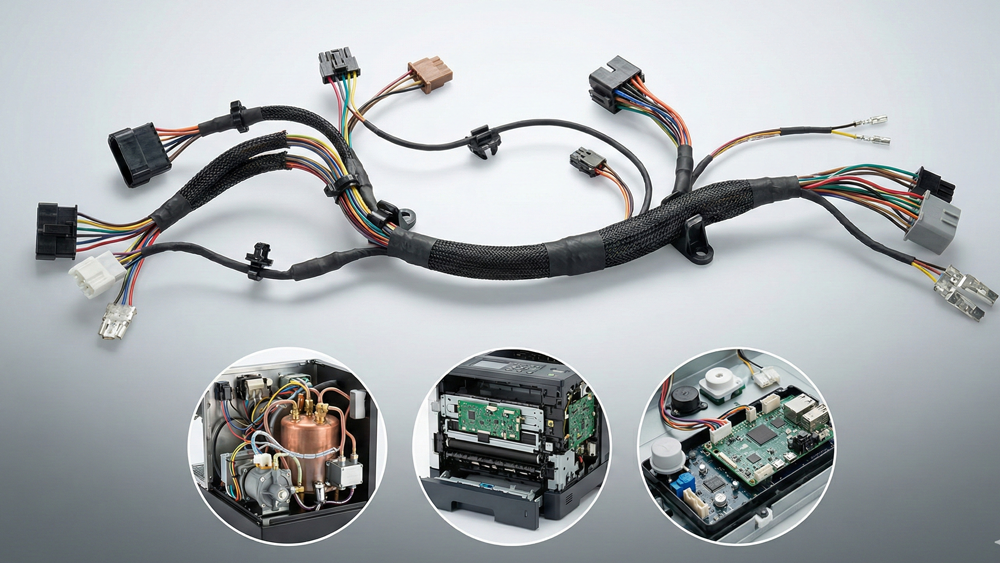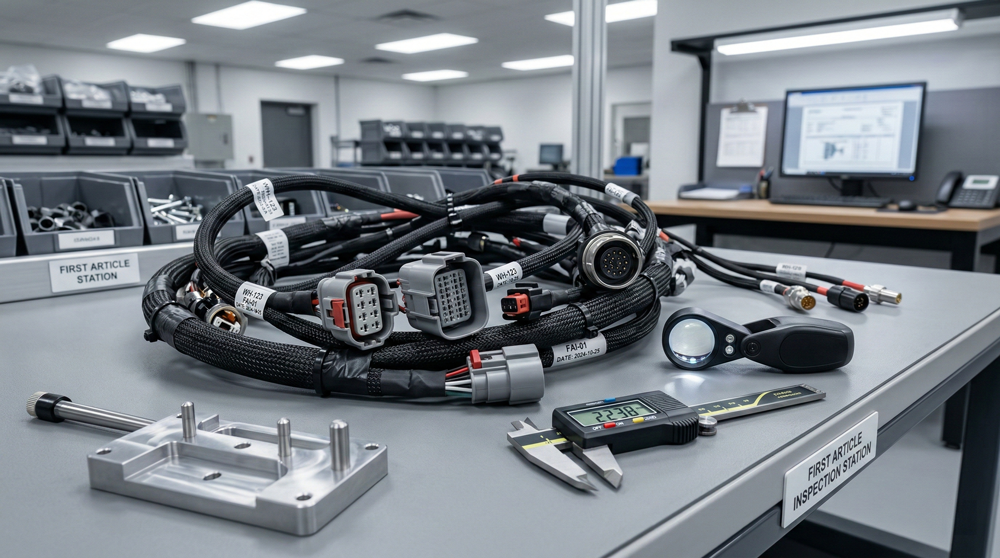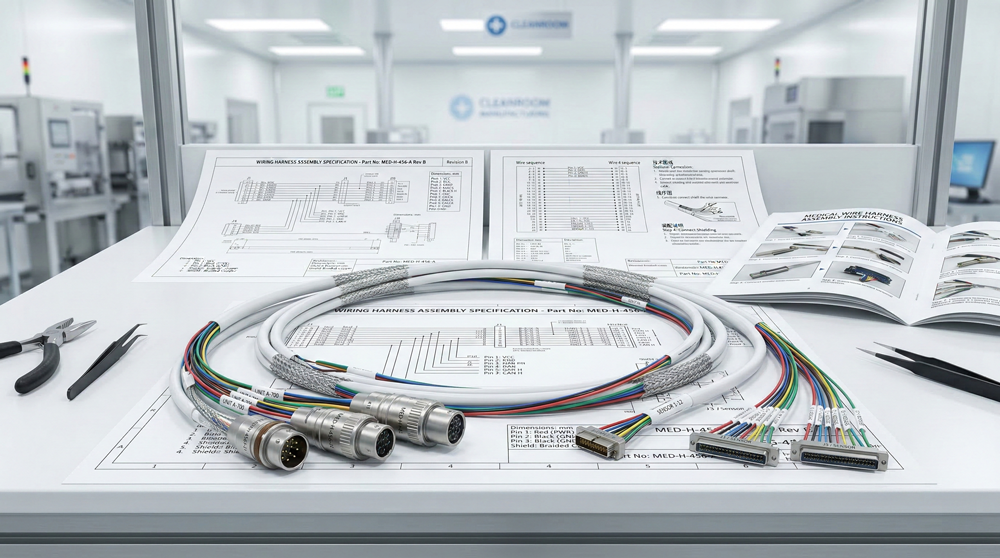
Wire harness validation after cost reduction is the step that decides whether a cost-down project is truly successful or only looks successful on paper. In many OEM programs, cost reduction work generates immediate excitement because the revised quotation appears lower, the Bill of Materials looks cleaner, or the supplier confirms that the new design or packaging route is “no problem.” But none of that proves the saving is safe. The real proof comes later, when the revised harness is checked against fit, function, process stability, traceability, and production reality. Without that step, the business is not really validating a cost reduction. It is simply trusting that a lower-cost version will behave like the old one.
That is why wire harness validation after cost reduction should never be treated as a formality. It is the control gate that separates disciplined optimization from hidden degradation. In a mature B2B supply program, validation is what allows procurement, engineering, quality, and project teams to confirm that the saving is real, the approved baseline is still protected, and the new version of the harness can enter normal production without creating downstream problems in assembly, delivery, service, or customer support.
Table of Contents
ToggleWhy Validation Matters
Every cost-down project changes something. The change may be large, such as a connector-family adjustment or a design simplification. It may be moderate, such as a packaging redesign or a process-flow improvement. It may even look small, such as a revised label structure, a protection-material update, or an approved alternate. But once something changes, the project is no longer dealing with the exact same harness state as before. That means the business needs a method to confirm that the new state is acceptable.
The reason this matters so much in wire harness supply is that savings do not fail in obvious ways only. Sometimes the revised harness still passes a basic continuity check and still looks acceptable in a quick visual review, but new issues show up later. Installation becomes tighter. Pack-out becomes less stable. Traceability becomes harder to read. Workmanship variation increases. Incoming teams start asking more questions. These are exactly the kinds of problems that good validation is meant to catch early, when correction is still manageable.
For OEM buyers, validation is also a trust mechanism. It allows the business to approve cost-down work with confidence rather than suspicion. If the supplier knows the acceptance logic is clear, the cost-down discussion becomes more productive. Instead of debating in abstract terms, both sides can focus on what changed, what needs to be checked, and what evidence will support approval.
Define the Validation Scope
The first step in wire harness validation after cost reduction is to define the scope clearly. Not every cost-down change needs the same level of review. A minor packaging optimization does not require the same validation burden as a new connector path or a branch-layout simplification. But every meaningful change should still have a visible validation boundary.
A good scope definition begins with a simple question: what exactly changed? Was the saving driven by material substitution, design simplification, process change, packaging change, MOQ improvement, or some combination of these? Once that is clear, the team can ask what risks moved with the change. Did the cost-down affect fit, routing, sealing, handling, labeling, installation, documentation, transport, or supplier execution? The answers determine what validation should actually cover.
This is why validation should never be generic. A vague instruction such as “please test the new version” is not strong enough. The team should define which characteristics matter, why they matter, and what evidence will confirm that the revised harness still meets program expectations. If that scope is not clear, validation becomes inconsistent, and different teams may approve different things without realizing it.
Review the Original Baseline
Validation is only meaningful when the original baseline is clear. If the business cannot define what the approved pre-cost-down state was, then it becomes very hard to judge whether the revised state is truly equivalent, better, or worse. That is why baseline review should happen before the revised harness is judged.
This is where Wire Harness BOM and Part Control and Wire Harness Drawing Review are foundational. The team needs to know which drawing revision, BOM structure, materials, labels, pack logic, and process assumptions defined the accepted version before cost-down. Otherwise, validation starts from memory rather than from control.
In many long-running programs, this baseline step is more important than people expect. The “current approved version” may already contain minor legacy exceptions, historical alternates, or supplier habits that were never fully harmonized in the formal package. If those issues are not clarified first, the revised cost-down version can be judged unfairly or inconsistently. The team may think it is comparing old versus new, when in reality it is comparing one partly informal version against another.
A disciplined baseline review therefore protects the cost-down project from confusion. It gives validation something real to compare against.
Match Validation to Change Type
One of the most important principles in validation is proportionality. The level of validation should match the type of change. If every cost-down idea is treated like a full redesign, the process becomes too slow and too expensive. If every cost-down idea is treated as low-risk, hidden problems will eventually escape. The right answer is a validation plan that fits the actual change.
Material-driven savings often require confirmation of fit, function, sourcing logic, and documentation alignment. Design-driven savings often need stronger focus on installation, branch geometry, labeling, and build repeatability. Process-driven savings need confirmation that the revised workflow still produces the same approved output consistently. Packaging-driven savings need validation around protection, freight stability, pack identity, and receiving usability. Forecast- or MOQ-driven savings may need little technical validation, but they still need commercial confirmation that the new pricing logic and pack logic are sustainable.
The practical value of this approach is that it keeps validation efficient. The team does not waste effort checking low-risk areas that were unaffected, but it does focus properly on the areas where cost-down could realistically create new risk. That is exactly what a mature OEM buyer should want: not more validation for its own sake, but smarter validation.
Check Fit and Function
Fit and function remain the most obvious validation category, but they should not be reduced to a simplistic pass/fail test. In wire harness projects, fit is not only whether the connector mates. Function is not only whether electrical continuity exists. A revised harness may still “work” in a narrow technical sense while creating new burden in handling, routing, or installation.
That is why fit and function validation should ask broader questions. Does the revised harness install with the same confidence as before? Are branch lengths still appropriate? Are protections and coverings still compatible with brackets, channels, or mounting conditions? Does the revised connector or accessory set behave the same in practical use? Are there subtle changes in routing stability, bend behavior, or harness presentation that could matter in assembly or service?
This is especially important in cost-down projects driven by design simplification or material rationalization. The revised design may appear cleaner and cheaper, but if it loses installation margin or creates more assembly sensitivity, then the saving is not as strong as it first appeared. Validation must therefore reflect actual use conditions, not only nominal drawing compliance.
Check Build Stability
Validation after cost reduction should also confirm build stability. A cheaper harness that is harder to build consistently is not a true improvement. It may reduce visible BOM or packaging cost while quietly increasing labor variation, rework risk, or first-pass yield problems.
This is where Wire Harness Prototype Review and Pilot Build becomes highly relevant. Pilot is not only for launch. It is also one of the best places to validate whether a cost-down change remains stable under realistic production conditions. A revised harness may pass sample build but still reveal problems when multiple units are produced in a row, when operators rotate, or when packaging and testing are included in the flow.
A good stability review asks whether the revised version is easier, harder, or roughly equivalent to build compared with the prior approved version. Does the new material route create more handling difficulty? Does the simplified design reduce interpretation, or create new ambiguity? Does the packaging change help the end-of-line handoff, or make it less predictable? These questions matter because cost-down should ideally reduce friction, not relocate it into production.
Check Workmanship Risk
Cost reduction sometimes changes the points where workmanship risk appears. A harness that previously had a stable visual finish may start showing more variation if the protection method changes, label placement becomes less defined, or the process sequence is simplified without enough control. These issues may not always create immediate rejects, but they can still erode consistency and buyer confidence.
That is why validation should review workmanship impact explicitly. The team should not only ask whether the revised harness is acceptable. It should ask whether the revised harness is likely to remain acceptably consistent lot after lot. In many OEM programs, consistency is as important as nominal conformance, especially when the harness is visible to the customer or when service teams need predictable product appearance and identification.
This is where Wire Harness IPC and Workmanship Guide can support the review logic. Workmanship standards provide a useful reference for judging whether cost-down has changed the practical quality envelope of the harness, even when the core function remains intact.
Check Test and Records
Validation is incomplete if it looks only at the physical product. The revised harness must also remain compatible with the test, records, and outgoing evidence logic that support daily supply. A cost-down project can appear technically successful while still weakening documentation quality or making outgoing confirmation less consistent.
That is why the validation plan should review how the revised harness interacts with test flow and records. Are test steps still clear and efficient? Does the evidence package still match the revised material or design state? Are labels, lot references, and revision references still aligned correctly? If the cost-down involved packaging or label simplification, does the new documentation still support receiving and containment properly?
This is exactly where Wire Harness Test Reports and Quality Documents and Wiring Harness Quality Evidence Pack Guide add value. They remind the team that quality control is not only about what was built. It is also about what can be proven, traced, and explained later. If the revised harness makes that harder, then validation should treat that as a real issue, not an administrative detail.
Check Traceability
Traceability should be reviewed explicitly after cost reduction because some of the most “practical” savings ideas can accidentally weaken stock identity, lot clarity, or receiving usability. This is especially true when packaging, labels, secondary identifiers, or documentation flow have been simplified.
A good traceability check asks whether the revised harness is still easy to identify by lot, revision, and shipment condition. Can incoming teams read the necessary labels? Can the supplier’s records still tie the lot back to the correct build path? If a quality problem appeared after launch, could the buyer still isolate affected stock quickly? These are not secondary questions. In a B2B environment, traceability quality is part of the total value of the supply model.
This is where Wire Harness Traceability and Containment becomes directly relevant. If a cost-down change weakens containment speed or lot visibility, then the buyer is trading visible savings for hidden operational exposure. Strong validation should catch that before full rollout.
Use Pilot Validation
One of the most effective ways to validate cost-down is through pilot-level confirmation. A pilot build reveals more than a one-time sample because it shows how the revised harness behaves under a short but realistic production pattern. It captures sequence, handling, repetition, labeling, testing, packing, and outgoing records more accurately than a single demonstration unit.
This is particularly important when the cost-down affects more than one layer of the product. For example, a design simplification may also change process flow. A packaging cost reduction may also influence packing labor and label application. A material alternate may affect sourcing and outgoing evidence at the same time. In these cases, pilot validation is often the cleanest way to confirm whether the new total system remains stable.
For OEM buyers, pilot validation also creates better internal confidence. Procurement, engineering, and quality can all review the same evidence set rather than relying on separate assumptions. That usually makes approval faster and more defensible.
Use First Lots
Even after pilot validation, the first production lots usually deserve heightened attention. The reason is simple: some issues only appear when the change enters normal lot flow. The supplier may build pilot carefully under close observation, but ordinary production introduces routine pressure, operator rotation, packing variation, and schedule rhythm that are more representative of real supply.
That is why wire harness validation after cost reduction should often include first-lot review. The business should confirm not only that the revised harness can be built, but that it can be built repeatedly under normal conditions. Are the first lots consistent? Are the records complete? Are the labels stable? Is the packaging behaving as expected? Are incoming teams seeing the revised version as clean and understandable?
This first-lot stage is not an argument against pilot. It is the natural continuation of pilot. Together, they help ensure that cost-down survives the move from controlled review into regular supply.
Define Approval Criteria
Validation becomes much stronger when approval criteria are defined before the results are reviewed. If the team waits until after samples or pilot are complete to decide what counts as acceptable, then the process becomes vulnerable to bias, negotiation pressure, or inconsistent judgment.
A better approach is to define the approval logic early. What evidence will be required? Which characteristics are critical? Which differences are acceptable if function remains unchanged, and which differences are not acceptable because they affect installation, documentation, or customer expectation? Will the revised harness need pilot confirmation, first-lot monitoring, or both? Who signs off on the final approval?
When these criteria are visible, the supplier can prepare better and the buyer can evaluate more consistently. Validation becomes less emotional and more operational. That is especially valuable in cost-down projects, where commercial pressure can otherwise distort technical judgment.
Use Change Control
No cost-down validation is complete unless the approved outcome is connected to formal change control. If the revised harness passes validation but the released baseline remains vague, then the saving is still unstable. Future orders may drift. A second supplier may inherit the wrong state. Internal teams may use old documents while the supplier uses new practice. That is exactly how later disputes begin.
This is why Wire Harness ECO and Revision Control is so important in the final stage of cost-down work. Once the revised state is validated, the business should decide how that state becomes official. That may mean a drawing revision, BOM update, approved alternate record, packaging revision, or another documented control path. The exact route depends on the change, but the key point is the same: the approved version must be visible.
A saving that lives only in a conversation or email trail is not truly released. It is only temporarily remembered.
Build a Validation Matrix
A practical way to keep validation disciplined is to use a validation matrix. This does not need to be complicated. It simply needs to show what changed, what risk areas apply, what checks are required, and what evidence supports approval.
A matrix is helpful because cost-down projects often touch multiple functions at once. A material change may affect sourcing, fit, and documentation. A packaging change may affect protection, labels, and receiving. A process change may affect first-pass yield and records. Without a structured matrix, some of those effects are easy to overlook.
A basic matrix might include the change description, the relevant risk areas, the required checks, the responsible reviewer, and the final approval result. This makes the project easier to audit later and much easier to explain internally. It also gives the supplier a clearer target, which usually improves execution quality.
A Practical Validation Review
A simple framework can keep validation focused on the right questions.
| Validation area | Main question | Strong outcome |
|---|---|---|
| Baseline | Is the old approved state clearly defined | Comparison starts from a controlled reference |
| Change scope | Do we know exactly what changed | Validation is proportional and targeted |
| Fit and function | Does the revised harness still work in real use | Installation and function stay stable |
| Build stability | Can the revised harness be built consistently | No new process fragility appears |
| Workmanship | Has consistency changed visually or practically | Quality remains repeatable lot to lot |
| Test and records | Do testing and evidence still align | Records stay complete and usable |
| Traceability | Can lots still be isolated clearly | Stock identity remains strong |
| Pilot and first lots | Does the change survive real production flow | Approval reflects actual supply conditions |
| Change control | Is the new state formally released | Future supply inherits the validated version |
This structure helps the team avoid two common mistakes: overvalidating low-risk changes and undervalidating meaningful changes. It makes the review more practical and easier to repeat across future projects.
What Strong Suppliers Do
A strong supplier does not ask the buyer to approve cost-down work on trust alone. A strong supplier helps define what changed, what should be checked, and what evidence will support the revised state. They understand that validation is not an obstacle to savings. It is what makes the saving credible.
They also help keep the validation proportional. They do not try to turn a small packaging adjustment into a major qualification burden, but they also do not downplay meaningful material, design, or process changes. They connect sample, pilot, first-lot, record, and traceability logic into one coherent approval path. That kind of support is especially valuable in B2B supply because the buyer often needs to align multiple internal stakeholders before releasing the change.
A supplier who validates well usually cost-downs well. The two disciplines belong together.
Conclusion
Wire harness validation after cost reduction is what turns lower price into lower risk-adjusted cost. Without validation, cost-down is only a commercial claim. With proper validation, the business can confirm that the revised harness still meets fit, function, buildability, traceability, and control expectations under real production conditions.
The strongest validation plans define the baseline clearly, match review depth to the type of change, check fit and function broadly, confirm build stability, review workmanship, protect test and records, preserve traceability, use pilot and first lots wisely, and release the approved state through formal change control. When those elements are in place, cost reduction becomes much safer to scale across recurring OEM supply.
For buyers, the key principle is simple: a cost-down is only complete when the new lower-cost state has been proven, not just promised.
FAQ
What is wire harness validation after cost reduction?
It is the process of confirming that a revised lower-cost harness still meets fit, function, buildability, traceability, and documentation expectations before it is released into normal production.
Does every cost-down change need the same level of validation?
No. Validation should be proportional to the type of change. A major material or design change needs deeper review than a small operational simplification, but every meaningful change should still have a defined approval path.
Is a sample enough to validate cost-down?
Not always. A sample is helpful, but many cost-down changes are better confirmed through pilot builds and early production lots because those stages reveal process and record behavior more realistically.
Why is traceability part of validation?
Because some cost-down changes affect labels, packaging, documentation, or lot identity. If traceability becomes weaker, the business may lose containment speed and receiving clarity even if the harness still functions.
Why is change control important after validation?
Because a validated saving is still fragile unless the approved new state is formally documented. Without change control, later orders or future suppliers may inherit the wrong version.
CTA
If you are planning a harness cost-down project, the safest time to define validation is before the revised version is built, not after. A clear validation scope helps procurement, engineering, quality, and the supplier align on what must be proven and what evidence will support approval.
You can send your drawing set, BOM, proposed cost-down items, target savings, and current approval concerns through Contact. Our team can help review validation logic using references such as Wire Harness BOM and Part Control, Wire Harness Drawing Review, Wire Harness Prototype Review and Pilot Build, Wire Harness Traceability and Containment, Wire Harness Test Reports and Quality Documents, and Wire Harness ECO and Revision Control.